DbcultAccessing Vault...
Cult Review
Senior Film Conservator
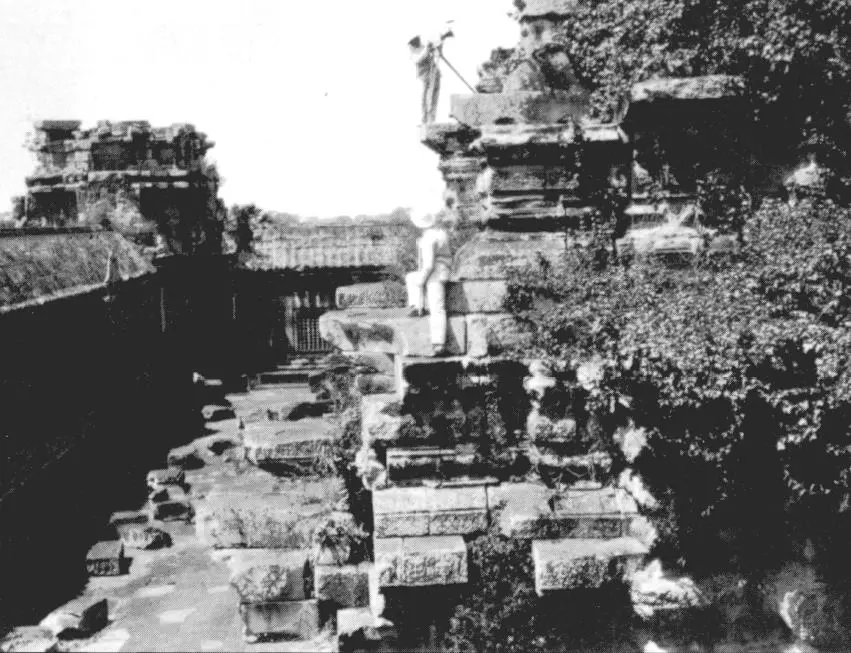
Is Au pays du roi lépreux worth your time in the modern era? Short answer: Yes, but only if you view it as a historical artifact rather than a complete cinematic experience. This is a film for the archivist, the Angkor obsessive, and the student of French silent cinema. It is emphatically not for anyone seeking a fast-paced adventure or a coherent narrative structure.
This film works because it captures the raw, pre-restoration majesty of Cambodia's temples with a haunting clarity that modern digital cameras cannot replicate.
This film fails because it is essentially a skeletal remains of a larger project, leaving the viewer feeling like they are watching a long-lost trailer for a movie that was never finished.
You should watch it if you are fascinated by the intersection of early 20th-century literature and the birth of 'exotic' location shooting.
Au pays du roi lépreux is a ghost. It haunts the periphery of cinema history because it represents a grand failure. Based on the novel by Pierre Benoist, the film was intended to be a sweeping epic. Instead, we are left with a short film that feels like a fever dream. The production was plagued by the realities of the Cambodian forest, a location that has humbled many directors before and since.
The film lacks the polished narrative of contemporaries like The Virgin of Stamboul. Where that film used its exotic setting to bolster a melodrama, Au pays du roi lépreux seems to surrender to its environment. The camera lingers on the stone faces of the Bayon for so long that the human actors begin to feel like intruders. It is a beautiful mess. And that is exactly why it remains compelling nearly a century later.
The decision to release this as an 'aesthetic short' was likely a marketing pivot to save a dying production. But in doing so, the creators accidentally birthed a piece of pure visual poetry. It strips away the baggage of Benoist’s pulp plotting and leaves us with the texture of the stone and the humidity of the air. It is cinema as a sensory experience, albeit an accidental one.
The cinematography in this film is remarkably sophisticated for its time. Henri Chomette, who would later become a key figure in the French avant-garde, brings a painterly eye to the composition. He doesn't just film the ruins; he frames them as if they are actively consuming the forest. The contrast between the deep blacks of the shadows and the bleached whites of the sun-drenched stone creates a high-stakes visual drama.
Unlike the gritty realism found in The Pitfall, this film leans into a dreamlike quality. There is a specific shot of Jacques Feyder walking through a gallery of carved bas-reliefs where the camera tracks him with a slow, deliberate pace. For a moment, the boundaries between the living actor and the ancient stone figures blur. It is a moment of genuine cinematic magic that transcends the film's technical limitations.
The pacing, however, is where the film shows its scars. Because it was salvaged from a larger project, the transitions are often jarring. One moment we are in a state of deep contemplation, and the next, we are thrust into a scene that feels like the middle of a climax we never saw the buildup for. It demands a lot from the viewer's imagination. You have to build the movie in your head as you watch it.
Seeing Jacques Feyder in front of the lens is a treat for any cinephile. Feyder, who would go on to direct masterpieces of poetic realism, has a presence that is both commanding and slightly out of place. He carries himself with a European rigidity that highlights the 'fish out of water' theme inherent in colonial narratives. He doesn't act so much as he exists within the frame.
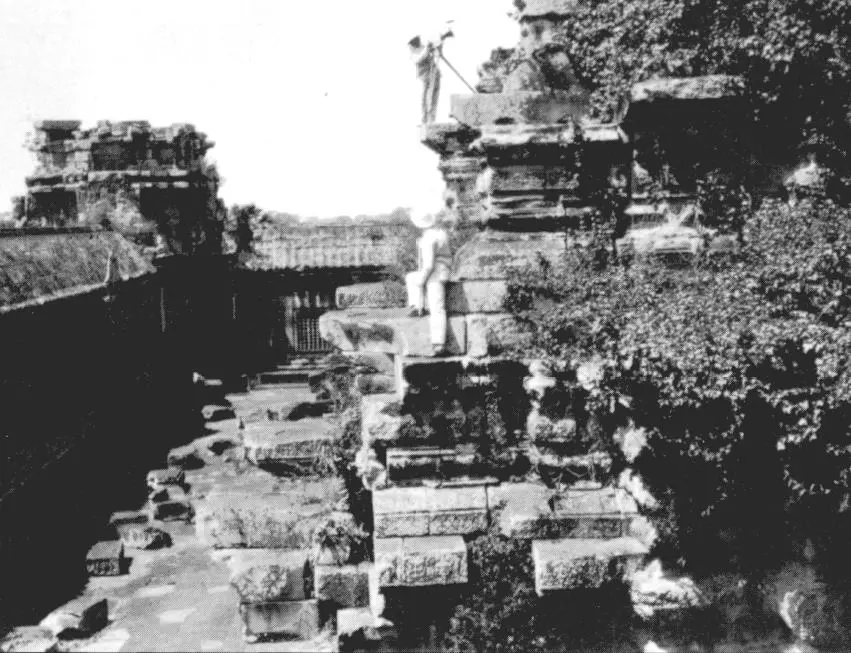
His performance—if you can call it that in such a short fragment—is one of quiet observation. It stands in stark contrast to the more theatrical acting styles seen in American films of the same year, such as Enemies of Women. Feyder seems to understand that he cannot compete with the ruins of Angkor. He lets the location do the heavy lifting, maintaining a stoic expression that masks the frustration of a stalled production.
Chomette’s involvement is equally fascinating. As the brother of René Clair, he was at the heart of the French film revolution. His work here hints at the 'pure cinema' movement—the idea that film should rely on movement and rhythm rather than literature. In a way, the failure of the feature-length adaptation allowed Chomette to experiment with a more abstract form of storytelling that would later define his career.
If you are looking for a story with a beginning, middle, and end, the answer is no. However, if you want to see a rare glimpse of 1920s Cambodia through the eyes of visionary French filmmakers, it is an essential watch. It serves as a visual companion to the literature of the era, providing a tangible sense of the 'exoticism' that captivated Western audiences at the time.
The film is a direct answer to the question: What happens when cinema meets an unstoppable force of nature? The Angkor forest wins. The film loses its plot but finds its soul in the process. It is a short, sharp shock of historical atmosphere that stays with you long after the final frame fades to black.
Pros:
Cons:
We cannot discuss Au pays du roi lépreux without addressing the elephant in the room: its colonial origins. The film treats Cambodia as a playground for European exploration. The locals, when they appear, are relegated to the background, serving as set dressing for the European drama. This is a common trait in films of this era, such as The Unblazed Trail.
However, there is a subtext of humility here that is often missing from other colonial works. The characters in this film don't conquer the land; they are swallowed by it. The ruins of the 'Leper King' serve as a reminder of the transience of empires. Whether the filmmakers intended it or not, the film functions as a critique of the very ambition that brought them to Cambodia in the first place.
This tension makes the film more interesting than a standard adventure flick. It’s a document of a culture trying to document another culture and failing to do so completely. That failure is where the real art lies. It’s a reminder that some places are too big for the camera to capture.
Au pays du roi lépreux is a fascinating ruin. Much like the temples it depicts, it is broken, overgrown, and missing large sections of its original structure. But that decay is precisely what gives it its power. It is a visual poem that captures a specific moment in time when cinema was still figuring out how to tell stories in the wild.
Don't go into it expecting a movie. Go into it expecting a dream. It is a 10-minute trip back to 1927, where the air is thick with humidity and the stones have eyes. It is an essential, if frustrating, piece of the cinematic puzzle. It works. But it's flawed. And in its flaws, it finds a strange kind of perfection.
"A haunting, accidental masterpiece of mood that proves some of the best cinema is found in the wreckage of failed ambition."
IMDb 5.9
1928
Community
Log in to comment.