DbcultAccessing Vault...
Cult Review
Senior Film Conservator
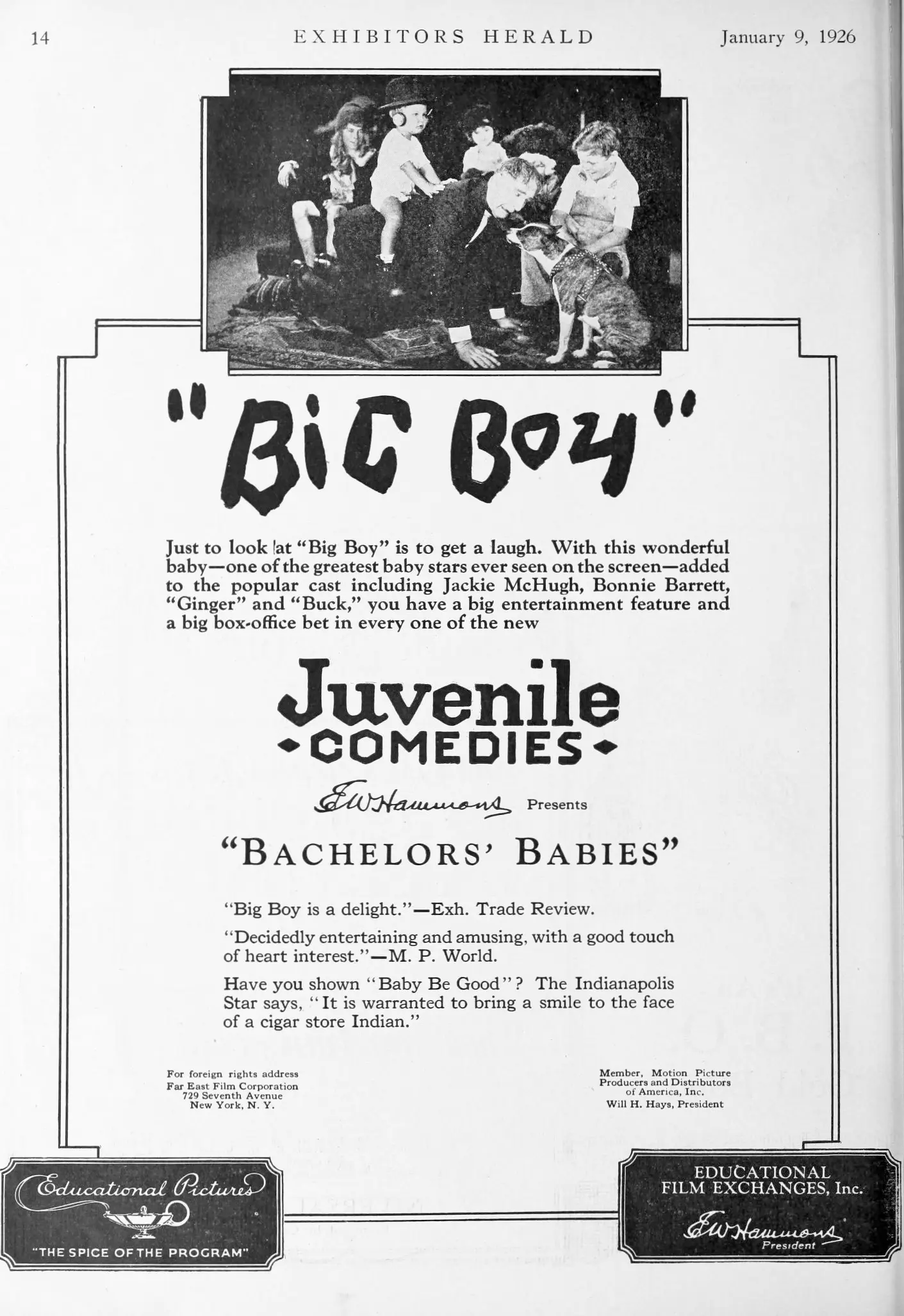
Is Bachelors' Babies a hidden holiday treasure or a relic of a bygone era that should stay buried? Short answer: It is a frantic, soot-stained delight for those who appreciate the anarchic energy of 1920s slapstick, but it will likely irritate anyone looking for a coherent narrative. This film is specifically built for fans of 'Our Gang' style juvenile comedy and silent era completists; it is absolutely not for viewers who find the 'destructive child' trope more stressful than funny.
This film works because of the sheer, unbridled physical commitment of its juvenile cast and the canine precision of Pal the Wonder Dog. However, it fails because it relies entirely on a single joke—the 'fake bachelor' trope—that it never quite knows how to resolve without resorting to property damage. You should watch it if you want to see the DNA of modern physical comedy in its rawest, most chaotic form.
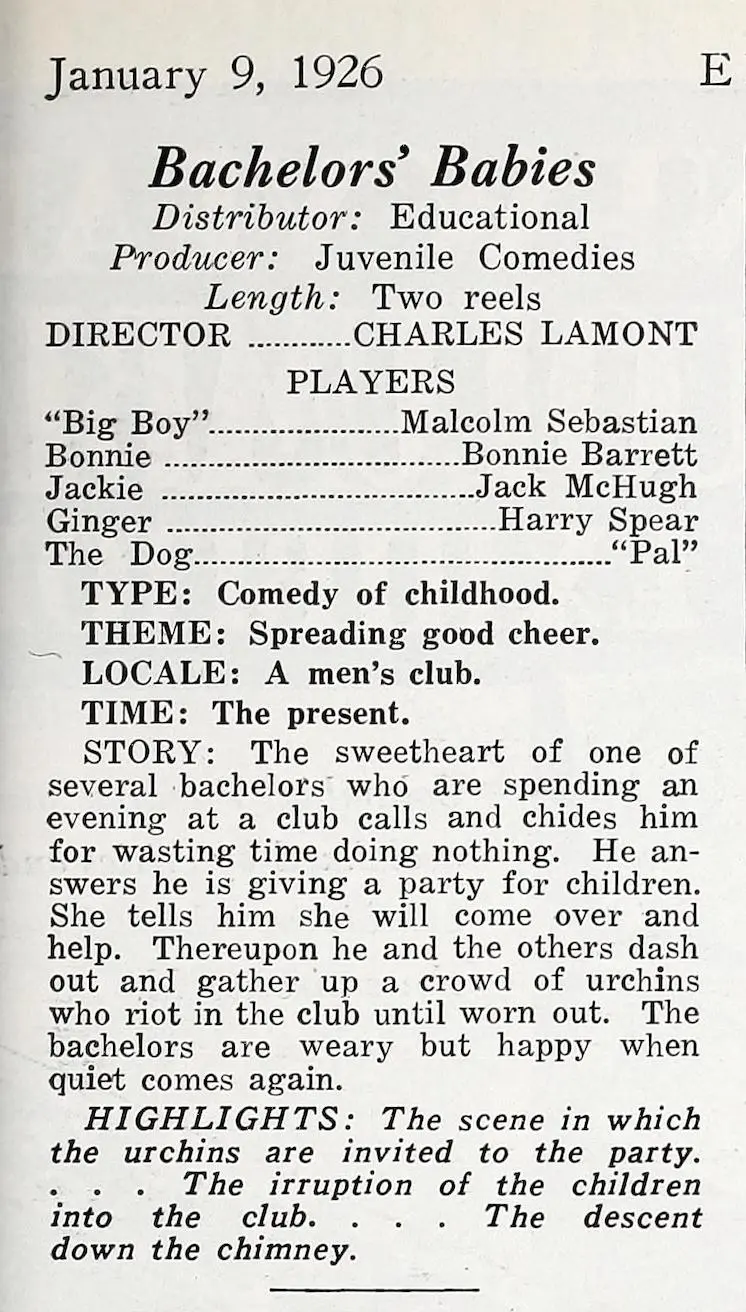
Bachelors' Babies is less a film and more a controlled explosion. Produced by Educational Pictures, a studio that specialized in short-form comedy, the film leans heavily into the 'Big Boy' brand of humor. Malcolm Sebastian, known as Big Boy, was a staple of the era, and here he functions as a tiny agent of entropy. Unlike the more sentimental child stars of the period, Big Boy’s appeal was his ability to look completely innocent while causing maximum financial damage to the adults around him.
The premise—a married man pretending to be a bachelor—is a classic farce setup, but the film quickly abandons the psychological tension of the lie for the physical reality of a trashed set. Jackie McHugh plays the protagonist with a wide-eyed desperation that feels genuinely stressed. When his wife enters the frame, the stakes are supposedly high, but the audience is already too distracted by the kids and the dog to care about the sanctity of his marriage.
If you are looking for a historical curiosity that showcases the transition from early silent gags to more sophisticated ensemble slapstick, then yes, it is worth your time. It offers a fascinating look at the 'Juvenile Comedy' subgenre that was immensely popular before the advent of the Hays Code. The film captures a specific kind of American humor that valued destruction over dialogue.
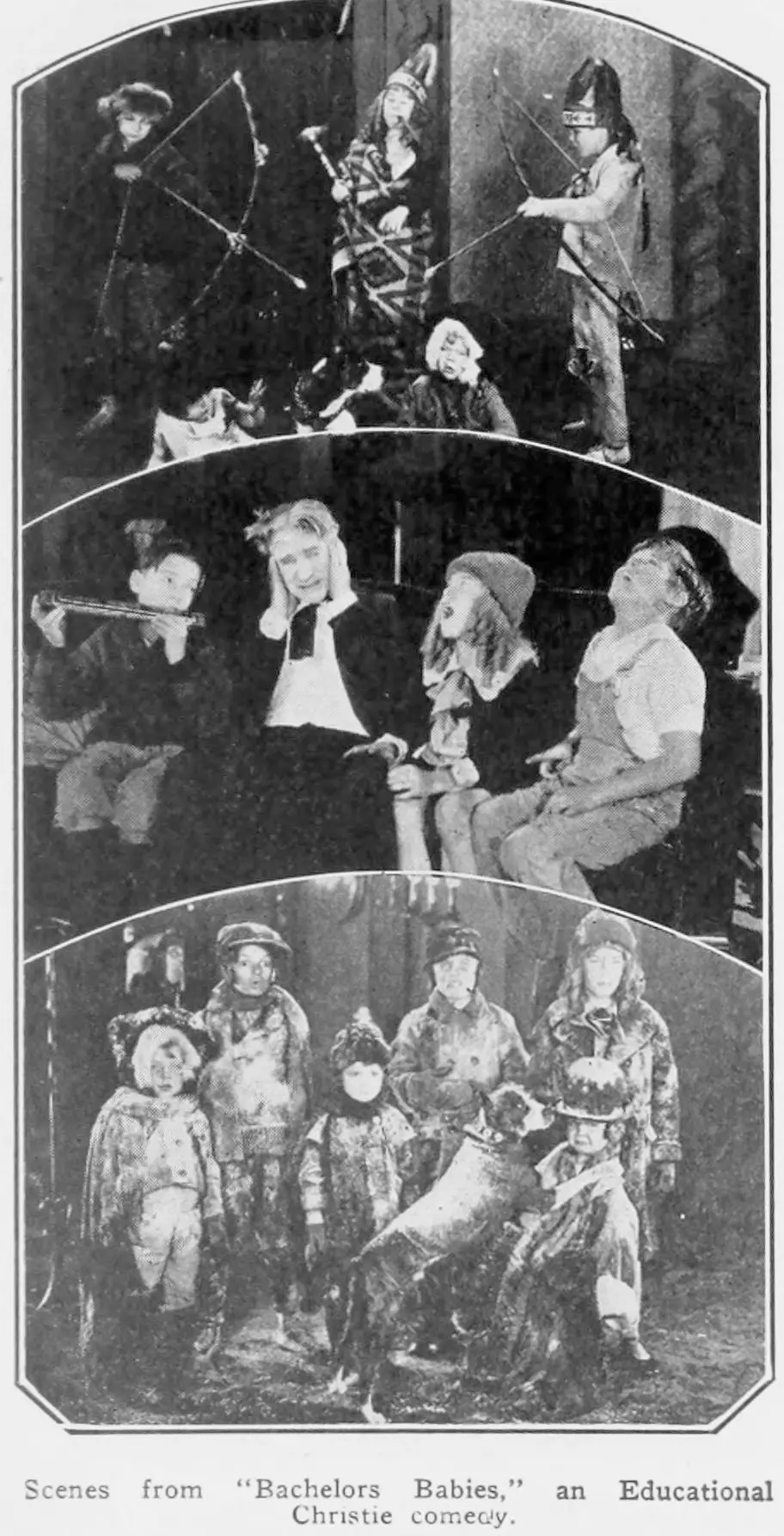
However, if you require character development or a plot that doesn't rely on four men getting stuck in a chimney, you might find it exhausting. It’s loud for a silent film. The visual noise is constant. It lacks the poetic grace of a Keaton or the pathos of a Chaplin, choosing instead to hit the audience over the head with a metaphorical (and sometimes literal) sack of toys.
The standout element of the film is undoubtedly the interaction between the children and Pal the Wonder Dog. Pal, who would later go on to be the ancestor of the famous Pete the Pup, is a scene-stealer. There is a specific moment where the dog assists in the dismantling of the Christmas tree that is choreographed with more precision than most modern action sequences. It’s not just a dog running around; it’s a dog performing a scripted demolition.
Compared to other films of the era like Puppy Love, which leaned into the 'cute' factor, Bachelors' Babies is surprisingly mean-spirited in its comedy. It enjoys the suffering of the bachelors. When the four Santas descend the chimney only to have the porter light a fire, the film crosses from holiday cheer into a sort of surrealist nightmare. The image of four bearded men scrambling out of a fireplace in a cloud of smoke is one of the most memorable, albeit bizarre, images in 1920s short cinema.
The pacing of Bachelors' Babies is relentless. At a time when feature films like Lady Windermere's Fan were experimenting with slow-burn social tension, these shorts were doing the opposite. The editing is quick, almost jagged, designed to keep the viewer from questioning the absurdity of the plot. The lighting is flat, typical for the 'Educational' house style, but it serves the purpose of making every piece of debris visible as the orphans tear the club apart.
One surprising observation: the film actually functions as a subtle critique of the 'Bachelor Club' culture of the 1920s. These clubs were bastions of male exclusivity, and seeing them literally torn down by children and a dog feels like a deliberate subversion. It’s a domestic invasion of a space specifically designed to exclude the domestic. This gives the film a layer of depth that isn't immediately apparent through the soot and the screaming (implied) kids.
Pros:
Cons:
Bachelors' Babies is a fascinating, if somewhat exhausting, example of 1920s comedy. It works. But it’s flawed. It captures a moment in time when the American public was obsessed with the 'naughty child' archetype, and Malcolm Sebastian was the king of that hill. While it lacks the narrative complexity of something like The Frame-Up, it makes up for it with pure, unadulterated energy.
Pal the Wonder Dog is a better actor than half the human cast, and his presence alone elevates the film from a standard short to a technical curiosity. If you can handle the sight of a Christmas tree being systematically destroyed by a group of toddlers, you will find much to enjoy here. It’s a reminder that even a century ago, the holidays were just as stressful, messy, and loud as they are today. Just don't expect a moral lesson at the end; this film is about the joy of the mess.
IMDb —
1933
Community
Log in to comment.