DbcultAccessing Vault...
Cult Review
Senior Film Conservator
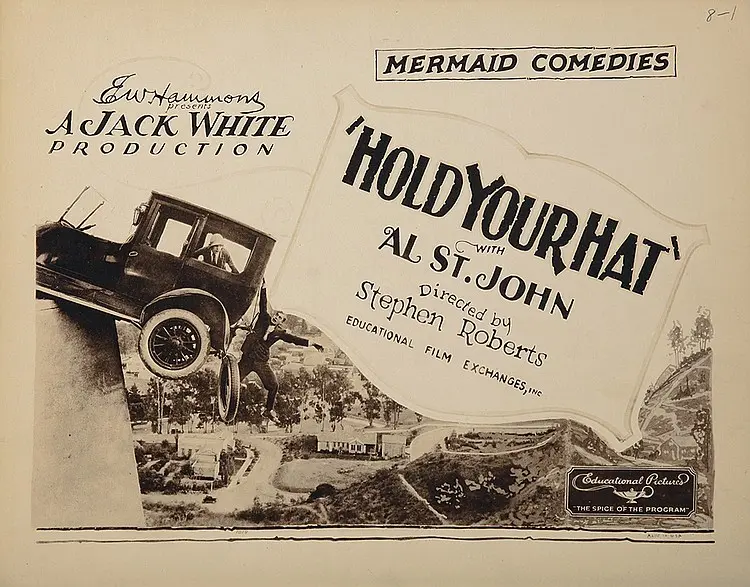
Is Hold Your Hat worth watching today? Short answer: Yes, but only if you view it as a masterclass in physical geometry rather than a narrative work. It is a film for those who appreciate the raw, unpolished kinetic energy of early silent shorts, but it will certainly frustrate anyone looking for character depth or a logical resolution.
This film serves as a fascinating bridge between the crude pie-throwing antics of early cinema and the sophisticated stunt-work that would later define the mid-1920s. It captures a moment in time where the automobile was still a source of both wonder and terror, using the vehicle as a character in its own right.
1) This film works because it utilizes the physical limitations of 1920s technology to create genuine, palm-sweating tension during the cliffside sequence.
2) This film fails because the narrative pivot—where parents suddenly approve of a marriage because of a car accident—is lazy, even by the standards of silent-era tropes.
3) You should watch it if you want to see Al St. John at the peak of his athletic prowess, performing stunts that would make modern insurance adjusters weep.
In Hold Your Hat, the elopement isn't a romantic gesture; it’s a tactical maneuver. The film opens with a frenetic energy that rarely lets up. Unlike the more deliberate pacing found in Adam and Eva, this short relies on the constant threat of momentum. The car is not just a tool for escape; it is a chaotic force that the characters barely control.
The cinematography, while primitive, is remarkably effective at capturing the scale of the landscape. When the car reaches the precipice, the camera angles are chosen to emphasize the verticality of the threat. This wasn't a studio set; this was real steel on real dirt. The lack of safety nets is palpable. It creates a visceral reaction that modern CGI simply cannot replicate.
The chase itself is a rhythmic exercise. Directorially, the film understands that slapstick is about the interval between the setup and the payoff. Every time the parents gain ground, a new obstacle—be it a bump in the road or a mechanical failure—resets the tension. It’s a loop, but a thrilling one.
Al St. John remains one of the most underrated figures of the silent era. While Buster Keaton was the 'Great Stone Face' and Chaplin was the 'Little Tramp,' St. John was a rubber ball. His movements in Hold Your Hat are erratic and fascinating. He doesn't just walk; he bounces. He doesn't just fall; he collapses with a terrifying fluidity.
In the scene where he saves the girl from the dangling car, his physicality is the movie’s strongest asset. There is a moment where he pivots his entire body weight to counterbalance the vehicle. It is a feat of strength disguised as a gag. This isn't the refined grace of The Bohemian Dancer; this is raw, muscular comedy.
Otto Fries and Eva Thatcher provide the necessary bulk to counter St. John’s agility. Their performances as the parents are broad, even for 1920. They represent the 'old world'—static, angry, and reactionary—while the young couple represents the 'new world'—fast, mobile, and reckless. The conflict is generational, played out through gear shifts and brake levers.
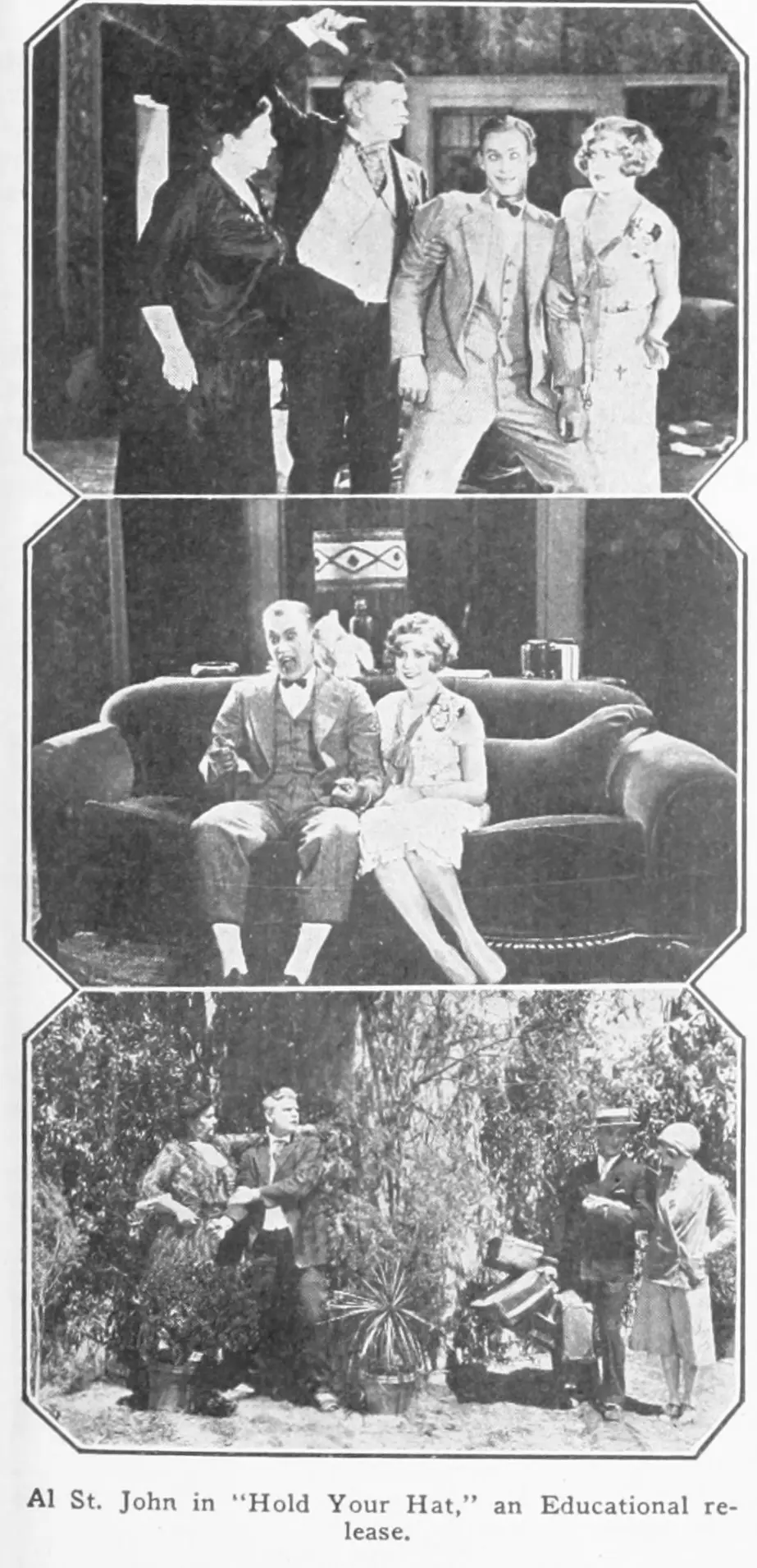
Hold Your Hat is worth watching if you are a student of film history or a fan of high-stakes physical comedy. If you enjoy seeing how early filmmakers solved technical problems without the benefit of modern editing, this film is a treasure. However, if you require a plot that makes sense or characters with internal lives, you should look elsewhere.
The film is a short, punchy experience. It doesn't overstay its welcome. At a time when films like Humoresque were exploring deep sentimentality, Hold Your Hat was content to be a thrill ride. It is the 1920 equivalent of an action-movie set piece expanded into a full narrative.
The use of the 'cliffhanger' literalizes the metaphorical stakes of the elopement. In films like The River's End, the danger is often environmental and external. Here, the danger is a direct result of the characters' choices. The car rolling to the edge is the physical manifestation of their social instability.
There is a brutal simplicity to the climax. The car stops. The girl screams. The man acts. It is primal storytelling. While it lacks the sophistication of Turn About, it possesses a clarity of purpose that is often missing from more complex features. The film knows exactly what it wants to do: scare you, then make you laugh, then get out of the way.
One surprising observation is how little the 'love' between the couple actually matters. The film doesn't spend time on their romance. We don't see them whisper sweet nothings. We only see them survive together. In this world, survival is the only proof of love required.
Pros:
Cons:
When compared to other films of the period, such as Honeymoon Hardships, Hold Your Hat feels more dangerous. There is a grit to the production that suggests a smaller budget but a higher willingness to take risks. It lacks the polish of The Love Charm, but it makes up for it with sheer audacity.
It is also interesting to note the portrayal of the parents. In Infatuation, parental control is treated with a certain degree of gravity. Here, it is a joke. The father’s rage is a prop, much like the car’s steering wheel. It exists to be manipulated and eventually broken.
"The car isn't just a vehicle in Hold Your Hat; it is the physical manifestation of a crumbling social order, teetering on the edge of a new, reckless decade."
Hold Your Hat is a fascinating, if flawed, piece of cinematic history. It works. But it’s flawed. The film succeeds as a stunt showcase but fails as a narrative. It is a relic of a time when the spectacle of a car nearly falling off a mountain was enough to justify the price of admission.
If you can overlook the dated gender roles and the lightning-fast logic of the ending, there is a lot to admire here. Al St. John’s energy is infectious, and the film’s commitment to its central gag is admirable. It’s a 15-minute adrenaline shot that reminds us that before there were superheroes, there were men in hats doing very dangerous things with very bad brakes.
IMDb 3
1934
Community
Log in to comment.