DbcultAccessing Vault...
7/10
Senior Film Conservator
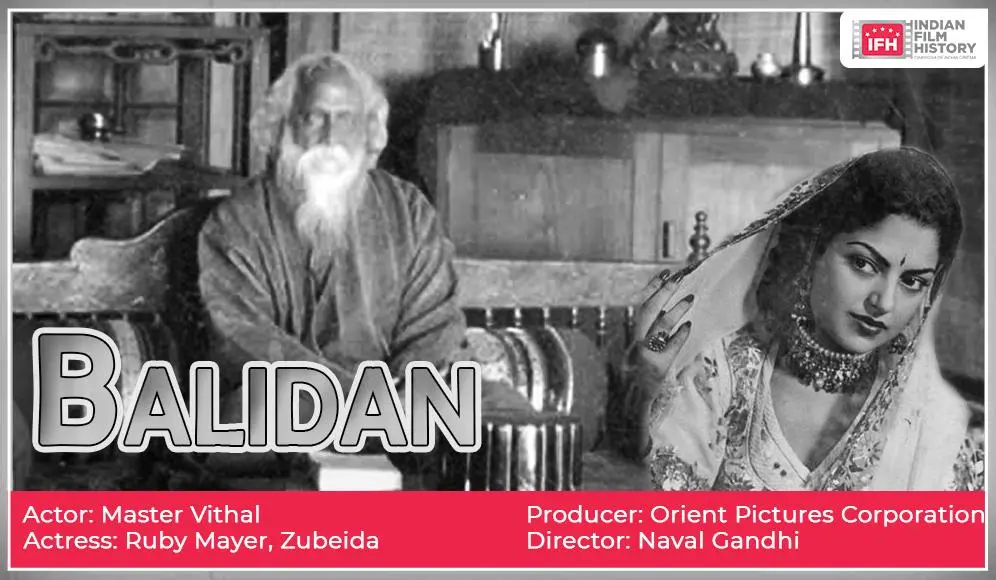
A definitive 7/10 rating for a film that redefined the boundaries of cult cinema. Balidan remains a cornerstone of transgressive art.
Should you invest your time in a silent film from 1927 like Balidan? Short answer: Yes, but only if you value intellectual weight over technical polish. This is a film for the patient viewer who wants to see the exact moment Indian cinema began to grapple with social reform. It is absolutely not for those who require fast-paced editing or modern high-definition clarity.
Balidan works because it refuses to treat its central conflict as a simple battle between good and evil. Instead, it frames the struggle between King Govinda and the priest Raghupati as a clash of two valid, albeit incompatible, worldviews. This film fails because the limitations of silent-era acting occasionally push the performances into a territory of theatricality that can feel jarring to a modern eye. You should watch it if you have an interest in how Rabindranath Tagore’s literary themes of humanism were first translated into the visual medium of film.
Is this film a significant piece of cinematic history? Yes. Balidan is a landmark because it addresses the friction between religious orthodoxy and progressive governance. It provides a blueprint for the social dramas that would define Indian cinema for decades to come.
The heart of Balidan is the intellectual and spiritual warfare between the King and the Priest. This isn't just a political spat; it is a battle for the soul of a nation. King Govinda represents the dawn of the modern era, where empathy and logic begin to override ancient, bloody rituals. Raghupati, played with a terrifying stillness, represents the old guard that believes the gods are only satisfied through sacrifice.
Consider the scene where Govinda first announces the ban. The camera lingers on the faces of the temple devotees. You can see the shift from confusion to outright fear. They aren't just losing a ritual; they are losing their sense of security. The film captures this beautifully. It shows that reform isn't just about changing a law; it's about managing the terror of the people who believe that law protects them from divine wrath.
Raghupati’s response is chilling. He doesn't just argue; he plots. He uses the Queen’s infertility as a weapon, suggesting that her lack of an heir is a direct punishment for the King’s heresy. This is a sophisticated narrative beat for 1927. It highlights how institutional power uses personal trauma to maintain its grip. It makes the priest more than a villain; he is a manifestation of a system that survives on fear.
Sulochana (Ruby Mayer) as Queen Gunavati delivers a performance that is surprisingly restrained for the era. While many of her contemporaries were still using the broad, sweeping gestures of the Parsi theater, Sulochana uses her eyes to convey the Queen's desperation. Her character is the most tragic in the film. She is a woman caught between her love for her husband and her terror of the goddess she has been taught to fear since birth.
Zubeida, as the beggar girl Aparna, provides the film’s moral compass. Her grief over her lost goat is the catalyst that moves the King to action. In a film filled with kings and priests, the most powerful voice belongs to the person with the least social standing. This is a classic Tagorean theme, and the film handles it with a sincerity that avoids being overly sentimental. Unlike the characters in The Girl and the Graft, who often feel like caricatures, the characters in Balidan have a psychological depth that was rare for the time.
The technical aspects, while primitive by today's standards, are effective. The use of shadows in the temple scenes creates an atmosphere of oppressive sanctity. You can almost smell the incense and the blood. The cinematography doesn't just record the action; it sets a mood of impending doom. It reminds me of the atmospheric tension found in The Return of Peter Grimm, where the environment itself feels like a character.
For the modern viewer, Balidan is an essential watch if you want to understand the roots of social realism in cinema. It is a film that asks difficult questions about the cost of progress. While it lacks the visual spectacle of something like The Napoleonic Epics, it compensates with a narrative gravity that is rare. It is a slow burn, but the payoff—the final confrontation between the King and the Priest—is genuinely powerful. It is a testament to the fact that a good story, well-told, transcends the limitations of its technology.
Pros:
- A sophisticated adaptation of Rabindranath Tagore’s work.
- Strong, nuanced performances from Sulochana and Zubeida.
- Atmospheric cinematography that captures the dread of the temple.
- A timeless theme that remains relevant in modern discourse.
Cons:
- The silent film format may be a barrier for casual viewers.
- Some of the supporting performances are overly theatrical.
- The print quality (depending on the version you find) can be quite poor.
Naval Gandhi’s direction in Balidan is surprisingly modern in its focus on character dynamics. He doesn't rely on massive sets or thousands of extras. Instead, he focuses on the geometry of power. The King is often framed against open spaces and light, symbolizing his enlightenment. In contrast, Raghupati is frequently tucked into corners, surrounded by the heavy, dark stone of the temple.
There is a specific moment where the King stands alone in the temple courtyard after the ban. The camera pulls back, making him look small against the ancient architecture. It’s a visual way of saying that while he is the King, he is fighting a system that has been standing for centuries. This kind of visual storytelling is what makes Balidan more than just a filmed play. It is cinema in its purest form.
The pacing, however, is where the film shows its age. There are sequences involving the temple rituals that go on for far too long. While they add to the atmosphere, they don't always move the plot forward. Compared to the tighter narrative of Bowled Over, Balidan can feel like it's taking the long way around to reach its destination. But for those who appreciate the journey, the detours into the lives of the common people of Tippera are worth the time.
One thing that struck me about Balidan is how it treats the goddess Kali. She isn't depicted as an evil entity. Instead, she is a silent witness. The film suggests that the goddess doesn't demand blood; it is the men who claim to speak for her who do. This is a bold stance for a film made in 1927 India. It shifts the blame from the divine to the human, making the priest’s actions a form of political manipulation rather than religious duty. It’s a cynical but deeply human observation that elevates the film above a simple moral fable.
Balidan is a difficult, demanding, and ultimately rewarding piece of cinema. It doesn't offer easy answers, and it doesn't shy away from the darkness of its subject matter. It is a film about the pain of growth and the cost of standing up to tradition. It is flawed. It is old. But it is vital. If you want to see where the soul of Indian cinema was born, you need to watch this film. It is a reminder that even in silence, a powerful message can be heard loud and clear.
"The King bans the blood of beasts, but the Priest demands the blood of the King. In this silence, the true sacrifice is the innocence of a nation."
IMDb 6.9
1933
Community
Log in to comment.