DbcultAccessing Vault...
Cult Review
Senior Film Conservator
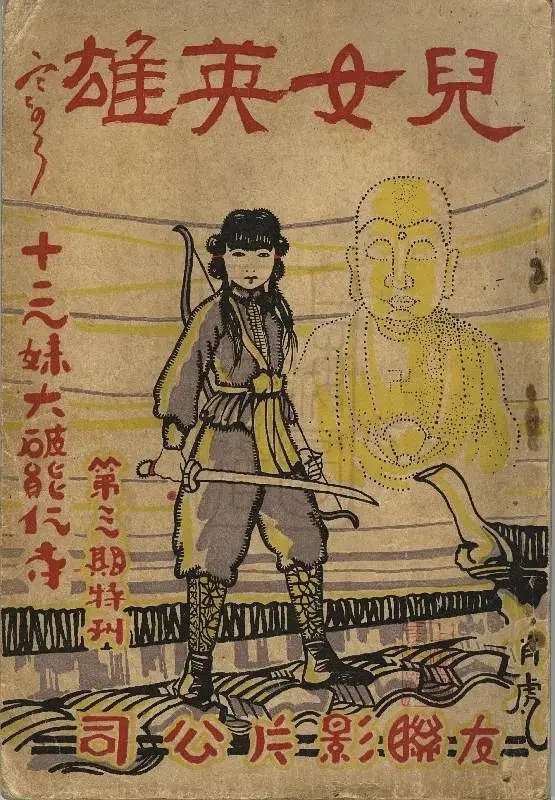
Should you invest your time in this silent-era martial arts relic? Short answer: Yes, but only if you value the raw DNA of action cinema over modern technical polish. This film is an essential artifact for those who want to see where the 'warrior woman' archetype truly began, though it will likely test the patience of viewers used to contemporary pacing.
This film is for the cinematic historian and the Wuxia obsessive who wants to trace the lineage of the genre back to its roots. It is definitively not for those who require high-definition spectacle or fast-cut editing to stay engaged.
1) This film works because it treats its female lead, the Thirteenth Sister, with a level of tactical respect that was decades ahead of its time.
2) This film fails because the narrative transitions between the rescue plot and the secondary hero subplots are jarringly clunky, even by the standards of 1920s serial storytelling.
3) You should watch it if you want to understand how early Chinese cinema used traditional literature to comment on contemporary social lawlessness.
Watching Ernu yingxiong di yi ji in the 21st century is akin to reading a primary source document that happens to feature sword fights. It is worth watching because it captures a moment of transition in global film history. While Western audiences were watching Hypocrites or religious epics like Christus, Chinese filmmakers were perfecting the art of the physical spectacle grounded in folk heroism.
The film offers a window into a world where the lines between stage performance and cinematic language were still being drawn. The choreography isn't the wire-work of the 90s; it is grounded, rhythmic, and surprisingly brutal. If you can look past the flickering frame rate, you see a masterclass in screen presence from Yan-Fu Yip.
One of the most striking elements of the film is its portrayal of the villains. The 'depraved monks' are not just generic bad guys; they represent a terrifying subversion of social safety. In a scene where the Thirteenth Sister first infiltrates the monastery, the contrast between the incense-heavy atmosphere and the hidden cells for kidnapped women is genuinely chilling.
This thematic darkness gives the film a weight that many of its contemporaries lacked. It isn't just about 'good vs. evil.' It is about the failure of institutions. When the heroes finally strike back, it feels less like a triumph of law and more like a necessary act of survival in a broken world. This grit is something that many modern Wuxia films lose in their pursuit of beauty.
Yan-Fu Yip does not play the Thirteenth Sister as a delicate flower forced to fight. She plays her as a professional. There is a specific moment during the courtyard battle where she adjusts her grip on her blade while eyeing three opponents. It is a small, human gesture that conveys more character than ten minutes of dialogue could. She possesses a stillness that anchors the chaotic action around her.
Comparing her performance to the theatricality found in The Ghosts of Yesterday, one notices a distinct lack of 'over-acting.' She understands that on film, the eyes do the heavy lifting. The supporting cast, particularly Juefei Shi, provides the necessary physical energy, but the film lives and dies by Yip’s ability to sell the weight of her sword.
The directing by Kang Wen and Bibo Xu utilizes the limitations of the era to create a sense of claustrophobia. The monastery interiors are shot with deep shadows that hide the corners of the frame, making the Thirteenth Sister’s sudden appearances feel almost supernatural. It’s a primitive form of horror-action that works surprisingly well.
While it lacks the experimental flair of something like Lunnaya krasavitsa, it excels in spatial clarity. You always know where the characters are in relation to each other during a fight—a feat many modern directors fail to achieve. The camera is often static, but the blocking of the actors within the frame creates a dynamic sense of movement.
Let's be honest: the pacing is a slog. Like many early serials such as The Tiger Band, the film suffers from a repetitive structure. The heroes plan, they fight, they regroup, they fight again. There is very little 'down time' that isn't used for exposition through title cards.
However, this repetition serves a purpose. It builds a sense of overwhelming odds. By the time the final confrontation arrives, the audience feels the exhaustion of the characters. It’s not an efficient way to tell a story, but it is an effective way to build an atmosphere of relentless struggle.
Pros:
- Groundbreaking representation of a female warrior.
- Visceral, practical stunt work that feels dangerous.
- Strong thematic commentary on religious hypocrisy.
- Excellent use of shadows and set design to build tension.
Cons:
- The print quality of surviving versions is often poor.
- Secondary characters are largely interchangeable.
- The musical accompaniment (if present) often clashes with the grit of the scenes.
It is fascinating to note that while Western films like Madame Doesn't Want Children were exploring domestic social shifts, Chinese cinema was using the Wuxia genre to explore similar themes of autonomy. The Thirteenth Sister is essentially a woman who refuses to be governed by the domestic or the patriarchal. She is an outlier. Her sword is her independence.
This film also shares a strange DNA with Nurse Marjorie in its focus on a woman entering a 'man's world' to fix what is broken, though the Thirteenth Sister does so with a blade rather than social reform. It’s a universal theme dressed in very specific, cultural garb.
Ernu yingxiong di yi ji is a difficult, beautiful, and vital piece of cinema. It isn't 'fun' in the way a modern blockbuster is fun. It is demanding. It asks you to respect its age and its context. But the rewards are there for those who look. It is a film that proved, nearly a century ago, that a woman leading a pack of heroes wasn't just a novelty—it was a box-office powerhouse.
Is it a perfect movie? No. It is flawed. But its flaws are those of a pioneer. Like Breaking Through, it is about the struggle to define a new kind of hero. If you care about the history of the image, you cannot ignore this film. It is the rough draft of every great action movie that followed.
"The Thirteenth Sister doesn't just fight monks; she fights the very idea that a woman needs permission to be a hero."
Ultimately, Ernu yingxiong di yi ji stands as a testament to the enduring power of the Wuxia spirit. It is a bridge between the oral traditions of the past and the visual language of the future. While it may lack the polish of Im weißen Rößl or the narrative complexity of Péntek este, it possesses a raw, unvarnished energy that is impossible to fake. It is a foundational stone in the house of martial arts cinema. Watch it for the history; stay for the defiance.
IMDb —
1921
Community
Log in to comment.