DbcultAccessing Vault...
6.6/10
Senior Film Conservator
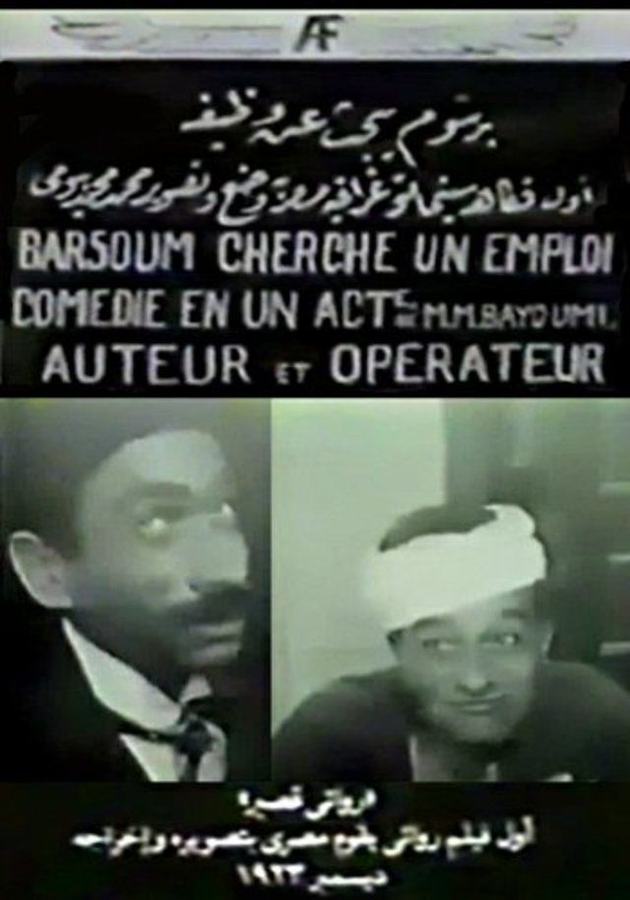
A definitive 6.6/10 rating for a film that redefined the boundaries of cult cinema. Barsoum Looking for a Job remains a cornerstone of transgressive art.
In the annals of early cinematic history, certain films emerge not just as artistic endeavors but as crucial historical artifacts, capturing the zeitgeist of their era with unparalleled clarity. Mohamed Bayoumi's 1923 masterpiece, 'Barsoum Looking for a Job' (slug: barsoum-looking-for-a-job), is precisely such a work. Far more than a simple narrative, this film stands as a profound testament to the social and political currents sweeping through Egypt in the wake of the 1919 Revolution. It is a cinematic plea, a visual sermon delivered with remarkable foresight and an unwavering commitment to national unity, particularly the critical theme of tolerance between Muslims and Christians. Bayoumi, a pioneering figure in Egyptian cinema, wielded the nascent power of the moving image to articulate a message that resonated deeply with the aspirations of a nation striving for independence and self-definition.
To truly appreciate the gravitas of 'Barsoum Looking for a Job', one must first immerse oneself in the tumultuous backdrop of Egypt in 1919. The revolution against British occupation was not merely a political uprising; it was a societal metamorphosis, a moment when the disparate threads of Egyptian identity began to weave into a cohesive national fabric. A cornerstone of this nascent nationalism was the rallying cry of Muslim-Christian unity, a potent slogan championed by the charismatic leader Saad Zaghloul. This wasn't a superficial political alliance; it was a deeply felt conviction that only through collective solidarity, transcending religious divisions, could Egypt achieve true liberation and self-determination. The film's brilliance lies in its ability to encapsulate this complex socio-political ideal within a concise, yet extraordinarily impactful, visual idiom.
Bayoumi, with the limited technical means of early cinema, managed to craft a scene of monumental symbolic weight. The image of Barsoum, presumably a Christian man given his name, praying before a photograph of Saint Mary, immediately establishes a specific confessional identity. However, the true genius of the composition unfolds beneath this devotional act. The deliberate placement of the crescent, a universal symbol for Islam, intertwined with the cross, the emblem of Christianity, directly below the image of the Virgin Mary, is an audacious and powerful statement. This visual synthesis unequivocally declares that religious difference need not be a source of division but can, and indeed must, coexist harmoniously within the national consciousness. To further cement this message, the photograph of Saad Zaghloul, the embodiment of the revolution itself, presides over this interfaith tableau, cementing the idea that national aspiration and religious harmony are inextricably linked.
Considering the era, Bayoumi's direction demonstrates a remarkable understanding of cinematic semiotics. While we lack extensive plot details beyond the central theme of tolerance and Barsoum's job search, the film's core visual message speaks volumes. It’s a testament to the power of silent cinema, where gestures, mise-en-scène, and symbolic imagery carried the narrative weight often conveyed by dialogue in later eras. The very act of Barsoum 'looking for a job' in this context can be interpreted not merely as a personal struggle for livelihood, but as a metaphor for the nation itself searching for its place, its identity, and its future. The film subtly suggests that economic and social stability for individuals, and by extension for the nation, is contingent upon this foundational unity. Disunity, by implication, would lead to societal fragmentation and impede progress. This layered interpretation elevates the seemingly mundane act of job-seeking to a profound national allegory.
The performances, even in the absence of spoken dialogue, would have been crucial in conveying the film's emotional resonance. Actors like Sayed Mustafa, Bechara Wakim, Victoria Kohin, Muhammad Yousuf, Adel Hameed, Abdel Hamid Zaki, and Fardous Hassan, all stalwarts of early Egyptian theatre and cinema, would have relied on exaggerated facial expressions, body language, and carefully choreographed movements to communicate character and emotion. While specific details of their individual contributions are sparse in historical records, their collective presence would have lent authenticity and gravitas to Bayoumi's vision. Bechara Wakim, a renowned comedic talent, might have brought a touch of relatable humanity or even subtle satire to the societal challenges, while others would have anchored the more serious, contemplative aspects of the film's message. The ensemble’s ability to project sincerity and conviction would have been paramount in making the film's plea for tolerance genuinely impactful to its contemporary audience.
Mohamed Bayoumi’s contribution to Egyptian cinema cannot be overstated. He was not just a filmmaker but a visionary who understood the potential of this new art form to shape national consciousness. At a time when cinema was still in its infancy globally, and certainly in Egypt, Bayoumi was experimenting with its narrative and symbolic capabilities. His work stands in stark contrast to many contemporary productions from other parts of the world, which often focused on slapstick comedy or melodramatic narratives. For instance, while films like A Fool and His Money or His Matrimonial Moans from the same era might have offered entertainment through comedic misadventures, Bayoumi was using the medium to address pressing societal concerns with a gravitas that set him apart. His decision to tackle such a sensitive and vital political theme speaks volumes about his artistic courage and commitment to social commentary.
The technical aspects, though rudimentary by today's standards, would have been cutting-edge for 1923. The use of natural light, the framing of shots, and the editing rhythm would all have contributed to the film’s overall effect. One can imagine the deliberate pacing designed to allow the audience to absorb the symbolic weight of each frame, particularly the iconic prayer scene. Unlike the rapid-fire editing of modern cinema, early films often employed longer takes, allowing for a more contemplative viewing experience. This slower rhythm would have amplified the film's message, giving the audience ample time to reflect on the profound implications of the unity depicted.
The theme of unity in the face of division is, of course, timeless. While 'Barsoum Looking for a Job' is deeply rooted in its specific historical context, its core message transcends geographical and temporal boundaries. One can draw parallels to other films that grapple with national identity or social cohesion, even if from different cultural landscapes or dealing with different types of conflict. For example, a film like The Challenge (1922) might explore different facets of societal struggle, but the underlying drive for a resolution that benefits the collective often remains a powerful cinematic theme. Similarly, while Lebenswogen (Waves of Life) might tackle personal dramas, Bayoumi's film elevates the personal to the national, demonstrating how individual fates are intertwined with the broader societal fabric. The film's appeal is not just historical curiosity; it is a continued reminder of the fragility and necessity of interfaith harmony.
The film serves as a crucial document for understanding the birth of Egyptian cinema as a tool for social commentary and nation-building. It represents a bold step away from mere entertainment towards cinema as a powerful medium for public discourse and political messaging. This was a nascent era for filmmaking globally; many productions were still exploring the basic grammar of the moving image. Bayoumi, however, was already leveraging its unique capacity to convey complex ideas and emotions visually. His choice of subject matter, rather than focusing on simpler, more universally accessible themes like adventure, as seen in The Battle of Trafalgar, or mystery, like Velvet Fingers, underscores his profound belief in cinema's potential as a cultural and political force.
Despite its profound significance, 'Barsoum Looking for a Job', like many early non-Western films, often remains an obscure footnote in broader cinematic histories. This is a disservice, for it offers invaluable insights into the global development of film and its diverse applications. It reminds us that cinema was not solely a Western phenomenon, but a universal language adopted and adapted by cultures worldwide to express their unique narratives and concerns. The film's straightforward yet deeply symbolic narrative, crafted by Mohamed Bayoumi, with contributions from a dedicated cast including Sayed Mustafa and Fardous Hassan, represents a moment of audacious creativity and political courage in Egyptian cultural history.
The scarcity of plot details beyond its central symbolic scene invites contemplation rather than providing a rigid narrative structure. This ambiguity allows the audience to project their understanding of the 1919 Revolution and its ideals onto Barsoum's personal quest. Is his 'job search' literal, representing the economic hardships faced by many Egyptians, or is it a broader search for national purpose and identity? The film’s genius lies in its capacity to accommodate both interpretations, making it resonate on multiple levels. It’s a subtle masterclass in how to use nascent cinematic techniques to convey complex socio-political messages without resorting to overt didacticism. The very act of a Christian character, Barsoum, embodying the message of national unity, further reinforces the film’s inclusive stance, making it a truly pioneering work of advocacy.
In conclusion, 'Barsoum Looking for a Job' is far more than a historical curiosity; it is a vibrant, living testament to the power of cinema as a vehicle for social change and national cohesion. Its iconic scene, depicting the fusion of religious symbols under the watchful eye of a revolutionary leader, remains as potent and relevant today as it was a century ago. Mohamed Bayoumi did not just make a film; he crafted a visual anthem for a nation, a timeless appeal for tolerance that continues to echo through the corridors of history. For any student of cinema, history, or political science, this film offers an indispensable window into a pivotal moment in Egypt's journey and a profound example of how art can shape, reflect, and inspire societal ideals. It is a film that demands rediscovery and sustained scholarly attention, ensuring its rightful place not just in Egyptian cinema, but in the broader tapestry of global film history. Its message of unity, articulated with such clarity and conviction in the nascent years of cinema, serves as a powerful reminder of the enduring human aspiration for harmony and collective progress.
IMDb 5.9
1936
Community
Log in to comment.