DbcultAccessing Vault...
Cult Review
Senior Film Conservator
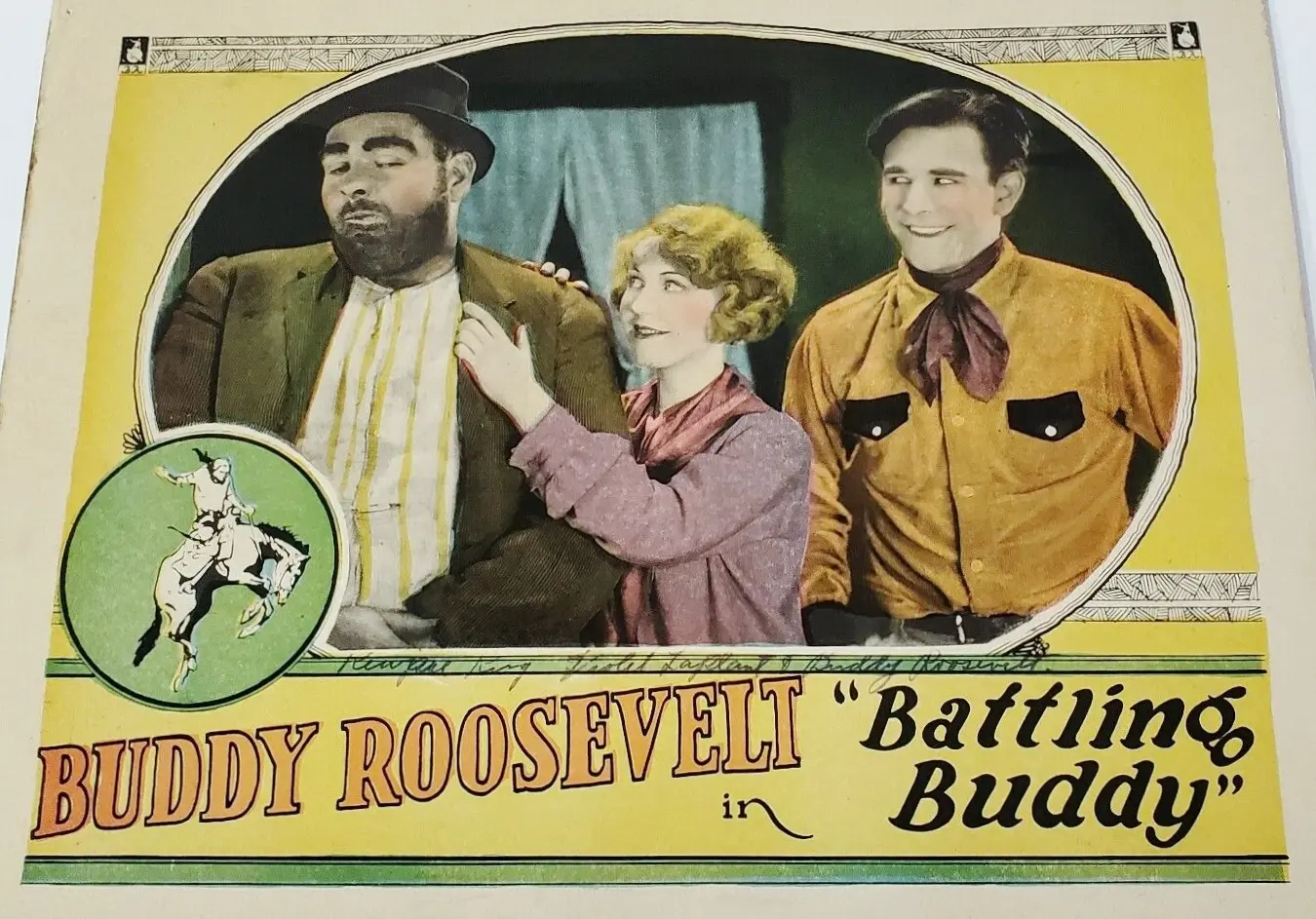
In the annals of silent cinema, where the grand vistas of the American West often served as a canvas for tales of heroism, betrayal, and redemption, Battling Buddy emerges as a quintessential example of the genre’s enduring allure. This 1924 cinematic endeavor, spearheaded by the dynamic Buddy Roosevelt, encapsulates the raw energy and straightforward narrative appeal that defined so many of its contemporaries. It’s a film that, despite the passage of nearly a century, still resonates with a certain primal charm, inviting viewers into a world where justice is hard-won and villains invariably receive their just deserts. The silent Western, in its purest form, often relied on exaggerated gestures and clear-cut moral dichotomies to convey its story, and Battling Buddy delivers on all fronts, crafting a compelling drama against a backdrop of rugged beauty.
At its heart, the narrative of Battling Buddy is a classic tale of usurpation and vindication. Buddy West, portrayed with an earnest conviction by Buddy Roosevelt himself, inherits a sprawling ranch, a legacy that should secure his future. However, a treacherous clause in the will, a device frequently employed to propel silent era melodramas, stipulates a perilous condition: should Buddy be deemed incompetent, the entirety of the estate will revert to the ranch foreman, Pete Hall. This legal loophole, a veritable Pandora's Box, is swiftly exploited by Hall, portrayed by William Lowery with a suitably sinister mien. Hall's machinations are swift and ruthless, orchestrating Buddy's wrongful commitment to an asylum, thereby setting the stage for the film's central conflict. It’s a plot point that echoes the dramatic tension found in other silent films where inheritance and familial disputes fuel the narrative, such as Family Affairs or even the more psychological depths explored in Revelation, albeit with a distinctly Western flavor.
The brilliance of Roosevelt’s performance lies not just in his athletic prowess, but in his ability to convey Buddy West’s unwavering spirit through sheer physicality and expressive pantomime. Trapped within the confines of the asylum, Buddy’s resilience shines through. His escape is not merely a plot device but a testament to his character’s indomitable will, a raw surge of primal energy that defies the injustice heaped upon him. This desperate flight from institutionalization is depicted with a visceral urgency, highlighting the vulnerability and determination of the protagonist. It’s a moment that distinguishes Buddy from a mere rancher, elevating him to a symbol of righteous defiance against overwhelming odds. The silent film medium, without dialogue, relied heavily on such visual storytelling, and Roosevelt’s movements, his expressions, speak volumes, crafting a hero who is both relatable in his plight and aspirational in his resolve.
Upon his return, Buddy West is a man transformed, a specter of vengeance seeking to reclaim his sullied reputation and the legacy that was unjustly seized. His mission, however, extends beyond mere self-vindication. He discovers that his uncle's daughter, Dorothy Parker, played with a delicate yet determined grace by Violet La Plante, has also fallen victim to Hall’s tyranny, held captive by the foreman and his nefarious henchmen. La Plante’s portrayal of Dorothy is crucial; she is not merely a damsel in distress but a catalyst for Buddy’s renewed determination. Her predicament adds a layer of emotional stakes to the already tense narrative, transforming Buddy’s quest from a personal vendetta into a broader fight for justice and liberation. The dynamic between Buddy and Dorothy, though largely conveyed through longing glances and desperate gestures in the silent era tradition, forms the romantic core of the film, providing a tender counterpoint to the rugged action.
William Lowery, as the villainous Pete Hall, embodies the archetype of the conniving antagonist with chilling effectiveness. His performance is a masterclass in silent film villainy, relying on exaggerated sneers, furtive glances, and a general air of malevolence that leaves no doubt as to his nefarious intentions. Hall is not merely an obstacle; he is the embodiment of greed and treachery, a stark contrast to Buddy’s honorable, albeit embattled, character. The conflict between these two figures forms the bedrock of the narrative, a classic struggle between good and evil that is both timeless and universally understood. Lowery’s portrayal ensures that Hall is a truly formidable foe, making Buddy’s eventual triumph all the more satisfying. The presence of such a clear-cut villain is a hallmark of the silent Western, providing a moral compass for the audience in an era of rapidly changing social landscapes.
The film’s action sequences, a signature element of Buddy Roosevelt’s work, are executed with a verve that belies the rudimentary technology of the era. Roosevelt, a true cowboy and stuntman, performed many of his own daring feats, lending an authenticity and excitement to the on-screen escapades. Whether it’s a thrilling horseback chase across the sprawling Western plains or a harrowing hand-to-hand combat sequence, the energy is palpable. His partnership with Pardner the Horse is particularly noteworthy, a classic man-and-horse duo that harks back to the earliest days of Westerns and adds an extra layer of charm and capability to Buddy’s character. These sequences are integral to the film’s appeal, showcasing the physical prowess that made stars like Roosevelt so captivating to audiences. In this regard, Battling Buddy stands proudly alongside other action-packed Westerns of its time, perhaps even sharing a spiritual kinship with films like Colorado or A Sagebrush Hamlet, which similarly prioritized robust physical action.
Betty Burbridge’s screenplay, while adhering to many genre conventions, weaves a surprisingly intricate plot for a silent film, maintaining suspense and momentum throughout. The narrative avoids excessive exposition, relying instead on visual cues and the actors’ expressive performances to advance the story. Her ability to craft a compelling tale of deceit, escape, and ultimate triumph within the constraints of the silent medium is commendable. The pacing is brisk, a necessary attribute for a silent film aiming to hold the audience's attention without the aid of spoken dialogue. Every intertitle, every visual cue, serves a purpose, driving the story forward with relentless efficiency. This meticulous construction ensures that the audience remains invested in Buddy’s arduous journey, from his unjust incarceration to his triumphant return, a testament to Burbridge’s skill in narrative construction.
Beyond the thrilling action and clear-cut morality, Battling Buddy touches upon themes that resonate deeply within the human experience. The struggle for justice against systemic corruption, the resilience of the human spirit in the face of adversity, and the enduring power of love and loyalty are all explored within its lean runtime. Buddy’s fight is not just for a ranch or a woman; it’s for his very identity and the restoration of order in a world thrown into chaos by greed. The film, in its own unassuming way, becomes a commentary on the fragility of legal structures when confronted by unscrupulous individuals, a reflection that perhaps finds a more dramatic, urban counterpart in films like Montmartre or the intense personal stakes of Hilde Warren und der Tod, where individuals battle overwhelming forces. The Western setting merely provides a starker, more visually dramatic backdrop for these universal human struggles.
The supporting cast, including Kewpie King and N.E. Hendrix, while perhaps not given the same depth as the leads, fulfill their roles admirably, contributing to the overall texture of the film. Their presence, whether as loyal allies or menacing henchmen, reinforces the clear delineation between the forces of good and evil that characterized much of silent era storytelling. The collective effort of the cast and crew underpins the film’s success, transforming a seemingly simple narrative into an engaging cinematic experience. Even the brief appearances, such as Charles E. Butler's, contribute to the tapestry of the ranch community, making Buddy's fight feel like a battle for the soul of the entire locale, not just his personal property.
The climax of Battling Buddy is a satisfying crescendo of action and resolution. Buddy, through sheer grit and a series of well-executed maneuvers, confronts Hall and his cohorts, ultimately prevailing against their combined might. The resolution is unambiguous: the villain is defeated, Dorothy is freed, and Buddy reclaims his rightful place, securing both his inheritance and the hand of the woman he loves. It’s a triumphant conclusion that aligns perfectly with the expectations of the genre, leaving the audience with a sense of catharsis and restored order. This kind of definitive closure was a comforting staple of early Hollywood, offering a clear moral victory after a period of intense struggle, a narrative arc also evident in films like Big Happiness or The Three Pals.
In retrospect, Battling Buddy stands as a vibrant testament to the enduring appeal of the silent Western. It’s a film that, while perhaps not lauded for groundbreaking artistic innovation, excels in delivering a straightforward, emotionally resonant story with robust action and clear character motivations. Buddy Roosevelt’s charisma and athleticism are undeniable, solidifying his place as a notable star of the era. Violet La Plante provides a compelling feminine counterpoint, and William Lowery crafts a memorable villain. For aficionados of classic cinema, and particularly those with a fondness for the untamed spirit of the early Western, Battling Buddy offers a delightful glimpse into a bygone era of filmmaking, where the power of visual storytelling reigned supreme. It’s a reminder that sometimes, the simplest stories, told with conviction and energy, are the most enduring. Its legacy lies in its unpretentious yet effective execution, capturing a moment in cinematic history when horses thundered and heroes fought not with words, but with deeds.
IMDb 5.3
1935
Community
Log in to comment.