DbcultAccessing Vault...
5/10
Senior Film Conservator
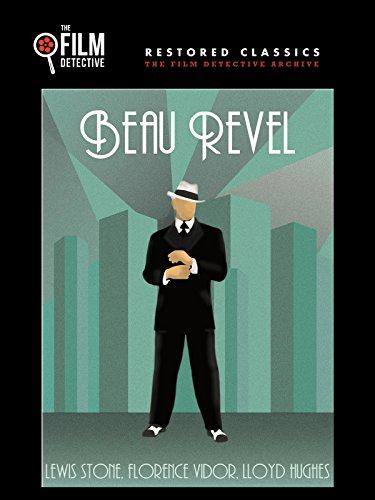
A definitive 5/10 rating for a film that redefined the boundaries of cult cinema. Beau Revel remains a cornerstone of transgressive art.
Lawrence Revel’s parlor smells of bergamot and burnt mahogany; oil-lamps throw honeyed halos on nude statuettes while a Victrola bleeds out a waltz that nobody dances to anymore. Into this mausoleum of pleasures strides his son—lanky, star-eyed, clutching a girl whose dress shimmers like petrol on asphalt. The camera, drunk on chiaroscuro, pans from Beau’s carnivorous smile to Dick’s trembling chin; in that single tilt, we know dynastic war has been declared.
Joseph Vance’s source novella was a tart little bonbon of 1918, but Luther Reed’s adaptation scalds. Dialogue cards arrive like razor-mail: “A man may survive his vices, never his regrets.” Intertitles aside, the film articulates through décor—filigreed mirrors doubling faces, a chessboard left mid-game, a wilted gardenia trampled underfoot. Each prop murmurs subtext so loudly you could watch it on mute and still feel your lungs compress.
Reed’s camera glides, rarely cuts. The average shot lasts an aeon by 1924 standards, allowing micro-acting to bloom. Watch Lewis Stone’s pupils—those slate-gray lochs—when Nellie rejects him: the dilation is almost pornographic, a silent howl of entitlement denied. Florence Vidor, luminous yet steel-spined, plays Nellie as neither vamp nor victim but a working-class strategist who knows her body is currency yet refuses to bankrupt her heart. The tension between their gazes could split a hair.
Beau’s creed—seduce, discard, repeat—reads today like an incel origin myth wrapped in white-tie civility. The film, however, refuses to glamorize him. Every conquest is framed through doorways, literally boxed by architecture, implying entrapment for both hunter and prey. When he grandly offers Nellie “protection,” the camera drops to her eye-level, shrinking the titan into a pathetic aging man clutching a cigar like a security blanket. Toxic masculinity, the film whispers, is its own punishment.
Dick’s arc is the inverse: a boy raised on tales of paternal conquest must decide whether to Xerox that script or torch it. Lloyd Hughes plays him with jittery earnestness, a tad milquetoast beside Stone’s titanic charisma, yet that imbalance is intentional—the son’s vapidity makes the father’s magnetism dangerous. Their final confrontation erupts in a single-take two-shot: Dick spitting “You taught me to own women; now I refuse to own her,” Beau’s façade finally crumbling into something raw, almost childlike.
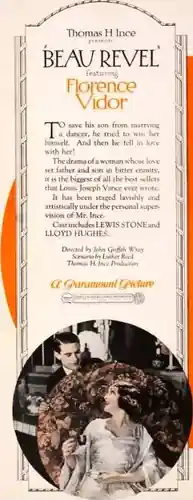
Nellie’s workplace, a Basin-Street cellar called “The Scarlet Lantern,” is lit hellishly in amber. The patrons—top-hat oligarchs—ogle dancers whose costumes are half-bodice, half-battle-gear. Reed shoots the routines head-on, no Busby Berkeley elegance, just sweat-slick limbs and cash-stuffed garters. The message: every shimmy is labor, every leer an economic transaction. When Beau slaps down diamond cufflinks as hush-money, Vidor’s eyes calculate faster than an adding machine. She declines not from moral purity but from self-preservation: “Accept once, owe forever.”
Death-by-defenestration became a cliché after 1940s noir, yet in 1924 it lands with the shock of a sacrament. Beau’s penthouse sill is foreshadowed repeatedly—first in jest, then in dread. When he finally climbs it, the intertitle card simply reads “Forgive…” The ellipsis hangs longer than any ellipsis should, the screen irises out on his hand releasing the curtain, fabric fluttering upward like a soul escaping. No falling body is shown; Reed denies us cathartic spectacle, leaving only the hollow whistle of wind, a sonic afterimage supplied by our imagination.
Lewis Stone, decades away from dignified Judge Hardy roles, is a revelation—equal parts Lucifer and tired banker. He modulates from silk-vest swagger to desiccated ruin without theatrical flourishes, just a gradual draining of light from his face. Florence Vidor counterbalances with minimalist steel; her stillness magnetizes the lens. In a career rife with ornamental roles, here she weaponizes quietude. When she tells Beau “Your money ages in my hand,” the line feels like it invents film noir a decade early.
Supporting players enrich the ecosystem: William Musgrave’s weaselly brother, Kathleen Kirkham’s acid-tongued dowager, Lydia Yeamans Titus as a maid whose side-eye could curdle milk. Each micro-performance thickens the social broth, making the film’s world feel lived-in rather than set-dressed.
Cinematographer William Marshall (later to lens Rolling Stones) bathes interiors in Rembrandt gloom, exteriors in over-exposed Southern glare. The contrast mirrors moral schisms: indoors, secrets; outdoors, blinding accountability. Note the scene where Beau stalks Nellie along the moonlit levee: his silhouette eclipses the moon, a literal black hole of desire. Shadows are not atmospherics but dramatis personae.
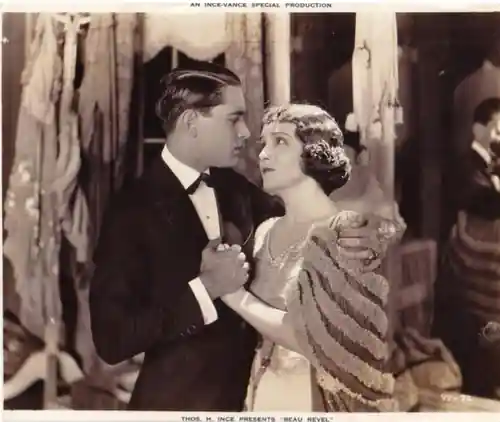
Modern viewers may balk at a 78-minute silent melodrama, yet Beau Revel ages into something feral and contemporary. Its interrogation of patriarchal entitlement, of transactional intimacy, anticipates #MeToo by nearly a century. The father’s lust to ‘test’ his son’s fiancé mirrors modern purity-culture gymnastics; Nellie’s refusal to be either saint or whore prefigures complex heroines still scarce in studio fare.
Moreover, the film dares a downbeat ending. In an era when Hollywood preferred moral restoration, Beau’s suicide feels like a wound left open. Dick’s plea for forgiveness—delivered in extreme close-up, eyes swollen—offers no neat romantic clinch. Reed cuts to the river, dark water swallowing moonlight, the city indifferent. Credits roll over ambient sound of lapping waves, a rarity for 1924, suggesting life’s narrative does not resolve but merely continues beyond the frame.
For decades the picture survived only in a 16mm print at MoMA, flecked with emulsion rot. A 2022 4K restoration by Kino Classics, struck from a newly-discovered 35mm dupe negative, reveals textures previously lost: brocade vests, sweat beads on stone, the glint of a pearl revolver grip. The release includes a commentary by film historian Dr. Maya Sorel who situates the movie within post-WWI masculinity crises. Streaming platforms have yet to license it widely; physical Blu-ray is your surest bet, and the disc’s sepia-toned booklet reprints Vance’s original novelette, illuminating Reed’s ruthless excisions.
Pair this with The Girl Without a Soul for another study of female agency weaponized within patriarchal artifice. Conversely, Assigned to His Wife offers a comic flipside where marital contracts are farce. Beau Revel sits closer to The Conqueror in its willingness to let a ‘hero’ rot on his own sword, yet stylistically it anticipates the venetian-blade chiaroscuro of 40s noir more than any dusty bibelot of the Jazz Age.
Beau Revel is less a curio than a razor in velvet—sleek, silenced, lethal. It seduces with period glamour, then eviscerates with existential candor. You arrive for flappers and champagne fountains; you leave pondering the gulf between conquest and connection, between teaching desire and learning humility. In the current cultural reckoning with power’s casualties, this 1924 parable hums like a tuning fork struck against the bones of the present. Watch it when the night is hot and your nerves are frayed; let its shadows crawl under your skin and remind you that every generation thinks it invented lust, heartbreak, and shame—until cinema’s ghostly lantern proves otherwise.
IMDb —
1926
Community
Log in to comment.