DbcultAccessing Vault...
Cult Review
Senior Film Conservator
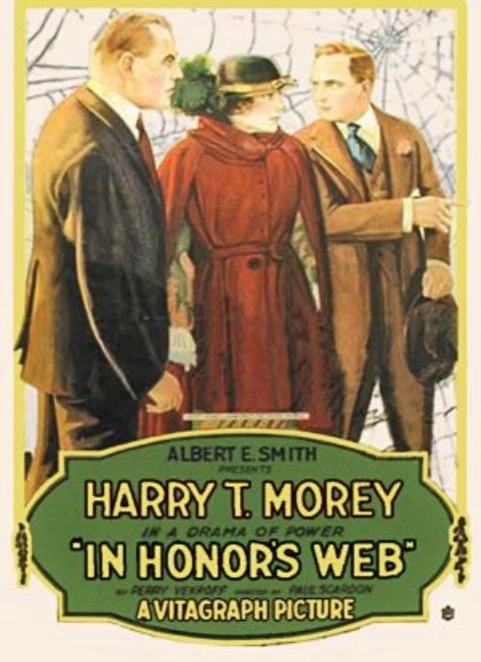
To watch In Honor's Web in the modern era is to step into a meticulously constructed machine of Edwardian ethics and Vitagraph visual storytelling. Released in 1917, a year defined by the shifting sands of global conflict and the burgeoning sophistication of American cinema, this film stands as a monumental example of how early directors utilized the 'web' metaphor to explore the claustrophobia of social expectation. The narrative doesn't merely present a murder mystery; it serves as a surgical examination of the 'gentleman's code'—a construct that, in the hands of writers Sam Taylor and Perry N. Vekroff, becomes both a shield and a noose for our protagonist, Frank Powell.
George Majeroni, an actor whose face possessed the gravitas of a Roman bust, portrays Frank Powell with a restrained intensity that predates the more histrionic tendencies of the 1920s. Powell is not a young man; he is an 'autumnal' romantic, a character choice that adds a layer of vulnerability to his pursuit of Olive Meade. Unlike the youthful exuberance found in The Little Brother, Majeroni’s performance is anchored in the weight of a life already lived, making his potential sacrifice all the more poignant. When he discovers what he perceives to be a betrayal by Olive and his brother Bert, the camera lingers on his stoic despair, utilizing the chiaroscuro lighting that Vitagraph had mastered to perfection by this stage in their production history.
The secondary plot involving Irene, the Governor's wife, and the loathsome Rodney Foster, provides the necessary friction to propel the story into its darker second act. Myrtle Stedman delivers a nuanced performance as Irene, a woman whose marriage to the elderly Governor Carson is a desert of emotional neglect. This trope—the busy, older husband ignoring the vibrant younger wife—was a staple of the era, seen in various iterations like Mary Jane's Pa, yet here it is treated with a certain grim realism. Rodney Foster, played with a slinking, serpentine grace by Gladden James, represents the 'society idler'—a figure of pure toxicity who preys on the vulnerabilities created by such marital voids.
The confrontation between Frank and Rodney is the film's first major pivot. When Frank knocks Rodney down for insulting Irene, it is not merely an act of physical aggression but a defense of the social order. However, the script cleverly complicates this by having Frank overhear the elopement plans. The tension built through the 1:30 AM deadline is a masterstroke of pacing. In 1917, the concept of 'time' as a narrative ticking bomb was still being refined, and In Honor's Web utilizes it with a precision that rivals the best work of the period, such as the suspense sequences in The Golden Lotus.
The cinematography in In Honor's Web deserves a rigorous academic breakdown. The use of deep focus during the scenes in Rodney's apartment creates a sense of impending doom. When Frank arrives at 2:05 AM to find Irene, the way the shadows are cast across the room suggests a cage—the literal 'web' of the title. The director (often credited to the Vitagraph house style but showing the distinct fingerprints of the era's best craftsmen) uses the architecture of the sets to reflect the psychological states of the characters. The Governor’s mansion is cavernous and cold, while Rodney’s bachelor pad is cluttered and claustrophobic, mirroring his cluttered morality.
This visual storytelling is far more advanced than contemporary works like The Martinache Marriage, which relied more heavily on intertitles to convey emotional shifts. In In Honor's Web, the tilt of a hat or the tightening of a jawline tells the story. When Frank is arrested for Rodney’s murder, the silence he maintains is not just a plot point; it is a visual theme. His stillness in the face of accusation contrasts sharply with the frantic movements of those around him, particularly the distraught Irene and the calculating Olive.
Perhaps the most provocative element of the film is Olive’s decision to lie for Frank. By claiming he was in her bedroom at the time of the murder, she effectively commits social suicide to save his life. This subversion of the 'pure' heroine was a radical move for 1917. It challenges the viewer to weigh the value of 'honor' against the value of 'truth.' In many ways, In Honor's Web acts as a companion piece to The Tempting of Justice, where the legal system is shown to be a blunt instrument easily manipulated by emotional loyalty. Olive’s sacrifice is framed as the ultimate act of love, yet the film doesn't shy away from the scandal it causes, much like the thematic concerns in Should a Wife Forgive?.
The resolution—involving Foster’s valet—might seem like a deus ex machina to modern audiences, but within the context of early 20th-century drama, it serves a specific socio-political purpose. Bernard Siegel’s performance as the valet is a masterclass in the 'invisible' character who sees everything. His confession and the subsequent framing of Frank highlight the class tensions that were often bubbling just beneath the surface of these high-society dramas. This exploration of the servant class as the ultimate arbiters of truth is a recurring motif in films like The Spreading Dawn and even the German production Das Tagebuch des Dr. Hart.
Agnes Ayres, before her legendary turn in The Sheik, displays a remarkable range here. Her Olive Meade is not a passive damsel but a proactive agent of change. The scene where she decides to offer the false alibi is played with a chilling calmness that elevates the film above standard melodrama. It is fascinating to compare her performance here with her roles in The Mating or the Cecil B. DeMille epic Old Wives for New. In In Honor's Web, she is the emotional core, the one who must navigate the wreckage left by the men's rigid adherence to outdated codes.
The supporting cast, including Harry T. Morey and George Backus, provides a solid foundation for the leads. Morey, in particular, has a presence that demands attention, ensuring that even the smaller scenes feel consequential. The ensemble work reflects the high standards of the Vitagraph 'stock company' system, which prioritized a cohesive acting style over individual star turns—a stark contrast to the star-driven vehicles like The Fortunes of Fifi.
Contextually, In Honor's Web arrived at a time when the American public was grappling with its own sense of 'honor' on the world stage. While the film is a domestic drama, the themes of sacrifice, silence, and the protection of the weak mirrored the rhetoric of the era. It shares a certain DNA with Kentucky Brothers in its exploration of familial loyalty versus individual morality. Even the title suggests a world where 'Honor' is not a virtue but a trap—a web that ensnares the righteous while the wicked, like Rodney Foster, thrive until their own vices consume them.
The film’s pacing is notably brisk for a five-reel production. The transition from the romantic opening to the murder mystery is handled with a narrative agility that avoids the sluggish middle acts common in 1910s cinema. This efficiency is likely due to the tight script by Taylor and Vekroff, who would both go on to have significant careers in the industry. Their ability to balance multiple plot threads—the romance, the elopement, the murder, and the legal drama—is exemplary. It feels much more modern in its structural complexity than something like Die Pagode or the propaganda-tinged Outwitting the Hun.
In the final analysis, In Honor's Web is a film of profound contradictions. It celebrates chivalry while showing its devastating consequences. It prizes truth but relies on a lie for its resolution. This complexity is what makes it a vital piece of cinema history. It doesn't offer easy answers. When Frank is finally freed and discovers Olive's love, the victory is bittersweet, tempered by the knowledge of the reputations ruined and the lives altered by the 'web' they inhabited. It is a more somber and reflective piece than Within the Cup, focusing on the internal scars of the characters rather than just the external spectacle.
For those interested in the evolution of the American thriller, this film is essential viewing. It bridges the gap between the moralistic plays of the late 19th century and the cynical noir of the 1940s. The 'honor' Powell defends is a relic, but the emotions driving him—fear, love, and a desperate desire for integrity—are universal. Vitagraph may be a defunct name today, but In Honor's Web proves that their legacy of sophisticated, adult-oriented drama remains as potent as ever. It is a haunting, beautifully shot, and expertly acted drama that deserves a place in the pantheon of great silent cinema.
Critic's Verdict:
A staggering achievement in narrative economy and emotional depth. In Honor's Web is a testament to the power of the silent image to convey the most complex of human dilemmas. Majeroni and Ayres are a revelation, providing a grounded, soulful core to a story that could have easily drifted into melodrama. A must-watch for any serious cinephile.
IMDb 6.6
1913
Community
Log in to comment.