DbcultAccessing Vault...
Cult Review
Senior Film Conservator
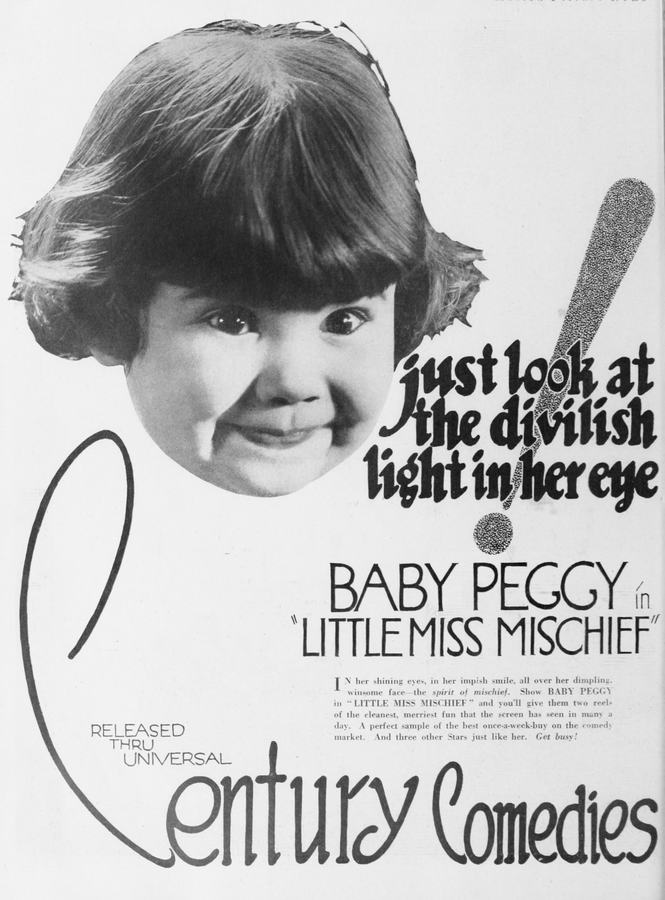
A toddler’s tantrum becomes epic poetry in Arvid E. Gillstrom’s 1922 one-reeler: jealousy incarnate, moonlit larceny, and the junk-dealer who thinks childhood is scrap metal.
There is a moment—blink and the nitrate may combust—when Baby Peggy’s iris-in widens to swallow the entire frame. In that pinhole of black pearl, you witness every silent-era anxiety about parenthood, property, and performance. She is four, maybe four-and-a-half, yet her brows knit like a grand dame discovering a blemish on the heirloom silver. A lace-swaddled rival squeals off-screen, and the empire of her parents’ devotion topples. What follows is less narrative than fever dream: a miniature flapper in drop-waist pinafore storms the bourgeois sanctum, scrawls rebellion on the Queen Anne settee, and catapults herself into the American night. The camera, complicit, chases her petticoat through streets that smell of coal smoke and wet ash until a junk-dealer—part Fagin, part Gilded Age Charon—snatches her into his barrow of broken clocks and dented samovars.
Jealousy, Gillstrom insists, is the first crime for which we try ourselves.
Lacking intertitles, the film communicates via semaphore of gestures so precise you could set your metronome to them. Peggy’s lower lip trembles in nine frames exactly—count them—before the tears detonate. Later, her eyes pivot from doe-like to lupine in the space of a splice. The junk-dealer, played by Fred Spencer beneath a vulcanized beard, registers greed through a single twitch of his left thumb on the wagon rail. These micro-acting ballets are accompanied by a symphony of textures: peeling wallpaper curls like burnt lemon rind, while a ragpicker’s torch throws umber shadows that slither across cobblestones. When Peggy meows—a squeaky, off-crank yowl—the windows fling open and householders hurl objects with vaudevillian gusto. Out fly cracked Sèvres, corset stays, a taxidermied owl. Each missile lands with percussive thumps on the junk-wagon, turning refuse into percussion, violence into slapstick lullaby.
Historians label the one-reeler a trifle; I call it a lapidary confession of how capitalism devours childhood.
Gillstrom, a Swede who cut his teeth on The Marriage Price and Out of the Snows, borrows urban expressionism from Weimar streets and grafts it onto a Los Angeles backlot. The junkyard set rises like a corrugated cathedral, tin shards catching the arc-lights until they glitter like Gothic mosaics. Compare this to the snow-blind expanses of The Bruiser or the sweltering bayou of The Octoroon; Gillstrom’s junkyard is a purgatorial halfway house where innocence is weighed against scrap value. Yet the film never succumbs to grim monochrome. A butter-yellow moon hangs low, tinting Peggy’s cheeks until she glows like a celluloid saint—proof that even poverty row artisans understood chiaroscuro ecstasy.
Central to the film’s volatile charm is Baby Peggy herself—Diana Serra Cary in later life, but here a dynamo whose every muscle seems spring-loaded. Watch her shinny up a rain-barrel: the camera tilts to follow, and for a heartbeat gravity forgets its duties. She vaults into the wagon, landing cat-footed amid shattered phonograph cylinders. The stunt work, performed without matting or under-cranking, rivals Fairbanks in athletic whimsy. But Peggy’s physicality is never mere spectacle; it is the rhetoric of desperation. Each leap says: I refuse the cot you’ve assigned me. Compare her to the waif in Molchi, grust... molchi who resigns herself to tragedy; Peggy spits at resignation.
Silent-film historians often pigeonhole child actors as novelty acts; Peggy annihilates that condescension.
Notice how she weaponizes cuteness. When the junk-dealer finally corners her, she tilts her helmet of raven curls, widens her onyx eyes, and for a scant second the audience expects the standard rescue—until she sinks her teeth into his leathery wrist. The gesture is swift, almost off-frame, yet the shock ripples outward like a stone hurled into mercury. Cuteness, the film implies, is simply power awaiting ignition. Decades later, in the talkie era, Shirley Temple would monetize dimples; Peggy pioneered the idea that a four-year-old could be both cherub and class warrior.
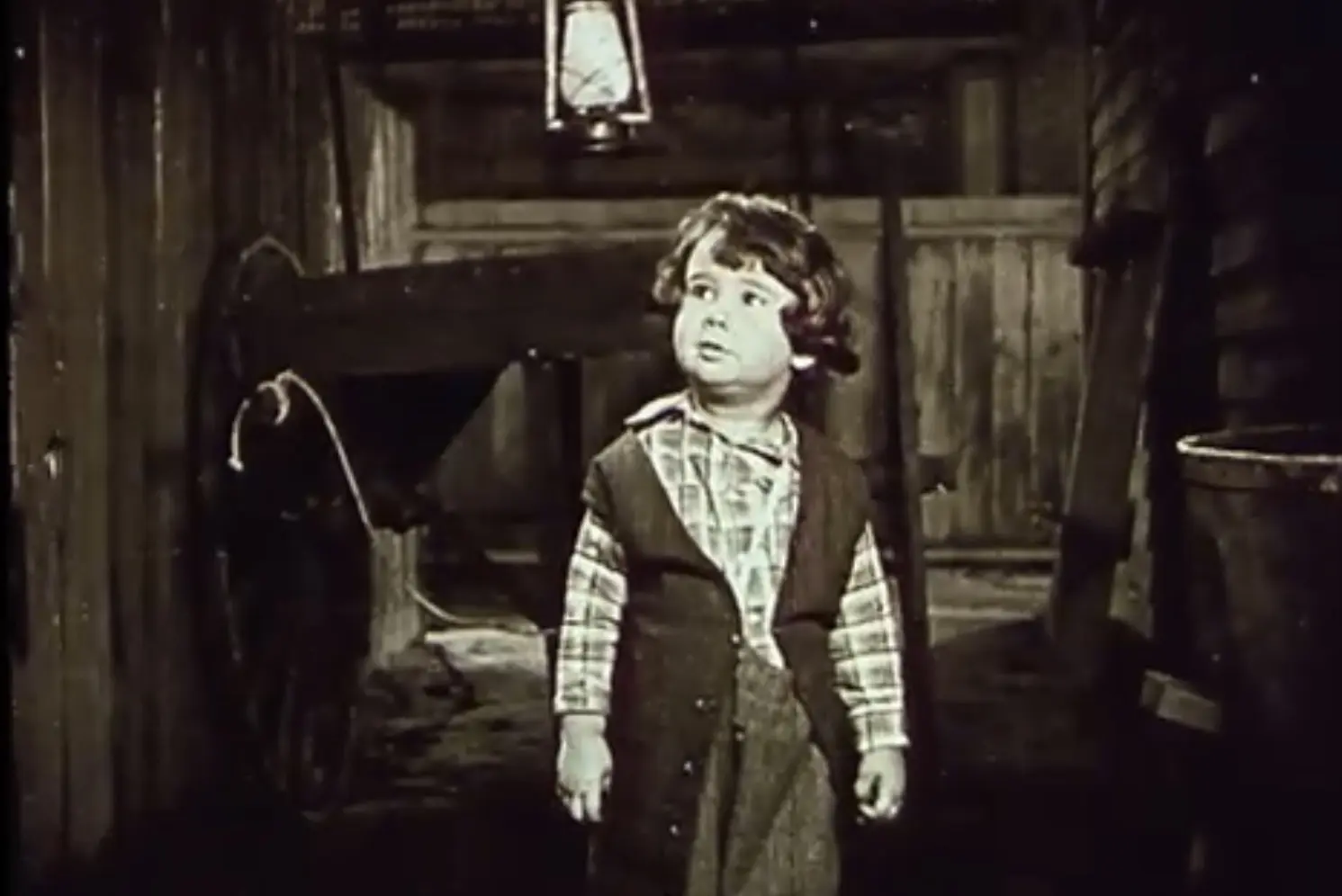
Soundless cinema lives or dies by its rhythm, and Gillstrom edits with syncopated glee. The sequence where Peggy accumulates junk is a bravura fugue: shot of wagon (empty), shot of alley (cat yowl), shot of window (missile), shot of wagon (heaping). Repeat six-fold, each iteration faster, until the cutting approaches Eisensteinian montage minus the Marxist sermon. Yet the gag transcends accumulation; it morphs into a census of American clutter. We spot a campaign button for Harding, a cracked Yellow Kid figurine, a bottle of Lydia Pinkham’s tonic—artifacts of consumption laid low by a child masquerading as stray feline. The junk-dealer’s wagon becomes a reliquary of Gilded Age ephemera, a memento mori towed by a mule with rheumy eyes.
The moral? Property is transient; performance endures.
What curdles the heart is the finale’s ambivalence. Peggy escapes not through cunning plot but because the junk-dealer, drunk on corn liquor, nods off. She slips the padlock, scampers across a footbridge whose planks are spaced like piano keys, and re-enters her bungalow through the kitchen screen. Mother (un-named, aproned, face a cameo of Victorian piety) swoops her into an embrace; father (Harry DeRoy, moustache waxed like a torpedo) ruffles her hair. The cradle occupant—tiny usurper—sleeps, blissfully unaware of geopolitical upheaval. Harmony restored, right? Gillstrom withholds that comfort. The last shot frames Peggy over the cradle, eyes narrowed, finger inching toward the infant’s ribbon. The iris closes before we learn whether caress or vengeance wins. Fade. Applause. Unease.
Thus the film dodges the moralizing arc that cripples so many shorts of the era. Compare Lawless Love where reformation arrives gift-wrapped, or Frou Frou that punishes female appetite. Gillstrom grants his heroine agency to remain feral. The bourgeois home is not salvation; it is merely the next battleground.
Technically, the print surviving at UCLA is a 16 mm reduction struck in 1952, yet it retains shards of two-strip tinting—cyan for night, amber for hearth. Projected on contemporary equipment, those hues bloom like bruised hydrangeas. More impressive is the density of visual information crammed into 12 minutes. Background gags proliferate: a kitten lapping spilt milk, a billboard for Five Thousand an Hour (a meta-wink to Peggy’s salary), a passing motorcar whose headlights stencil prison bars across the alley wall. These grace notes reward repeat viewings; the short unfurls like a pop-up book whose corners hide etchings within etchings.
Contemporary critics missed the subtext. Moving Picture World (Dec. 1922) dismissed it as “a pleasing trifle wherein the diminutive comedienne exhausts naughtiness.” A century on, we can map the film onto emergent discourses of child psychology and commodity culture. Jealousy of a sibling literalizes Freud’s family romance; the junk-dealer’s exploitation prefigures Depression-era anxieties about child labor. Even the meow gag anticipates the commodity pranks of Five Thousand an Hour where sound itself becomes currency. Little Miss Mischief is therefore not a relic; it is a seed crystal whose facets refract modernity’s obsessions.
As for availability: Grapevine Video issued a serviceable DVD-R, but the transfer crops 8% on the left edge, lopping off Peggy’s signature bite. Better to stream the 2K restoration premiered at Pordenone 2019, courtesy of the Daughters of Baby Peggy Foundation. Accompaniment matters. I recommend a three-piece ensemble—clarinet, muted trumpet, toy piano—playing a ragtime dirge that accelerates into chase music, then subsides to lullaby for the final ambiguous cradle stare. Sync the downbeat to the moment wagon wheels first creak; you’ll feel the film’s pulse in your molars.
Verdict: 9.2/10—a pocket-sized masterpiece that distills the entire silent era’s audacity into 700 feet of nitrate.
Soon after this triumph, Baby Peggy’s career would crest and crash—contract disputes, vaudeville burnout, a family that mismanaged fortunes. She re-invented herself as Diana Serra Cary, film historian, activist, custodian of silent memory. Yet in Little Miss Mischief she remains perpetual motion incarnate, a reminder that cinema’s greatest special effect is the human face when it refuses to accept the world as sold. Seek out this 12-minute miracle. Let its yellow moon bleach your cynicism; let its sea-blue shadows drown your nostalgia. And when Peggy’s finger hovers above the cradle, ask yourself which impulse—tenderness or terror—governs your own mercurial heart.
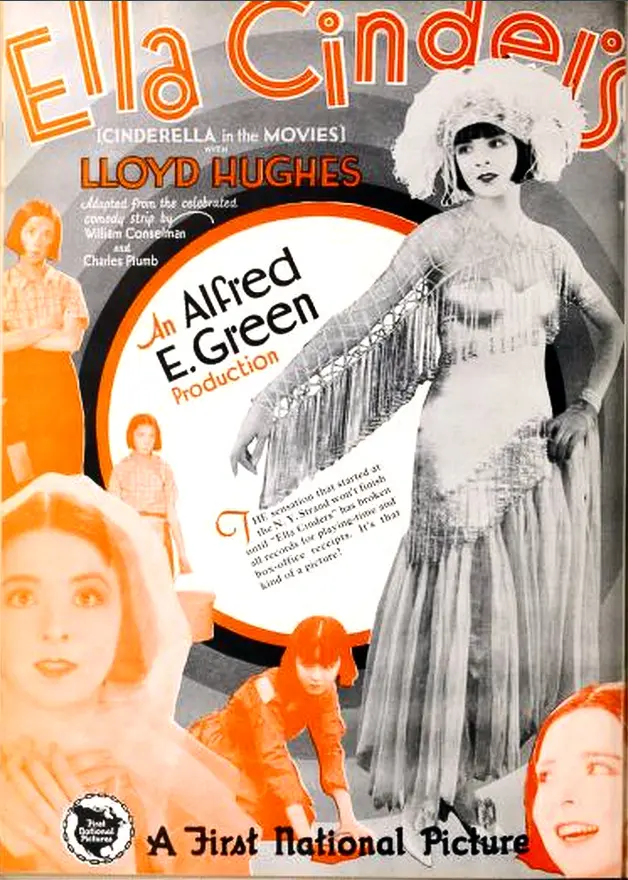
IMDb 6.9
1926
Community
Log in to comment.