DbcultAccessing Vault...
5.4/10
Senior Film Conservator
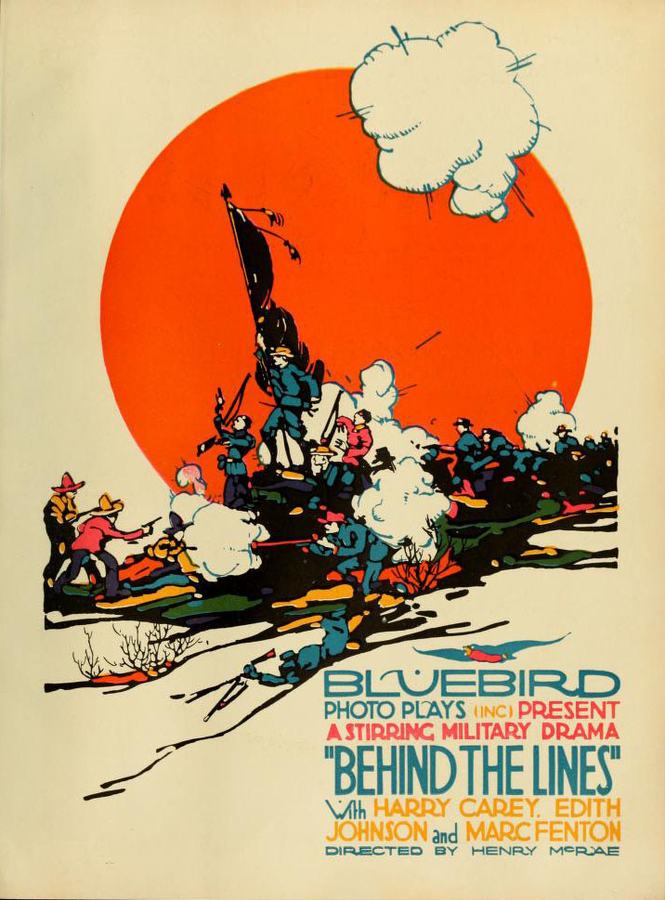
A definitive 5.4/10 rating for a film that redefined the boundaries of cult cinema. Behind the Lines remains a cornerstone of transgressive art.
In the grand tapestry of cinematic history, certain films, often overlooked by the casual observer, possess an undeniable resonance that transcends their immediate era. 'Behind the Lines' is one such compelling narrative, a masterclass in tension and moral ambiguity, set against the volatile backdrop of a Mexican rebellion. It’s a stark reminder that the most profound conflicts are frequently fought not on vast battlefields, but within the hearts and minds of individuals caught in the crosscurrents of history. The film, penned by the insightful duo of Mary Rider and Walter Woods, crafts a narrative that is as much a political thriller as it is a deeply personal drama, exploring the agonizing choices forced upon ordinary people in extraordinary circumstances. This isn't merely a tale of espionage; it's an intricate examination of loyalty, sacrifice, and the relentless pursuit of justice, often through means that blur the lines of conventional morality. The film’s power lies in its ability to humanize the often-abstract concept of war, bringing the visceral reality of its impact to the forefront through the lens of Nina Garcia’s harrowing journey.
At the heart of this intricate drama is Nina Garcia, portrayed with a compelling blend of vulnerability and steely resolve by Miriam Shelby. Shelby’s performance as Nina is nothing short of captivating, embodying the profound internal conflict of a woman torn between her privileged upbringing and an unshakeable commitment to a cause larger than herself. As the daughter of a diplomat, Nina's entry into the murky world of revolutionary espionage is not merely an act of defiance but a profound personal transformation. She navigates the treacherous corridors of a military hospital, her nursing uniform a deceptive cloak for her perilous mission: to pilfer critical documents for the rebels. This duality of healer and spy creates an almost unbearable tension, a tightrope walk between compassion and betrayal. The film brilliantly illustrates the psychological toll of such a double life, a constant state of vigilance and suppressed emotion. Unlike the more overt acts of heroism seen in films like The Black Night, Nina's bravery is quiet, insidious, and arguably more dangerous, operating in the shadows where the stakes are perpetually life and death. Her character arc is a testament to the writers' ability to craft a protagonist who, while thrust into an impossible situation, never loses her agency or her moral compass, even as she engages in morally ambiguous acts.
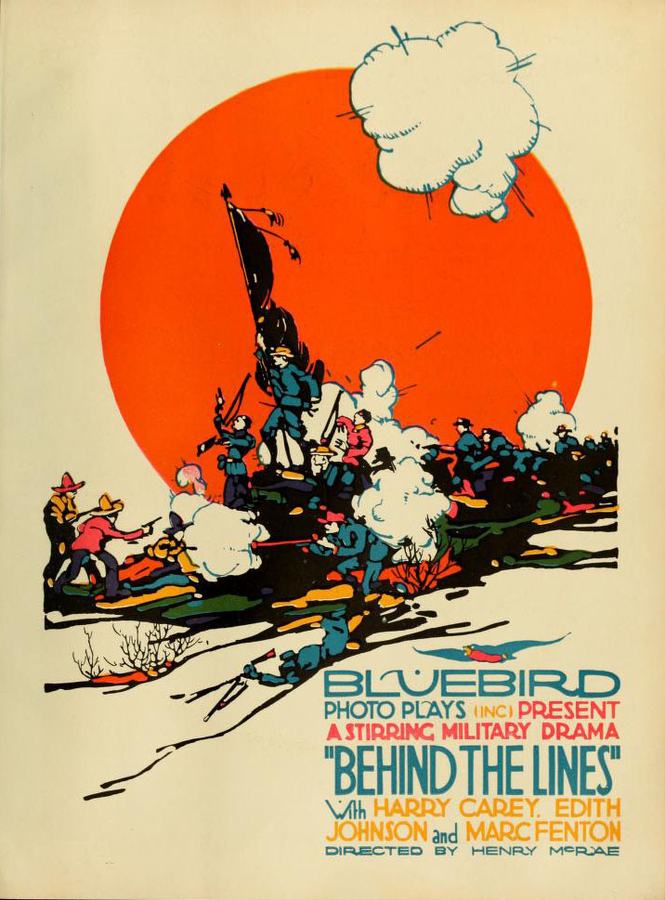
The narrative momentum of 'Behind the Lines' builds inexorably towards Nina's inevitable discovery. The film masterfully ratchets up the suspense, with each stolen document and hushed conversation contributing to a palpable sense of impending doom. The officials, portrayed with chilling efficacy by actors like Edwin Wallock and Lee Hill, represent the rigid, unyielding authority against which Nina struggles. Their eventual discovery of her involvement in enemy espionage isn't a sudden plot twist, but rather the logical, agonizing culmination of her high-stakes gamble. This sequence is particularly gripping, as the walls close in around Nina, highlighting the claustrophobic reality of her situation. It evokes a similar sense of impending fate found in the more dramatic moments of Amor fatal, where destiny's hand seems to guide the characters towards their inescapable conclusions. The film avoids cheap thrills, instead relying on psychological tension and the raw emotional performances of the cast, including the understated yet powerful contributions of Lee Shumway and L.M. Wells, who lend gravitas to the supporting roles that populate this dangerous world. The cinematography, though perhaps limited by the technology of its time, effectively uses close-ups and dramatic lighting to amplify Nina's fear and determination.
In a truly audacious and pivotal moment, as soldiers close in for her arrest, Nina performs an extraordinary act of self-experimentation. With a syringe in hand, she injects herself with Dr. Ralph Hamlin's (a character whose earnestness is subtly conveyed by Ernest Shields) experimental serum for gangrene. This isn't merely a desperate attempt to evade capture; it's a profound, multifaceted gesture. On one level, it's a defiant act of scientific validation, hoping to prove the worth of a medical breakthrough that could save countless lives. On another, it's a desperate plea for recognition, a final, dramatic demonstration of her intrinsic value beyond her role as a spy. The irony is poignant: a woman deemed a traitor risking her life for a medical advancement that could benefit the very government seeking to execute her. This moment elevates the film beyond a simple espionage thriller, delving into themes of scientific ethics, personal sacrifice, and the often-unacknowledged contributions of individuals in times of crisis. It resonates with the quiet heroism found in narratives focused on medical innovation, though here, the stakes are amplified by the immediate threat of execution. The government's subsequent cold dismissal of her bravery and Ralph's impassioned pleas for clemency underscore the brutal, dehumanizing nature of political conflict, where individual lives and scientific progress are often secondary to state power. The stark indifference of Harry Carey and Mark Fenton's characters, representing the unyielding state, is particularly chilling.
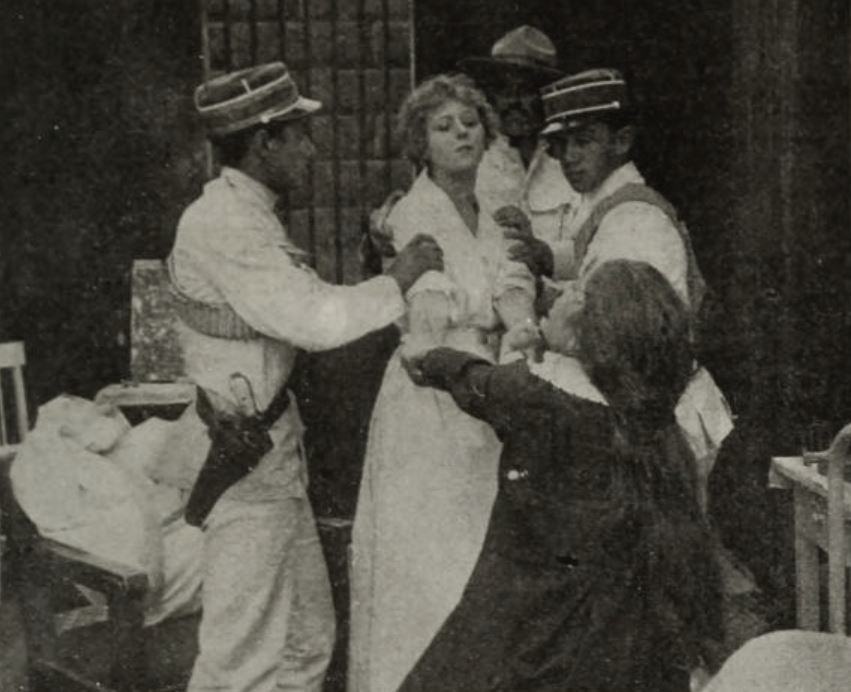
The government's decision to order Nina's execution, even after her recovery from the self-administered injection, is a stark portrayal of judicial rigidity and political ruthlessness. It highlights the profound chasm between individual acts of heroism and the cold calculus of state power. Nina's bravery, her willingness to risk her life for a scientific principle, is utterly disregarded in the face of her perceived treason. This segment of the film is emotionally devastating, as we witness the system's unyielding nature, unmoved by human empathy or logical argument. The performances of William Human and Edith Johnson, though perhaps in smaller roles, contribute to this atmosphere of bureaucratic indifference. The impending execution casts a long, dark shadow over the narrative, creating an almost unbearable suspense that is reminiscent of the existential dread found in films exploring the ultimate consequences of human actions, such as Livets konflikter, which similarly delves into the profound moral dilemmas that shape human destinies. The scene leading up to the execution, with its deliberate pacing and focus on Nina's quiet resolve, builds an almost unbearable tension, making the audience acutely aware of the preciousness of life and the finality of the state's decree. The writers, Mary Rider and Walter Woods, ensure that this moment is not just a plot device, but a powerful commentary on the arbitrary nature of power and justice in times of war.
Just as Nina stands on the precipice of death, a dramatic and timely intervention occurs: United States troops arrive, saving her from execution. This classic deus ex machina, while perhaps a convenient narrative device, serves a critical thematic purpose. It underscores the larger geopolitical forces at play, reminding us that individual struggles are often intertwined with international relations. The arrival of the US troops isn't just a rescue; it's a statement about intervention, about the shifting sands of power, and about the potential for external forces to alter the course of local conflicts. While some might critique its suddenness, it provides a cathartic release after sustained tension, offering a glimmer of hope and justice in a world that often seems devoid of both. This moment, while perhaps less gritty than the raw survival depicted in The Sea Wolf, nevertheless offers a similar sense of relief from an overwhelming threat. The film's conclusion, therefore, is not just a happy ending for Nina, but a broader commentary on the delicate balance of power and the often-unforeseen consequences of international politics. The performances of Ruth Clifford and Ray Hanford, even in these concluding scenes, add a layer of human emotion to what could otherwise be a purely functional plot resolution, ensuring the audience remains invested in Nina's fate until the very last frame.
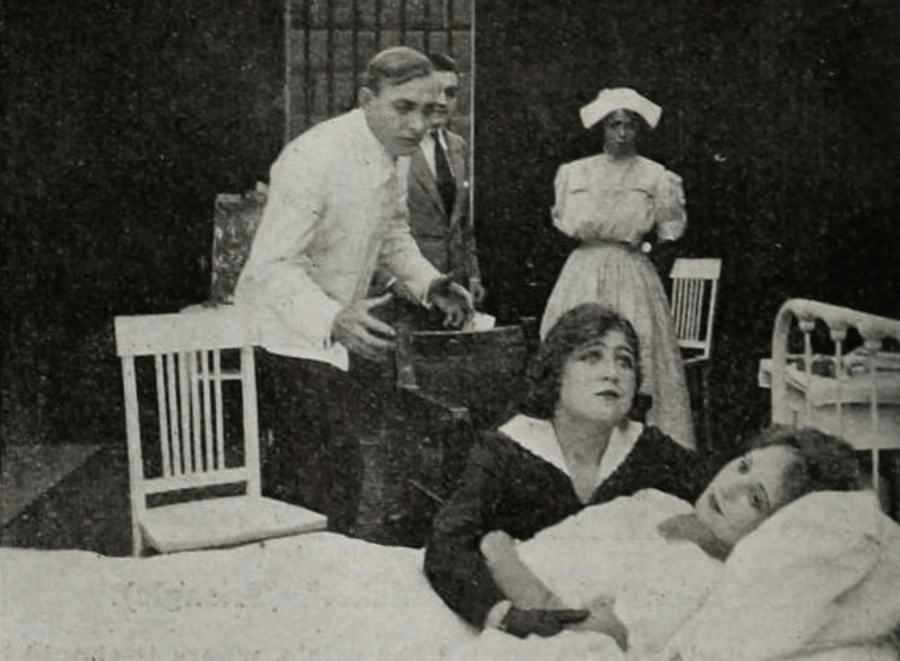
The narrative prowess of Mary Rider and Walter Woods is evident throughout 'Behind the Lines.' Their script avoids simplistic portrayals, instead opting for a nuanced exploration of character and circumstance. The dialogue, while perhaps reflective of its era, maintains a sharp edge, driving the plot forward without sacrificing emotional depth. The pacing is deliberate, allowing the tension to build organically, rather than relying on rapid-fire action sequences. This careful construction allows the audience to fully immerse themselves in Nina's plight, making her struggles and triumphs all the more impactful. The direction, too, is commendable, particularly in its ability to extract powerful performances from the entire ensemble. The film's visual language, though not overtly flashy, effectively conveys the oppressive atmosphere of wartime and the clandestine nature of Nina's activities. The use of shadows and confined spaces in the hospital scenes, for instance, subtly amplifies the sense of danger and entrapment. This commitment to storytelling over spectacle aligns it with the character-driven depth found in works like The Heart of Jennifer, where emotional resonance takes precedence.
The cast of 'Behind the Lines' delivers a collective performance that anchors the film's dramatic weight. Miriam Shelby, as Nina Garcia, is undeniably the film's beating heart. Her portrayal is a masterclass in subtle emotion, conveying fear, determination, and profound humanity with remarkable clarity. Lee Shumway and L.M. Wells provide solid support, grounding the narrative in a believable reality, while Edwin Wallock and Lee Hill effectively embody the antagonists, their cold authority providing a stark contrast to Nina's passionate idealism. Ernest Shields, as Dr. Ralph Hamlin, brings a quiet dignity to his role, representing the moral scientific compass in a chaotic world. Even the smaller roles, filled by talents such as Harry Carey, Mark Fenton, William Human, Edith Johnson, Ruth Clifford, and Ray Hanford, contribute significantly to the film's rich texture, creating a believable and immersive world. Their collective efforts ensure that the film's emotional beats land with precision, making the audience feel every twist and turn of Nina's perilous journey. The ensemble's commitment to their roles elevates the material, turning what could have been a straightforward adventure into a profound character study, much like the nuanced ensemble work often lauded in films such as York State Folks, where every character, no matter how minor, contributes to the overall narrative fabric.
'Behind the Lines' is more than just a historical drama; it's a potent exploration of morality in wartime. Nina's actions, though for a cause she believes in, are inherently deceptive, forcing the audience to grapple with the complexities of right and wrong. Is espionage ever truly justified? What is the cost of revolutionary fervor? The film doesn't offer easy answers, instead inviting viewers to ponder these profound questions. The theme of redemption, both for Nina and perhaps for the fractured nation, is subtly woven into the fabric of the story, culminating in the unexpected intervention that saves her. This nuanced approach to moral quandaries sets it apart, making it a film that lingers in the mind long after the credits roll. It touches upon the universal human struggle for purpose and meaning, even when faced with overwhelming odds, echoing the personal quests for understanding seen in films like The Education of Mr. Pipp, albeit in a far more perilous context. The film also subtly critiques the very systems that create such desperate situations, forcing individuals like Nina to make impossible choices for survival and ideological conviction. The contrast between Nina's personal sacrifice and the government's cold pragmatism is a recurring motif, highlighting the often-tragic disconnect between individual human worth and political expediency. In this way, it shares a thematic thread with films that examine the broader societal impacts of conflict and moral choices, such as Aftermath, which grapples with the lingering consequences of profound upheaval.
Despite its historical setting, 'Behind the Lines' retains a striking relevance in contemporary times. Its themes of political unrest, espionage, scientific ethics, and the human desire for freedom are perennial. The film serves as a powerful reminder of the sacrifices made in the pursuit of ideals and the often-unseen heroes who operate in the shadows. It stands as a testament to the enduring power of storytelling, capable of transporting audiences to a different era while simultaneously reflecting universal truths about the human condition. While it may lack the epic scope of films like The Life and Passion of Jesus Christ, its focus on individual struggle grants it an intimate power that resonates deeply. Its narrative depth and character complexity also invite comparison to the more intricate psychological dramas of its time, providing a rich viewing experience that continues to provoke thought and discussion. The tension between personal conviction and state authority, a central conflict in the film, remains a vital point of discourse in any era marked by political upheaval. The film, in its quiet strength, makes a compelling case for the enduring power of the human spirit against overwhelming odds. It's a journey into the heart of conflict, not just military, but moral and personal, leaving an indelible mark on its audience. The film, in its narrative construction and thematic depth, aligns more closely with character-driven dramas than with pure action spectacles like Jeffries-Sharkey Contest, focusing on the internal struggles and ethical dilemmas rather than overt physical confrontation. Furthermore, the film's exploration of hidden dangers and clandestine operations, though lacking the sensationalism, shares a thematic undercurrent with narratives of societal threats, albeit more grounded in political intrigue than the stark warnings of Cocaine Traffic; or, the Drug Terror. It reminds us that even in the absence of explicit grandstanding, the quiet heroism of individuals can shine through, much like the understated resilience celebrated in A Man's Making. The film's profound engagement with the human element amidst chaos solidifies its place as a compelling and thought-provoking piece of cinematic art, offering a perspective that is as relevant today as it was upon its initial release.
IMDb 6
1931
Community
Log in to comment.