DbcultAccessing Vault...
Cult Review
Senior Film Conservator
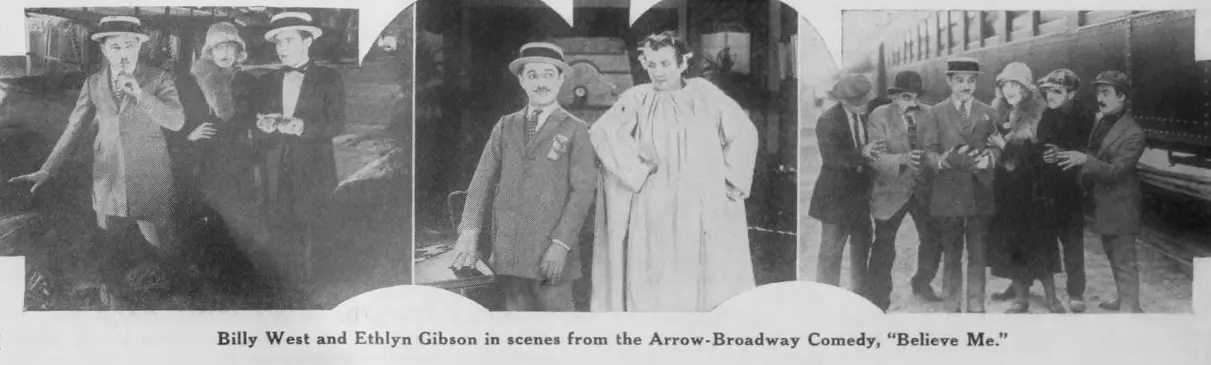
Is Believe Me a cinematic revelation or a relic of calculated imitation? Short answer: It is an essential artifact for silent film historians, but casual viewers will find its derivative nature a hurdle. This film is for those who want to see how the early film industry monetized mimicry; it is not for those who demand narrative depth or original character arcs.
1) This film works because Billy West is an uncanny physical technician who masters the 'Tramp' choreography with surgical precision. 2) This film fails because it lacks the pathos and social commentary that made the original Chaplin shorts timeless. 3) You should watch it if you are interested in the 'Chaplin-clone' era of the 1910s or want to see Ethelyn Gibson at her most charismatic.
Billy West’s career is one of the strangest footnotes in cinema history. In Believe Me, he doesn’t just borrow a mustache; he steals a soul. Every twitch, every waddle, and every shy glance toward Ethelyn Gibson feels like a rehearsal for a role someone else already perfected. It’s technically impressive. But it’s hollow. When we look at films like The Idle Class, we see a character used to critique social stratification. In Believe Me, the character is used simply as a vessel for slapstick.
There is a specific moment where West attempts to navigate a revolving door. The timing is impeccable, a ballet of near-misses and sudden impacts. However, the scene lacks the 'why.' In a Chaplin film, the door represents the protagonist's exclusion from society. Here, it is just a door. This is the fundamental divide between the master and the mimic. West is a gymnast; Chaplin was a poet.
While West is busy being someone else, Ethelyn Gibson manages to be herself. Her performance provides a necessary grounding to the film’s more manic sequences. She doesn't just react to West; she challenges him. In the scene where they share a meal, her subtle eye rolls and controlled gestures provide a hilarious contrast to West's explosive spills. She is the straight-man that the film desperately needs to stay tethered to reality.
Gibson’s presence reminds us of the work in Pretty Ladies, where the female lead often had to carry the emotional weight of a scene while the men played for laughs. In Believe Me, she is the only reason the stakes feel even remotely real. Without her, the film would dissolve into a series of disconnected circus acts.
The cinematography in Believe Me is standard for the King Bee production house: static, wide, and stage-like. This isn't a criticism so much as a reflection of the era's limitations. However, the lighting is surprisingly effective. There is a depth to the interior scenes that evokes the moody atmosphere found in White Hands. The shadows aren't just there to fill space; they emphasize the grit of the urban setting.
The pacing is relentless. Unlike the slow-burn tension of Shackles of Fear, Believe Me demands your attention every second. If you blink, you miss a pratfall. If you look away, you miss a subtle sleight of hand. This speed is both a blessing and a curse. It keeps the energy high, but it prevents the audience from actually connecting with the characters on any level beyond the superficial.
If you are a student of film history, Believe Me is a mandatory watch. It represents a time when the industry was still figuring out the boundaries of intellectual property and persona. Seeing Billy West operate is like seeing a high-quality deepfake from a hundred years ago. It is eerie, impressive, and slightly uncomfortable.
However, if you are looking for a comedy that will make you laugh out loud today, you might find it lacking. The gags have been done better elsewhere. The 'Tramp' persona feels like a costume rather than a character. It lacks the bite of The Hick or the narrative cohesion of Everything But the Truth. It is a museum piece, not a living comedy.
Pros: The chemistry between West and Gibson is palpable. The film moves at a breakneck speed that prevents boredom. It serves as a perfect time capsule of 1918 production values.
Cons: The derivative nature of the protagonist feels distracting. Some of the gags are over-extended. The ending feels rushed and somewhat arbitrary.
Here is a hot take: Billy West was actually a better athlete than Charlie Chaplin. While Chaplin was the better director and storyteller, West’s raw physical stunts in Believe Me are arguably more dangerous and technically difficult. He takes falls that would make a modern stuntman wince. It’s a shame that his legacy is buried under the label of 'imitator' because his physical gifts were immense. He wasn't just a copycat; he was a powerhouse performer who chose the wrong path to fame.
Compare his work here to the more traditional dramatic turns in The Sorrows of Love or Ten of Diamonds. There was a trend toward grounded realism in the late 1910s that West completely ignored in favor of high-octane cartoonishness. It was a bold choice, even if it was a derivative one.
Believe Me is a 3-star film trapped in a 5-star body. It has the look and feel of a masterpiece, but the heart of a commercial product. It is fascinating to watch, not because it is great, but because it is so specifically a product of its time. It is the 'mockbuster' of the 1910s. It works. But it’s flawed. If you can get past the feeling that you're watching a cover band, there is a lot of fun to be had in the chaos.
Ultimately, the film stands as a testament to the power of the 'Tramp' icon. It was so potent that even a secondary performer like Billy West could build a career out of its leftovers. It’s worth the 15 minutes of your life, if only to see how the ghost of Chaplin haunted the screens of 1918.
IMDb —
1921
Community
Log in to comment.