DbcultAccessing Vault...
Cult Review
Senior Film Conservator
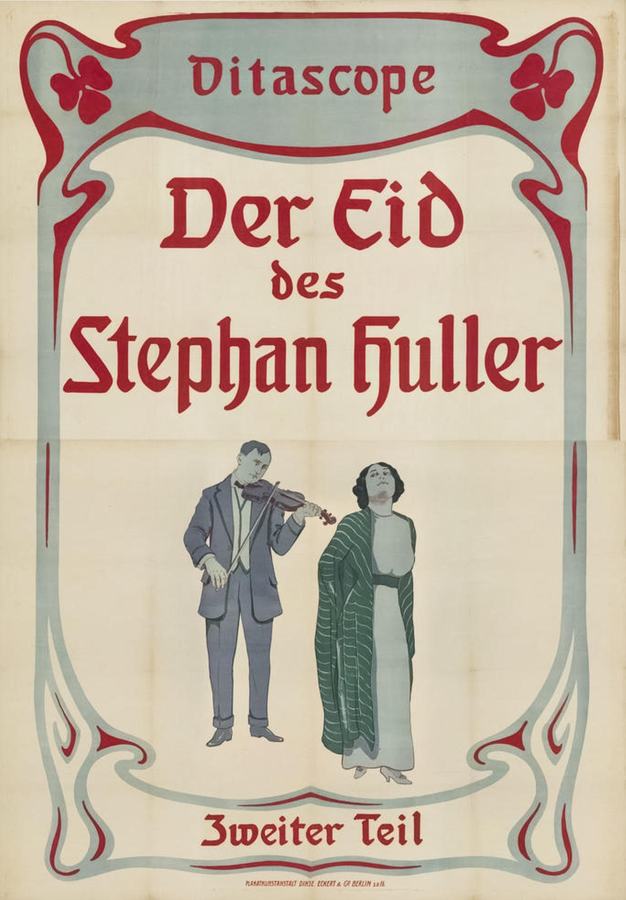
To witness Der Eid des Stephan Huller - II in the modern age is to step into a time capsule that feels oddly prophetic of the psychological thrillers that would dominate the mid-century. While the first installment, Der Eid des Stephan Huller, laid the groundwork for a tale of honor and betrayal, this 1912 sequel dives headlong into the murky waters of consequence. It is a film that refuses to offer easy absolution, choosing instead to linger on the fractured psyche of its protagonist. Viggo Larsen, serving as both director and lead, demonstrates a sophisticated understanding of the camera's ability to act as a silent confessor, capturing nuances of grief and terror that were often lost in the more theatrical productions of the era.
Larsen’s directorial hand is palpable in every frame. Unlike the sprawling, almost documentary-like approach seen in Glacier National Park, Larsen opts for a controlled, studio-bound environment that heightens the sense of entrapment. The sets are not merely backgrounds; they are extensions of Stephan Huller’s mental state. The heavy drapery, the ornate but suffocating furniture, and the stark lighting choices create a world where there is no room to breathe. This isn't the grand historical pageantry of Les amours de la reine Élisabeth; this is an intimate, searing look at the dissolution of a man’s dignity.
The pacing of the film is deliberate, almost agonizingly so. Larsen understands that for the weight of the 'Oath' to be felt by the audience, we must sit with the characters in their silence. While contemporary films like The Flying Circus relied on spectacle and kinetic energy to maintain engagement, Der Eid des Stephan Huller - II finds its power in the stillness. It is a brave choice for 1912, a year when cinema was still largely finding its feet as a narrative medium. The film demands a level of emotional labor from its viewers, asking them to decode the subtle shifts in expression and the heavy symbolism of the props.
Wanda Treumann’s performance is nothing short of revelatory. In an era where acting was often characterized by broad, sweeping gestures—think of the histrionics in Oliver Twist or the operatic scale of Les misérables—Treumann offers something far more grounded. Her eyes convey a depth of sorrow that feels modern, a quiet desperation that anchors the more melodramatic elements of the plot. She is the perfect foil to Larsen’s Stephan Huller. Where Larsen is rigid and unyielding, Treumann is fluid and fragile, creating a dynamic tension that sustains the film’s runtime.
Fritz Schroeter and Helene Voß provide solid support, though they often feel like archetypes compared to the complex central duo. However, their presence is necessary to ground the film in the reality of the time. They represent the societal gaze, the judgmental eyes of a community that values reputation over humanity. This thematic thread is reminiscent of the social critiques found in Anna Karenina or Jane Eyre, where the individual is crushed by the weight of collective expectation.
Technically, the film is a fascinating bridge between the primitive cinema of the early 1900s and the sophisticated visual language of the 1920s. The use of shadows is particularly noteworthy. While not yet the full-blown chiaroscuro of *The Cabinet of Dr. Caligari*, there are moments in Der Eid des Stephan Huller - II where the darkness seems to consume the edges of the frame, mirroring the encroaching madness of its characters. This visual darkness is far more evocative than the literal hellscapes of Dante's Inferno, as it suggests a spiritual rot that is internal rather than external.
The editing, handled with a surprising level of fluidity for the time, helps to emphasize the psychological connections between scenes. Felix Hollaender’s writing shines through in the way the narrative structures its 'reveals.' It isn't just about what happened, but about how the characters *feel* about what happened. This focus on subjectivity is a hallmark of the 'Autorenfilm' (Author's Film) movement that was just beginning to stir in Germany. It elevates the movie above the simple morality plays like From the Manger to the Cross, providing a secular, deeply humanistic perspective on sin and redemption.
When placed alongside its contemporaries, Der Eid des Stephan Huller - II stands out for its lack of cynicism. While many early films were either purely commercial spectacles like The Corbett-Fitzsimmons Fight or rigid historical recreations like The Life and Death of King Richard III, Larsen’s work feels like a genuine attempt to use cinema as a tool for psychological inquiry. It shares a certain DNA with The Black Chancellor in its exploration of power and secrecy, but it trades political intrigue for personal tragedy.
The film also serves as an important document of the transition from Danish-led dominance in European cinema to the rise of the German studio system. Larsen, a Dane who found immense success in Germany, brought a certain Scandinavian somberness to the production that feels distinct from the more flamboyant French or Italian styles of the period. It is a precursor to the great chamber dramas of the 1920s, a quiet revolution in storytelling that proved cinema could be as profound as the greatest literature.
Ultimately, the 'Oath' of the title is a metaphor for the inescapable nature of our choices. Stephan Huller is a man defined by a single moment of conviction, and the sequel shows us the slow, painful erosion of that conviction. It is a themes that resonates across cultures and eras, finding echoes in everything from The Redemption of White Hawk to the epic struggles of The Independence of Romania. However, by keeping the stakes personal and the scale small, Larsen makes the tragedy feel universal.
The final act of the film is a masterclass in tension. As the various narrative threads begin to tighten around Huller, the film abandons all pretense of a happy ending. It is a bleak, uncompromising conclusion that honors the complexity of the characters. There are no easy outs, no miraculous interventions. There is only the cold reality of the oath and the lives it has consumed. It is this commitment to emotional honesty that makes Der Eid des Stephan Huller - II a vital piece of cinematic history, one that deserves to be remembered not just as a sequel, but as a landmark of early psychological drama.
In the grand tapestry of 1912, a year that gave us the visual splendor of Cleopatra and the religious fervor of The Life and Passion of Jesus Christ, this film remains a somber, essential outlier. It is a reminder that even in the infancy of the medium, filmmakers were already grappling with the deepest questions of the human condition. Larsen and Hollaender didn't just make a movie; they crafted a ghost story where the ghost is one's own past, and the haunting is the life we are forced to lead after the truth is known.
For those looking to understand the roots of European auteur cinema, this is a mandatory watch. It may lack the polish of modern digital effects, but it possesses a raw, flickering soul that many contemporary blockbusters could only dream of achieving. It is a testament to the power of the silent image and the enduring brilliance of Viggo Larsen.
IMDb 4.8
1926
Community
Log in to comment.