DbcultAccessing Vault...
Cult Review
Senior Film Conservator
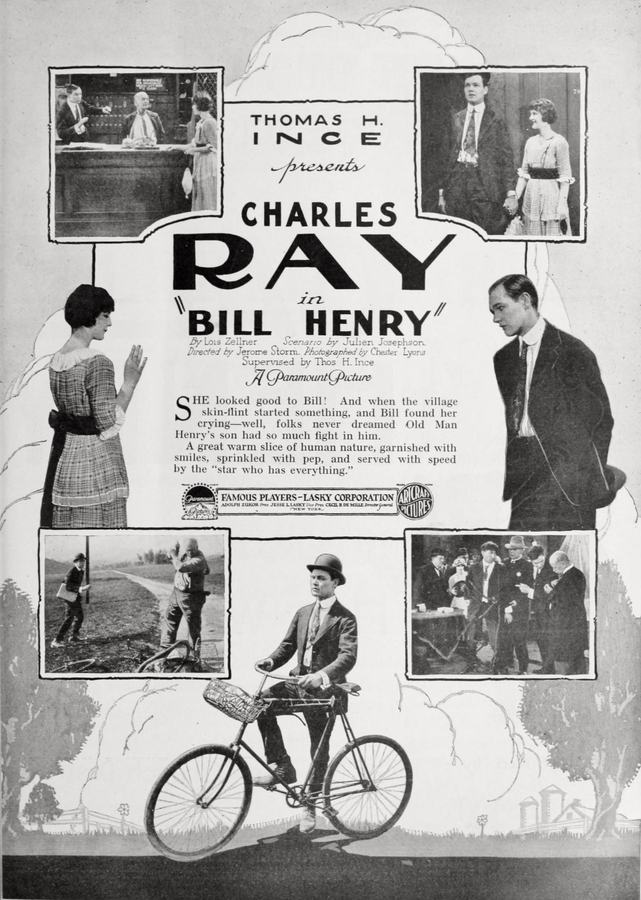
The year 1919 stood as a temporal bridge between the Victorian remnants of the past and the roaring velocity of the upcoming decade. In this delicate equilibrium, Bill Henry arrived as a poignant meditation on the American character. Starring the inimitable Charles Ray, a performer whose face could mirror the undulating anxieties of a nation in flux, the film transcends its simple 'country boy makes good' premise to become a foundational text of the silent era's obsession with moral fortitude versus urban cynicism.
Bill Henry Jenkins, portrayed with a delicate blend of clumsiness and sincerity by Ray, is not merely a character but a vessel for the agrarian virtues that were increasingly under threat by the industrial sprawl. Unlike the darker explorations of domestic upheaval found in The Homebreaker, Bill Henry maintains a luminescent hope, even when the mechanics of survival—symbolized by his essential bicycle—are stripped away by the cruelty of circumstance.
The inciting incident involving the lost bicycle is treated with a gravity that modern audiences might find quaint, yet within the context of 1919, this loss represents a profound disconnection from the world of labor. The bicycle was Jenkins' tether to the market, his vehicle for social mobility. When it vanishes, his descent into unemployment is swift and brutal. This sequence captures a specific brand of early cinematic pathos, reminiscent of the struggles depicted in Mrs. Wiggs of the Cabbage Patch, where the fragility of the working class is laid bare with unflinching honesty.
The direction allows the camera to linger on Ray's expressions, capturing the transition from frantic desperation to a quiet, resigned dignity. It is here that the screenplay by Lois Zellner and Julien Josephson shines. They understand that the stakes are not merely financial but spiritual. The loss of a job for a man like Bill Henry is the loss of his identity as a provider and a functioning member of the social contract.
The narrative pivot into the world of high-stakes poker is where the film sheds its pastoral skin and adopts the tension of a psychological thriller. The smoke-filled rooms, populated by the likes of William A. Carroll and Frederick Moore, provide a sharp visual contrast to the sun-drenched fields of Jenkins' youth. While films like The Island of Intrigue utilized exotic locales to generate suspense, Bill Henry finds its tension in the micro-expressions across a green baize table.
This poker game serves as a metaphorical trial. Jenkins is out of his element, a rube among wolves. Yet, his success is not presented as a triumph of skill or deception, but as a cosmic realignment where honesty and luck converge to reward the pure of heart. This thematic resolution echoes the optimistic sentimentality of Little Miss Happiness, though it is delivered with a grit that feels more substantial.
The supporting cast provides a robust framework for Ray’s central performance. Edith Roberts brings a luminous presence to the screen, her interactions with Ray offering a reprieve from the mounting pressures of his professional failures. The chemistry between them is palpable, grounded in a shared understanding of their characters' modest origins. In contrast, the heavy-set presence of Walter Hiers adds a layer of levity that prevents the film from descending into the bleakness seen in international contemporaries like Die Nonne und der Harlekin.
Visually, the film utilizes the limited technology of its time to maximize emotional impact. The use of iris shots to focus on Jenkins' hands during the poker game, or the wide-angle shots of the country roads he travels, creates a rhythm that feels both intimate and expansive. The cinematography captures the textures of the era—the wool of the suits, the dust on the boots, the flickering light of the gambling den—with a clarity that remains impressive over a century later.
When placing Bill Henry alongside Somebody's Baby or Shadows and Sunshine, one notices a recurring motif in the cinema of 1919: the reclamation of the self through adversity. While The Soul of a Child focuses on the innocence of youth, Bill Henry explores the more complex territory of the 'innocent man'—an adult who retains his moral compass in a world designed to demagnetize it.
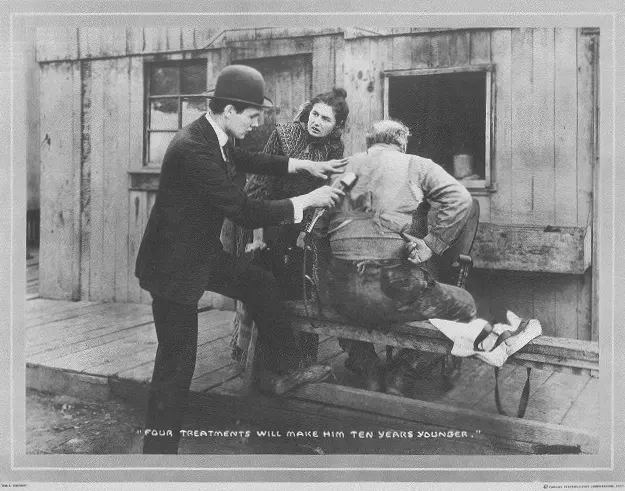
The film also offers a fascinating counterpoint to the more scandalous narratives of the time, such as The Slave Auction or Married in Name Only. Where those films sought to titillate or shock, Bill Henry seeks to reassure. It posits that the American Dream is not a myth, provided one is willing to face the cards they are dealt with an unblinking eye.
Beneath the surface of this charming comedy-drama lies a subtle critique of the burgeoning corporate world. Bill Henry’s failure as a salesman is not a failure of his character, but a failure of a system that values mechanical efficiency (the bicycle) over human connection. His eventual success in the poker game—a realm of pure chance and intuition—suggests that true fortune lies outside the rigid structures of the 9-to-5 grind. This subtext is what makes the film resonate today; it speaks to the universal desire to break free from the cogs of the machine.
The inclusion of Bert Woodruff and Jennie Lee as the elder generation further emphasizes this theme. They represent a world where value was tied to the land and the community, a world that is rapidly being eclipsed. Their presence acts as a moral anchor for Jenkins, reminding him (and the audience) of the stakes involved in his journey. If he loses his way in the city, he loses the legacy they represent.
The pacing of Bill Henry is a masterclass in narrative economy. There is no wasted movement. Every scene either advances the plot or deepens our understanding of Jenkins’ internal landscape. This precision is a hallmark of the Zellner and Josephson collaboration. They avoid the melodramatic excesses that often plagued silent features like The Blind Adventure or the brooding intensity of Rablélek.
Instead, they opt for a tonal consistency that balances humor with genuine stakes. The sequence where Jenkins attempts to sell his wares without his bicycle is both heartbreaking and hilarious, a testament to Ray’s physical comedy skills. It is a precursor to the work of Keaton or Chaplin, yet it remains distinctly Ray’s—more grounded, more vulnerable, and perhaps more relatable to the average viewer of the time.
Why does Bill Henry endure when so many other films from 1919 have faded into the sepia-toned oblivion of history? Perhaps it is because the film understands a fundamental truth about the human condition: we are all, in some way, country boys and girls looking for our place in a world that seems determined to steal our bicycles. It is a story of resilience that doesn't rely on superhuman feats, but on the simple, quiet courage to keep playing the hand you're dealt.
In the broader context of silent cinema, Bill Henry stands alongside works like My Partner as a celebration of masculine vulnerability. It challenges the notion of the stoic hero, replacing him with a protagonist who is allowed to be confused, frightened, and ultimately, human. This humanity is what bridges the gap between 1919 and the present day, making the film not just a historical curiosity, but a living piece of art.
As we look back at the career of Charles Ray, Bill Henry remains a high-water mark. It captured him at the height of his powers, embodying a character that would become his trademark. The film serves as a reminder of a time when cinema was discovering its own language, learning how to tell complex stories through the flicker of light and shadow, and finding the extraordinary in the ordinary life of a boy named Bill Henry Jenkins.
For those seeking to understand the evolution of the American film narrative, this is essential viewing. It offers a window into a vanished world, yet its heart beats with a rhythm that is undeniably contemporary. Whether viewed as a social commentary, a character study, or a simple tale of triumph, Bill Henry remains a luminous example of the power of silent storytelling.
IMDb —
1919
Community
Log in to comment.