DbcultAccessing Vault...
Cult Review
Senior Film Conservator
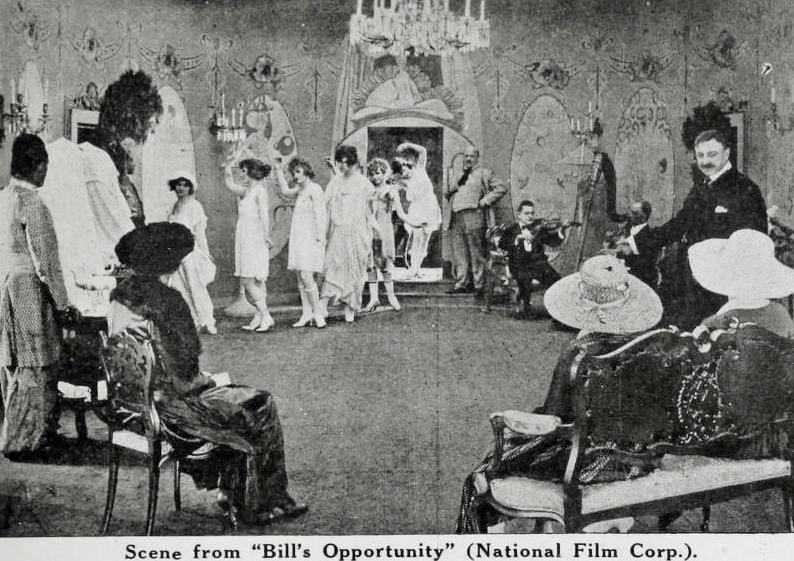
The silent era, often dismissed by casual viewers as a quaint precursor, frequently delivered narratives brimming with a psychological depth and social commentary that rivals, and sometimes surpasses, the most celebrated works of later cinematic periods. Such is the case with Bill's Opportunity, a film that, despite its seemingly straightforward premise, unfurls a remarkably nuanced tapestry of class anxieties, marital discord, and the profound human capacity for elaborate self-deception. It’s a compelling look into the early 20th century’s domestic landscape, where appearances often dictated reality, and personal truths were readily sacrificed on the altar of societal expectation.
At its heart, the film presents us with Bill, portrayed with a remarkable blend of earnestness and burgeoning desperation by William Parsons. We first encounter him as a quintessential cog in the capitalist machine: a book-keeper, hunched over ledgers in a sprawling department store, emblematic of the era’s burgeoning white-collar workforce. His existence is defined by its drudgery, a perpetual state of being overworked and underappreciated. Parsons masterfully conveys the quiet resignation of a man trapped in a monotonous cycle, his posture, his weary glances, all speaking volumes without a single intertitle. This initial portrayal establishes a deep empathy for Bill, making his subsequent choices, however questionable, understandable within the context of his desire for upward mobility and domestic tranquility.
The titular 'opportunity' arrives in the form of a promotion, a lifeline thrown to a drowning man. Bill is elevated to manager of the lingerie department, a position that, while offering a significant improvement in his financial standing and professional stature, simultaneously plunges him into a moral and domestic quagmire. The irony is palpable: liberation from economic hardship begets a new, more intricate form of bondage. This transition is not merely a change in title; it's a shift in social perception, in personal identity, and crucially, in the expectations placed upon him by his spouse. The film expertly uses this professional advancement as a pivot point, transforming a simple narrative into a complex exploration of truth, lies, and the fragile architecture of a marriage built on shaky foundations.
Lydia Yeamans Titus, as Bill’s wife, embodies the archetypal jealous spouse with a performance that is both formidable and, at times, pitiable. Her suspicion and possessiveness are not merely character flaws; they are the driving force behind Bill's elaborate deception. The film doesn’t necessarily condemn her outright but rather uses her jealousy as a potent symbol of the societal pressures and gender roles prevalent at the time. A man working in a 'women's' department, particularly one as intimate as lingerie, would undoubtedly raise eyebrows and fuel gossip, especially in a more conservative social climate. Bill's decision to conceal his true profession is therefore not just a personal failing but a strategic maneuver to navigate a potentially volatile domestic situation and avoid societal judgment. This predicament resonates with the themes of hidden lives and societal pressures explored in films like The Root of Evil, where characters often find themselves ensnared by the consequences of their concealed actions.
The central conceit of the film, Bill's daily transformation from 'oil field worker' to 'lingerie manager,' forms the crux of its dramatic tension and comedic potential. Each morning, he dons the rough garb of a laborer, bidding farewell to his wife as if heading for an arduous day in the unforgiving oil fields. Then, in a friend's house – a sanctuary of complicity and quiet rebellion – he sheds this persona for the respectable attire of a department store manager. This ritualistic costume change is more than a mere plot device; it is a profound visual metaphor for the performative nature of identity. Bill is not just playing a role for his wife; he is living a bifurcated existence, a testament to the lengths individuals will go to maintain a facade for the sake of peace, perceived happiness, or simply to avoid confrontation. The friend's house becomes a liminal space, a theatrical dressing room where Bill sheds one identity and assumes another, highlighting the artificiality of the entire charade.
The physical comedy inherent in these transitions, though subtle, is effective. Parsons's nuanced expressions – the furtive glances, the relieved sighs, the careful adjustments of his tie – convey the constant strain of maintaining such an elaborate lie. Billie Bennett, whose role is less central but crucial as the friend facilitating Bill's deception, provides a quiet counterpoint, her presence underscoring the communal aspect of secrecy and the bonds of male camaraderie in navigating domestic complexities. This dynamic of shared secrets and hidden lives finds echoes in other silent-era narratives, where the unspoken often carried more weight than any dialogue, for instance, the intricate social maneuvering seen in One Night, where a single evening can unravel a lifetime of careful construction.
The film's exploration of class is particularly noteworthy. Bill's initial position as a book-keeper places him firmly within the burgeoning lower-middle class, a group perpetually striving for respectability and economic stability. His promotion is a significant step up, yet he is forced to portray himself as a manual laborer, a profession often viewed with less social esteem, even if the oil field worker was synonymous with a certain rugged masculinity. This inversion of his true status, driven by domestic necessity, offers a trenchant commentary on the arbitrary nature of social hierarchies and the pressures to conform to certain masculine ideals. The contrast between the perceived 'roughness' of the oil field worker and the 'delicacy' of the lingerie department manager is a source of both humor and pathos, an astute observation on the performative aspects of gender and class roles.
From a purely cinematic perspective, Bill's Opportunity employs the visual storytelling techniques common to its era with commendable skill. The use of close-ups to capture the actors' expressions, the deliberate pacing that allows emotional beats to land, and the effective staging of scenes all contribute to a compelling narrative. The film relies heavily on pantomime and exaggerated gestures, a hallmark of silent cinema, yet manages to convey profound emotional states without descending into mere caricature. The performances, especially by Parsons and Titus, demonstrate the sophisticated acting prevalent in the early 20th century, where conveying complex internal states through external physicality was paramount. Their interplay, the silent arguments, the unspoken fears, are all masterfully communicated, drawing the viewer into their intricate domestic drama.
One might draw parallels between Bill's struggle and the plight of characters in other films dealing with socio-economic pressures. The relentless grind of the working class, for instance, is a pervasive theme in films like Proletardrengen, though Bill's specific dilemma introduces a unique layer of marital deceit on top of professional advancement. His situation also echoes the domestic tensions and misunderstandings explored in Husband and Wife, where communication breakdowns and hidden desires often lead to significant conflict. The film's strength lies in its ability to take a seemingly lighthearted premise and imbue it with genuine tension and human vulnerability.
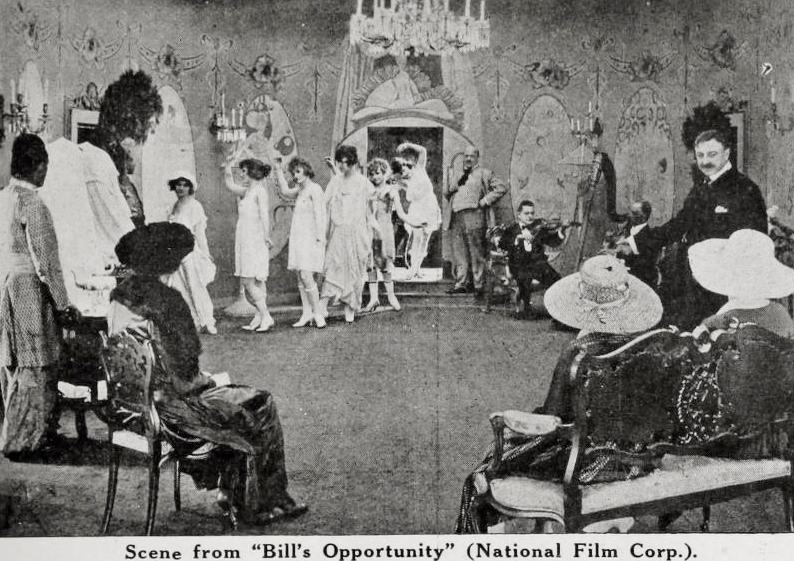
The narrative arc, while seemingly confined to the domestic sphere, touches upon broader themes of honesty, trust, and the societal construction of masculinity. Bill's choice to lie, born out of a desire to preserve peace and avoid his wife's wrath, ultimately undermines the very foundation of his marriage. The film subtly suggests that while his promotion offers an 'opportunity' for financial betterment, it simultaneously presents a profound moral challenge. How long can one maintain such an elaborate charade? What are the psychological costs of living a double life? These questions linger, making the film's conclusion, whatever form it takes (as the plot synopsis provided doesn't detail the resolution), impactful and thought-provoking. The film avoids easy answers, instead opting for a portrayal of human frailty and the complex web of motivations that drive our actions.
Furthermore, Bill's Opportunity serves as a fascinating artifact of its time, reflecting the evolving social mores and the nascent understanding of psychology in popular culture. The jealousy of Bill's wife, while a plot device, also speaks to the anxieties surrounding gender roles and the public/private divide that characterized the early 20th century. Women's increasing presence in the workforce, even in retail, challenged traditional domestic arrangements, and films like this often explored the resultant tensions. The film doesn't offer a didactic message but rather observes the human condition with a keen, often empathetic, eye. It’s a snapshot of a particular moment in history, yet its themes remain remarkably resonant today.
The artistry of silent film, often underestimated, truly shines in narratives like this. Without the crutch of dialogue, every gesture, every facial expression, every camera angle becomes imbued with heightened meaning. The subtle shift in Bill's demeanor as he transitions from the 'oil worker' persona to the 'manager' persona is a masterclass in non-verbal communication. The tension is built not through spoken words but through visual cues – a furtive glance, a nervous adjustment of clothing, the way characters move within a frame. This reliance on visual storytelling forces the viewer to engage more actively, interpreting the unspoken nuances and emotional undercurrents that drive the narrative forward. It's a testament to the power of pure cinematic expression.
Comparing it to other films of the era, Bill's Opportunity stands out for its unique blend of domestic drama, social commentary, and situational irony. While films like Sunshine Dad might offer more overt comedic scenarios, or The Defeat of the City a more stark portrayal of urban struggles, Bill's narrative skillfully intertwines the personal with the societal. It's not merely a story about a man's lie; it's a story about the lies we tell ourselves and others to maintain a semblance of order in a chaotic world, and the often-absurd lengths to which we go to protect our fragile sense of self and security. The film's enduring appeal lies in this universal resonance, the timeless struggle between truth and convenience.
The performances are central to the film's success. William Parsons, in particular, carries the weight of Bill’s predicament with a captivating blend of vulnerability and resourcefulness. His expressions convey the internal conflict, the constant fear of exposure, and the quiet desperation of a man caught between a rock and a hard place. Lydia Yeamans Titus, while playing a character who could easily become one-dimensional, infuses Bill’s wife with enough conviction to make her jealousy feel like a genuine, if misguided, force. Her reactions, though sometimes exaggerated for the silent screen, ground the domestic conflict in believable emotional stakes. Billie Bennett, as the friend, provides a necessary touch of grounded realism, a silent confidante who observes Bill’s charade with a mixture of amusement and concern, underscoring the human element of shared secrets.
In conclusion, Bill's Opportunity is more than just a relic of the past; it is a vibrant, engaging piece of cinematic history that speaks to enduring human themes. Its exploration of deception, identity, marital dynamics, and class consciousness remains as pertinent today as it was at its release. The film reminds us that the challenges of maintaining authenticity in the face of societal and domestic pressures are not new, but rather an intrinsic part of the human experience. It’s a film that deserves to be rediscovered and appreciated for its subtle artistry, its compelling performances, and its surprisingly trenchant social commentary, proving that even a century later, some stories continue to resonate with profound relevance.
The careful construction of Bill's double life, the meticulous planning required for his daily transformation, speaks to the lengths people will go to maintain a fragile peace. This isn't just about avoiding a jealous wife; it's about preserving a perceived ideal, a domestic harmony that, ironically, is built on a foundation of lies. The narrative doesn't demonize Bill for his choices but rather presents them as a product of his circumstances, a desperate attempt to navigate an impossible situation. This nuanced portrayal elevates the film beyond a simple farce, imbuing it with a sense of tragicomic realism. The film's enduring legacy is its ability to make us reflect on our own pretenses, the masks we wear, and the hidden lives we sometimes lead to appease others or ourselves. It's a powerful reminder that the pursuit of happiness, especially when entangled with societal expectations, often leads down convoluted paths.
The subtle interplay between the characters, particularly the unspoken communication between Bill and his wife, is a masterclass in silent film acting. The way a glance can convey suspicion, a posture can express weariness, or a hesitant gesture can betray inner turmoil, is handled with exceptional skill. These non-verbal cues are not merely supplementary to the plot; they are the very fabric of the narrative, driving the emotional core of the film. This deep reliance on visual storytelling is what gives Bill's Opportunity its timeless quality, allowing audiences from any era to connect with the universal human emotions at play. It's a testament to the power of cinema before spoken dialogue, proving that true artistry transcends technological limitations.
The film also offers a fascinating glimpse into the nascent consumer culture of the early 20th century. The department store setting, with its various departments and the bustling activity, serves as a backdrop that is both mundane and emblematic of a changing society. Bill's promotion to the lingerie department places him at the intersection of commerce and intimacy, a symbolically charged position that further complicates his domestic life. This setting, much like the urban landscapes depicted in films such as The Girl from His Town, is not merely scenery but an active participant in shaping the characters' experiences and dilemmas. The film effectively uses its environment to underscore the social and economic forces at play, demonstrating how personal lives are inextricably linked to broader societal trends.
Ultimately, Bill's Opportunity is a compelling argument for the enduring relevance of silent cinema. It's a film that, through its astute observations of human nature and its skillful deployment of visual storytelling, manages to transcend its historical context. It invites viewers to reflect on the intricate dance between truth and illusion, the sacrifices made for domestic peace, and the complex, often contradictory, facets of human identity. It's a poignant reminder that while the world may change, the fundamental dilemmas of the human heart remain remarkably constant, making Bill's predicament as relatable today as it was a century ago. This makes it a valuable watch for anyone interested in the foundational narratives of cinema and their lasting impact on our understanding of ourselves and society.
IMDb 5.8
1929
Community
Log in to comment.