DbcultAccessing Vault...
Cult Review
Senior Film Conservator
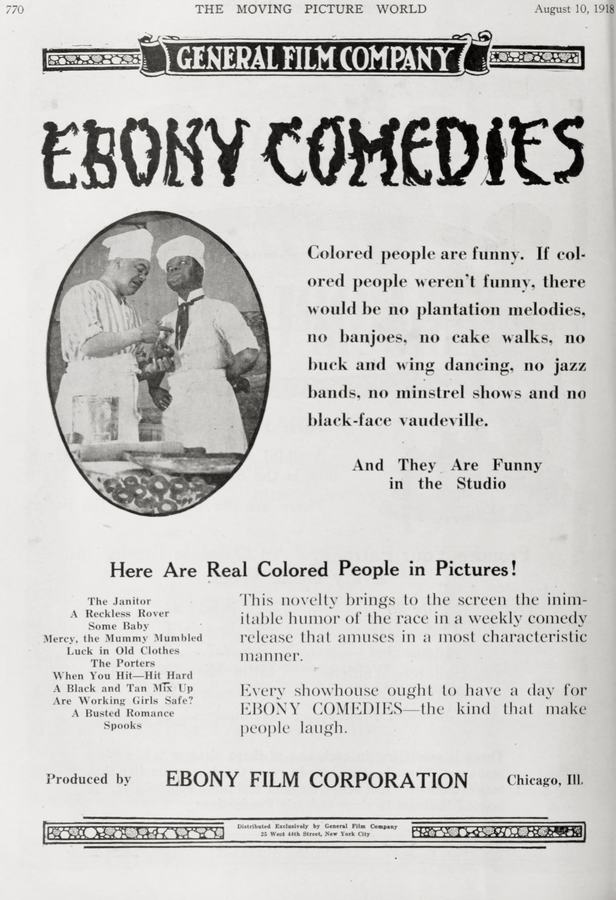
The early 1920s represented a feverish crucible for American cinema, a period where the grammar of film was being written in real-time. Within this nascent industry, Reol Productions emerged as a beacon of creative autonomy for African American artists. Black and Tan Mix Up (1923) stands as a testament to this era, offering a vibrant, comedic counter-narrative to the monolithic portrayals often found in mainstream Hollywood productions of the time.
At its core, the film is an exercise in rhythmic escalation. Unlike the heavy-handed moralizing found in Uncle Tom's Cabin (1918), Black and Tan Mix Up leans into the joyful anarchy of the 'mix up' trope. The plot functions like a Rube Goldberg machine of social faux pas. Evon Skekeeter and Will Starks anchor the production with a chemistry that feels both rehearsed and dangerously spontaneous. Their performances evoke a sense of frantic grace, navigating the constraints of a silent medium with a lexicon of gestures that transcend the need for dialogue.
The narrative structure avoids the linear simplicity of contemporary shorts. Instead, it weaves a tapestry of interconnected mishaps. We see the characters moving through spaces that feel lived-in—parlors, street corners, and the eponymous 'Black and Tan' clubs—which serve as the backdrop for a series of identity swaps. This isn't just low-brow humor; it is a sophisticated interrogation of how identity is performed. When Samuel 'Sambo' Jacks enters the frame, he brings a traditional vaudevillian energy that is cleverly juxtaposed against the more 'modern' affectations of the other cast members, creating a stylistic tension that keeps the audience engaged.
To appreciate the levity of Black and Tan Mix Up, one must contrast it with the psychological weight of other 1920s offerings. While He Who Gets Slapped explored the tragic mask of the clown, Reol’s production uses the comedic mask as a tool of liberation. There is no existential dread here, only the immediate, tactile problem of the 'next five minutes.'
Consider the domestic tension presented in The Hand That Rocks the Cradle. Where that film treats the household as a site of moral peril, Black and Tan Mix Up treats it as a playground. The stakes are ostensibly high for the characters—social ruin, romantic failure—but the direction ensures that the audience remains in a state of amused suspense. This tonal lightness is a radical act in itself, asserting the right of Black characters to exist within the realm of the trivial and the hilarious, free from the burden of representing the 'entire race' in every frame.
Julia Mason and Mildred Price provide the film with its necessary emotional grounding. In many ways, their roles are more difficult than those of the male leads; they must play the 'straight' characters amidst the whirlwind of Skeeter and Sambo’s antics. Mason, in particular, possesses a screen presence that rivals the leading ladies of major studio productions like Nell Gwynne or Still Waters. Her ability to convey skepticism or affection with a mere tilt of the chin provides the film with its human core.
The ensemble cast, including Walter Brogsdale and Frank Pollard, operates with a communal timing that suggests a deep familiarity with the material. This was a hallmark of the Reol troupe—a sense of collective authorship that is palpable on screen. The film lacks the brooding, gothic intensity of The Mysterious Mrs. Musslewhite, opting instead for a bright, high-key visual style that emphasizes the clarity of the physical comedy. Every fall, every double-take, and every frantic chase is captured with a precision that honors the craft of the performers.
While it might be tempting to view Black and Tan Mix Up as simple escapism, it is deeply embedded in the politics of its time. The 'Black and Tan' clubs were rare spaces of racial integration and social fluidity in a segregated America. By setting a comedy in this environment, the filmmakers were making a subtle statement about the possibility of a more integrated, or at least a more interconnected, urban reality.
This stands in stark contrast to the historical rigidity found in films like Wolfe; or, the Conquest of Quebec. While Wolfe looks backward to define national identity through conflict, Black and Tan Mix Up looks forward, defining identity through the chaotic, vibrant energy of the modern city. It shares more DNA with the European avant-garde's fascination with the circus and the street than with the stuffy historical epics of the era.
The editing in Black and Tan Mix Up is remarkably brisk for 1923. There is a rhythmic pulse to the cuts that mirrors the syncopation of the jazz music that would have accompanied it in theaters. This isn't the slow, methodical pacing of Mania. Die Geschichte einer Zigarettenarbeiterin. Instead, the film hurtles toward its conclusion with a momentum that feels almost breathless.
The use of title cards is also noteworthy. Rather than merely explaining the plot, they often serve as punchlines or provide a cynical commentary on the action, much like the witty intertitles in The Right to Be Happy. This self-reflexivity suggests an audience that was media-literate and ready to engage with film as a playful, rather than purely instructional, medium.
As we look back at the surviving fragments of early Black cinema, Black and Tan Mix Up emerges as a vital piece of the puzzle. It lacks the somber, tragic undertones of A senki fia or the pastoral melancholy of Autumn. Instead, it offers a vision of resilience through laughter. It suggests that even in a world defined by 'mix ups' and misunderstandings, there is a path forward through wit and communal solidarity.
The film’s climax, which involves a chaotic convergence of all the disparate plot threads, is handled with a directorial confidence that belies its independent roots. It doesn't rely on the heavy-handed emotional cues of Der Märtyrer seines Herzens. Instead, it trusts the audience to find the logic in the lunacy. This trust is what makes the film so enduringly charming; it invites the viewer into the joke rather than making them the butt of it.
In the pantheon of 1923, where films like The Hunted Woman or The Fires of Youth were exploring the boundaries of genre, Black and Tan Mix Up carved out a unique space. It is a film that refuses to be categorized. It is a comedy, a social document, and a piece of pure cinematic energy.
For the modern cinephile, watching this film is like discovering a lost frequency on the radio. It hums with the life of a bygone Harlem, a world of sharp suits, sharper wits, and the eternal, hilarious struggle to keep one's dignity in a world gone mad. It is a reminder that the 'angel of our dreams'—to borrow a phrase from Angel of His Dreams—often wears a comedian’s mask and finds salvation in the most unexpected 'mix ups.'
A dizzying, delightful romp that serves as a crucial historical artifact. While the slapstick is undeniably broad, the underlying social commentary and the sheer charisma of the Reol troupe make it essential viewing for anyone interested in the roots of independent cinema. It is a vibrant, neon-lit ghost of the Jazz Age that still manages to pull a laugh from the modern viewer.

IMDb 7.3
1936
Community
Log in to comment.