DbcultAccessing Vault...
4.2/10
Senior Film Conservator
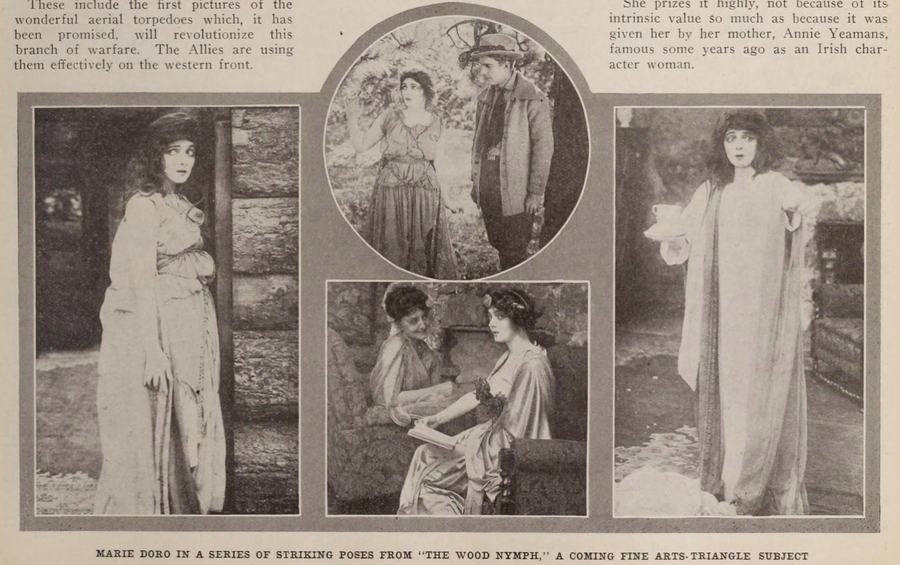
A definitive 4.2/10 rating for a film that redefined the boundaries of cult cinema. The Wood Nymph remains a cornerstone of transgressive art.
A Timeless Journey into Myth and Early Cinema
Stepping back into the formative years of cinematic artistry, D.W. Griffith's The Wood Nymph (1913) emerges not merely as a relic of a bygone era, but as a surprisingly potent and evocative exploration of innocence, isolation, and the awakening of the human spirit. In an age dominated by nascent storytelling techniques and the silent screen's unique demands, Griffith, alongside writer Monte M. Katterjohn, crafts a narrative that, while ostensibly simple, resonates with a profound yearning for connection and understanding. The film’s setting, among the awe-inspiring, colossal redwoods of California, isn't just a backdrop; it's a character in itself, a silent, ancient witness to the unfolding drama, imbuing the entire production with an almost mythical grandeur. This deliberate choice of locale immediately distinguishes it, setting a tone of primordial wonder that few contemporary films dared to fully embrace. The very air seems to hum with the ancient stories that form the protagonist's worldview, creating a rich, immersive atmosphere before a single word is uttered.
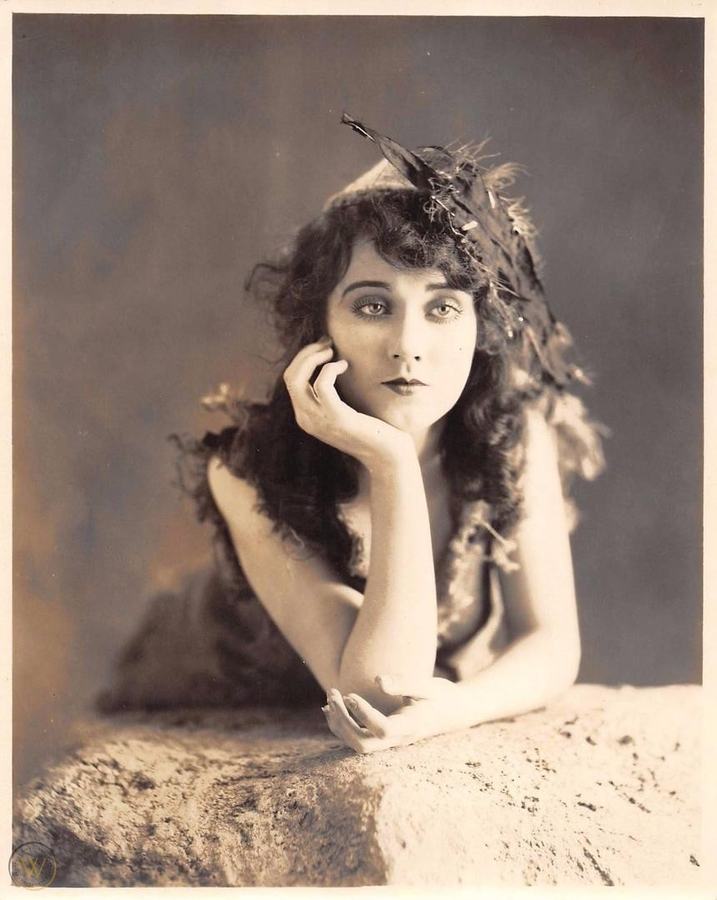
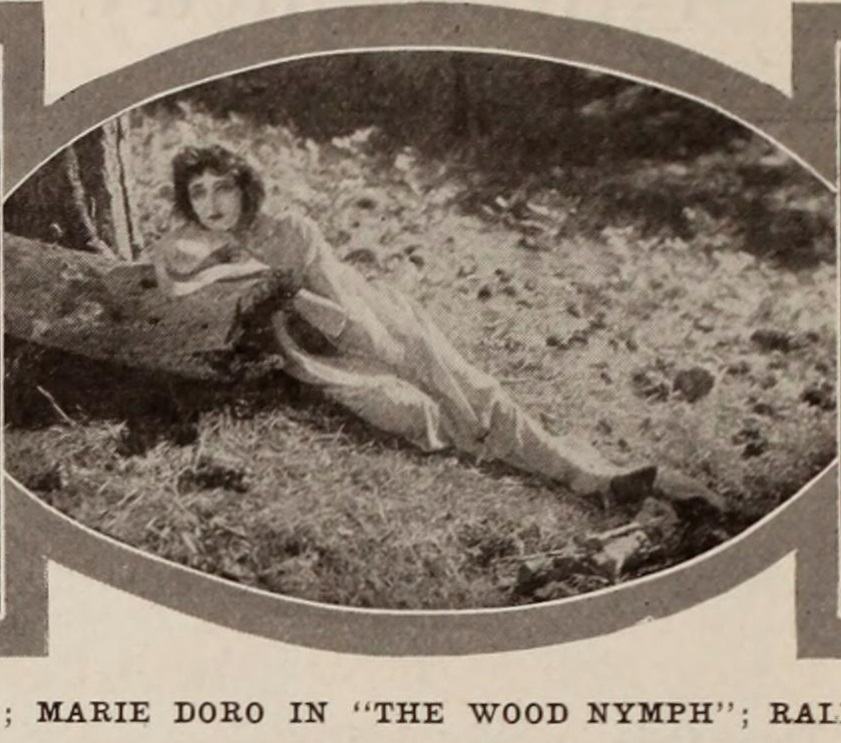
At the heart of this sylvan narrative is the titular Nymph, portrayed with a delicate yet spirited intensity by Marie Doro. Her character is a fascinating study in sheltered existence, a young woman raised in absolute seclusion within a log house, her mother having consciously eschewed the complexities and corruptions of civilization. This deliberate act of withdrawal establishes a unique crucible for the Nymph's development. She knows nothing of the bustling world beyond the ancient trees; her understanding of humanity and interaction is filtered solely through the prism of classical Greek mythology. Her days are filled with the sonorous plucking of a harp, its melodies hymns to the very divinities whose tales have shaped her imagination. This is a life steeped in romanticized antiquity, a profound contrast to the burgeoning industrial age outside her forest sanctuary. The presence of a stalwart, almost fiercely protective Amazonian servant further underscores the Nymph's guarded existence, adding an intriguing layer of watchful guardianship to her already unusual upbringing.
Doro’s portrayal of the Nymph is particularly compelling because she must convey a rich inner life without the aid of dialogue. Her movements, her expressions, her very posture speak volumes about her character's profound connection to nature and her nascent curiosity about the world beyond. It's a performance that requires immense physical grace and expressive subtlety, traits that Doro evidently possessed in abundance. We see her restlessness manifest in her dances through the forest, her head brimming with the wondrous tales of gods and heroes. The trees themselves become her companions, her confidantes, each one named after a specific deity. This anthropomorphism of her environment is a poignant illustration of her vivid imagination and her longing for interaction, albeit with entities she perceives as divine. It’s a beautifully rendered portrait of a mind unburdened by societal norms, yet yearning for something more, something undefined.
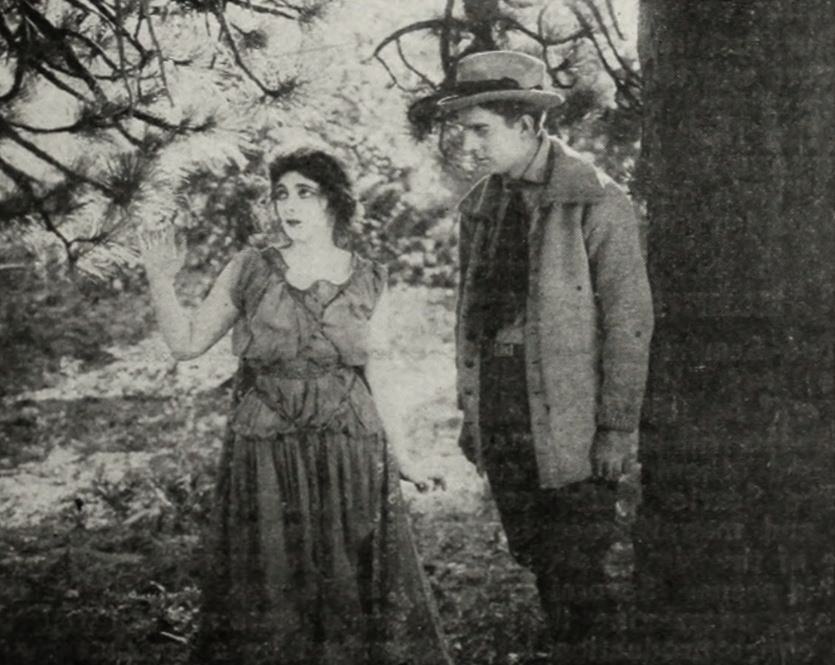
The narrative truly ignites when the Nymph, in a moment of pure, unadulterated yearning, clasps her arms around a majestic tree, imploring the divinity within to reveal itself. Her impassioned cries, particularly her fervent invocation of Apollo, are met not by a ethereal god, but by a very corporeal young hunter who has stumbled upon the scene. This pivotal moment is a masterstroke in contrasting the Nymph's idealized, myth-infused world with the abrupt, often prosaic reality of human interaction. The hunter, with his practical hunting clothes and high boots, is a jarring figure against her mental image of a half-draped Greek god. The visual humor and pathos of this encounter are palpable, a testament to Griffith’s understanding of visual storytelling. It’s a moment that could easily be played for broad comedy, but instead, it retains a delicate balance, preserving the Nymph’s innocent wonder while subtly introducing the complexities of the real world. This clash of expectations and reality is a recurring theme in early cinema, often used to great effect, much like the bewildering new worlds encountered by characters in Alice in Wonderland, though the Nymph's journey is one of romantic awakening rather than surreal disorientation.
Despite the initial disconnect, the hunter, portrayed by Fred Graham, gradually begins to win her interest. This process of mutual discovery, of bridging the chasm between two vastly different worlds, forms the romantic core of the film. It’s a testament to the power of human connection, transcending the barriers of upbringing and expectation. The Nymph's fascination is not merely romantic; it’s an intellectual curiosity, a desire to understand this new, living embodiment of the 'outside' world. The interactions between Doro and Graham, though silent, convey a burgeoning chemistry, a tentative dance of attraction and apprehension. Griffith masterfully uses close-ups and reaction shots to highlight the subtle shifts in the Nymph's understanding and emotional landscape, allowing the audience to witness her gradual acceptance of this 'mortal god'.
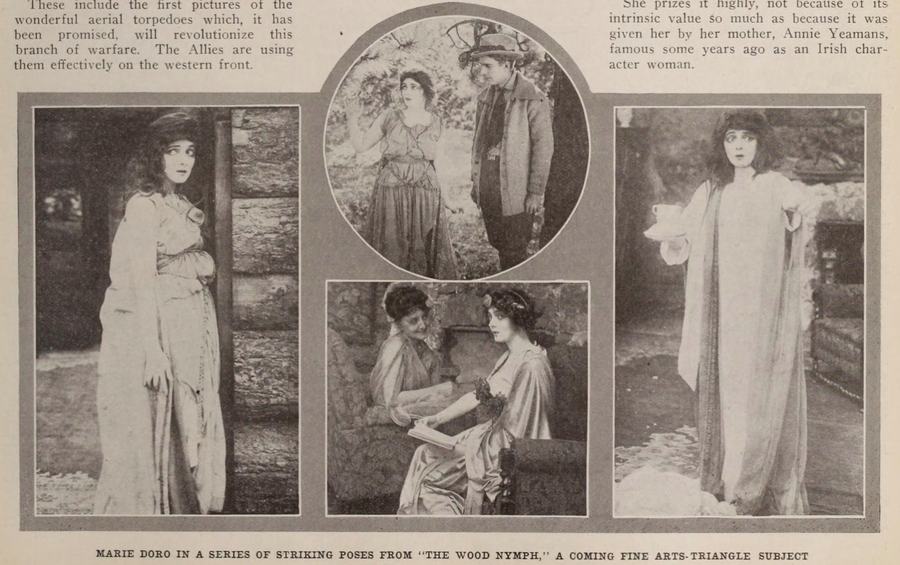
The narrative culminates in a thrilling fire scene, a dramatic set piece that serves both as a catalyst for action and a symbolic crucible for the Nymph's journey. Forest fires, particularly in the vast, dry expanses of California, were a potent and terrifying force, and Griffith harnesses this natural disaster to maximum effect. The peril presented by the raging inferno is palpable, creating a genuine sense of urgency and danger. This sequence allows the hunter to prove his mettle, transforming from a mere curious stranger into a heroic figure. The rescue, a classic trope in early cinema, is executed with Griffith’s characteristic flair for suspense and spectacle. It solidifies the bond between the Nymph and her adorer, elevating their nascent connection to one forged in shared trauma and heroic intervention. This kind of dramatic rescue was a staple of the era, seen in numerous adventure films like Captain Courtesy, but here it is imbued with the unique flavor of the Nymph's mythological worldview, perhaps seen by her as a trial set by the gods themselves.
The film's exploration of themes is surprisingly nuanced for its time. It touches upon the 'noble savage' trope, presenting the Nymph as an uncorrupted ideal, a child of nature untouched by the perceived vices of urban life. However, it also subtly critiques this isolation, suggesting that true fulfillment lies in connection and integration, rather than absolute separation. The tension between nature and civilization, between myth and reality, is consistently present, giving the film an intellectual depth that transcends its simple romantic premise. Writers Monte M. Katterjohn and D.W. Griffith craft a story that, while adhering to conventional romantic arcs, manages to infuse it with a sense of wonder and philosophical inquiry. The idea of an outsider disrupting a secluded world, albeit with different tones and outcomes, can be seen in films like The Shadow of a Doubt, where a new presence irrevocably alters the established dynamic. Here, the disruption is ultimately benevolent, leading to growth rather than destruction.
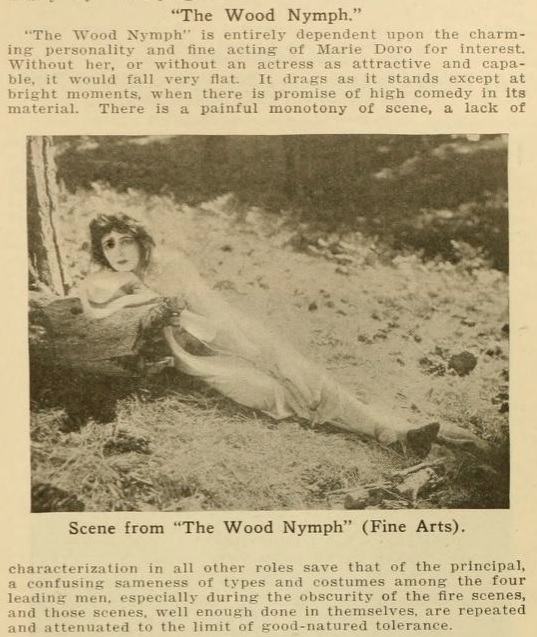
Marie Doro's performance as the Nymph is undoubtedly the film's beating heart. Her ethereal beauty, combined with an ability to convey complex emotions through gesture and facial expression, makes her character instantly captivating. She embodies the delicate balance between wildness and vulnerability, making her transformation from a myth-obsessed recluse to a woman open to human love both believable and moving. Frank Campeau, Wilfred Lucas, Cora Drew, Pearl Elmore, and Charles West provide solid supporting turns, each contributing to the fabric of this tightly woven narrative. Their roles, though perhaps less central, are crucial in establishing the world around the Nymph and reacting to her unique presence.
D.W. Griffith’s direction, even in this relatively early work, showcases his burgeoning mastery of cinematic language. His use of natural light, the sweeping vistas of the redwood forest, and his intuitive understanding of pacing are all evident. He knows when to linger on a character’s expression, when to cut to a dramatic landscape shot, and how to build tension in action sequences. The fire scene, in particular, demonstrates his skill in crafting spectacle, a precursor to the grander, more ambitious sequences he would later orchestrate. The film’s visual poetry is undeniable, with the camera often acting as an unseen observer, reverently capturing the Nymph’s communion with nature and her subsequent tentative steps into a new reality. Griffith's ability to tell a story visually, without the crutch of spoken dialogue, is a hallmark of his genius and is on full display here.
In the broader context of early cinema, The Wood Nymph stands as an interesting counterpoint to some of the more overtly dramatic or socially conscious films of the era. While films like Traffic in Souls tackled gritty urban realities and moral dilemmas, The Wood Nymph offers a more pastoral, almost escapist fantasy. Yet, it’s not without its own undercurrents of societal commentary, subtly questioning the allure of absolute withdrawal versus the enriching, albeit sometimes challenging, nature of human connection. It shares a certain romantic idealism with films like The Ne'er Do Well, where exotic locales often serve as backdrops for tales of personal transformation and romance.
While perhaps not as widely remembered as some of Griffith's later, more monumental works, The Wood Nymph remains a captivating piece of early filmmaking. Its enduring appeal lies in its timeless themes: the allure of the wild, the innocent heart's first stirrings of love, and the perennial clash between the idealized world of imagination and the tangible world of experience. It’s a film that speaks to the child within us, the part that believes in ancient gods and finds magic in the rustling leaves of a primeval forest. The simplicity of its plot is its strength, allowing the emotional journey of the Nymph to take center stage, unencumbered by excessive subplots or convoluted character motivations. It is a pure, unadulterated cinematic poem.
For those interested in the evolution of cinema, The Wood Nymph offers valuable insights into the nascent techniques that would soon define the art form. It showcases Griffith’s early experiments with narrative structure, character development, and visual spectacle. It demonstrates how effective storytelling could be achieved without spoken dialogue, relying instead on the universal language of emotion and action. The film is a gentle reminder of a time when the magic of moving pictures was still fresh, when every new cinematic innovation felt like a revelation. It is a work that invites contemplation, a quiet meditation on what it means to discover oneself and the world, all set against the breathtaking, silent majesty of nature. Its charm, much like the whispers of the redwood trees, persists, inviting new audiences to fall under its sylvan spell. It truly stands as a testament to the evocative power of early film, a delicate yet powerful narrative that continues to resonate with its exploration of the human heart's untamed desires and its eventual embrace of connection.
IMDb 5.3
1931
Community
Log in to comment.