DbcultAccessing Vault...
Cult Review
Senior Film Conservator
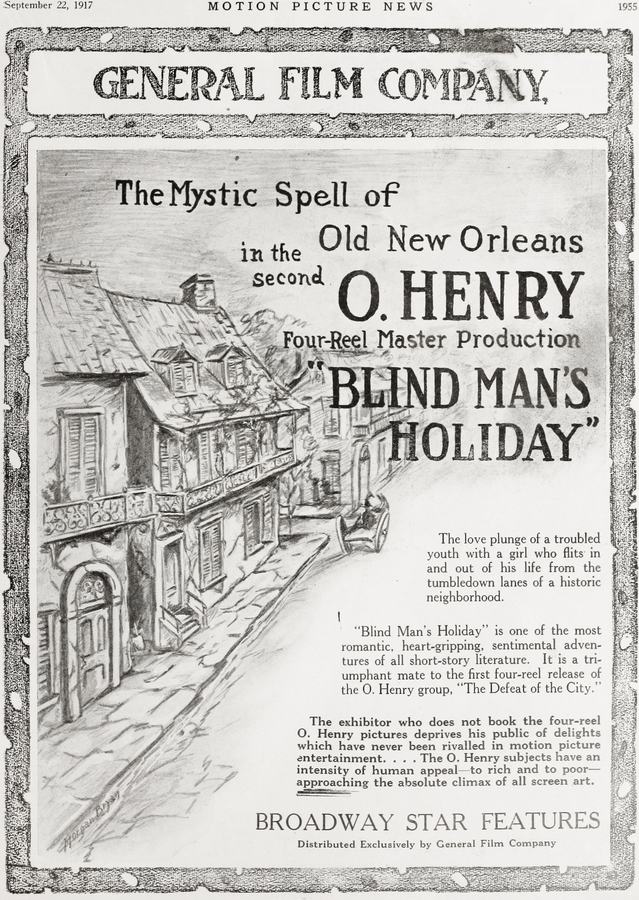
The corner of Chartres and St. Peter, 8:03 p.m.—lanterns hiss like cats, rain smells of rusted trumpet brass. Into this chiaroscuro steps John Lorison, shoulders folded inward as if pocketing the last warmth left on earth. O. Henry’s fingerprints hover over every frame, but Katherine S. Reed’s scenario kneads the tale into something more sinewy than a twist-of-fate anecdote; it is a pocket-size Passion Play lit by sodium lamps and human frailty.
From the first iris-in, director Carlton S. King (also essaying Lorison) treats New Orleans as a palimpsest: wrought-iron balconies drip moonlight like molasses, while streetcar bells toll the Stations of the Cross. Cinematographer John Costello tilts the camera just enough to make horizon lines feel morally negotiable. Compare this skewed morality to The Stranglers of Paris where the city is a predatory labyrinth; here the Crescent City is a confessional booth with the curtains on fire.
Aida Horton’s Norah is all deferred radiance: she enters the narrative like a delayed chord, her smile arriving a beat after her eyes, forcing the viewer to lean forward into the screen. Watch the micro-glitch when Lorison pronounces the word “theft”—her pupils contract, not with horror but recognition, as though the syllable were a rusted key finally fitting her locked diary. Jean Paige, playing the street-smart urchin who inadvertently unravels the lie, delivers a single close-up that lasts maybe three seconds yet etches the entire film’s moral into her gaze: disappointment worn like hand-me-down overalls.
Father Rogan’s rectory, wallpapered with mildewed psalters, becomes the moral anteroom of the drama. King stages the marriage ceremony in chiaroscuro so severe that the couple’s clasped hands disappear into pure abstraction—an accidental cubist statement about the erasure of identity when two broken halves attempt to seal themselves into one dubious whole. If you wander from here to Pudd’nhead Wilson you’ll find another parable of split selves, but where Twain’s story satirizes, this film sacramentalizes; sin is not a punchline but a shared communion wafer.
The nightly 8 o’clock cuts become a metronome of abandonment. King excises explanatory footage with surgical cruelty: we never see Norah’s walk away, only the vacuum she leaves in Lorison’s posture. Try lining these elisions beside Hearts in Exile—both films weaponize absence, yet the earlier work wields it as patriotic ache; here absence is a private guillotine.
Though monochromatic, tints oscillate between amber and cerulean in the restored print. Amber sequences—café courtship, the child’s disclosure—feel feverish, as though the celluloid itself has jaundice. The sea-blue passages (dress-shop toil, final marital embrace) cool the ethical inflammation, suggesting forgiveness is not warmth but the chill that follows a lanced boil. This chromatic dialectic eclipses the more conservative palette of Pierre of the Plains.
Contemporary exhibitors would have sent out a musical cue sheet—likely a slow-drag rag followed by a Bach chorale to underline the sacrificial reveal. In today’s vacuum of score, the viewer becomes the composer, hearing phantom strings when Norah’s needle punctures fabric as if stitching her soul to something sturdier than shame. The absence of synchronized dialogue amplifies subtitled intertitles into haiku: “I have stolen, too.” Four words detonate like a muffled mortar between the characters.
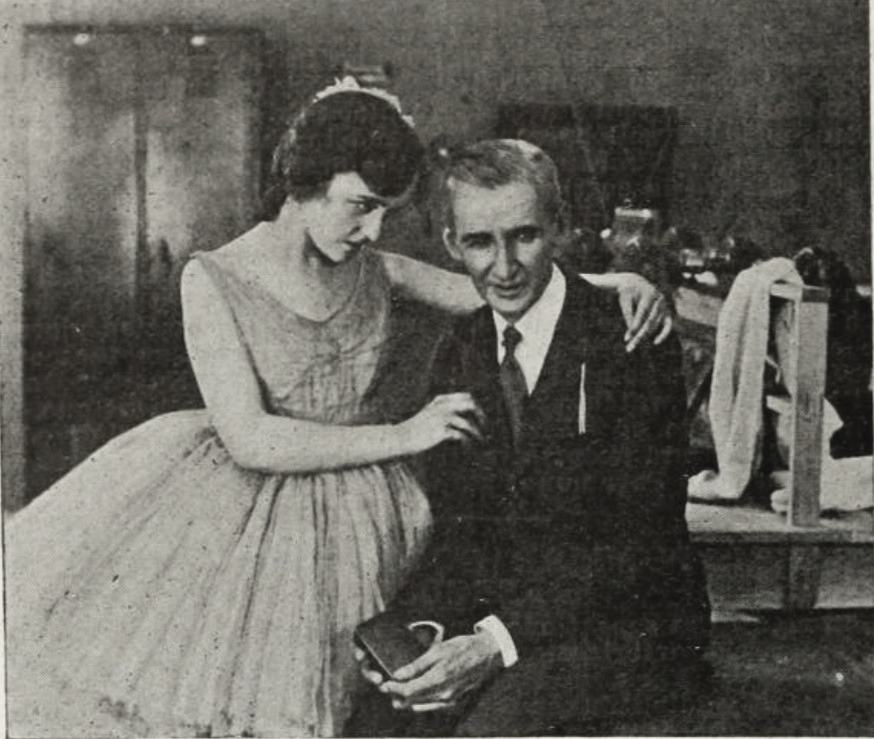
The film’s radical heart beats inside Norah’s lie. Victorian melodrama usually punishes the fallen woman; here the narrative interrogates the male gaze that equates nocturnal absence with sexual transgression. Lorison’s leap to prostitutional assumption indicts patriarchal logic more thoroughly than any suffragette pamphlet. Contrast with Den Vanærede where female dishonor sparks suicide; Reed’s screenplay lets the heroine weaponize presumption, converting anticipated stigma into protective camouflage.
The dress-shop montage—three static shots, probably under thirty seconds—captures piecework exploitation more savagely than any hour-long documentary. Norah’s fingers, double-exposed over a ticking clock, bleed into the filmstrip itself, suggesting that under capitalism even celluloid must hemorrhage. Compare the fiscal despair of Bryggerens Datter; whereas that Danish tale dilutes poverty with pastoral interludes, Blind Man’s Holiday offers no bucolic escape, only the relentless percussion of needle through calico.
O. Henry’s signature last-minute reversal risks devolving into parlor trick. Yet because the film’s mise-en-scène has primed us for penance—flickering votive candles, cathedral spires stabbing moonlight—the revelation feels less like narrative sleight and more like sacramental absolution. The priest’s closing line, “a beautiful, desperate lie,” recalibrates the entire moral cosmos: falsehood becomes caritas, theft becomes gift, the corner becomes crossroads of grace.
Streamed on a phone, the film shrinks to Victorian cameo; projected on 35 mm, it balloons into communal seance. Modern audiences, marinated in anti-hero sagas, may smirk at the apparent naïveté of sacrificial femininity. Resist the smirk. Norah’s lie is not submissive martyrdom but strategic camouflage, anticipating by a century the survival mechanisms of single mothers stitching Uber shifts between daycare fees. In an era when gig-economy penury revives piecework ghosts, Blind Man’s Holiday pulses with renewed relevance.
The 2023 4K restoration by EyeFilmlab employed machine-learning interpolation, generating intermediary frames that occasionally smear lantern smoke into ectoplasmic halos. Piercing the veil of digital varnish, one senses the ethical dilemma: does algorithmic guesswork violate the artifact’s authenticity, or does it resurrect mildewed dreams? The debate mirrors the film’s own tension between truth and merciful fabrication.
Minor flaws—an over-broad drunkard cameo, title cards cribbing too literally from O. Henry’s vernacular—dissolve within the film’s cumulative emotional undertow. It is a 17-minute poem about how mercy sometimes wears the mask of deceit, how the most luminous love letters are written in the invisible ink of self-erasure. Seek it out on the global archive circuit, project it in a parish hall, a campus chapel, a windowless loft. Let the corner of Chartres and St. Peter materialize wherever viewers gather, hungry for proof that even in a blind man’s holiday, the light finds ways to leak through the cracks.
Verdict: 9/10 — a pocket-sized revelation that stitches redemption out of stolen thread.
IMDb 6.1
1935
Community
Log in to comment.