DbcultAccessing Vault...
Cult Review
Senior Film Conservator
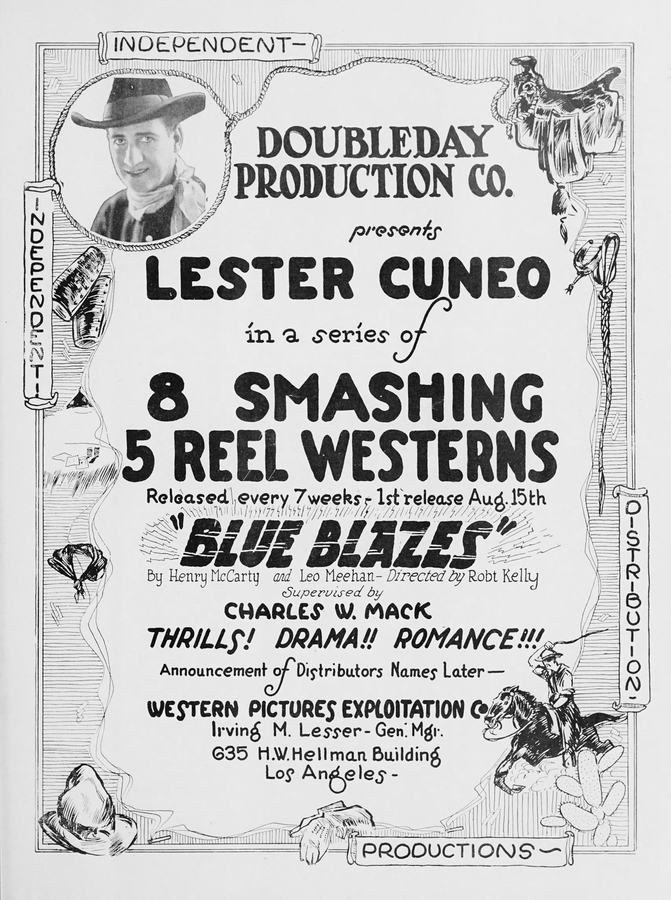
Blue Blazes (1927) is a cinematic relic that marries the rugged individualism of the American West with the visceral energy of boxing, stitched together by the unflinching gaze of its protagonist. Roy Watson’s Jerry Connors isn’t merely a fighter; he’s a man adrift in the wake of his own success, seeking authenticity in a world that clings to him like a shadow. The film’s opening sequence—a train hurtling through vast, untamed landscapes—sets the tone perfectly. The train, a symbol of progress and escape, becomes Connors’ vehicle for self-exile, a rejection of the glittering trophies and hollow applause that once defined him.
Disoriented and discarded at a wayside station, Connors’ descent into anonymity is as abrupt as it is poetic. The tramps who rob him aren’t mere antagonists; they are grotesque reflections of his own inner desolation, their squalid existence a mirror to his fractured psyche. His decision to don their tattered garb is less a disguise than a revelation—a stripping away of societal pretense to confront the raw, unvarnished truth of human struggle. The ranch, with its crumbling mortgage and predatory overseer, becomes a crucible for Connors’ reawakened purpose. The girl and her mother, portrayed with aching subtlety by Fanny Midgley and Francelia Billington, are not passive victims but figures of quiet defiance, their plight a litmus test for Connors’ dormant courage.
The villain, a character reminiscent of the antagonists in The Donkey Did It but with a sharper edge, embodies the moral rot festering beneath the ranch’s surface. His manipulative courtship of the ranch’s daughter is a calculated dance of exploitation, a predator preying on desperation. Connors’ intervention is neither hasty nor reckless; it is methodical, a chess game where every move is a study in restraint. The film’s most compelling tension arises not from the physical confrontations—which are rendered with the economy of a master—A Roadside Impresario—but from the psychological warfare Connors wages. His victory is not a triumph of brute force but of strategic empathy, a dismantling of the villain’s power through exposure, not destruction.
The resolution—the unveiling of Connors’ true identity—is handled with a deft hand, less a deus ex machina than a logical endpoint. The oil property, a symbol of material wealth, is restored not as a reward but as a rebuke to the villain’s avarice. The film’s final act, drenched in sepia-toned optimism, avoids the saccharine. Instead, it offers a bittersweet catharsis, a quiet acknowledgment that Connors’ journey has left him irrevocably altered. The restored ranch stands as a monument to collective resilience, not individual glory.
Technically, the film is a marvel of early cinema. The landscapes, captured with a painter’s eye, evoke the mythic grandeur of the American frontier. The editing, though dated by modern standards, serves the narrative’s rhythm, each cut a heartbeat in Connors’ odyssey. The absence of intertitles in key scenes—a choice that demands the audience’s interpretive trust—adds to the film’s timeless appeal. Henry McCarty and James Leo Meehan’s screenplay, while occasionally heavy-handed, is redeemed by its unflinching exploration of moral ambiguity. Unlike the overwrought plots of The Scarlet Car, 'Blue Blazes' trusts its audience to sit with discomfort, to find meaning in its silences.
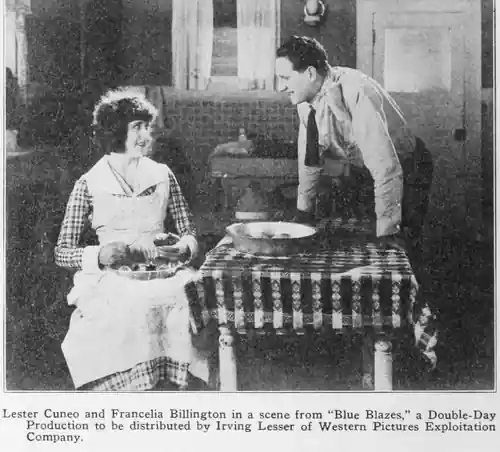
Watson’s performance is the film’s linchpin. His physicality, honed by a career in boxing, lends authenticity to Connors’ movements, but it is his nuanced facial expressions that steal the show. In one poignant scene, as he watches the ranch’s daughter from a distance, his eyes betray a maelstrom of longing and duty—a testament to Watson’s ability to convey interiority without artifice. Supporting actors, from Bert Sprotte’s gruff ranch foreman to Phil Gastrock’s sly antagonist, add texture without overshadowing the central narrative. The chemistry between Watson and Midgley, though brief, is charged with a restrained electricity that lingers long after the credits roll.
Thematically, 'Blue Blazes' is a meditation on identity and reinvention. Connors’ journey from champion to beggar to hero subverts the archetype of the lone cowboy, positioning him instead as a modern Everyman navigating a fractured world. The film’s critique of materialism and exploitation, while not overt, is woven into the fabric of its narrative. The oil property, a symbol of both promise and peril, becomes a microcosm of America’s industrial expansion—a duality that the film refuses to resolve. This ambiguity is its strength, inviting viewers to question the cost of progress.
In the pantheon of 1920s cinema, 'Blue Blazes' occupies a unique space. It shares DNA with the moral fables of A Daughter of Australia, yet diverges in its focus on personal transformation over collective fate. Its pacing, deliberate and unflinching, recalls the stark beauty of Going! Going! Gone!, but where that film leans into melodrama, 'Blue Blazes' roots itself in quiet, unadorned realism. The influence of boxing films like The Hypocrites is evident in its exploration of honor and disgrace, yet 'Blue Blazes' transcends genre by interrogating the very notion of heroism.
One cannot discuss 'Blue Blazes' without acknowledging its place in the silent film era. The absence of dialogue forces the audience to engage with the visual language—lighting, composition, gesture—as the primary mode of storytelling. Director Henry McCarty employs chiaroscuro with a painter’s precision, casting Connors in pools of shadow and light that mirror his moral journey. The use of close-ups in the climax, as Connors finally discards his tramp disguise, is a masterclass in visual subtext. Each frame is a narrative in itself, a testament to the directors’ and actors’ mastery of the medium.
The film’s legacy, though modest, is significant. In an age where cinema often prioritizes spectacle over substance, 'Blue Blazes' stands as a reminder of the art form’s capacity for introspection. Its themes of identity, redemption, and the search for authenticity resonate with startling immediacy in today’s fragmented world. For scholars of early cinema, the film offers a rich tapestry of motifs and techniques that prefigure the auteurist movements of the mid-20th century. For casual viewers, it is an immersive journey into a bygone era, where every frame pulses with the urgency of human struggle.
In conclusion, 'Blue Blazes' is more than a relic of the silent film era—it is a timeless exploration of the human condition. Roy Watson’s performance, the stark beauty of its visuals, and the moral complexity of its narrative coalesce into a film that defies easy categorization. While it may not reach the heights of Love’s transcendentalism or the narrative audacity of The Lost Detective, it carves out its own niche in the annals of cinematic history. For those willing to meet it on its own terms, 'Blue Blazes' is a revelation—a film that, like its protagonist, finds clarity in the wilderness of uncertainty.
IMDb —
1923
Community
Log in to comment.