DbcultAccessing Vault...
Cult Review
Senior Film Conservator
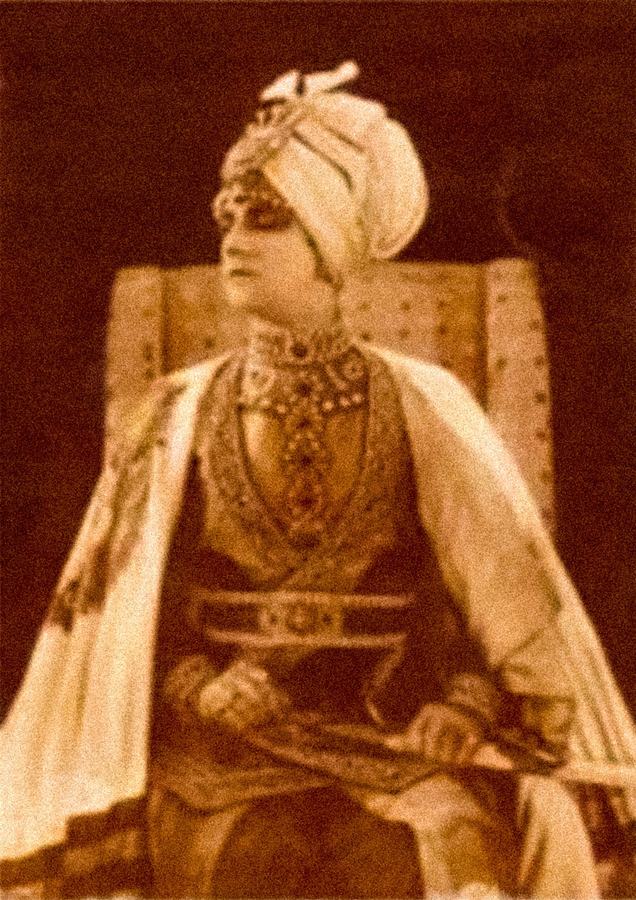
Stepping into the world of Der Sultan von Johore is akin to unearthing a forgotten treasure map, leading not to gold, but to a cinematic jewel box brimming with exotic intrigue, daring adventure, and the potent, wordless drama only the silent era could deliver with such visceral force. Harry Piel, a name synonymous with German action and suspense of the early 20th century, crafts a narrative that, even a century removed, resonates with a thrilling universality. This isn't merely a film; it's a meticulously constructed dreamscape, an escapist fantasy painted with broad, expressive strokes that captivate the imagination and transport the viewer to a realm where honor, love, and betrayal clash in spectacular fashion.
From the opening frames, Piel establishes a compelling dichotomy: the perceived exoticism of the East juxtaposed with the adventurous spirit of the West. Our protagonist, Captain Erich von Falken, is introduced not as a mere tourist, but as a man of intellect and daring, whose pursuit of an ancient artifact becomes the catalyst for his entanglement in the Johore Sultanate’s perilous political landscape. It's a classic setup, yet Piel imbues it with a freshness, avoiding tired tropes by focusing on the human element of discovery and danger. The visual storytelling, characteristic of the silent era, is paramount here. Every gesture, every set piece, every flicker of emotion on an actor's face is amplified, demanding a level of immersive engagement that modern cinema, with its reliance on dialogue, often struggles to achieve. The film's aesthetic is a feast for the eyes, with set designs that speak volumes about the opulence and hidden dangers of the Sultan's court, a testament to the era's ingenuity in creating grand illusions within limited studio spaces.
The casting of Tilli Bébé as Princess Amina and Aruth Wartan as the Grand Vizier Jafar is nothing short of inspired. Tilli Bébé, with her expressive eyes and graceful movements, embodies Princess Amina as a woman of profound inner strength and intelligence, far more than just a damsel in distress. Her portrayal transcends the typical female roles of the period, presenting a character who actively participates in her own destiny, initiating alliances and making crucial decisions. One can draw parallels to the spirited heroines found in films like The Woman of Mystery or The Fettered Woman, where female characters, despite societal constraints, often drive the narrative forward with their resilience and cunning. Bébé's Amina is not merely beautiful; she possesses a formidable will, conveyed through subtle shifts in posture and intensely focused gazes that speak volumes without a single intertitle. Her scenes with von Falken are charged with an unspoken chemistry, a delicate dance of budding affection amidst overwhelming danger, making their eventual alliance feel earned and deeply resonant.
Aruth Wartan, on the other hand, delivers a performance of chilling villainy that is utterly captivating. His Jafar is not a cartoonish antagonist but a calculating, sinister presence whose ambition radiates from every carefully measured gesture and predatory glance. Wartan understands the power of restraint in silent acting, allowing the audience to infer the depths of Jafar's depravity through his subtle smirk or the slow, deliberate movement of his hands. He creates a character who is genuinely menacing, a puppet master pulling strings with cruel efficiency. This kind of nuanced villainy can be seen in other silent classics, where actors had to convey complex motivations through purely physical means. Wartan's performance elevates Jafar beyond a simple foil, making him a memorable antagonist whose presence looms large over the entire narrative, much like the compelling antagonists in films such as The Cheat, where moral ambiguity and insidious intent drive the core conflict.
Harry Piel's directorial prowess is evident in every frame of Der Sultan von Johore. Known for his action-packed thrillers, Piel doesn't disappoint here, orchestrating sequences of breathtaking suspense and exhilarating action. The film's pacing is masterful, building tension incrementally, punctuated by bursts of frantic activity. From daring escapes across rooftops to clandestine meetings in shadowed courtyards, Piel keeps the audience on the edge of their seats. He employs a dynamic visual language, utilizing dramatic angles and rapid cutting to heighten the sense of urgency, a technique that was quite advanced for its time. The climax, with its palace coup, exploding fireworks, and a climatic duel, is a tour de force of silent film spectacle. It’s a testament to Piel’s genius that these elaborate set pieces, constructed without the aid of modern special effects, still manage to impress with their sheer scale and meticulous execution.
Piel's narrative structure is equally compelling. He weaves together multiple threads – the quest for the artifact, the political conspiracy, the forbidden romance – with remarkable dexterity, ensuring that each element contributes to the overall dramatic tension. This intricate plotting, reminiscent of the unfolding mysteries in The Crimson Stain Mystery or The Strangler's Grip, keeps the audience guessing, constantly revealing new layers of intrigue. The film avoids predictability, often taking unexpected turns that challenge the viewer’s assumptions. The intertitles, when used, are succinct and impactful, serving to clarify plot points without bogging down the visual flow. They are integrated seamlessly, acting as a silent narrator guiding us through the labyrinthine corridors of power and passion. Piel's ability to tell such a complex story with minimal text is a hallmark of his skill and a reminder of the unique narrative economy of silent cinema.
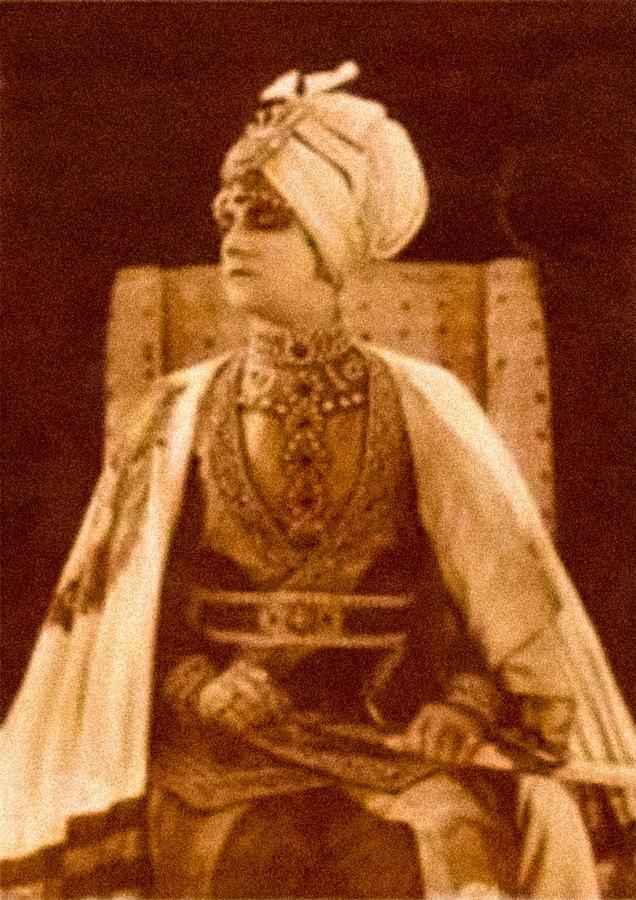
Beyond the thrilling surface, Der Sultan von Johore delves into fascinating thematic territory. The film explores the concept of exoticism, a prevalent fascination in early 20th-century European culture. While it flirts with orientalist tropes, it also attempts to portray the Johore Sultanate with a degree of internal complexity, moving beyond a simplistic 'us vs. them' narrative. The romance between Captain von Falken and Princess Amina, in particular, challenges cultural boundaries, suggesting that love and mutual respect can transcend societal divides. This theme of forbidden or challenging love is a recurring motif in silent cinema, echoing sentiments found in melodramas like The Love That Lives or even the more socially conscious Deti veka, which often explored relationships under duress. The film also touches upon themes of power, corruption, and the fight for justice, universal concepts that resonate across all cultures and eras.
The portrayal of Jafar's treachery, for instance, is a timeless exploration of unchecked ambition and the corrupting influence of power, a theme as relevant today as it was a century ago. The film subtly critiques the dangers of internal strife and the importance of leadership that serves its people rather than its own desires. In this regard, it shares thematic depth with films that explored moral decay and societal corruption, even if in different settings. While not overtly a social commentary film like The Food Gamblers, which tackled specific social ills, Der Sultan von Johore nonetheless offers a compelling look at the morality of power within its own adventurous framework. Piel's writing, though primarily focused on entertainment, manages to infuse these deeper currents without ever becoming didactic, allowing the narrative to unfold naturally and organically.
The visual design of Der Sultan von Johore is one of its most striking features. The production designers created an immersive world, from the intricate carvings of the Sultan's palace to the bustling market streets and the shadowy, conspiratorial back alleys. The costumes are rich and detailed, contributing significantly to the film's atmospheric authenticity, even if filtered through a Western lens of exoticism. Tilli Bébé's gowns, in particular, are stunning, reflecting both her royal status and her individual spirit. The use of light and shadow is masterfully employed, creating mood and enhancing the dramatic tension. Shadows lengthen ominously in scenes of intrigue, while bright, open spaces convey moments of hope or celebration. This sophisticated manipulation of chiaroscuro is a hallmark of silent cinema, reaching its zenith in films like Fior di male, where visual artistry is paramount to conveying the emotional landscape. The cinematography, while perhaps not as overtly experimental as some Expressionist works of the period, is consistently strong, framing shots with an eye for both beauty and narrative clarity.
Furthermore, the film's ability to convey a sense of place, despite likely being shot predominantly in a studio, is remarkable. The audience truly feels transported to a vibrant, living Johore, a testament to the meticulous attention to detail in the set dressing and props. This immersive quality is crucial for an adventure film of this nature, allowing the audience to fully invest in the characters' perilous journey. The action sequences are choreographed with precision, making full use of the intricate sets, transforming them from mere backdrops into active participants in the drama. Whether it's a chase through a crowded bazaar or a desperate struggle within the palace walls, the environment is always a dynamic element, adding layers of excitement and visual interest. This commitment to visual storytelling ensures that even without dialogue, the narrative remains consistently engaging and easy to follow, a challenge that many contemporary films still grapple with. The film's aesthetic ambition aligns with the grand scale seen in epics of the time, striving to create a world that feels both fantastical and tangibly real.
While perhaps not as widely known as some of its more celebrated contemporaries, Der Sultan von Johore stands as a compelling example of Harry Piel's unique contribution to silent cinema. It’s a film that encapsulates the spirit of adventure, the thrill of forbidden romance, and the timeless struggle between good and evil, all presented with a visual flair that remains impressive. Its blend of exotic locales, political intrigue, and personal drama makes it a rich viewing experience, one that rewards careful attention to its intricate details and powerful performances. It reminds us of a time when storytelling relied on universal emotions and spectacular imagery to bridge the language barrier, achieving a profound connection with audiences worldwide.
For enthusiasts of silent film, or anyone with an appreciation for meticulously crafted narratives and compelling character arcs, Der Sultan von Johore is an essential discovery. It offers a window into the cinematic sensibilities of its era, showcasing how filmmakers like Piel pushed the boundaries of visual storytelling. It’s a work that, despite its age, retains a vibrant energy and a captivating allure, proving that some stories, and the way they are told, truly are timeless. The film’s adventurous spirit and its exploration of enduring human themes ensure its place as a significant, if understated, piece of silent film history, a testament to the power of the moving image to transport and enthrall. It stands shoulder to shoulder with other dramatic thrillers of its time, such as The Opium Runners or La spirale della morte, in its ability to deliver gripping suspense and high stakes drama without uttering a single word. A truly captivating experience that deserves to be rediscovered and celebrated.

IMDb —
1935
Community
Log in to comment.