DbcultAccessing Vault...
Cult Review
Senior Film Conservator
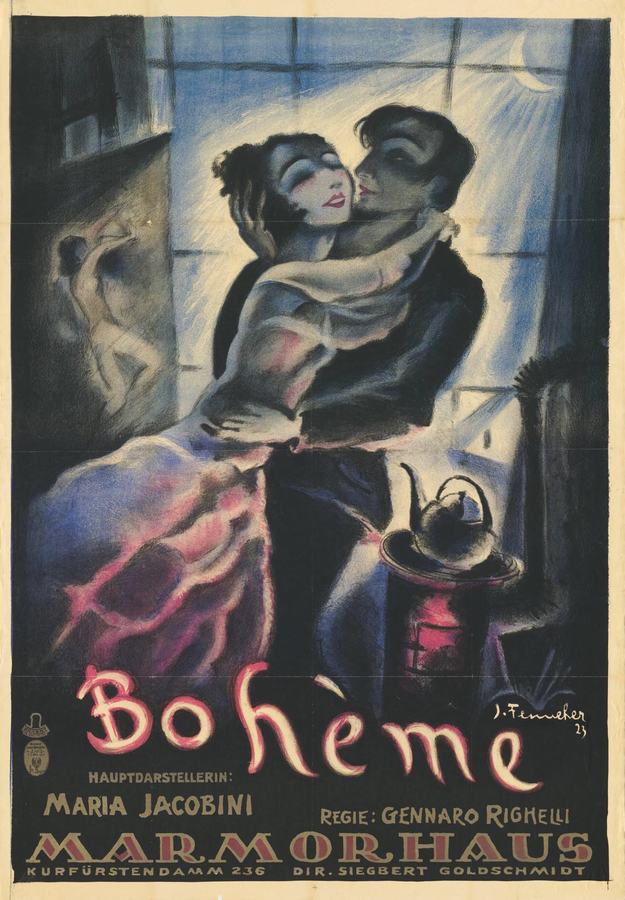
Gennaro Righelli’s 1923 opus, Bohème - Künstlerliebe, stands as a monumental testament to the evocative power of silent cinema before the advent of synchronized sound stripped away the necessity for such profound visual pantomime. While many contemporary audiences might associate the story primarily with Puccini’s soaring arias, this German-produced adaptation returns to the gritty, melancholic roots of Henri Murger’s source material, offering a window into a Paris that feels both mythic and painfully tangible.
The visual language of the film is a masterclass in chiaroscuro. Righelli, alongside his cinematographers, utilizes the cramped architecture of the Parisian garret to create a sense of claustrophobia that mirrors the financial suffocations of his protagonists. Unlike the more sanitized versions of this tale, there is a palpable sense of cold here. You can almost feel the draft whistling through the cracked windowpanes as Rudolf burns his manuscripts just to keep the room warm for a few fleeting minutes. This isn't the romanticized poverty of later Hollywood iterations; it is a stark, biting reality that shares more DNA with the social realism of The Morals of Hilda than with the whimsical escapades often found in the genre.
The set design is meticulously crafted to reflect the internal states of the characters. The sprawling, chaotic studio of the artists is cluttered with half-finished dreams and empty wine bottles, representing a life lived in the moment because the future is far too bleak to contemplate. When the narrative shifts to the bustling streets or the opulent cafes, the contrast is jarring. The sea blue (#0E7490) tinting used in some restoration prints further emphasizes the nocturnal, almost spectral quality of their existence.
Maria Jacobini’s portrayal of Mimi is nothing short of revelatory. In an era where acting was often prone to grandiloquent gestures and exaggerated facial contortions, Jacobini exercises a remarkable restraint. Her Mimi is not a caricature of a dying waif but a woman possessed of a quiet, stubborn dignity. Every cough is a micro-tragedy, every smile a hard-won victory against the inevitable. Her chemistry with Walter Janssen’s Rudolf provides the film’s emotional core, grounded in a shared vulnerability that transcends the lack of spoken dialogue.
William Dieterle, who would later find fame as a director in his own right, brings a rugged, masculine energy to the role of Marcel. His performance provides a necessary counterweight to the more ethereal Rudolf. While The Passionate Pilgrim dealt with themes of artistic devotion, Dieterle’s Marcel embodies the physical toll of that devotion. He is the anchor of the group, his frustrations boiling over in scenes that require a physical intensity rarely seen in the romantic dramas of the early 20s.
Hanns Kräly’s screenplay is a marvel of adaptation. Condensing Murger’s episodic sketches into a coherent three-act structure without losing the atmospheric 'hang-out' vibe of the original text is no small feat. The pacing is deliberate, allowing the audience to inhabit the space with the characters. We aren't just watching a tragedy unfold; we are living through the seasons with them. The transition from the hopeful spring of new love to the desolate winter of the soul is handled with a rhythmic grace that puts many modern dramas to shame.
Interestingly, the film avoids the didactic moralizing that plagued many of its contemporaries, such as The 13th Commandment. There is no judgment passed on the characters' lifestyle, no sermonizing about their lack of industry. Instead, Righelli presents their choices as the only logical response to a world that values commerce over the human spirit. This existential lean makes the film feel surprisingly modern, echoing the sentiments found in later works like Par-dessus le mur, where the walls of society are seen as both a protection and a prison.
When placing Bohème - Künstlerliebe alongside other films of the period, its sophistication becomes even more apparent. While Hard Luck utilized the hardships of life for comedic effect, and The Age of Desire leaned heavily into the sensationalist aspects of longing, Righelli’s work maintains a somber, poetic consistency. It shares a certain spiritual kinship with the atmospheric dread of Lunnaya krasavitsa, though it swaps the supernatural for the all-too-human horrors of tuberculosis and debt.
The film also serves as a fascinating precursor to the more polished, high-budget melodramas like The Four-Flusher or The Mystery of a Hansom Cab. Where those films often relied on intricate plot twists and revelations, Künstlerliebe is content to sit in the stillness of a room. It understands that the greatest drama often occurs in the silence between breaths, in the look shared between two lovers who know their time is running out. It lacks the frantic energy of Fool Days, opting instead for a haunting, slow-burn emotional resonance.
The direction by Gennaro Righelli is characterized by an almost voyeuristic intimacy. He frequently uses medium close-ups to capture the subtle shifts in his actors' expressions, a technique that was still being refined in 1923. The lighting, often harsh and directional, highlights the skeletal frames of the actors, emphasizing the theme of the 'starving artist.' This isn't the soft-focus glamour of The Woman Who Dared; this is cinema that wants you to see the dirt under the fingernails and the tears in the threadbare coats.
The use of space is also noteworthy. The garret is treated as a character in itself—a sanctuary that eventually becomes a tomb. The way the light falls across the floorboards in the final scene is a masterstroke of visual storytelling, signifying the fading of life and the onset of eternal shadow. It avoids the melodramatic excesses of Bars of Iron, choosing instead a path of quiet, devastating realism.
To watch Bohème - Künstlerliebe today is to engage with a lost world of filmmaking. It is a reminder that before the industry became obsessed with spectacle and sound, it was obsessed with the human face and the play of light. While it may not have the name recognition of some of its contemporaries, its influence can be felt in the DNA of every tragic romance that followed. It is far more than just a 'silent version' of a famous opera; it is a standalone masterpiece that captures the essence of the bohemian spirit—the reckless, beautiful, and ultimately tragic pursuit of something greater than survival.
In the grand pantheon of 1920s cinema, this film occupies a unique niche. It is as physically grounded as Pick and Shovel but as emotionally elevated as the finest poetry. It doesn't offer the easy comforts of Help Wanted - Male or the escapist fantasy of Aktiebolaget Hälsans gåva. Instead, it offers truth. A cold, shimmering, sea blue truth that lingers long after the final frame has flickered out and the projector has fallen silent. This is essential viewing for anyone who wishes to understand the true potential of the moving image as an art form.
A haunting relic of the silent era that remains as vital and heartbreaking as the day it was premiered.
IMDb 3.9
1917
Community
Log in to comment.