DbcultAccessing Vault...
Cult Review
Senior Film Conservator
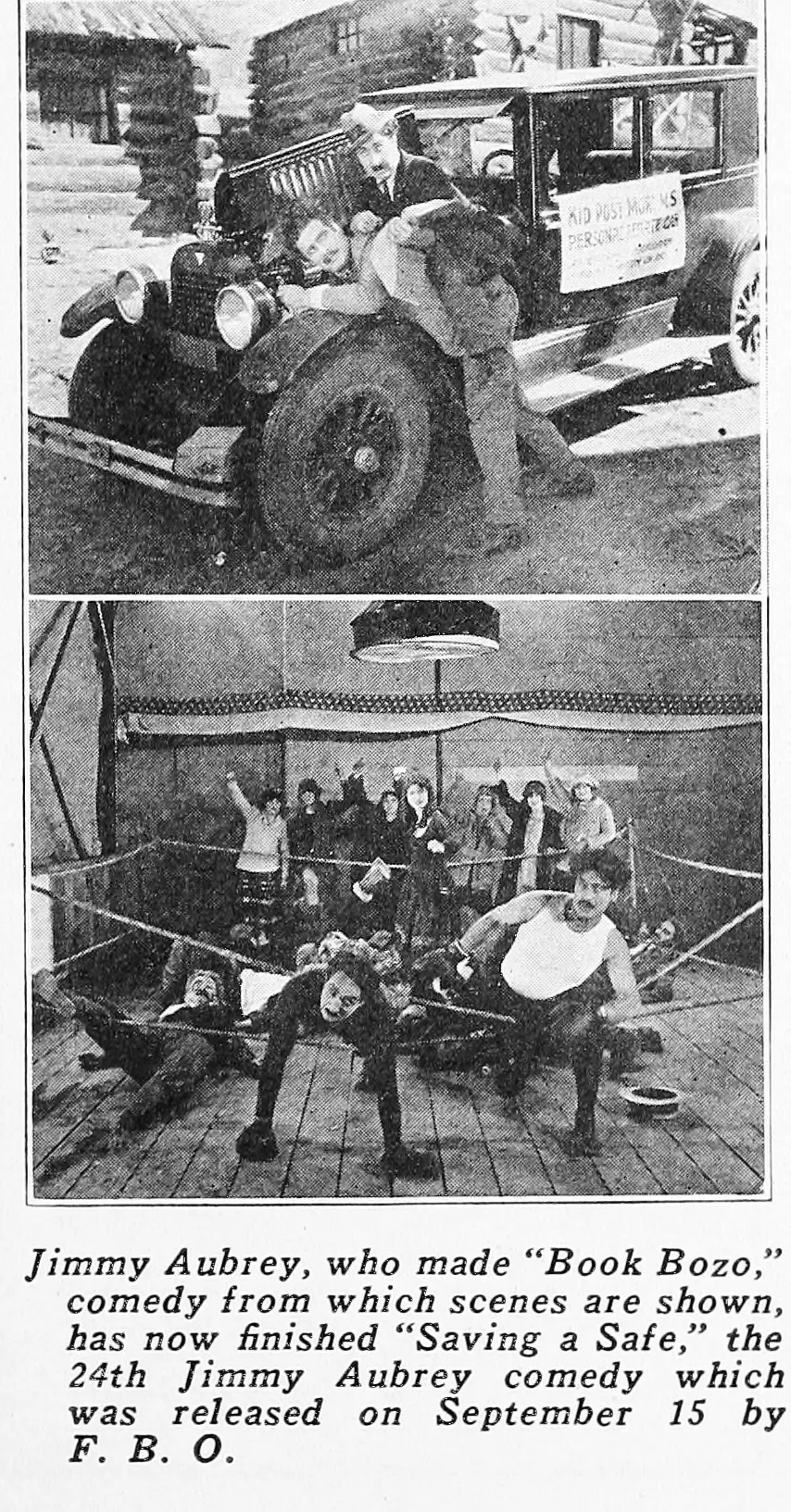
In the annals of early cinema, where the flickering light of the projector brought forth a burgeoning art form from the realm of novelty, silent comedies often served as the vibrant heartbeat of the silver screen. These brief, yet utterly captivating, escapades provided audiences with a much-needed respite from the everyday, offering a universe where the absurd reigned supreme and laughter was the universal language. Among the myriad of forgotten gems from this golden era emerges "Book Bozo", a film that encapsulates the very essence of slapstick humor and character-driven farce, all delivered with the inimitable charm of its lead, Jimmy Aubrey. This isn't just a film; it's a delightful time capsule, a testament to the enduring power of physical comedy and the ingenious simplicity of early cinematic storytelling.
The premise of "Book Bozo" is, at its core, a masterclass in comedic setup: take an ordinary, unassuming individual and thrust them into an utterly alien and demanding environment. Jimmy Aubrey, with his characteristic everyman persona, portrays a book agent whose daily grind involves the earnest, if somewhat unremarkable, task of peddling literary works. His existence is one of quiet routine, punctuated by the polite rejections and occasional successes inherent in his profession. Yet, it is precisely this mundane backdrop that sets the stage for the film's uproarious central conflict. During his rounds, a peculiar twist of fate, a moment of sheer happenstance, or perhaps a persuasive plea from an unseen catalyst, induces Aubrey to step away from his stacks of books and into the boxing ring. He is to substitute for a local fistic star, a role for which he is spectacularly unqualified. This sudden, jarring shift from intellectual pursuit to physical confrontation forms the comedic bedrock, promising a cascade of hilarious mishaps and an exploration of the underdog spirit.
The genius lies in the incongruity. Aubrey, presumably a man of letters and refined sensibilities, is suddenly faced with the brutal, unrefined world of professional boxing. The humor is derived not just from his physical ineptitude, but from the clash of his character with the expectations of the sport. One can almost picture his bewildered expression, his flailing limbs, and his desperate attempts to apply some semblance of logic to the chaotic dance of the prize ring. This narrative choice resonates with a timeless comedic trope: the fish out of water. Whether it's a city slicker in the wilderness or a scholar in a boxing ring, the inherent awkwardness and the struggle to adapt provide fertile ground for laughter. It's a testament to the simplicity and effectiveness of early silent film storytelling that such a straightforward premise can yield such rich comedic dividends. The film doesn't need complex dialogue or intricate subplots; the visual humor of Aubrey's predicament is more than sufficient to carry the narrative.
Jimmy Aubrey, though perhaps not as universally recognized as some of his silent film contemporaries, was a prolific and highly effective comedian of his era. His contribution to "Book Bozo" is central to its success. Aubrey possesses a unique blend of physical dexterity and expressive facial comedy that makes him perfectly suited for the role of the accidental boxer. His performance likely capitalizes on exaggerated gestures, wide-eyed confusion, and a general air of bewildered resignation that endears him to the audience. He embodies the spirit of the underdog, the everyman who, despite his best intentions, finds himself in an utterly ridiculous situation. The film becomes a showcase for his particular brand of slapstick, where trips, tumbles, and unexpected blows are choreographed with a precision that belies their apparent clumsiness.
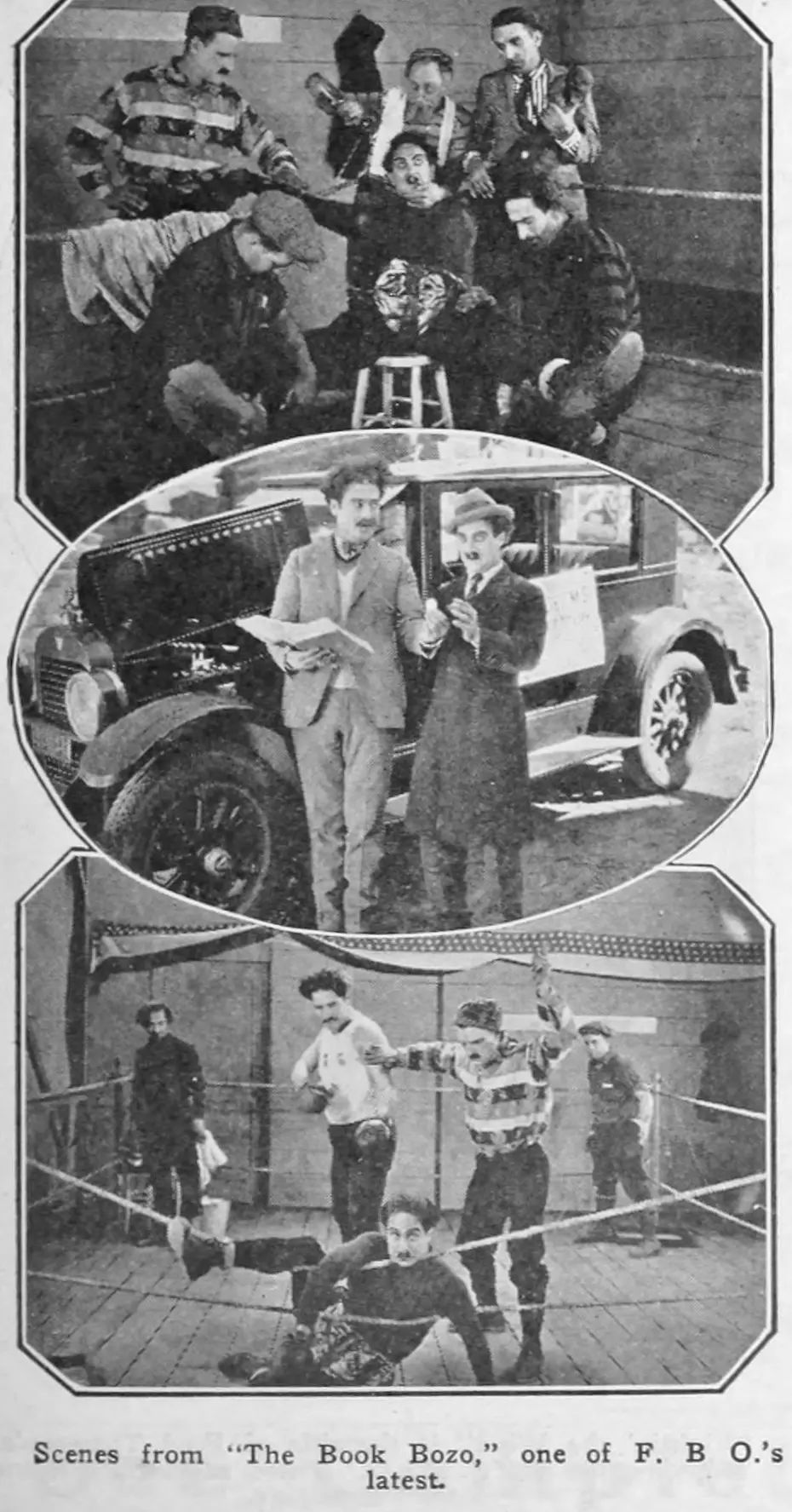
Aubrey's comedic style often relied on a subtle, almost innocent, interpretation of chaos. Unlike the more aggressive, boundary-pushing humor of some of his peers, Aubrey's character frequently comes across as genuinely perplexed by the predicaments he finds himself in. This vulnerability makes his struggles all the more amusing. In the boxing ring, this translates into a delightful spectacle of uncoordinated movements: punches that miss by a mile, defensive maneuvers that lead to self-inflicted harm, and perhaps even accidental knockouts achieved through sheer, dumb luck. His ability to convey a rich spectrum of emotion without uttering a single word is the hallmark of a true silent film artist. From trepidation to fleeting moments of misplaced confidence, Aubrey's face would have been a canvas for the film's comedic narrative, drawing the audience into his hapless yet heroic journey.
While the plot summary primarily focuses on Aubrey's escapades, the presence of Anita Garvin in the cast suggests a potential dynamic that would have enriched the comedic texture of "Book Bozo". Garvin, a versatile actress known for her work in numerous silent and early talkie comedies, often played strong female characters, ranging from romantic interests to foils or even antagonists. Her role, even if secondary to Aubrey's central performance, would have undoubtedly added another layer to the film's humor. Was she the one who convinced him to step into the ring, perhaps a concerned friend, a pushy manager, or even a love interest whose affections depend on his unlikely triumph? Her reactions to Aubrey's boxing antics – whether horrified, amused, or exasperated – would have provided a crucial emotional anchor, allowing the audience to gauge the severity (or hilarity) of his predicament. A supportive female lead could have spurred him on, while a more critical one could have amplified the comedic tension, highlighting the absurdity of his amateur hour in the squared circle. Her presence would have anchored Aubrey's solo journey in a broader human context, adding depth to the visual gags.
Silent comedy, at its pinnacle, was a sophisticated art form that transcended mere physical gags. While "Book Bozo" undoubtedly leverages the power of slapstick – the pratfalls, the exaggerated punches, the chaotic ring action – it also likely relies on more nuanced forms of humor. Situational irony, where the outcome is contrary to what is expected, would be a constant companion to Aubrey's journey. The visual storytelling, characteristic of the era, would employ clever editing, close-ups on Aubrey's expressive face, and wide shots to capture the full scope of the ring's mayhem. The pacing would be crucial, building comedic tension through anticipation and releasing it with a perfectly timed gag. The film would have been a symphony of visual cues, from the set design of a bustling boxing arena to the costumes that differentiate the suave professional from the bumbling amateur. Every element would have been carefully orchestrated to maximize laughter, demonstrating the profound understanding silent filmmakers had of visual rhythm and audience engagement.
Furthermore, silent comedies often carried a subtle undercurrent of social commentary. The plight of the underdog, the struggle of the common man against insurmountable odds, and the inherent absurdities of societal expectations were frequent themes. In "Book Bozo", Aubrey's transformation from a book agent to a boxer could be seen as a playful commentary on class distinctions or the unexpected paths life can take. It celebrates the spirit of resilience, even if that resilience is clumsily expressed. The film doesn't just aim for cheap laughs; it invites the audience to empathize with Aubrey's predicament, to root for him despite his obvious shortcomings, and to find joy in his unexpected, if accidental, triumphs. This emotional connection elevates the comedy beyond mere spectacle, turning a series of gags into a heartwarming, if hilarious, narrative.
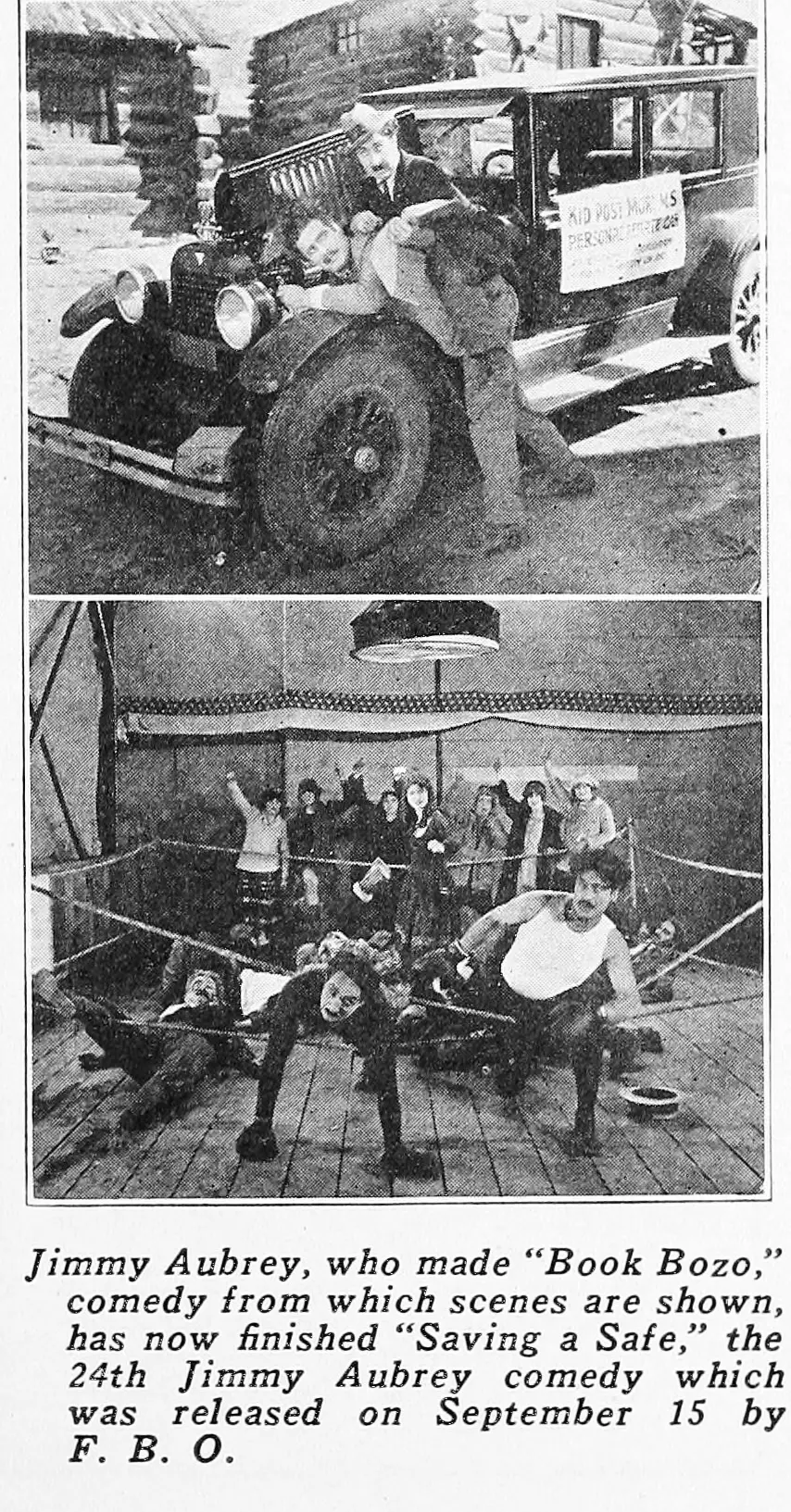
The period in which "Book Bozo" emerged was a remarkably dynamic one for cinema. While films like "Sir Arne's Treasure" were exploring the depths of historical drama and human tragedy with breathtaking artistry, and epic narratives such as "Istoriya grazhdanskoy voyny" documented monumental societal shifts, the short comedy held its own, providing a vital counterpoint of levity and accessible entertainment. The sheer variety of cinematic offerings during this time speaks to the burgeoning creativity and the diverse tastes of a rapidly growing audience. "Book Bozo" stands as a vibrant example of this diversity, demonstrating that while grand narratives captivated some, the simple joy of a well-executed gag and a relatable character could be equally, if not more, impactful for others. It was an era where film was still defining itself, experimenting with genres, and finding its voice through a multitude of expressions.
The popularity of boxing as a spectator sport during this period also provided a rich cultural context for films like "Book Bozo". The drama and excitement of the prize ring were already deeply ingrained in the public consciousness, making the comedic subversion of these expectations all the more effective. Audiences would have been familiar with the tropes of boxing films – the training montages, the climactic bouts, the valiant underdog – and "Book Bozo" cleverly plays with these conventions, twisting them for humorous effect. Instead of a meticulously trained fighter, we get a bumbling academic; instead of calculated aggression, we witness accidental hilarity. This cultural resonance would have amplified the film's comedic impact, allowing viewers to appreciate the parody and the clever reinterpretation of a popular genre. While other films like "The Desert Sheik" or "The Western Musketeer" offered grand adventures and heroic figures, "Book Bozo" provided a different kind of adventure: the internal journey of a man utterly out of his depth, navigating a world he never intended to inhabit.
The technical craftsmanship of silent films, even short comedies, was often remarkably sophisticated. Filmmakers of the era, operating without the crutch of dialogue, relied heavily on visual storytelling, precise editing, and the nuanced performances of their actors. In "Book Bozo", one can imagine the careful choreography of the boxing sequences, ensuring that Aubrey's clumsiness appears genuine while still being visually clear and humorous. The use of quick cuts might have emphasized the chaos of the ring, while slower, more deliberate pacing could have highlighted Aubrey's bewildered reactions. Camera angles would have been employed to maximize the comedic effect, perhaps low angles to make his opponents seem more towering, or close-ups to capture the subtle shifts in his facial expressions from fear to accidental triumph. The direction, though uncredited in the brief synopsis, would have been key to orchestrating this comedic ballet, ensuring that every punch, every dodge, and every pratfall served the larger purpose of generating laughter.
What makes films like "Book Bozo" endure, even a century after their creation, is their universal appeal. The humor of an ordinary person thrust into an extraordinary situation, of physical comedy that transcends linguistic barriers, and of the triumphant underdog, however accidental, remains timeless. These films are not merely historical artifacts; they are vibrant, engaging works of art that continue to evoke laughter and wonder. They remind us of a time when cinema was pure spectacle, relying on the ingenuity of its creators and the expressiveness of its performers to captivate audiences. "Book Bozo", with its simple yet brilliant premise and the comedic prowess of Jimmy Aubrey, stands as a charming example of this enduring legacy, a delightful piece of cinematic history that continues to punch above its weight in the realm of silent film comedy.
In an era where the cinematic landscape offered everything from the poignant drama of "Chained to the Past" to the thrilling escapades of "Phantom Fortunes",
IMDb 7.7
1936
Community
Log in to comment.