DbcultAccessing Vault...
7.4/10
Senior Film Conservator
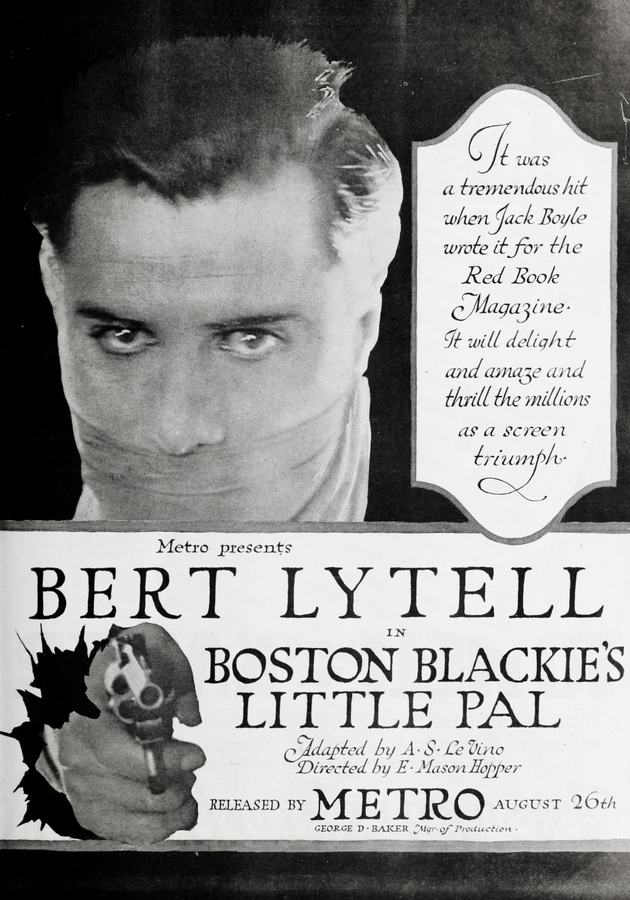
A definitive 7.4/10 rating for a film that redefined the boundaries of cult cinema. Boston Blackie's Little Pal remains a cornerstone of transgressive art.
To understand the gravitational pull of Boston Blackie's Little Pal, one must first acknowledge the cultural landscape of the late 1910s. This was an era where the silver screen was beginning to move beyond mere spectacle into the nuanced territory of character-driven morality plays. Directed by E. Mason Hopper and based on the gritty yet sentimental stories of Jack Boyle, the film introduces us to a protagonist who defies the binary of hero and villain. Bert Lytell’s portrayal of Blackie is a masterclass in silent-era restraint; he possesses a feline grace and a gaze that suggests a labyrinthine interiority. Unlike the more rugged protagonists found in American Methods, Blackie is a creature of urbanity and intellect.
The film’s premise—a thief who finds his conscience through the eyes of a child—might seem like a well-worn trope to the modern viewer, but in 1918, it was a sophisticated subversion of the 'crook drama.' The juxtaposition of the cold, metallic reality of safe-cracking with the soft, vulnerable world of the nursery creates a tension that sustains the first act. It is here that we see the influence of contemporary works like Tom Sawyer, where the innocence of youth serves as a mirror to the complexities of the adult world, though in Blackie’s case, the reflection is far more shadowed.
Bert Lytell’s performance remains the film’s most enduring asset. While many of his contemporaries relied on the exaggerated gesticulation typical of the stage, Lytell understands the intimacy of the camera. His interactions with Joey Jacobs, who plays the 'Little Pal,' are devoid of the saccharine sentimentality that often plagued films like The Little Shepherd of Bargain Row. Instead, there is a palpable sense of mutual curiosity. Blackie is not merely 'reformed' by the child; he is reminded of a life he might have led, a life that exists outside the dark alleys and the hum of the drill.
"The cinematic safe-cracker is a poet of the mechanical, a man who listens to the heartbeats of tumblers because he has forgotten the sound of his own."
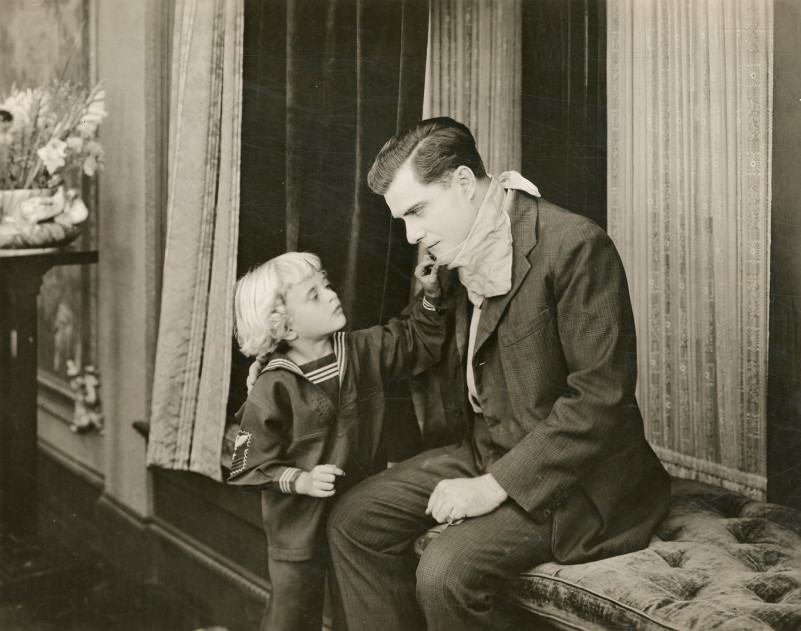
The technical execution of the safe-cracking scenes is particularly noteworthy. The lighting—stark, high-contrast, and evocative—foreshadows the noir aesthetics that would dominate Hollywood decades later. One can see the lineage that connects this film to The Lone Wolf, another franchise that toyed with the concept of the reformed thief. However, Boston Blackie's Little Pal feels more grounded in the domestic sphere, making the stakes feel oddly more personal than the international espionage of its peers.
The Wilmerding household is presented not as a sanctuary, but as a site of profound emotional vacancy. Howard Davies and Rosemary Theby portray the elder Wilmerdings with a coldness that justifies Blackie’s initial predatory intent. The film suggests that the 'theft' occurring within the marriage—the theft of affection, the betrayal of vows—is far more egregious than the theft of jewels. This theme of marital discord was a recurring motif in films like His Wife and Sleeping Fires, reflecting a burgeoning societal anxiety regarding the stability of the nuclear family.
When Rosemary Theby’s character attempts to elope with the oily Donald Lavalle (Frank Whitson), the film shifts gears into a psychological thriller. Blackie’s decision to intervene is not born of a desire to uphold the law—he is, after all, a criminal—but rather a desire to protect the 'Little Pal' from the devastation of a broken home. His masquerade as the jealous husband is a brilliant narrative flourish, allowing Lytell to showcase a range of theatricality that contrasts sharply with his earlier stoicism. It is a moment of meta-performance that elevates the film above the standard melodrama of its time, such as The Girl Who Doesn't Know.
The cinematography by John Burton captures the claustrophobic opulence of the Wilmerding estate with a precision that rivals the international artistry of La luz, tríptico de la vida moderna. There is a specific visual language used to distinguish the 'upstairs' world of the elite from the 'downstairs' world of the help and the intruders. The use of depth of field, though primitive by modern standards, effectively isolates little Martin in the vast, empty halls of his home, emphasizing his abandonment. This visual isolation makes his eventual 'rescue' by Blackie feel like a genuine liberation, even if the rescuer is a man of questionable character.
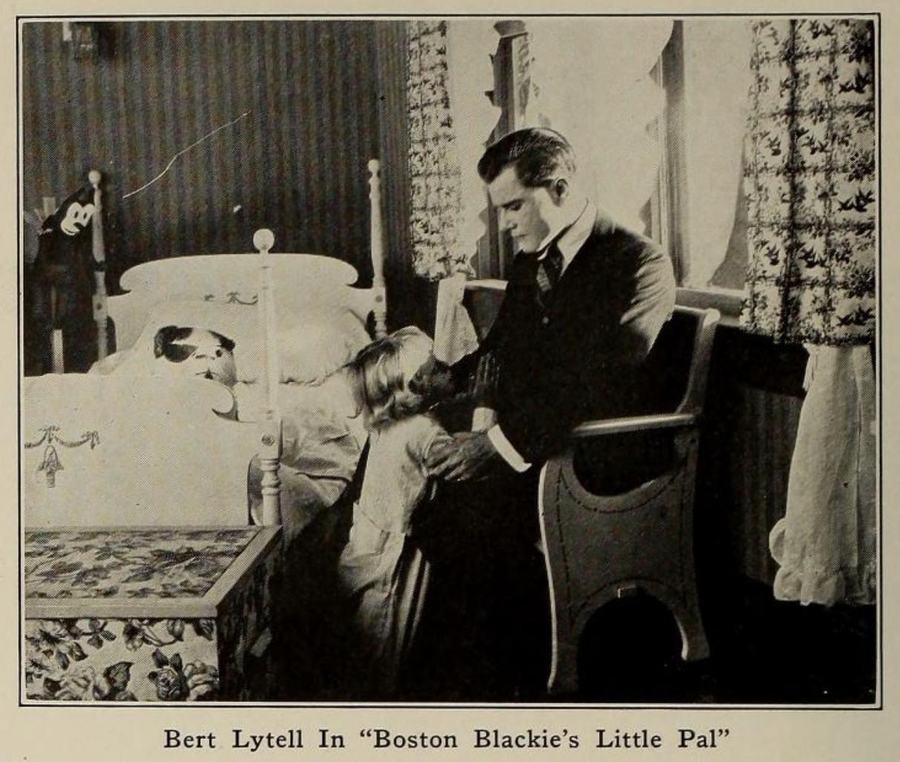
Furthermore, the script by Albert S. Le Vino avoids the easy moralizing found in God's Crucible. Blackie does not experience a sudden, religious conversion. He remains a man of the world, cynical and pragmatic. His use of telegrams to effect a reconciliation is a touch of modern ingenuity, showing a man who understands the tools of his trade—information and timing—can be used for purposes other than profit. This nuanced take on reform is reminiscent of the themes explored in A Gentleman's Agreement, where the social contract is negotiated through deception and revelation.
The most fascinating aspect of Boston Blackie's Little Pal is its refusal to provide a clean resolution. As Blackie stands with the jewels in hand, weighing their material value against the emotional equilibrium he has restored, the film enters a space of profound moral ambiguity. This is not the heroic certainty of Pro Patria or the visceral survivalism of The Romance of Tarzan. It is a quiet, contemplative moment that asks the audience to consider whether a 'good' act can ever truly erase a 'bad' nature.
In many ways, the film acts as a precursor to the modern anti-hero. Blackie is a predecessor to the protagonists of the noir era, men who operate in the 'gray' areas of existence. The film’s pacing, while deliberate, allows for these thematic explorations to breathe. It doesn't rush toward a climax of gunfire or chase sequences—though it has its moments of tension—but instead focuses on the internal shifts of its characters. This focus on the psychological over the physical puts it in dialogue with ambitious works like Idols or the dramatic weight of The Heart of the Hills.
Watching Boston Blackie's Little Pal today, one is struck by how much of our modern cinematic DNA is present in this century-old film. The 'thief with a heart of gold' has become a cliché, but here, it feels vital and raw. The film captures a moment in time when the medium was discovering its power to tell complex human stories without the need for a single spoken word. It is a testament to the skill of the writers and the cast that the emotional beats land with such precision.
While it may lack the epic scale of a film like Torpedoing of the Oceania, it gains much from its intimacy. It is a story about the small, quiet choices that define a man's soul. Whether Blackie returns the jewels or disappears into the night is almost secondary to the fact that he was, for a brief moment, capable of being a 'pal.' In the world of Boston Blackie, that is perhaps the greatest heist of all: stealing a piece of one's own humanity back from the darkness.
Director: E. Mason Hopper
Starring: Bert Lytell, Joey Jacobs, Rosemary Theby, Rhea Mitchell
Release Year: 1918
Genre: Crime Drama / Silent Film
IMDb 8.2
1932
Community
Log in to comment.