DbcultAccessing Vault...
5.6/10
Senior Film Conservator
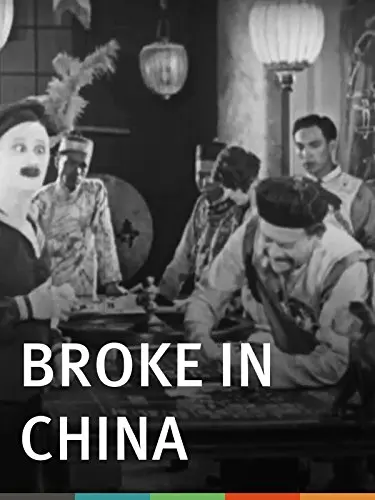
A definitive 5.6/10 rating for a film that redefined the boundaries of cult cinema. Broke in China remains a cornerstone of transgressive art.
Is Broke in China a film you should track down today? Short answer: Yes, but only if you have a high tolerance for the frantic, non-sequitur logic of 1920s Mack Sennett productions.
This film is specifically for historians of slapstick and those who find Ben Turpin’s physical eccentricities inherently hilarious. It is absolutely not for viewers who require narrative cohesion or sensitive cultural depictions.
This film works because it leans entirely into the absurdity of its lead actor’s persona, using Ben Turpin’s cross-eyed stare as a comedic compass that points everywhere and nowhere at once.
This film fails because the plot is a flimsy clothesline designed only to hang gags on, many of which feel repetitive by the second act.
You should watch it if you want to see how 1920s Hollywood imagined 'international intrigue' through the lens of low-brow vaudeville humor.
Ben Turpin was the anti-Keaton. Where Buster Keaton (seen in Cops) used stoicism and geometric precision, Turpin used chaos and ocular misalignment. In Broke in China, Turpin plays Donald Drake with a manic energy that defies logic.
One specific scene at the All Nation Cafe involves Drake trying to maintain his dignity while being blatantly hustled by Maud and Mollie. The way Turpin’s eyes seem to be looking at both women and the exit simultaneously creates a natural, if bizarre, comedic tension.
It is a performance that relies on the audience’s familiarity with the 'Turpin Brand.' If you don't find his face funny, the movie loses 70% of its power. It’s that simple.
The setting of Shanghai in this film is purely decorative. Much like the stylized environments in Le brasier ardent, the 'China' here is a collection of tropes: beaded curtains, gambling dens, and 'good time girls.'
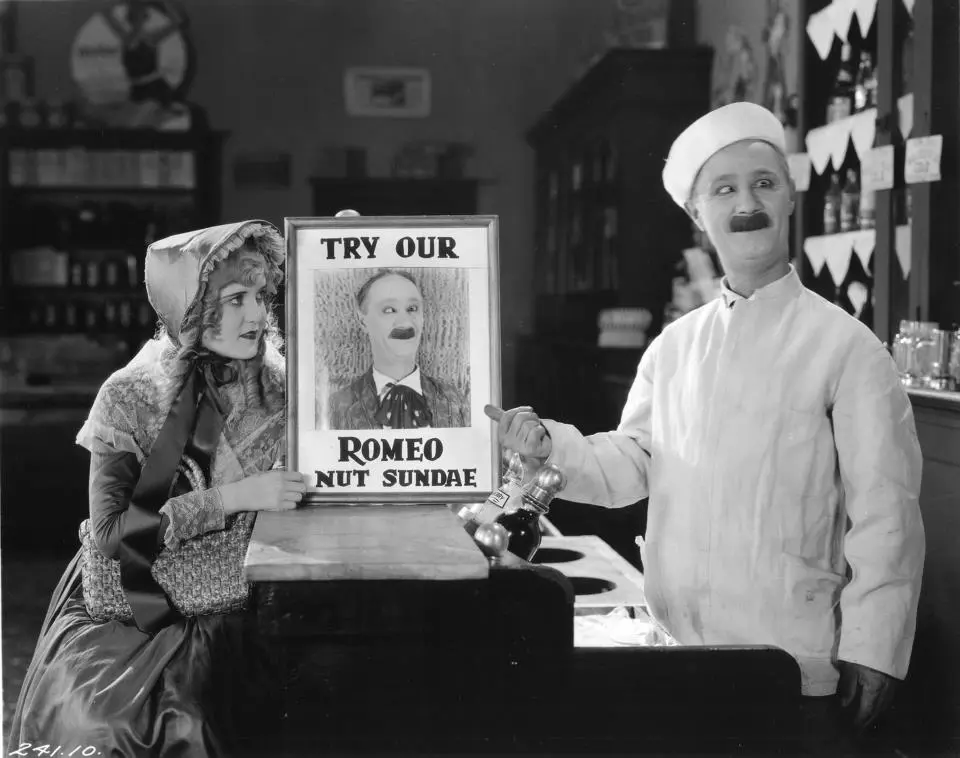
The All Nation Cafe serves as a microcosm of the film’s world. It’s a place where everyone is a grifter. The proprietor is a classic Sennett villain—broad, loud, and motivated entirely by the sight of a dollar sign.
The cinematography by the Sennett regulars is functional. It doesn't have the artistic aspirations of Three Weeks, but it understands how to frame a physical gag. The camera stays wide enough to capture the full body movement, which is essential for Turpin’s style.
The film takes a strange detour into Drake’s backstory. The transition from a 'deep-sea gondolier' to a 'soda jerk' is the kind of verbal non-sequitur that silent title cards excelled at. It’s intentionally ridiculous.
When Drake tells the story of the blonde he let slip through his fingers, the film briefly flirts with sentimentality. But in a Sennett production, sentiment is always the setup for a punchline. The 'love of his life' is less a character and more a plot device to get him to the roulette table.
The gambling sequence is the film’s highlight. Drake’s 'errant coin' is a masterclass in the comedy of errors. It suggests that in the world of Broke in China, success is not a result of skill or virtue, but of sheer, blind luck—literally.
If you are looking for a deep exploration of the human condition, look elsewhere. If you want to see a man with crossed eyes accidentally win at roulette while being fleeced by American flappers in a fake Shanghai, then this is your film.
It is a short, punchy experience. It doesn't overstay its welcome. It works. But it’s flawed.
Pros:
- Turpin’s unique physical comedy remains a fascinating relic.
- Fast pacing ensures the 20-minute runtime flies by.
- The 'backstory' flashbacks are genuinely inventive for their time.
Cons:
- Dated cultural stereotypes that may grate on modern sensibilities.
- Supporting characters are largely one-dimensional caricatures.
- The ending feels somewhat abrupt, even for a short.
Broke in China is a loud, messy, and occasionally brilliant piece of silent-era ephemera. It captures a moment in Hollywood history where the 'gag' was king and narrative logic was merely an afterthought. It isn't a masterpiece like Keaton's work, but it possesses a raw, vaudevillian energy that is increasingly rare to find. It is a curiosity worth visiting once, if only to marvel at the fact that a 'deep-sea gondolier' was once a viable comedic premise.
IMDb —
1930
Community
Log in to comment.