DbcultAccessing Vault...
Cult Review
Senior Film Conservator
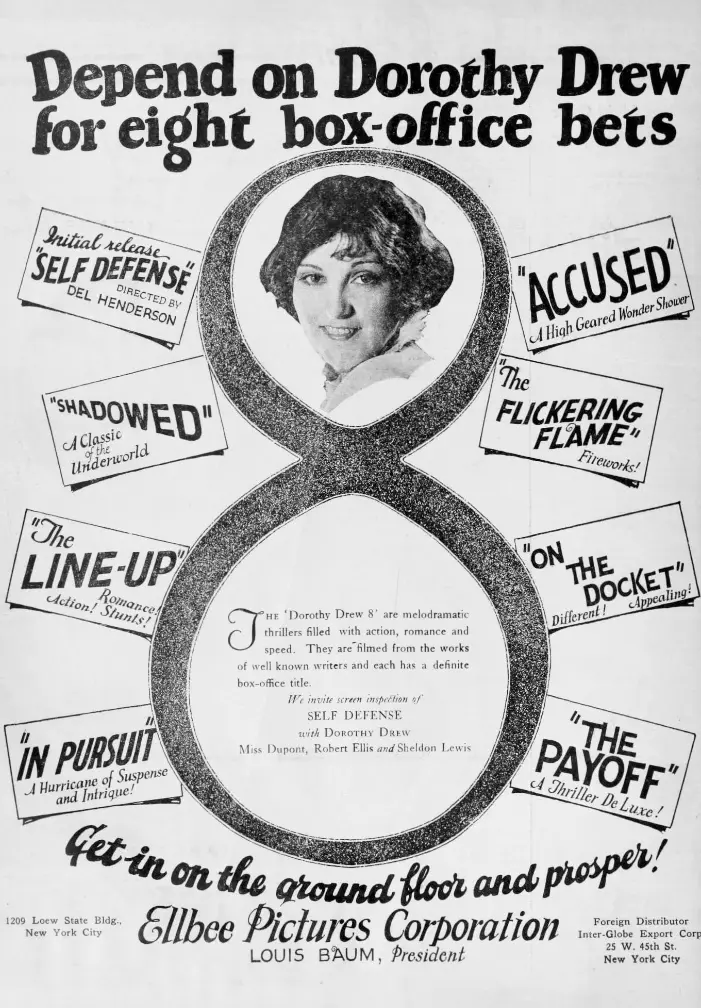
Short answer: No, unless you are a dedicated scholar of early sound cinema. This film is specifically for those fascinated by the awkward transition from silent to talkie aesthetics, but it is certainly not for anyone seeking modern narrative complexity or high-octane thrills.
The Pay-Off functions more as a historical artifact than a piece of entertainment that holds up by today's standards. While the central conflict of land rights and industrial greed remains relevant, the execution is hampered by the technical limitations of its era. If you are looking for a tightly wound thriller, you would be better off revisiting The Firing Line, which handles its stakes with significantly more panache.
1) This film works because it effectively utilizes the 'secret villain' trope to create a sense of mounting paranoia in a rural setting.
2) This film fails because the dialogue-heavy scenes are static, lacking the visual dynamism found in contemporary films like Tiger Rose.
3) You should watch it if you enjoy seeing Robert McKim play a manipulative antagonist or if you are interested in the 'land-grab' subgenre of early 20th-century American film.
The Pay-Off arrives at a curious crossroads in cinematic history. Released in 1930, it carries the heavy burden of early sound recording equipment, which often forced actors to stand near hidden microphones, resulting in a somewhat wooden blocking. The plot, centered on a young woman’s struggle to build a dam, is a classic 'David vs. Goliath' narrative. However, the Goliath here isn't just a faceless corporation; it is a family friend. This betrayal adds a layer of psychological weight that the film occasionally struggles to support.
The dam itself is more than just a plot device; it represents the modernization of the American landscape. We see this theme explored in other films of the period, such as Josselyn's Wife, where domesticity and industrial ambition often clash. In The Pay-Off, the sabotage is depicted through a series of bureaucratic delays and physical 'accidents' on the construction site. One specific scene involving a falsified contract highlights the era's fear of the 'city man' coming to the country to swindle honest folk.
The pacing is, unfortunately, where the film loses its grip. Much of the middle act is consumed by repetitive conversations about financing and logistics. While these details ground the story in reality, they don't necessarily make for compelling cinema. It works. But it’s flawed. The tension only truly spikes when the heroine begins to suspect that her benefactor is actually her executioner.
Robert McKim brings a veteran’s presence to the role of the financier. Having spent years playing villains in the silent era, McKim understands how to use a look or a subtle shift in posture to convey menace. His voice, however, is a different matter. Like many actors transitioning to sound, his delivery is overly deliberate, a common trait in 1930 releases. He lacks the effortless charisma seen in later talkies, but his performance remains the film's strongest anchor.
Marcella Daly, playing the embattled daughter, provides a necessary emotional core. She isn't just a damsel in distress; she is a woman with an engineering mind and a stubborn streak. This was a progressive character choice for 1930. In one particular moment, when she confronts her father about his misplaced trust, Daly shows a range of frustration that feels surprisingly modern. She carries the weight of the film's moral compass, contrasting sharply with McKim’s oily pragmatism.
Charles Delaney plays the love interest and technical assistant, but his role is largely functional. He exists to provide the muscle and the occasional romantic subplot, which feels tacked on to meet audience expectations. Compared to the character dynamics in The Ragamuffin, the chemistry here feels somewhat clinical. The film is far more interested in the dam than the romance.
Visually, The Pay-Off is a mixed bag. The outdoor sequences at the dam site offer some much-needed scale. The use of wide shots to show the construction progress provides a sense of grandeur that the interior scenes lack. However, the cinematography is often hampered by the static camera setups required by early sound technology. There is very little of the fluid movement you might find in a film like Monkeying Around.
The lighting in the financier’s office is particularly noteworthy. It uses high-contrast shadows to signal his duplicity long before the plot confirms it. This 'proto-noir' style was becoming popular in the early 30s, and here it serves to distinguish the 'corrupt city' from the 'honest country' lighting of the heroine's home. It is a simple visual metaphor, but it is effective.
The film’s greatest strength is not its dialogue, but its ability to make a pile of dirt and some concrete feel like the most important thing in the world.
Why do we care about a dam project from 1930? Because the film taps into a universal fear: the loss of agency. The heroine isn't failing because she is incompetent; she is failing because the system is rigged against her. This theme of systemic corruption was a staple of the era, reflecting the public's growing distrust of financial institutions following the 1929 crash. The financier is a surrogate for the banks that were failing across America at the time.
In one sequence, a 'mysterious' fire breaks out at the supply shed. The camera lingers on the heroine’s face as she realizes the fire wasn't an accident. This moment of realization is the film's peak. It shifts the movie from a procedural about construction into a personal vendetta. It is a shame the film doesn't maintain this level of intensity throughout its runtime.
Pros:
Cons:
The Pay-Off is a competent but uninspired entry in the early sound era. While it features a strong performance by Marcella Daly and a classic villain turn by Robert McKim, it is ultimately weighed down by the very things it tries to depict: heavy machinery and slow progress. It lacks the charm of Tut! Tut! King or the dramatic weight of Ostap Bandura. It is a film that serves its purpose but leaves no lasting impression once the credits roll. Watch it if you must, but don't expect a masterpiece. It is a functional piece of cinema history, nothing more and nothing less.
IMDb 5
1929
Community
Log in to comment.