DbcultAccessing Vault...
6.9/10
Senior Film Conservator
A definitive 6.9/10 rating for a film that redefined the boundaries of cult cinema. Bumping Into Broadway remains a cornerstone of transgressive art.
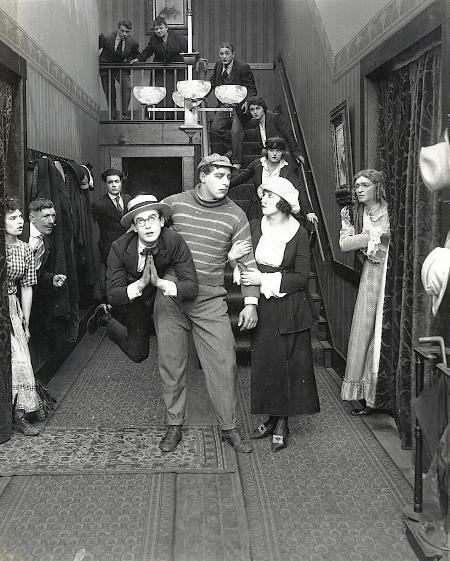
The year 1919 serves as a pivotal meridian in the history of cinematic comedy, marking the definitive emergence of Harold Lloyd’s 'Glasses' character as a cultural juggernaut. In Bumping Into Broadway, we witness the crystallization of an archetype: the optimistic, indomitable everyman who navigates the pitfalls of modernity with a mix of naive courage and frantic ingenuity. Unlike the chaotic anarchy of his earlier 'Lonesome Luke' phase, this two-reeler introduces a narrative sophistication that bridges the gap between the broad slapstick of the nickelodeon era and the refined feature-length structures that would soon follow. The film is not merely a collection of gags; it is a rhythmic exploration of desperation and serendipity in the shadow of the Great White Way.
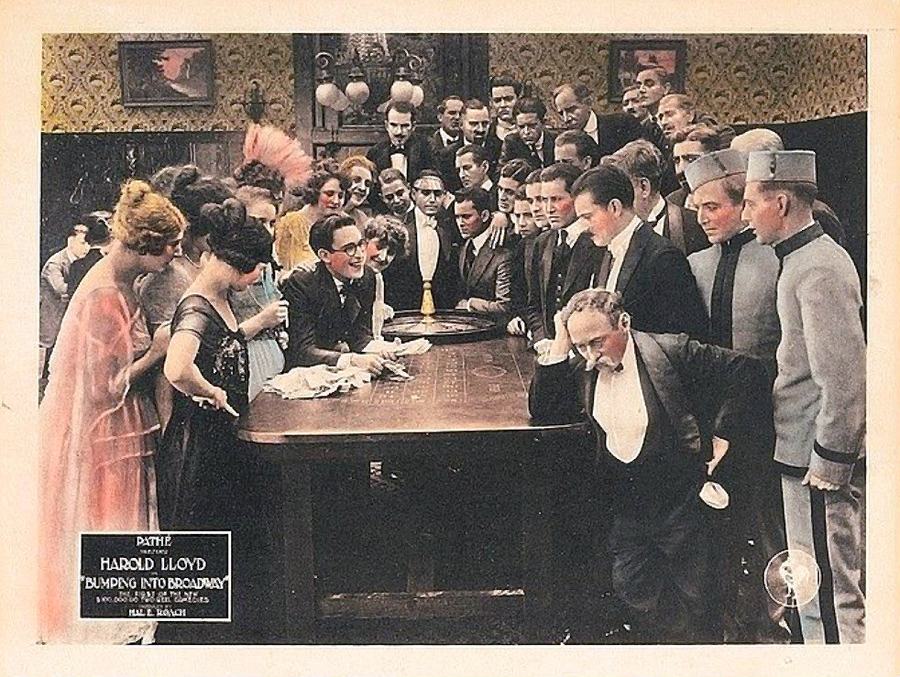
The film opens with a claustrophobic intimacy that mirrors the lived reality of many aspiring artists of the era. The theatrical boarding house is depicted as a crucible of failed dreams and simmering hope. Lloyd’s playwright is introduced not as a caricature, but as a recognizable human figure—one who meticulously counts his pennies while maintaining a facade of middle-class respectability. This setting provides a stark contrast to the more melodramatic depictions of urban struggle found in The Shadows of a Great City, opting instead for a lighthearted yet poignant look at the 'starving artist' trope. The interaction between Lloyd and Bebe Daniels is infused with a genuine warmth that elevates the stakes of the comedy. When he gives her his last cent to satisfy the predatory landlady, the act is framed with a sincerity that makes the subsequent chaos feel earned.
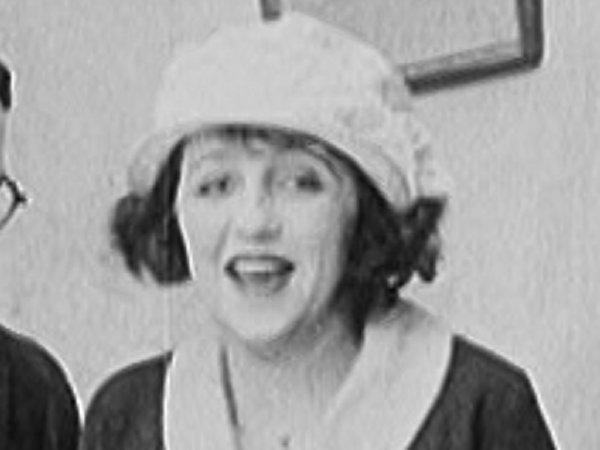
This early sequence demonstrates Lloyd’s mastery of prop-based comedy. The way he manipulates his meager surroundings—the inkwell, the radiator, the very floorboards—suggests a world that is constantly conspiring against the protagonist. Yet, his resilience is his defining trait. We see echoes of this thematic struggle in other contemporary works like Stage Struck, but Lloyd imbues his performance with a unique physical vocabulary that is both athletic and graceful. The 'Boy' does not just walk; he bounces, he skitters, and he reacts with a telescopic intensity that draws the viewer into his immediate psychological state.
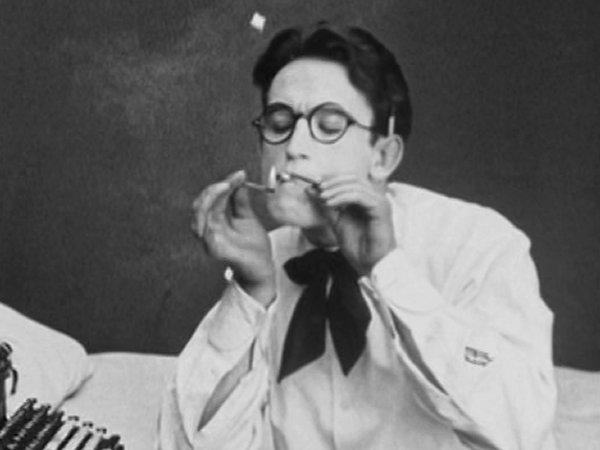
As the narrative shifts to the illicit gambling club, the film’s tempo accelerates significantly. The transition from the domestic sphere to the subterranean world of vice allows director Fred C. Newmeyer to experiment with larger-scale ensemble movement. Here, Bumping Into Broadway transforms into a masterclass in spatial awareness. Lloyd’s presence in the club is a fish-out-of-water scenario that maximizes the potential for social embarrassment and physical comedy. His accidental success at the roulette table is a brilliant subversion of the 'hero's journey,' where luck serves as a temporary surrogate for competence. This sequence captures the same frantic energy seen in The Girl from Frisco, albeit through a comedic lens rather than a serial-adventure one.
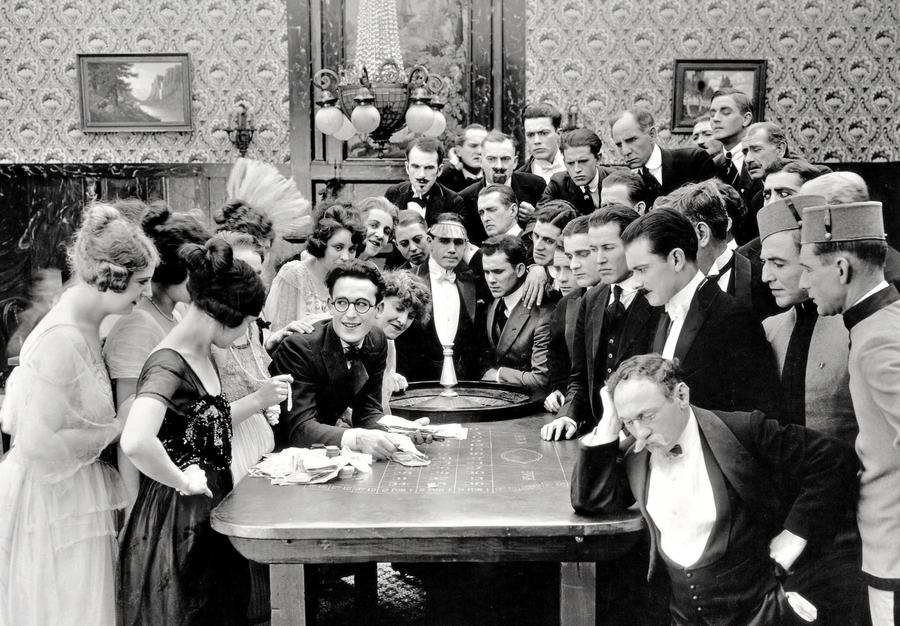
The cinematography during the gambling scenes utilizes deep focus to manage multiple layers of action. While Lloyd is preoccupied with the chips, the background is a hive of activity, populated by character actors like 'Snub' Pollard and Noah Young, who provide a textured backdrop of 1910s urban archetypes. The tension builds not from the gambling itself, but from the looming threat of discovery. When the police raid finally occurs, the film erupts into a sequence of kinetic brilliance that remains breathtaking over a century later. The use of the 'Glasses' character as a focal point in the middle of a riotous crowd allows the audience to maintain a sense of narrative orientation amidst the visual cacophony.
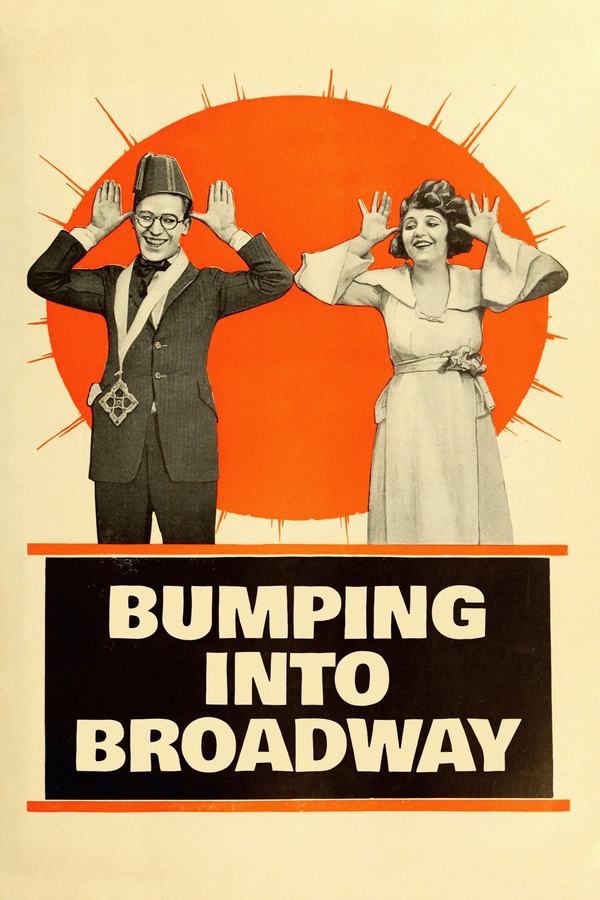
It is often argued that silent film relies on a limited emotional palette, but Bumping Into Broadway refutes this with its nuanced portrayal of social anxiety and romantic yearning. Lloyd’s face is a canvas of micro-expressions. The way he adjusts his spectacles when confronted with authority, or the slight slump of his shoulders when his play is rejected, conveys more than a title card ever could. This level of performance detail is comparable to the dramatic weight found in As in a Looking Glass, but repurposed for the service of humor. The film’s rhythmic editing, overseen by Hal Roach’s keen eye, ensures that every beat lands with surgical precision.
The interplay between Lloyd and Bebe Daniels is particularly noteworthy. Daniels, who would later become a major star in her own right, provides a perfect foil to Lloyd’s manic energy. Her performance is grounded and empathetic, preventing the film from descending into mere caricature. Their relationship feels like a predecessor to the sophisticated comedies of the 1930s, where the romance is built on mutual support rather than just sentimental tropes. For a more traditional take on such romantic dynamics, one might look at His Sweetheart, but Lloyd and Daniels offer a more modern, urban chemistry that feels strikingly contemporary.
In the broader context of Lloyd’s filmography, Bumping Into Broadway serves as the definitive proof of concept for his future features. It proved that the 'Glasses' character could sustain a complex narrative that balanced pathos, romance, and high-octane comedy. While films like Just for Tonight or The Power of Decision explored different facets of the human condition during this era, Lloyd’s work remained uniquely focused on the intersection of the individual and the machinery of the modern city. The ending of the film, which sees our hero triumphant but still fundamentally the same humble playwright, reinforces the idea that success is a fleeting, joyous accident in an otherwise indifferent world.
The technical aspects of the film, from the set design of the boarding house to the lighting of the gambling den, reflect a high level of craftsmanship. The shadows in the club are deep and expressive, reminiscent of the darker tones in Dikaya sila, yet the overall mood remains buoyant. This tonal balance is difficult to achieve and even harder to maintain, but Lloyd and his team manage it with apparent ease. The film also benefits from a lack of the moralizing that often plagued silent-era productions. There is no heavy-handed lecture on the evils of gambling; instead, the club is simply a setting for a grand adventure, a playground for the Boy's ingenuity.
To watch Bumping Into Broadway today is to witness the birth of the modern action-comedy. Every frantic chase, every narrow escape, and every moment of desperate improvisation in contemporary cinema owes a debt to the groundwork laid here. The film’s brief runtime is packed with a density of ideas that puts many modern features to shame. It avoids the repetitive structures of the Keystone era, opting instead for a narrative flow that feels organic and purposeful. Whether compared to the theatricality of The Mixed Ladies Chorus or the dramatic tension of Held for Ransom, Lloyd’s work stands out for its sheer vitality.
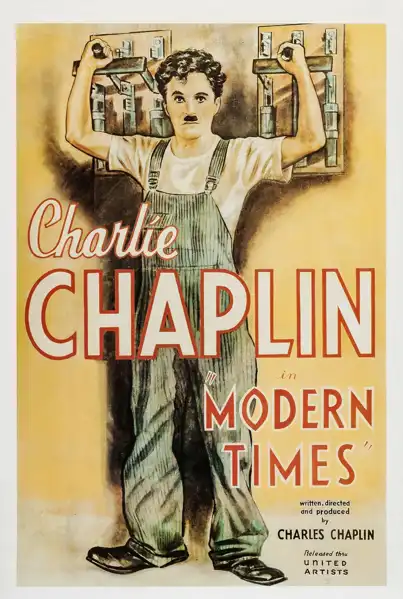
The enduring appeal of Harold Lloyd lies in his relatability. He is not a supernatural clown like Keaton or a tragic wanderer like Chaplin; he is a man who tries, fails, and tries again. Bumping Into Broadway is the ultimate testament to that spirit. It is a vibrant, hilarious, and technically masterful piece of cinema that captures the essence of an era while remaining eternally fresh. As we look back at the cinematic landscape of 1919, through the lens of films like Old Heidelberg or The Fly God, it is Lloyd’s spectacles that shine the brightest, reflecting the frantic, hopeful heart of the American dream.
IMDb 8.5
1936
Community
Log in to comment.