DbcultAccessing Vault...
Cult Review
Senior Film Conservator
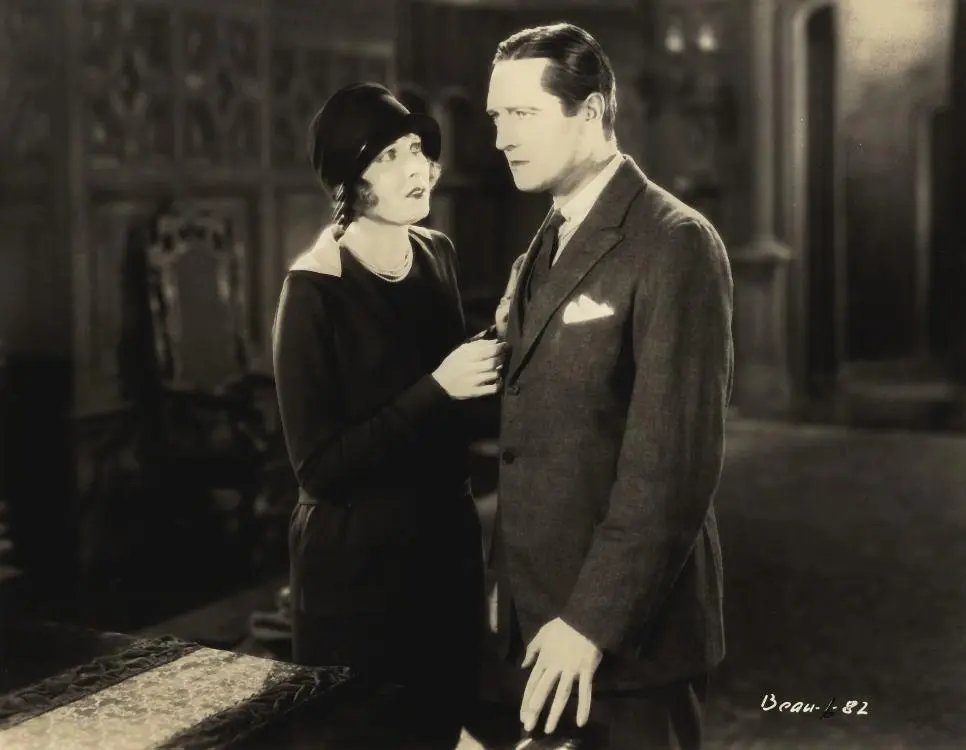
Is One Increasing Purpose a film that demands your attention in the modern era? Short answer: yes, but only if you have the patience for the deliberate, heavy-handed moralizing of late-1920s melodrama. It is a fascinating artifact of a world trying to make sense of survival after a global catastrophe.
This film is for the dedicated cinephile who enjoys domestic dramas with a high-stakes ethical core. It is decidedly not for those who require fast-paced action or subtle, ambiguous character arcs. It wears its heart—and its sermon—on its sleeve.
Before we dive into the technical merits, let’s be direct about where this film stands. It is a work of intense sincerity that occasionally trips over its own nobility.
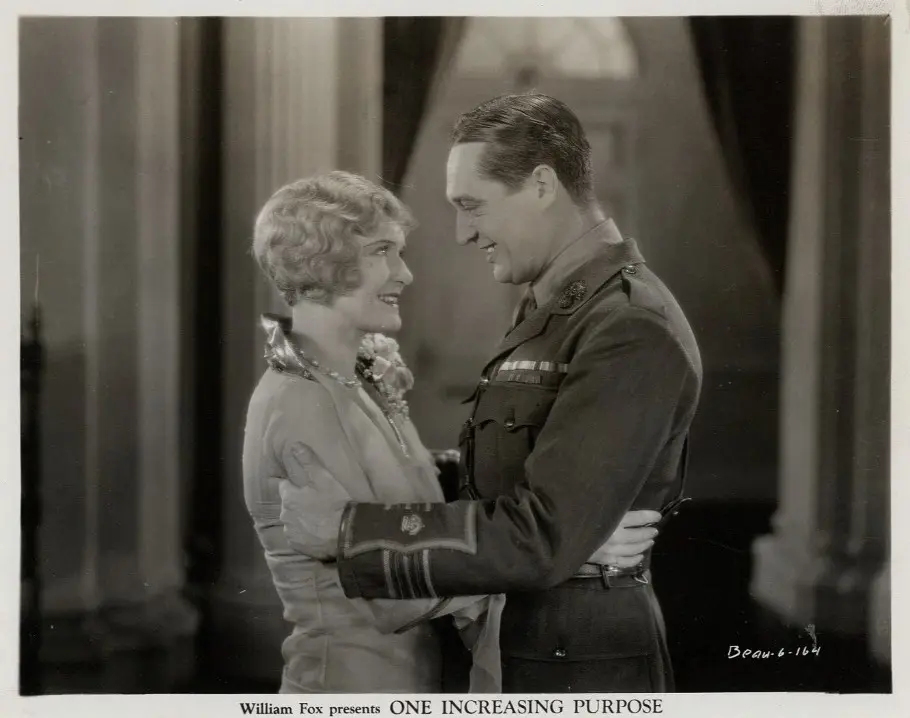
1) This film works because it captures the specific post-war anxiety of the 1920s, where traditional values clashed violently with the new, greedy 'Jazz Age' mentality.
2) This film fails because the protagonist’s transition from a traumatized soldier to a wandering preacher feels too sudden and lacks the psychological nuance modern audiences expect.
3) You should watch it if you are interested in how silent cinema handled complex social issues like infidelity, greed, and the 'purpose' of life before the Hays Code tightened its grip.
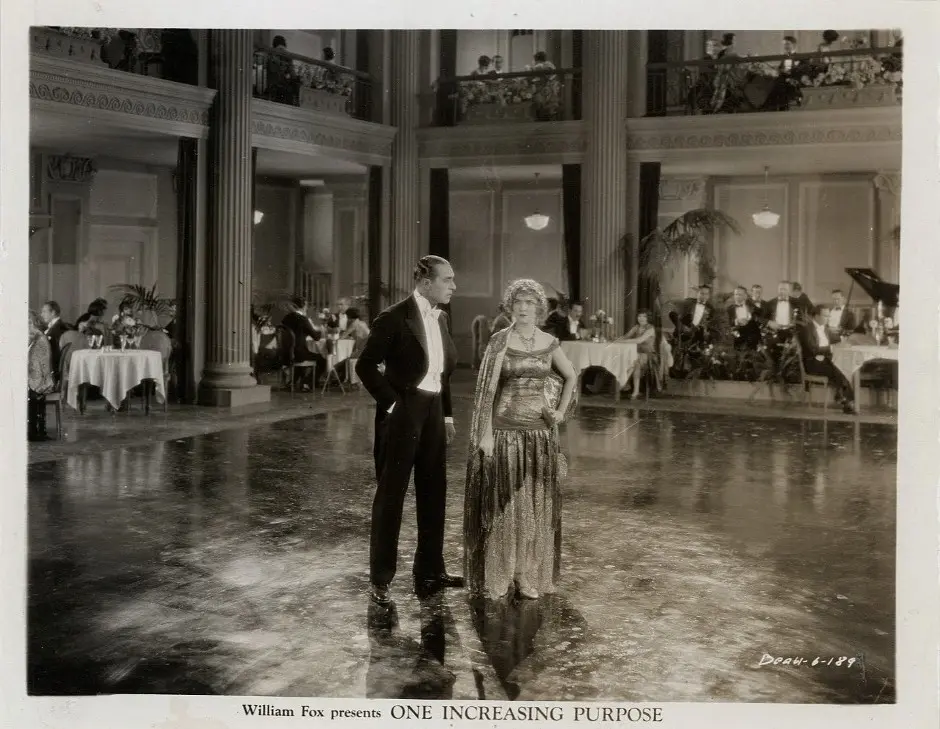
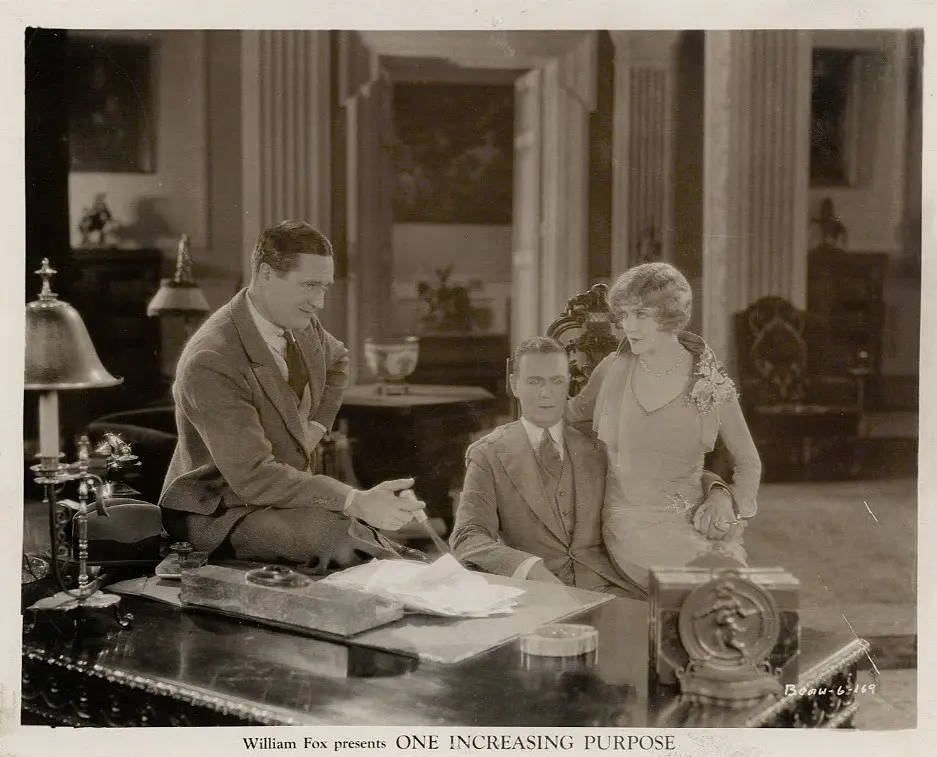
The strength of One Increasing Purpose lies not in its eventual religious fervor, but in its initial depiction of a family falling apart. The director, Harry Beaumont, does an excellent job of illustrating the isolation within a household. Take the character of Charles. He is a man who has replaced intimacy with ledgers. Every time he is on screen, the lighting feels colder, the framing more rigid. He is a precursor to the corporate shells we see in films like The Money Mill.
Then there is the brother waiting for the inheritance. This subplot is genuinely sordid and far more interesting than Sim’s later preaching. The way the male nurse lurks in the background, observing the wife’s affair with the doctor, creates a sense of claustrophobia. It’s a voyeuristic tension that reminds me of the darker undertones in The Vamp. The blackmail sequence is the film's highlight. It is played with a quiet, menacing stillness that is far more effective than the grand gestures seen later in the movie.
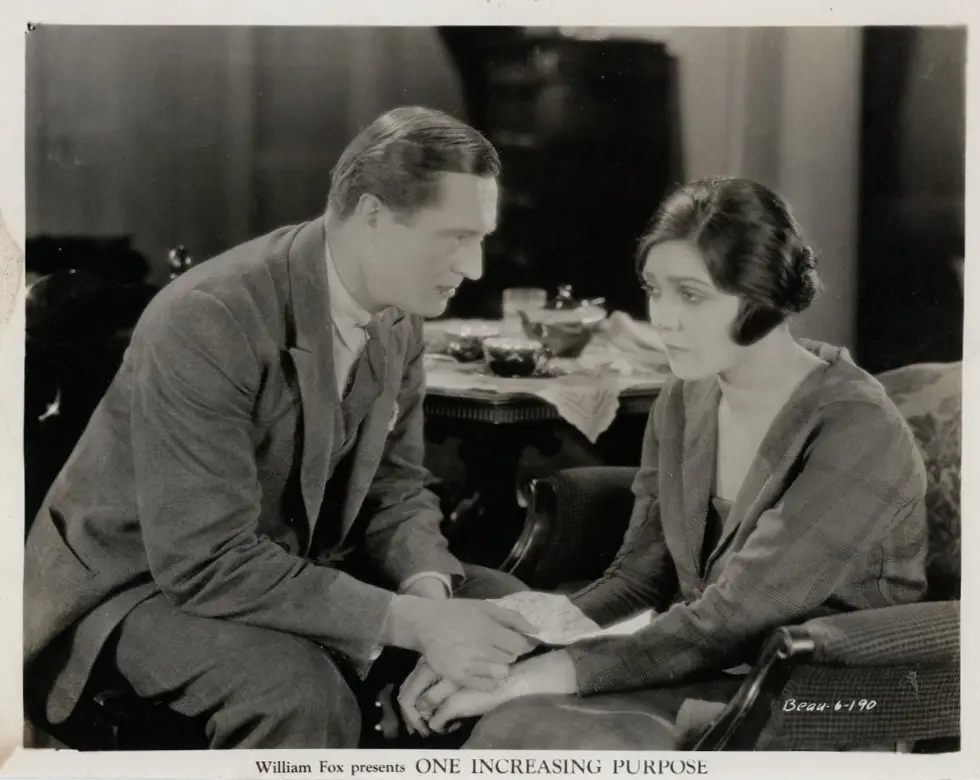
Edmund Lowe plays Sim Paris with a restrained intensity. In the early scenes, his eyes carry the 'thousand-yard stare' of a man who hasn't quite come back from the trenches. It’s a grounded performance that anchors the film’s more flighty philosophical leanings. When he visits his former comrade and sees a simple, happy life, Lowe’s reaction isn't one of joy, but of a man realizing he’s been thirsty for years and finally found water.
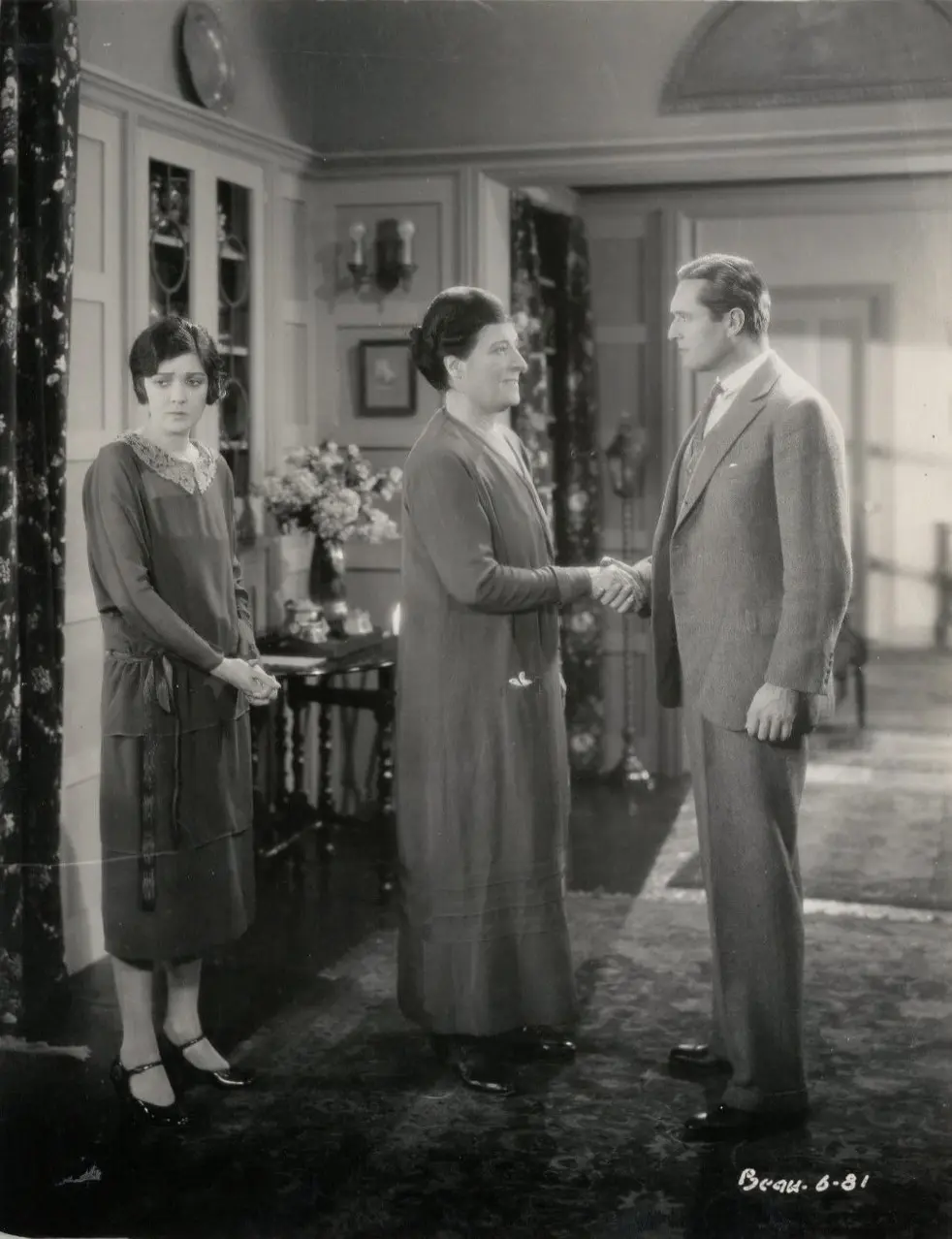
However, the film shifts gears in the second half. It moves from a character study into a hagiography. Sim becomes less of a man and more of a symbol. This is a common pitfall in films from this era, similar to the moral heavy-handedness found in Forbidden Fruit. The nuance is stripped away in favor of the 'message.' It’s a choice that makes the film feel longer than its runtime. The pacing slows down significantly once Sim starts his trek across England. We lose the sharp, biting social commentary of the family scenes and enter a repetitive cycle of 'problem encountered, unselfishness preached, problem solved.'
Visually, the film is a product of its time—but a high-quality one. The use of location shooting in the English countryside provides a much-needed breath of air after the stifling interiors of the family home. The contrast is intentional. The city and the wealthy estates are shot with sharp angles and deep shadows, suggesting a moral labyrinth. The countryside is shot with softer light and wider lenses, suggesting clarity and truth.
There is a specific shot where Sim stands on a hill overlooking a village. It’s a classic image, almost biblical. While it might seem cliché now, in 1927, this was powerful visual shorthand. It’s the kind of earnest imagery that filmmakers like those behind Tol'able David used to define the American and British pastoral ideals. The film doesn't rely on flashy editing; it relies on the composition of the frame to tell you how to feel. It’s honest. Perhaps too honest.
If you are looking for a historical perspective on post-WWI trauma, this is a vital watch. It provides a window into the 1920s soul that few other films do. It asks: 'If we survived the war, what was it for?' This question is handled with more sincerity here than in many modern war-aftermath films.
However, if you find religious or moral lecturing in cinema to be a turn-off, you will struggle with the final act. It’s a film that demands you buy into its central premise completely. There is no room for cynicism here. It is a blunt instrument of a movie, but sometimes a blunt instrument is what’s needed to crack a hard shell of indifference.
The acting by Edmund Lowe is surprisingly modern and understated for a silent film. The exploration of post-war materialism is still relevant today. The film doesn't shy away from the darker aspects of family life, like greed and infidelity, which were often glossed over in other contemporary works like The Beloved Impostor.
The pacing is uneven, with a strong first act and a dragging finale. The 'unselfishness' doctrine is presented as a magical cure-all for complex systemic and psychological problems, which feels naive. Some of the secondary characters are one-dimensional villains or saints.
One thing that struck me was how the film treats the 'invalid' relative. In many films of this era, like The Innocent Cheat, the sick or elderly are used as mere plot devices for sympathy. Here, the invalid is a catalyst for the worst human impulses—greed and neglect. It’s a brutal, honest look at how people behave when they think no one is watching. It’s dark. It works. But it’s flawed.
One Increasing Purpose is a fascinating, if occasionally exhausting, cinematic sermon. It succeeds as a time capsule of 1920s morality and fails as a cohesive narrative in its final third. However, the strength of the opening family drama and Edmund Lowe's performance make it a worthy entry in the silent film canon. It’s a film that asks big questions, even if it provides answers that are a little too simple for a complicated world. It is a heavy, earnest, and deeply human piece of filmmaking that deserves to be remembered for its ambition, if not its execution.

IMDb —
1936
Community
Log in to comment.