DbcultAccessing Vault...
Cult Review
Senior Film Conservator
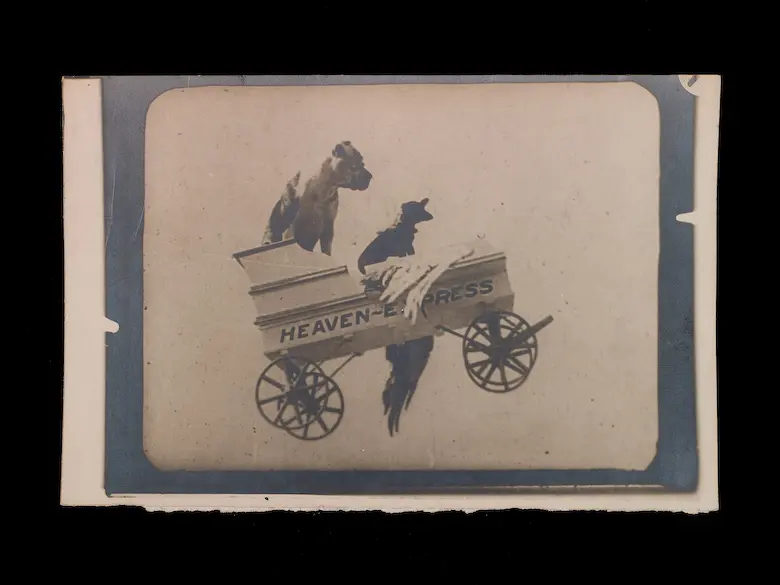
Is this film worth watching today? Short answer: Yes, but only if you view it as a curated window into the birth of the American 'brat' subgenre. This film is specifically for silent cinema completionists and those fascinated by the transition of comic strips to the screen; it is absolutely not for viewers who require narrative complexity or modern sensitivity toward slapstick violence.
1) This film works because Pal the Wonder Dog (playing Tige) exhibits a level of screen presence and comedic timing that puts his human co-stars to shame.
2) This film fails because Arthur Trimble’s performance as Buster lacks the internal logic or sympathetic charm found in contemporary child stars of the era, making his mischief feel more grating than endearing.
3) You should watch it if you are researching the history of brand-driven entertainment or the evolution of animal training in Hollywood.
Buster Brown was a cultural juggernaut long before he hit the silver screen. Created by Richard F. Outcault, the character was a marketing pioneer, selling everything from shoes to cigars. By the time Buster, Come on! arrived, the audience already had a preconceived notion of who Buster was. This film had the difficult task of translating the vibrant, often surreal energy of the Sunday funnies into the grainy, black-and-white reality of 1920s cinema.
The direction by the Stern Brothers is functional, if uninspired. They rely heavily on the established iconography—the suit, the hair, the dog—to do the heavy lifting. Compared to the more ambitious storytelling found in films like The Pioneers, this short feels trapped in its own brand identity. It’s a commercial product first and a piece of cinema second. It works. But it’s flawed.
Arthur Trimble was one of several Busters, and his performance here is a curious study in early child acting. There is a rigidness to his movements that often feels like he is waiting for a director’s cue just off-camera. In the scene where he attempts to 'help' with household chores, his timing is a beat off, making the slapstick feel manufactured rather than organic. It lacks the fluid chaos seen in The Barnstormers.
Then there is Pal the Wonder Dog. Pal, an American Pit Bull Terrier, is the true emotional anchor. Whether he is tilting his head in confusion or participating in a choreographed chase, his reactions feel more 'human' than the actors. There is a specific moment where Tige has to hide a stolen item, and the dog’s eye movement suggests a level of craft that Trimble simply hadn't mastered yet. It’s a reminder that in the silent era, animals were often the most reliable special effects.
Visually, the film is a standard example of the Stern Brothers' assembly-line production style. The lighting is flat, designed to ensure that every gag is visible, but it lacks the atmospheric depth found in more prestigious dramas like The Sea Tiger. The camera rarely moves, acting as a proscenium arch for the physical comedy to unfold within.
However, there is a certain charm in the location shooting. The suburban sets provide a fascinating look at the idealized American home of the 1920s. The contrast between the clean, orderly environment and Buster’s destructive nature is the primary engine of the film’s humor. It’s a theme explored with much more nuance in Ashamed of Parents, but here it is played strictly for laughs.
If you are asking if Buster, Come on! is worth watching for pure entertainment, the answer is no. Most of the gags have been recycled a thousand times since 1920. However, if you are asking if it is worth watching for its historical value, the answer is a resounding yes. It represents the moment when corporate branding and narrative film first began to sleep in the same bed.
The film is mercifully short, making it an easy watch for those curious about the era. The presence of Doreen Turner provides a much-needed foil to Buster’s antics, and the restoration of some prints allows us to see the crispness of the original 35mm photography. It captures a specific 'innocence' that was already disappearing by the time films like Why Girls Say No hit theaters.
The pacing is uneven. Some gags go on for far too long, while others are cut short before the payoff can land. There is also a distinct lack of the 'wink-at-the-camera' self-awareness that made the original comic strip so revolutionary. It feels like a pale imitation of Outcault’s sharp wit, leaning instead on the lowest common denominator of physical slapstick.
When placed alongside other films of the period, Buster, Come on! feels somewhat primitive. If you look at Up in the Air (1923), you see a much more sophisticated use of space and verticality in comedy. Buster stays grounded, both literally and figuratively. Even a Western like Taming the West shows more interest in character development than this short does.
The film also lacks the social commentary found in Sex or the dramatic weight of God's Law and Man's. It is content to be a trifle. This isn't necessarily a bad thing, but it limits the film's appeal to those who aren't already invested in the Buster Brown mythos.
One cannot discuss this film without mentioning the editing. Silent comedy lives and dies by the cut. In Buster, Come on!, the editing is surprisingly modern in its speed, even if the content of the shots is stagnant. The way the director cuts between Buster’s mischievous face and Tige’s 'knowing' reaction is the film’s most effective tool. This 'reaction shot' technique would be perfected in later animal-led films like Wild Beauty.
"Buster Brown on screen is a reminder that some characters are born for the page and struggle to find their soul in the flicker of the projector."
Buster, Come on! is a fascinating failure. It succeeds as a showcase for a legendary canine performer but falters as a translation of a beloved literary character. It is a film of 'almosts'—almost funny, almost charming, and almost essential. While it doesn't have the grand scale of The Courtship of Myles Standish or the narrative grit of The Hope, it remains a vital piece of the puzzle for anyone trying to understand the history of American pop culture.
Watch it for the dog. Tolerate it for the kid. Ignore it for the plot. In the end, it’s a twenty-minute distraction that tells us more about the 1920s than it does about the characters it portrays. It’s a relic, but a shiny one nonetheless.
IMDb 6.6
1936
Community
Log in to comment.