DbcultAccessing Vault...
6.4/10
Senior Film Conservator
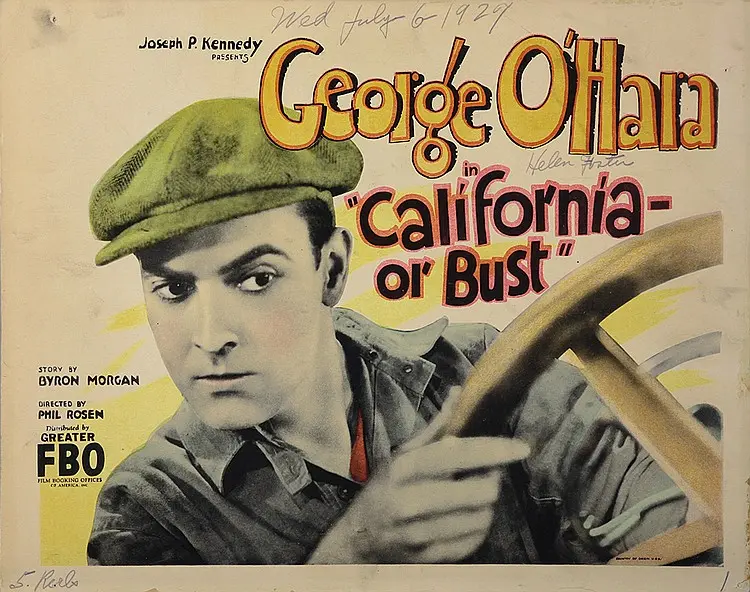
A definitive 6.4/10 rating for a film that redefined the boundaries of cult cinema. California or Bust remains a cornerstone of transgressive art.
Is 'California or Bust (1927)' worth watching today? Short answer: yes, but with significant caveats. This film is primarily for silent film enthusiasts, historians, and those curious about the early evolution of American comedy. It is decidedly NOT for viewers seeking a fast-paced, emotionally complex, or visually sophisticated cinematic experience by modern standards.
Stepping into the world of 'California or Bust,' a 1927 silent comedy, is akin to opening a meticulously preserved time capsule. It offers a fascinating, albeit simplistic, window into a bygone era of cinematic storytelling, where narrative relied on broad physical comedy, exaggerated expressions, and the charm of its performers. Directed by unknown hands but written by Al Boasberg and Byron Morgan, this film, while certainly not a forgotten masterpiece, possesses an undeniable, earnest appeal that occasionally surfaces through its dated conventions.
This film works because its earnest charm is infectious, particularly through the energetic performance of Johnny Fox, and it provides a genuine glimpse into period mechanics and the nascent American fascination with the automobile. It fails because of its utterly predictable plot, underdeveloped characters beyond their archetypal roles, and a reliance on physical comedy tropes that often fall flat by contemporary standards. You should watch it if you appreciate silent cinema's historical context, enjoy simple, good-natured narratives, or are a fan of early automotive culture and the mechanical ingenuity of the 1920s.
The narrative of 'California or Bust' centers on Jeff Daggett, a small-town garage owner in Rockett, Arizona, whose mind is perpetually in the clouds, obsessed with perfecting a revolutionary new automobile motor. His practical assistant, Johnny Fox (played by the actor Johnny Fox), is left to manage the more mundane aspects of the business. This setup immediately establishes a classic dichotomy: the visionary dreamer versus the grounded pragmatist, a dynamic that, while simple, provides the film's initial comedic fodder.
The catalyst for the plot arrives with the unexpected breakdown of President Holtwood's car. Holtwood, a powerful figure in the motor industry, is en route to California with his daughter, Nadine. This chance encounter is pivotal, allowing Jeff to present his invention to a potential patron of immense influence. It’s here that the film introduces its primary antagonist, Rexton, Holtwood's chief engineer, who views Jeff not only as a professional rival but, more crucially, as a romantic threat to his own designs on Nadine.
Rexton's immediate dismissal of Jeff's motor and his subsequent challenge to a race are transparently driven by jealousy, a narrative device as old as storytelling itself. This simplicity, while making the plot highly digestible, also strips it of any genuine suspense. The stakes, though presented as high for Jeff's career and romantic prospects, never truly feel perilous. The subsequent theft of Rexton's car by a highwayman, leading to a chase sequence and Jeff's heroic intervention, is the film's attempt at an action climax. It works. But it’s flawed.
The resolution, with Jeff securing a job with Holtwood, is entirely foreseeable. The film never deviates from its predetermined trajectory, offering few surprises. This predictability is perhaps its biggest narrative weakness. While silent films often adhered to simpler structures, 'California or Bust' leans into it with such conviction that it occasionally feels less like a story unfolding and more like a checklist being completed. However, for those seeking a comforting, straightforward tale of ingenuity triumphing over adversity and villainy, it delivers precisely that.
The most engaging performance comes from Johnny Fox, the actor, in his role as Johnny Fox, the assistant. His character injects a much-needed jolt of energy into the proceedings. While Jeff Daggett (likely played by George O'Hara or Irving Bacon, though specific credits are often ambiguous for these types of shorts) is the earnest, often oblivious inventor, it is the assistant who frequently grounds the narrative with his practical concerns and occasional exasperation. Fox's physical comedy, though not on the level of a Keaton or Chaplin, is lively and well-timed, providing genuine moments of levity. His expressions are clear, his movements deliberate, embodying the silent film actor's need to communicate entirely through physicality. One particularly memorable scene involves his frantic attempts to keep the garage running amidst Jeff's absentmindedness, a ballet of frustrated efficiency that offers a surprising amount of nuance.
Jeff Daggett, the inventor, is portrayed with an earnestness that makes him likable, if not particularly complex. His character arc is that of the underdog proving his worth, a trope that resonates even today. However, the performance often lacks the distinctive flair that would elevate it beyond mere competence. Audrey Howell, as Nadine Holtwood, fulfills the role of the charming love interest adequately. Her character, unfortunately, is largely passive, serving primarily as a prize for the victor of the romantic and professional rivalry. Her reactions are appropriate, her beauty undeniable for the era, but she's given little opportunity to showcase depth or agency beyond being the object of male attention. This isn't a flaw of Howell's performance itself, but rather a limitation of the script, which relegates female characters to a supportive, often ornamental, capacity.
Irving Bacon, as Rexton, the jealous engineer, leans heavily into the conventions of silent film villainy. His expressions are broad, his sneers pronounced, leaving no doubt as to his nefarious intentions. While effective in clearly delineating good from evil, this lack of subtlety means Rexton never feels like a genuine threat, more a cartoonish obstacle. His jealousy over Nadine and his professional disdain for Jeff's invention are communicated with such overtness that any potential for dramatic tension is quickly diffused. This choice, while typical for the era's comedies, prevents the film from achieving any significant emotional resonance or suspense.
The direction of 'California or Bust' is straightforward, prioritizing clarity over artistic flourish. Shots are typically static, establishing the scene and allowing the actors' physical performances to dominate. There's little in the way of innovative camera work or complex compositions. The focus is on capturing the action and the exaggerated expressions of the performers. For example, during the garage scenes, the camera often remains at a medium distance, allowing viewers to take in the bustling activity of the workshop and Johnny Fox's comedic reactions. This simple approach, while not groundbreaking, is effective in conveying the narrative without distraction.
Cinematography of the era, particularly for a short comedy, was utilitarian. Lighting is generally flat, ensuring visibility. There are no dramatic shadows or intricate light play to speak of. The film does, however, offer some interesting period detail in its depiction of automobiles and garage mechanics, acting as an inadvertent historical document. The cars themselves are characters, reflecting the public's burgeoning fascination with automotive technology and speed. The chase sequence, while not a spectacle by modern standards, is competently shot, relying on the inherent excitement of vehicles in motion.
The pacing of 'California or Bust' is uneven. It starts with a leisurely build-up, establishing Jeff's inventive obsession and the daily grind of the garage. The middle section, with the arrival of Holtwood and the introduction of Rexton's rivalry, picks up slightly, driven by the escalating conflict. The chase sequence provides a burst of speed, typical of silent comedies that often ended with a frantic pursuit. However, these moments of heightened activity are interspersed with slower, more deliberate scenes, particularly those focused on character interactions and the exposition delivered via intertitles.
The tone is consistently lighthearted and comedic. Even the villainy of Rexton and the threat of the highwayman are presented with a comedic slant, never truly intending to instill fear or high drama. This unwavering commitment to a good-natured tone is one of the film's strengths, making it an easy and pleasant watch, even if it lacks the sharp wit or profound emotional depth of some of its more celebrated contemporaries like The Boat or The Show.
For the casual modern viewer accustomed to the rapid-fire editing and complex narratives of contemporary cinema, 'California or Bust' might feel like a quaint relic. Its humor is broad, its plot predictable, and its characterizations archetypal. The lack of spoken dialogue, relying entirely on intertitles and visual storytelling, requires a different kind of engagement from the audience. It demands patience and an appreciation for the historical context of its creation.
However, for silent film aficionados, film historians, or anyone with a keen interest in the early days of cinematic comedy and the automobile's role in popular culture, this film offers genuine value. It is a competent example of a specific type of silent short, showcasing the talents of its performers within the constraints of its era. It's not a groundbreaking work, nor is it particularly innovative, but it is a charming, if slight, piece of cinematic history.
Its primary value lies in its ability to transport the viewer to 1927, offering a snapshot of American life, technological optimism, and simple storytelling. You won't find deep philosophical insights or mind-bending plot twists, but you will find an honest attempt at entertainment from a time when the medium was still defining itself. It's an accessible entry point for those curious about silent cinema without the commitment of a feature-length epic.
Pros:
- Charming Simplicity: The straightforward narrative and clear character archetypes make it an easy watch.
- Energetic Performance: Johnny Fox delivers a lively and engaging performance as the assistant, providing much of the film's comedic sparkle.
- Historical Snapshot: Offers an interesting glimpse into 1920s automotive culture, garage mechanics, and small-town American life.
- Accessible Silent Film: Its short runtime and uncomplicated plot make it a good entry point for those new to silent cinema.
Cons:
- Predictable Plot: The story unfolds exactly as expected, leaving little room for surprise or genuine suspense.
- Underdeveloped Characters: Most characters, including the lead and love interest, lack significant depth or complex motivations.
- Dated Humor: Relies heavily on physical comedy and exaggerated expressions that may not resonate with modern sensibilities.
- Limited Innovation: Lacks the directorial or narrative ambition seen in some of the era's more celebrated silent comedies.
- Uneven Pacing: Moments of action are interspersed with slower, more deliberate exposition, leading to an inconsistent rhythm.
'California or Bust' is not a film that will revolutionize your understanding of cinema, nor will it likely be added to your list of all-time favorites. It is a product of its time, a modest silent comedy that delivers exactly what it promises: a simple story of an inventor, a romantic rivalry, and a bit of automotive action. Its strengths lie in its earnestness, the spirited performance of Johnny Fox, and its value as a historical artifact. Its weaknesses stem from its inherent predictability and the limitations of its narrative ambition.
For those with an academic interest in silent film, or a nostalgic curiosity for the roaring twenties and the dawn of the automobile age, 'California or Bust' is a perfectly pleasant, if unchallenging, diversion. It's a testament to the sheer volume of cinematic output from the era, a film that, while not groundbreaking, contributed to the vibrant tapestry of early Hollywood. Approach it with an appreciation for its historical context, and you might just find a quiet charm in its unassuming journey.

IMDb —
1919
Community
Log in to comment.