
DbcultAccessing Vault...
5.4/10
Senior Film Conservator
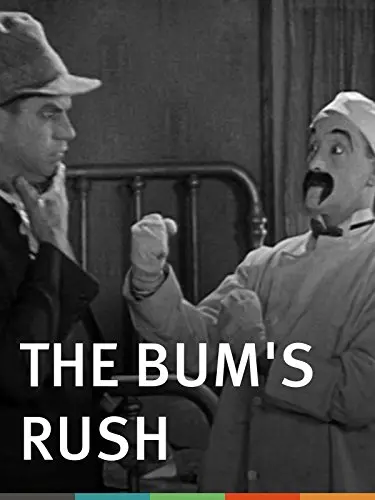
A definitive 5.4/10 rating for a film that redefined the boundaries of cult cinema. The Bum's Rush remains a cornerstone of transgressive art.
Is The Bum's Rush worth your twenty minutes today? Short answer: yes, but only if you appreciate the frantic, unpolished energy of late-twenties silent shorts. This film is for the archival completionist and fans of 'Snub' Pollard’s unique brand of kinetic stupidity; it is definitely not for anyone looking for the refined pathos of a Chaplin feature.
1) This film works because the chemistry between the 'bum' and the 'convict' creates a chaotic moral compass that feels surprisingly modern.
2) This film fails because the kidnapping subplot is resolved with a jarring lack of tension that undermines the stakes.
3) You should watch it if you want to see how silent shorts bridged the gap between pure slapstick and narrative structure during the industry's transition.
By 1927, the silent comedy landscape was changing. The era of the pure gag-reel was fading, replaced by a demand for more cohesive storytelling. Harold Tarshis, the writer behind this short, understood this shift. He didn't just give Pollard a series of props; he gave him a mission.
Pollard’s persona here is less the 'Bebe' sidekick and more a protagonist in his own right. He carries the weight of the film with a frantic, nervous energy. His mustache, a character in itself, twitches with a comedic anxiety that mirrors the era's economic instability.
The interaction between Pollard and Dick Gilbert is the film's backbone. Gilbert, as the escaped convict, provides the physical threat, while Pollard provides the misguided ingenuity. It is a precursor to the 'buddy cop' dynamic, but with much dirtier faces.
Compare this to the more domestic comedy found in Home, Sweet Home. While that film plays with the safety of the household, The Bum's Rush thrives in the danger of the open road and the shadows of the underworld.
Slapstick is often dismissed as low-brow, but in The Bum's Rush, it is a language of survival. Every fall and every collision serves a purpose. When Pollard stumbles upon the kidnapped boy, the comedy doesn't stop; it just becomes more frantic.
There is a specific scene where the duo attempts to hide the boy from a passing officer. The timing required for this sequence is impeccable. It’s not just about being funny; it’s about the tension of the 'near miss.' This is where Tarshis excels as a director.
The film avoids the overly sentimental traps that caught many of its contemporaries. It doesn't ask you to cry for the boy; it asks you to laugh at the absurdity of his rescuers. It’s a cynical take on the 'hero' archetype that feels refreshed even a century later.
Unlike the more whimsical Little Miss Mischief, this film has a gritty edge. The 'bums' aren't magical figures; they are desperate men doing a good thing by accident. This groundedness is what keeps the film from feeling like a relic.
The Bum's Rush is worth watching if you are interested in the technical evolution of silent comedy. It provides a clear look at how 1920s filmmakers used limited space to create high-speed chases. It also serves as a masterclass in 'Snub' Pollard's physical timing.
While the plot is thin by modern standards, the execution is tight. The film runs at a breakneck pace, ensuring that even the weaker gags don't overstay their welcome. It is a bite-sized piece of cinematic history that remains entertaining.
However, if you require high-definition visuals or complex dialogue, this is not for you. It is a product of its time—loud, messy, and silent. But for those who can look past the grain, there is a lot of heart here.
The camera work in The Bum's Rush is functional but effective. It doesn't aim for the artistic heights of Vanina. Instead, it focuses on clarity of action. Every frame is designed to show you exactly where the threat is and where the escape is.
There is a notable use of depth in the outdoor scenes. As Pollard and Gilbert move through the brush, the camera stays low, making the environment feel more treacherous. This simple choice adds a layer of realism to the slapstick.
The lighting is naturalistic, which was common for the time, but it works in the film's favor. The harsh sunlight makes the characters look more haggard, emphasizing their status as outcasts. It’s a visual shorthand that tells the audience everything they need to know.
One surprising observation is the lack of traditional 'hero' shots. Even when they are saving the boy, the camera treats them with the same irreverence as when they are stealing a pie. It’s a democratic way of filming that I find quite refreshing.
Otto Fries and Max Asher provide the necessary villainy to make the stakes feel real. They aren't just cartoonish bad guys; they have a certain menace that balances the comedy. This tonal shift is crucial for the film's success.
Mavis Villiers, though in a smaller role, provides a glimpse into the world the boy belongs to. Her presence acts as the 'straight' element that the chaos of Pollard and Gilbert reacts against. It’s a standard trope, but it’s handled with more grace than in The Princess's Dilemma.
Bobby Nelson, as the kidnapped boy, is surprisingly un-annoying. Child actors in the 1920s could be a hit-or-miss affair, often leaning too heavily into 'preciousness.' Nelson just seems confused, which is exactly how a kidnapped child would feel.
The ensemble works because they all understand the rhythm of the film. There are no wasted movements. Every actor is a cog in a very fast-moving machine. It works. But it’s flawed by its own brevity.
Tarshis was a workhorse of the silent era. His writing here shows a man who knew his audience. He didn't try to reinvent the wheel; he just tried to make it spin faster. His work on Cleaning Up shows a similar penchant for taking mundane situations and escalating them to the point of collapse.
When you look at other films from the same period, like Felix Minds His Business, you see a trend toward character-driven shorts. The Bum's Rush fits perfectly into this niche. It isn't just about the 'what' but the 'who.'
Pollard was competing with the likes of Keaton and Lloyd. While he never reached their level of poetic physical movement, he had a 'everyman' quality that was more relatable. He looked like a man you'd see on the street, which made his antics feel more grounded.
The film’s focus on the 'bum' character is also a reflection of the pre-Depression era's anxieties. There was a growing awareness of the people on the margins of society. Films like A Lickpenny Lover touched on this, but The Bum's Rush does it with a punch to the gut and a slip on a banana peel.
It is a fascinating artifact. It shows a world that was about to disappear—the world of the silent short—and it goes out with a bang. It’s loud for a silent movie. It’s aggressive. And it’s undeniably human.
"The Bum's Rush is a reminder that in the 1920s, comedy wasn't just about a laugh; it was about the kinetic energy of a world moving too fast for its own good."
The Bum's Rush is a minor work in the grand scheme of cinema, but it is a vital one. It captures 'Snub' Pollard at a turning point in his career and showcases the raw power of silent storytelling. It doesn't need words to tell you that these two men are losers, and it doesn't need words to tell you they've found their soul.
While it lacks the polish of a Chaplin feature like Not So Long Ago, it makes up for it with sheer gall. It is a messy, funny, and occasionally touching piece of film history. If you have twenty minutes to spare, give it a look. You might find yourself surprised by how much you care about a bum and a convict.
Ultimately, the film succeeds because it refuses to be anything other than what it is: a fast-paced, slightly dark, and thoroughly entertaining chase through the underbelly of the 1920s. It’s not a masterpiece. It’s better than that—it’s alive.