DbcultAccessing Vault...
Cult Review
Senior Film Conservator
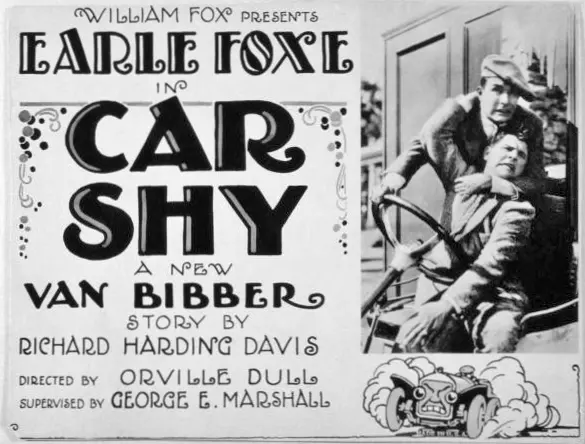
Is 'Car Shy' a film you should prioritize watching in the modern era? Short answer: yes, but with significant caveats. This early cinematic effort serves primarily as a fascinating historical artifact, a window into the foundational years of comedic filmmaking rather than a consistently uproarious experience.
It's a delightful, if somewhat simplistic, diversion for cinephiles, historians, and those with a deep appreciation for the silent era's unique charm. However, for viewers accustomed to contemporary pacing, complex narratives, or sophisticated humor, 'Car Shy' will likely test your patience, offering more smiles of recognition than bursts of laughter.
The year is likely somewhere in the early 1920s, a period when the automobile was rapidly transitioning from a luxury curiosity to an everyday, if still somewhat terrifying, fixture. 'Car Shy' taps into this societal shift, channeling the anxieties and comedic potential inherent in the clunky, unpredictable machines that were beginning to dominate the roads. It's a simple premise, executed with the broad strokes typical of its era, focusing on physical comedy and situational humor over intricate plot development.
Our protagonist, Eustace P. Featherbottom, embodies the reluctance of a generation clinging to horse-drawn familiarity. His inherited motorcar isn't just a plot device; it's a symbol of progress, a noisy, smelly harbinger of change that Eustace, and by extension, a segment of the audience, deeply distrusts. This core conflict, man versus machine, is timeless, even if the execution here feels distinctly of its time.
This film works because it perfectly captures a specific cultural moment, translating the widespread apprehension towards new technology into accessible, physical comedy. It fails because its comedic beats are repetitive, often stretching a single gag beyond its natural lifespan. You should watch it if you're a student of early cinema, appreciate slapstick, or enjoy historical curiosities; otherwise, you might find its charms fleeting.
The film's pacing is, by modern standards, glacial. Gags unfold with a deliberate slowness that demands a different kind of viewership, one willing to savor the setup and the often-obvious payoff. Yet, within this languid rhythm lies a certain charm, a chance to observe the building blocks of cinematic comedy before rapid-fire editing and sophisticated visual effects became the norm.
The ensemble cast, featuring names like Ralph Sipperly, Fred Walton, and Otto Fries, delivers performances entirely in keeping with the theatrical traditions of the period. Subtlety is not the order of the day; instead, we are treated to exaggerated facial expressions, grand gestures, and a reliance on physical comedy that would feel at home on a vaudeville stage. Ralph Sipperly, as Eustace, is particularly adept at conveying a sense of bewildered exasperation, his every movement a testament to his character's internal struggle with the mechanical beast.
His wide-eyed terror behind the wheel, or his flailing attempts to crank the engine, are genuinely amusing moments, even if they are repeated several times throughout the film. Fred Walton, often cast in character roles, likely provides a memorable foil, perhaps as the exasperated driving instructor or a rival suitor. The dynamic between Sipperly’s bumbling protagonist and the more grounded or antagonistic figures offers the film’s most consistent source of humor.
Virginia Bradford, as Prudence, the ambitious fiancée, is tasked with representing the societal pressures pushing Eustace towards modernity. Her performance, while less overtly comedic than Sipperly's, grounds the narrative with a sense of purpose, even if that purpose is purely to drive the plot's comedic engine. The interplay between these archetypes is predictable, certainly, but effective for the film's modest ambitions. It's a far cry from the nuanced character work seen in later films like Remember, but perfectly suited for its genre.
The direction in 'Car Shy' is, unsurprisingly, straightforward. The camera is largely static, observing the action from a fixed perspective, allowing the physical comedy to unfold within the frame. There's little in the way of innovative camera work or complex blocking. The focus is on clarity and ensuring the audience can easily follow the sequence of comedic events. This isn't a film aiming for the visual artistry of a later epic; it's a vehicle for gags, plain and simple.
However, this simplicity is not without its charm. It forces the viewer to pay attention to the performers and the meticulously choreographed (or perhaps gloriously chaotic) physical routines. A particular scene involving Eustace attempting to park the car in a crowded street, resulting in a domino effect of minor collisions and pedestrian chaos, is a testament to the era's practical effects and the director's ability to orchestrate a believable, if exaggerated, mishap.
Cinematography, too, adheres to the conventions of early cinema. Lighting is often flat but functional, ensuring all elements are visible. The film's black and white palette, while lacking the vibrancy of color, possesses a timeless quality that enhances its historical appeal. There are no sweeping vistas or dramatic close-ups here, but rather a clear, unadorned presentation of the action. It has a raw, unpolished feel that connects directly to the pioneering spirit of early filmmaking.
The pacing of 'Car Shy' is perhaps its most divisive element. Modern audiences, accustomed to rapid-fire editing and constant narrative progression, will find it deliberately slow. Each gag is given ample time to develop, unfold, and then linger, sometimes to the point of exhaustion. A sequence depicting Eustace's repeated failures to start the car, for instance, goes on for what feels like an eternity, relying on incremental variations of the same struggle.
Yet, this slow burn is integral to the film's tone. It cultivates a sense of gentle humor, allowing the audience to anticipate the inevitable mishaps and appreciate the physical effort of the performers. The tone is consistently lighthearted and good-natured, even amidst the chaos. There's no real malice or danger; just a series of comical frustrations that never truly escalate beyond the realm of light slapstick. It shares a certain amiable spirit with other shorts of the era, like Toddles, focusing on simple, relatable predicaments.
The film doesn't aim for profound statements or deep character exploration. Its ambition lies squarely in providing an uncomplicated, if somewhat extended, series of laughs centered around a universal theme: the awkward dance between humanity and its accelerating technological progress. It works. But it’s flawed.
One of the most surprising observations about 'Car Shy' is its unexpected relevance to contemporary anxieties. While the specific technology has changed, the underlying fear of new, complex machines and the humor derived from human ineptitude remains strikingly potent. In an age of self-driving cars and smart homes, Eustace's struggle with his early automobile feels almost quaintly prophetic.
However, this connection to modern themes doesn't entirely alleviate the film's structural weaknesses. The repetitive nature of its gags, while characteristic of the era, can become genuinely tiresome. There's a point where Eustace's misfortune ceases to be funny and merely feels prolonged. This is a common pitfall of early comedy, where the novelty of a visual gag often outweighed the need for narrative progression or variation.
I would argue that the film's greatest strength is its ability to transport you to a bygone era, allowing you to experience humor as it was understood and presented a century ago. Its biggest weakness, paradoxically, is its unwavering adherence to those same conventions, which can feel restrictive and dated to a modern sensibility. Unlike the more dynamic narrative found in a film like The Galloping Kid, 'Car Shy' prioritizes a singular comedic premise.
'Car Shy' is undeniably a product of its time, a charming, if somewhat one-note, comedic short that offers more historical curiosity than gut-busting laughs. Its value lies less in its groundbreaking artistry and more in its honest reflection of a specific cultural moment and the foundational principles of cinematic comedy. It’s a gentle reminder of how far filmmaking has come, and how some human foibles remain eternally amusing.
For those willing to adjust their expectations and embrace the unique rhythms of early cinema, there’s a quiet satisfaction to be found in Eustace P. Featherbottom's automotive woes. It's not a film that will change your life, but it might just offer a pleasant, nostalgic chuckle and a deeper appreciation for the pioneers who first put slapstick on screen. Consider it a delightful, albeit slightly protracted, historical footnote in the grand tapestry of film comedy. It’s certainly not for everyone, but for the right audience, it’s a small, unassuming treasure.
IMDb —
1920
Community
Log in to comment.