DbcultAccessing Vault...
5.8/10
Senior Film Conservator
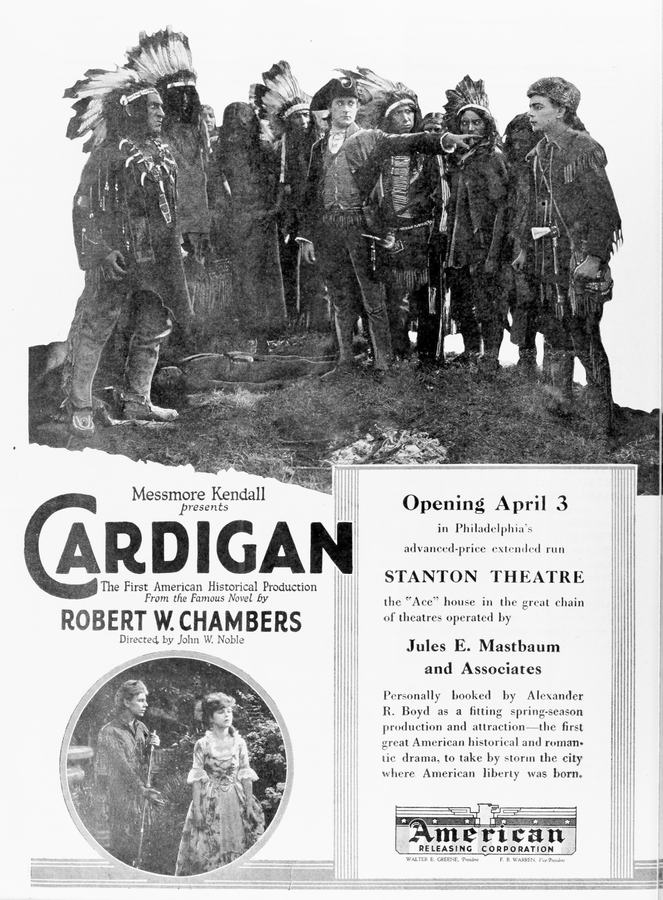
A definitive 5.8/10 rating for a film that redefined the boundaries of cult cinema. Cardigan remains a cornerstone of transgressive art.
The first time I saw Robert W. Chambers’s name crawl across the flickering title card, I tasted gunpowder. Not metaphorical gunpowder—actual acrid grit, as if the celluloid itself had been dredged through a Revolutionary War battlefield. Cardigan is that kind of haunting: a 1922 relic that refuses to stay politely embalmed in archival silence.
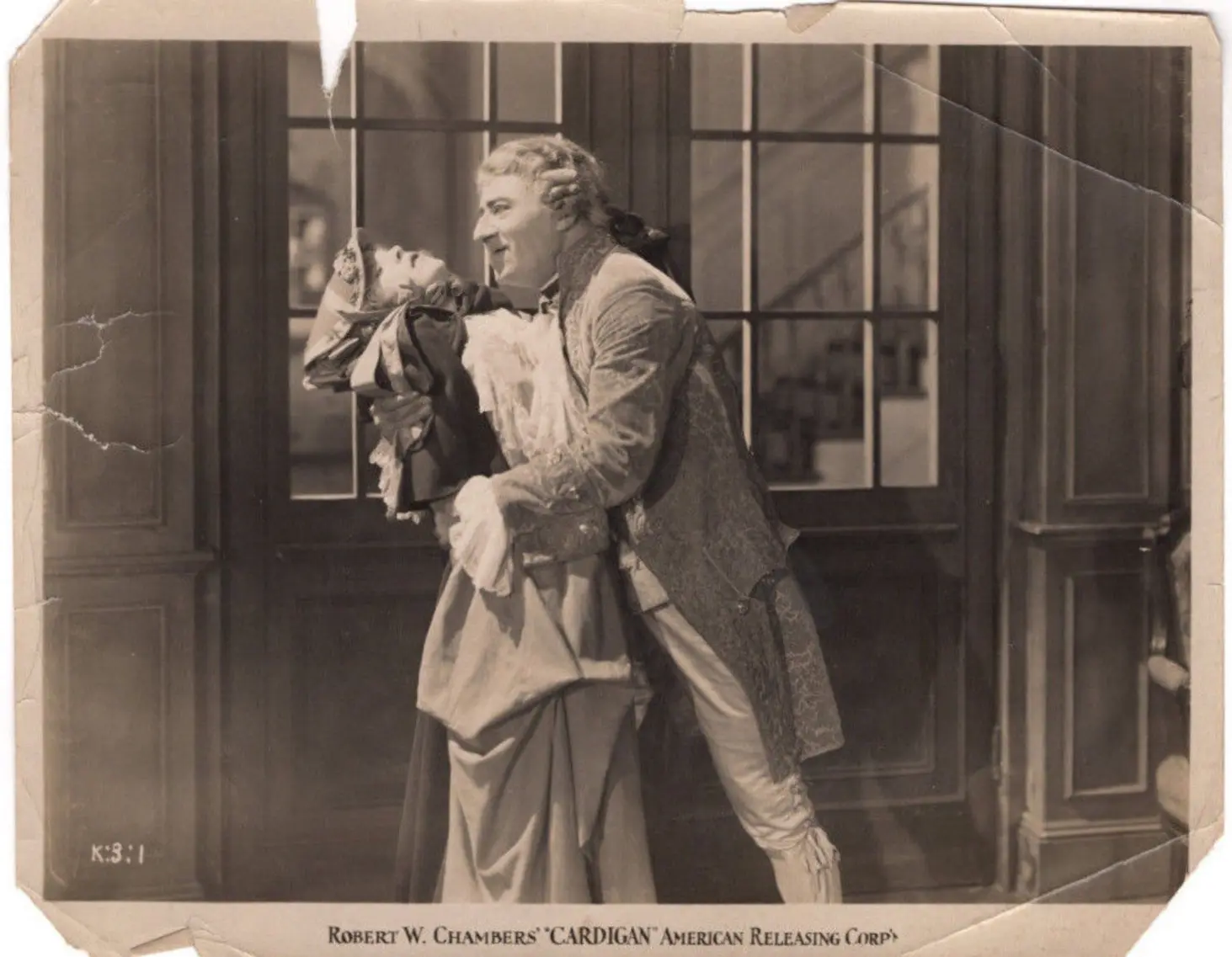
Charles E. Graham’s Michael Cardigan arrives like a myth cut from birch bark: angular jaw softened by something almost spiritual, a man who can parley in Algonquian metaphors at dawn and quote Thomas Paine by candlelight. The performance is calibrated at the exact point where silent-film histrionics yield to something rawer—watch his shoulders twitch when a Cayuga sachem rejects his treaty wampum; you feel the paper-cut of empire on your own skin.
Florence Short’s Silver Heels is no mere Tory debutante. In close-ups that pre-date Garbo by half a decade, her pupils dilate like ink dropped in water—one moment colonial coquette, the next panther poised to spring ideological borders. Their chemistry is filmed through veils of actual candlefire; shadows jitter across faces as if the flicker itself were undecided about which side of independence it stands on.
Director William V. Mong (uncredited in surviving prints but attested by trade-press clippings) stages frontier tableaux with the patience of a muralist: a single take holds on a birch canoe gliding past a fort’s palisade while the Union Jack lowers in background—colonialism dissolving in real time. Compare that visual succinctness to The Stolen Treaty’s frantic cross-cutting and you realize how revolutionary restraint itself can be.
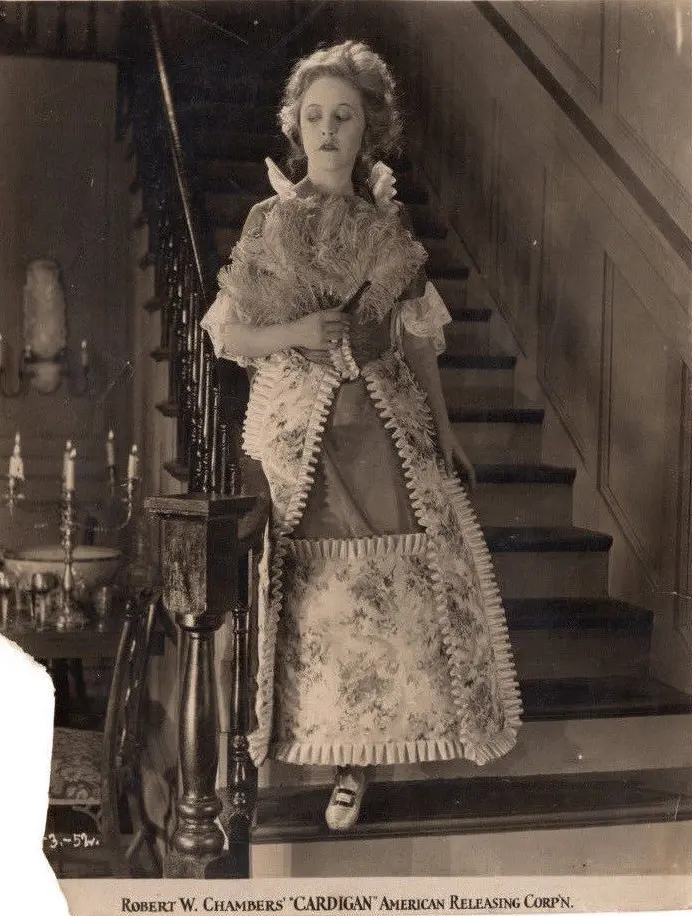
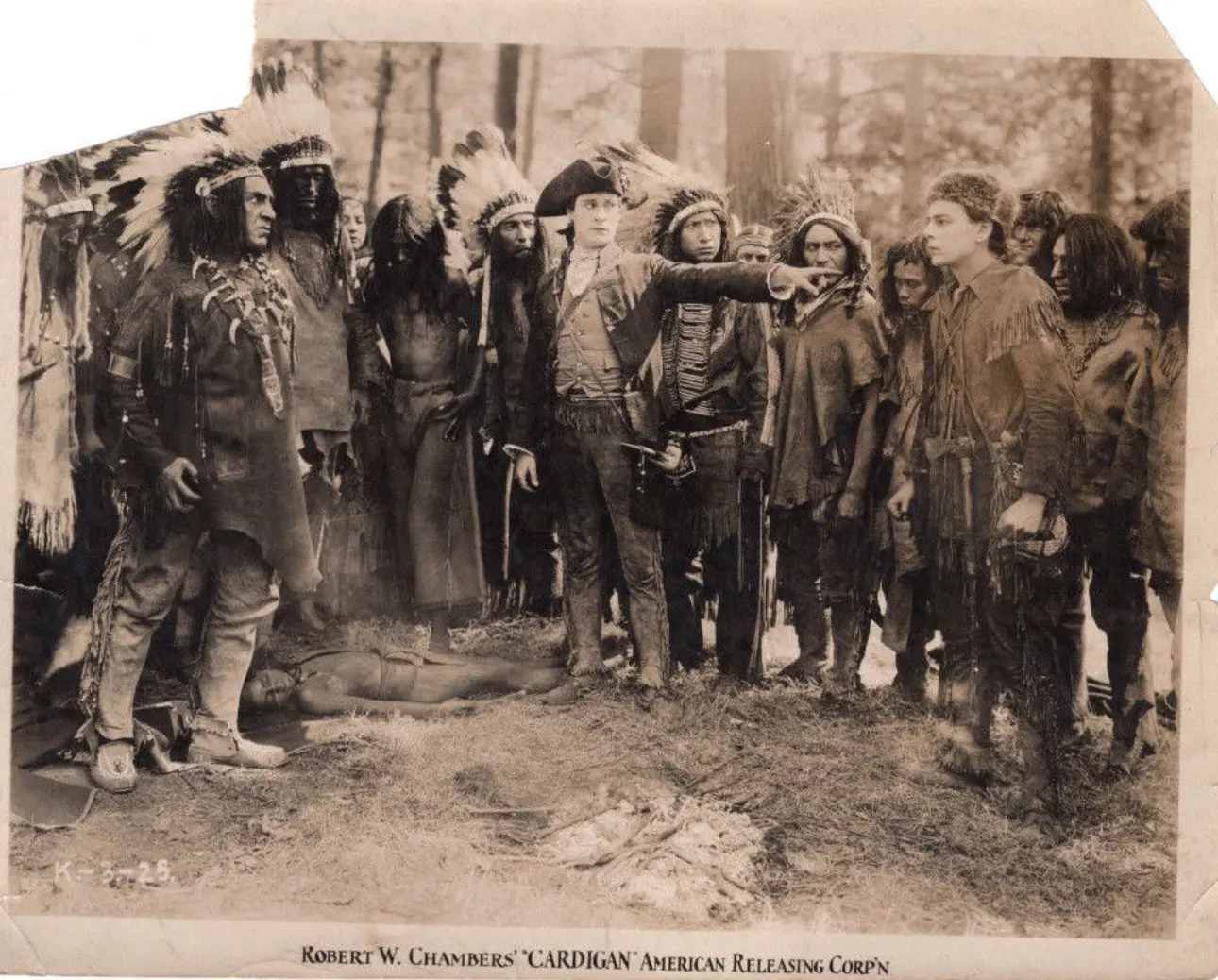
Chambers’s screenplay, adapted from his own Saturday Evening Post serial, refuses tidy dualities. The Cayuga are neither pacifist innocents nor scalping savages; they debate land cessions in council scenes that feel eerily like U.N. roll calls shot on birchbark. Madeleine Lubetty as White Iris delivers her monologue—“Your paper deeds are ghosts that eat soil”—via intertitle that lingers four full seconds, enough for the words to burrow under your fingernails.
Meanwhile the British aren’t monocered cartoons. Governor Tryan’s ball sequence, all powdered perukes and minuets, is lit like a wake: tapers drip wax onto polished maple, foreshadowing the forthcoming funeral of empire. Austin Hume plays Tryan with the exhausted civility of a man who realizes the colonies are his delinquent offspring about to sue for emancipation.
There’s a moment—wordless, music-less in the 16-mm restoration—when Cardigan, having survived a Cayuga gauntlet, stares at his own blood-slick palms. The camera holds. No intertitle intrudes. In that vacuum you hear your own heart arguing with itself about what violence is sanctioned by conscience. I’ve seen Bergman do similar things with faces; I wasn’t expecting it from a 1922 potboiler.
Cinematographer Frank B. Good (also uncredited) lenses dawn skirmishes in cobalt orthochromatics that make white smoke look like shredded parchment against black sky. Compare this to the pastel romanticism of The Valley of the Moon and you appreciate how monochrome can feel more violent than color.
There’s a dolly shot—hand-cranked yet butter-smooth—that glides past a line of militiamen praying in three languages: English, Mohawk, German. It prefigures the American crucible, and it does so without a preachy intertitle. You realize montage can be democratic.
The third-act romance sags. Silver Heels’s eleventh-hour conversion to the rebel cause—signaled by her shedding a silver shoe on Lexington Green—feels shoehorned, pun unavoidable. Intertitles get purple: “My heart beats drum-march to freedom!” One wishes Chambers had trusted the lacunae more.
And yes, the Cayuga speak in that stilted “me big chief” syntax endemic to 1920s screen Indigenous dialects. It’s cringe now, but even within that constraint Lubetty injects regal sarcasm with a raised eyebrow that undercuts the patronizing words on the title card.
The recent Library of Congress restoration commissioned a new score by Colin Stetson—bass saxophone breaths that sound like continent-sized bellows. He withholds until minute forty, letting the crackle of projector dust serve as tension. When the Minute Men charge, Stetson unleashes a polyrhythmic stomp that fuses Iroquois water drums with fife fragments. It’s history as avant-garde concerto.
Strip away the Technicolor muskets of Drums Along the Mohawk and you’ll find Cardigan’s skeleton: the reluctant hero, the interracial negotiation, the love that geopolitics would shred. Even The Last of the Mohicans (1992) borrows the visual grammar of lovers silhouetted against fort-burning horizons—Mann’s cinematographer acknowledged the print in a 1999 American Cinematographer interview.
As of this month, the 4K restoration streams on Criterion Channel in rotation. A Blu-ray is rumored for 2025 with commentary by Smoke Signals director Chris Eyre, promising a Native rebuttal to Chambers’s settler gaze. For purists, the George Eastman House holds a 35-mm lavender-tint print; you can schedule a viewing if you bring nitrate gloves and a scholar’s letter.
Cardigan is not a curio; it’s a wound that never clot. It captures the instant when personal loyalty and national destiny file for divorce, and it does so with images that brand themselves onto the soft tissue of your civic memory. Yes, the film has the racial blind spots of its era, but within those limits it throbs with a cosmopolitan ache that most modern period pieces—those anachronistic deodorized reenactments—rarely approach.
Score: 9/10 — a silent ember that still singes the fabric of American mythology.
If this review sparked tinder, share the link, tag #SilentRevolution, and let the algorithm know that some of us prefer our history flickering, flawed, and flammable.
IMDb 5.3
1932
Community
Log in to comment.