DbcultAccessing Vault...
6.7/10
Senior Film Conservator
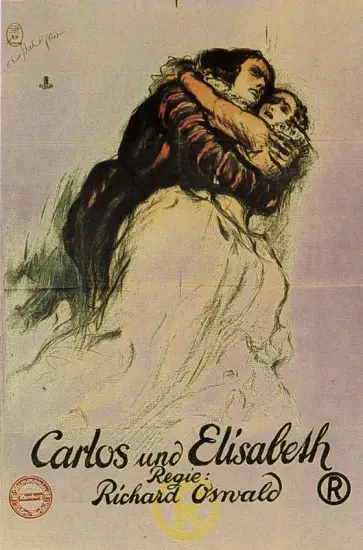
A definitive 6.7/10 rating for a film that redefined the boundaries of cult cinema. Carlos und Elisabeth remains a cornerstone of transgressive art.
In the grand tapestry of silent cinema, where emotions spoke louder than words and gestures carried the weight of a thousand soliloquies, there emerges a profound and enduring masterpiece: Carlos und Elisabeth. This 1924 German historical drama, helmed by an uncredited but clearly visionary directorial hand, plunges into the tumultuous heart of 16th-century Spain, meticulously crafting a narrative of love, duty, and the crushing weight of political expediency. It is a film that, even a century later, resonates with a startling immediacy, a testament to its timeless themes and the raw power of its performances.
The premise, drawn from Ludwig Fulda's poignant adaptation, is a study in tragic irony. Elisabeth of Valois, portrayed with exquisite vulnerability by Dagny Servaes, arrives in Spain brimming with the innocent expectation of marrying Don Carlos, the nation's charismatic crown prince. Her perception of Carlos, brought to life by the earnest Martin Herzberg, is not merely as a fiancé but as a beacon of progressive thought. He is the poetic, liberal scion, a champion of religious freedom, an antithesis to the rigid dogma that grips the kingdom. His very existence offers a glimmer of hope for a more tolerant Spain, and indeed, for a Flanders chafing under the Spanish yoke. The initial encounters between Elisabeth and Carlos are imbued with a tender, burgeoning affection, a silent understanding that transcends the formalities of royal engagement. They share a vision, a quiet rebellion against the prevailing orthodoxy, hinting at a future where compassion might temper power.
However, the cruel hand of fate, or rather, the calculated machinations of power, shatters this idyllic illusion. Elisabeth discovers, with a dawning horror, that her intended is not the idealistic prince, but his father, King Philip II, played with chilling gravitas by Conrad Veidt. Veidt, a master of conveying complex villainy and tormented authority (as seen in his iconic roles elsewhere), embodies Philip with a terrifying blend of piety and tyranny. He is the architect of the Inquisition, the unyielding enforcer of oppression, both within the Iberian peninsula and its rebellious northern territories. This revelation is a gut punch, not only for Elisabeth but for the audience, who are made privy to the agonizing realization that her dreams of a liberal partnership have been replaced by a grim reality of political subjugation. The film masterfully builds this dramatic tension, allowing the audience to feel Elisabeth's confusion, hope, and subsequent despair with every subtle shift in Servaes's expressive face.
The core of Carlos und Elisabeth lies in the enduring, yet utterly forbidden, affection between Carlos and Elisabeth. Despite her marriage to Philip, Carlos's love for Elisabeth remains an unyielding force, a constant, dangerous undercurrent beneath the rigid decorum of court life. Herzberg, as Carlos, portrays a man torn between filial duty, political conviction, and an overwhelming passion. His longing for Elisabeth is palpable, conveyed through stolen glances, desperate gestures, and the profound sadness etched upon his features. This silent, agonizing romance is a powerful engine of the narrative, reminiscent of other tragic love stories in cinema, though perhaps with a unique royal and religious backdrop that elevates its stakes. One might draw parallels to the intensity of passion found in Le crépuscule du coeur, where societal constraints similarly crush individual desires, though Carlos und Elisabeth infuses its tragedy with a distinct political and religious dimension.
Conrad Veidt's King Philip is not merely a villain; he is a complex antagonist, embodying the very essence of absolute power and rigid faith. His performance is a masterclass in controlled intensity, his cold gaze and deliberate movements conveying a man who sees himself as God's instrument, even as his actions breed widespread suffering and personal torment. His jealousy, though often unspoken, simmers beneath the surface, a dangerous threat to the illicit emotional bond between his son and his wife. The film's strength lies in its ability to humanize, to a degree, even its most oppressive figure, showing the psychological toll of such immense power and the paranoia it can engender. The stark contrast between Philip's unyielding dogmatism and Carlos's nascent liberalism forms the ideological backbone of the film, making it more than just a love triangle; it's a clash of worldviews.
The supporting cast, though perhaps less prominent than the central trio, contributes significantly to the film's rich texture. Adolf Klein, Robert Taube, Aud Egede-Nissen, Eugen Klöpfer, Rudolf Biebrach, William Dieterle, and Friedrich Kühne all deliver nuanced performances that flesh out the intricate courtly ecosystem. Each character, from the loyal confidante to the scheming advisor, serves to amplify the sense of claustrophobia and impending doom that pervades the Spanish court. The atmosphere is thick with suspicion, whispered conspiracies, and the ever-present threat of the Inquisition, which casts its long, terrifying shadow over every facet of life. This portrayal of a politically charged environment, where personal desires are secondary to state and religious decree, finds echoes in other historical dramas of the era, such as Die Nacht der Königin Isabeau, which also delves into the dangers of courtly intrigue and the perils of power.
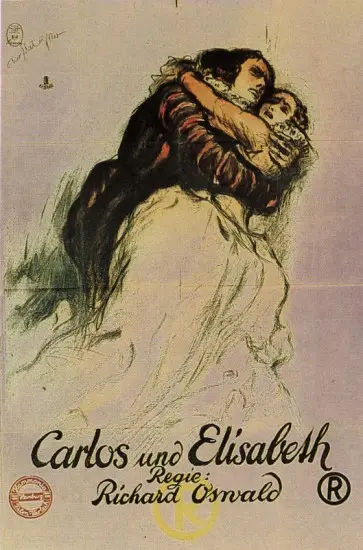
The film's visual aesthetic is equally compelling. The cinematography, a hallmark of German Expressionism's influence even in more conventional narratives, uses shadow and light to great effect, mirroring the moral ambiguities and hidden passions of the characters. The grand, imposing sets of the Spanish court emphasize the characters' smallness against the backdrop of immense power, while close-ups on faces convey the searing internal conflicts that rage beneath stoic exteriors. The costumes are opulent, historically accurate, and serve to further immerse the viewer in this bygone era of rigid formality and simmering rebellion. The visual storytelling is so potent that it transcends the need for spoken dialogue, allowing the audience to infer complex emotional states and political machinations through purely cinematic means.
What elevates Carlos und Elisabeth beyond a mere historical romance is its potent exploration of ideological conflict. Carlos represents the Enlightenment's nascent stirrings – a plea for reason, tolerance, and individual liberty. Philip, conversely, is the embodiment of absolute monarchy and religious fundamentalism, a staunch defender of the status quo at any human cost. This clash of philosophies is not abstract; it is deeply personal, playing out within the confines of a single family, tearing apart father and son, husband and wife. The film subtly critiques the dangers of unchecked power and religious zealotry, making it a surprisingly modern commentary despite its historical setting. The suffering of the Flemish people, though often glimpsed rather than directly experienced, serves as a constant reminder of the wider consequences of Philip's reign, grounding the personal drama in a broader political context.
As a silent film, Carlos und Elisabeth relies heavily on the expressive capabilities of its actors and the evocative power of its visual language. Martin Herzberg's Carlos is a figure of tragic nobility, his youthful idealism slowly crushed by the harsh realities of his world. Dagny Servaes's Elisabeth is a portrait of grace under immense pressure, her inner turmoil conveyed through subtle gestures and tear-filled eyes. But it is arguably Conrad Veidt's Philip that leaves the most indelible mark, a towering performance that defines the film's oppressive atmosphere and provides its central dramatic conflict. His portrayal is a nuanced study of a man consumed by power, faith, and ultimately, a chilling loneliness that is perhaps his own form of punishment.
The film's conclusion, without giving away specifics, is steeped in the kind of profound melancholy that characterized many of the great European dramas of the silent era. It eschews easy answers or convenient resolutions, opting instead for a tragic inevitability that feels both earned and heartbreaking. This commitment to dramatic realism, even within a historical setting, is one of its most commendable qualities. It asks difficult questions about the price of power, the nature of duty, and the enduring human capacity for both love and cruelty.
In an era when cinema was still finding its voice, Carlos und Elisabeth stands as a magnificent example of its expressive potential. It is a film that demands engagement, rewarding the attentive viewer with a rich tapestry of emotional depth, historical intrigue, and philosophical inquiry. Its themes of forbidden love, political and religious oppression, and the struggle for individual freedom against institutional might remain as relevant today as they were a century ago. For those interested in the artistic achievements of the silent era, or indeed, in powerful storytelling regardless of its medium, this film is an essential viewing experience. It reminds us that some stories, particularly those woven from the fabric of human passion and societal constraint, possess an eternal resonance, echoing across generations and continuing to stir the soul.
The enduring appeal of such narratives, where personal desires clash with monumental forces, is a testament to the universal human experience. Whether it's the innocent mistaken identity in The Young Rajah, or the weighty moral dilemmas in Guilt, stories that probe the depths of human decision-making under duress continue to captivate. Carlos und Elisabeth, with its masterful blend of historical grandeur and intimate tragedy, secures its place as a pivotal work in cinematic history, a film that speaks volumes without uttering a single word, leaving an indelible mark on the viewer long after the final frame fades to black.
IMDb 6.2
1931
Community
Log in to comment.