DbcultAccessing Vault...
7.1/10
Senior Film Conservator
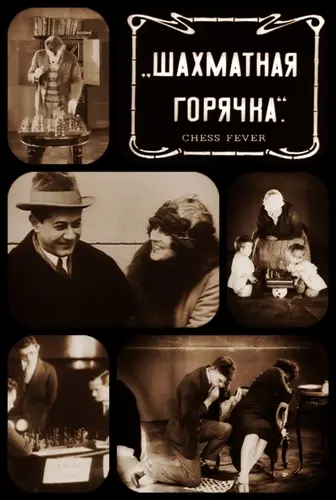
A definitive 7.1/10 rating for a film that redefined the boundaries of cult cinema. Chess Fever remains a cornerstone of transgressive art.
In the annals of Soviet cinema, a period predominantly characterized by the stern, didactic monumentality of Eisenstein or the ethnographic lyricism of Dovzhenko, Vsevolod Pudovkin’s Chess Fever (1925) emerges as a delightfully anomalous artifact. It is a work of levity that nevertheless employs the sophisticated syntactic tools of the Kuleshov workshop. While many cinephiles associate the Soviet Montage school with the churning gears of revolution or the tragic weight of history, Pudovkin—alongside co-director Nikolai Shpikovsky—utilized these revolutionary editing techniques to capture a very different kind of uprising: a domestic, psychological obsession that gripped Moscow during the first great international chess tournament of the Bolshevik era.
The film’s brilliance lies in its ability to externalize an internal fixation. Vladimir Fogel, an actor of remarkable physical elasticity, portrays the hero not merely as a man who likes a game, but as a vessel possessed by a geometric demon. His performance is a masterclass in the jittery, anxious energy of the NEP (New Economic Policy) era. Every movement is staccato, every glance a calculation of diagonal threats and vertical opportunities. When we compare this kinetic character study to the more traditional dramatic arcs found in American silents like Eyes of Youth, we see a radical departure. Where Western films often focused on the moral trajectory of the individual, Pudovkin is interested in the individual as a cog in a broader social mania.
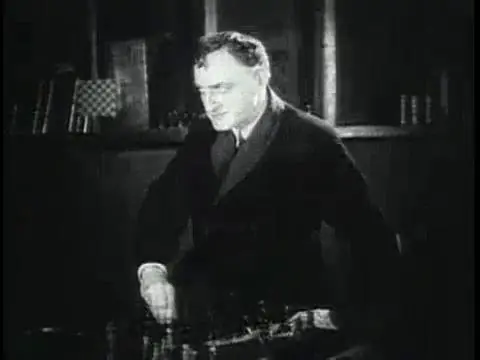
The visual motif of the checkerboard permeates the frame with an almost claustrophobic persistence. It is not just on the boards; it is on the socks, the handkerchiefs, the tablecloths, and the very architecture of the city. This is where the film transcends simple parody and enters the realm of avant-garde visual poetry. The editing rhythm mimics the rapid-fire decision-making of a grandmaster. Pudovkin employs the Kuleshov effect to bridge the gap between the fictional narrative and the actual tournament footage. By intercutting shots of the real José Raúl Capablanca and Richard Réti with the exaggerated reactions of his actors, he creates a seamless reality where the boundaries between the spectator and the spectacle dissolve entirely.
One must admire the sheer audacity of the production. Filmed on the fly during the 1925 Moscow International Tournament, the directors managed to secure a cameo from the world champion himself, José Raúl Capablanca. In a modern context, this would be akin to a romantic comedy featuring a spontaneous, plot-pivoting appearance by a global sporting icon at the height of their powers. Capablanca’s presence isn't just a gimmick; it provides the thematic fulcrum of the film. When the heroine, played by the expressive Natalya Glan, is at her lowest ebb—ready to end her life because the world has turned into a giant chess set—she meets the 'King' himself. His suave, effortless charm provides a counterpoint to the protagonist's frantic, uncoordinated mania.
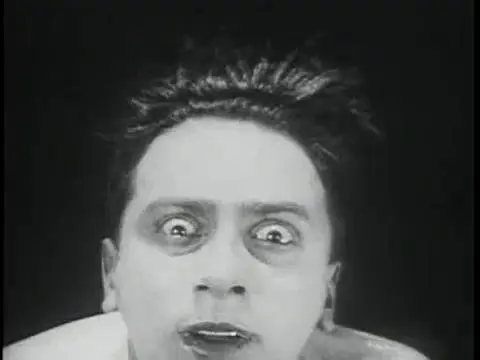
Unlike the heavy-handed moralism seen in films like Naked Hearts, where emotional stakes are treated with Victorian gravity, Chess Fever treats its characters' suffering with a playful, almost cruel irony. The heroine's attempt to buy poison is thwarted by the pharmacist's own preoccupation with a chess problem. Her despair is framed not as a tragedy, but as a cosmic joke. This irreverence is what makes the film feel so startlingly modern. It anticipates the absurdist humor of the 1960s French New Wave or the frantic energy of a Buster Keaton chase, yet it remains firmly rooted in the specific intellectual fervor of the 1920s Soviet intelligentsia.
Pudovkin’s use of montage here is less about the 'collision' of ideas (as Eisenstein championed) and more about the 'linkage' of disparate spaces. He creates a unified Moscow that exists solely within the logic of the game. We see the protagonist in his room, then we cut to a grandmaster in the tournament hall, then to a shopkeeper, and finally to a cat—all unified by the singular action of the move. This creates a sense of 'universal synchronization' that is both terrifying and hilarious. In films like The West-Bound Limited, montage is used to build suspense through physical peril; in Chess Fever, the peril is purely psychological, yet the editing is no less intense.
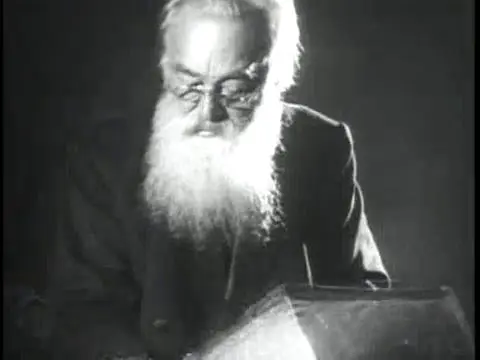
The film also serves as a fascinating sociological document. We see the faces of the Moscow public, the genuine excitement of the crowds, and the specific fashion and decor of the era. There is a raw, documentary energy that balances the stylized performances. The cast, featuring luminaries like Boris Barnet (who would go on to direct his own masterpieces) and Vladimir Nabokov (not the novelist, but a notable figure of the era), brings a level of theatrical pedigree that elevates the material above mere slapstick. The interplay between the amateur extras and the professional actors creates a textured, lived-in world that feels far more authentic than the staged sets of contemporaries like Charge It to Me.
At its core, Chess Fever is a subversion of the traditional romance. Usually, the 'third party' in a love triangle is another person; here, it is an abstract system of rules. The resolution is particularly subversive. In a traditional narrative—perhaps something akin to The Betrothed—the hero would realize the error of his ways, renounce his obsession, and return to the arms of his beloved. But Pudovkin offers no such moral platitude. Instead, the heroine is simply absorbed into the obsession. The 'happy ending' is the total surrender of the individual to the collective mania. It’s a witty, perhaps even cynical, commentary on the nature of passion and the inevitability of social contagion.
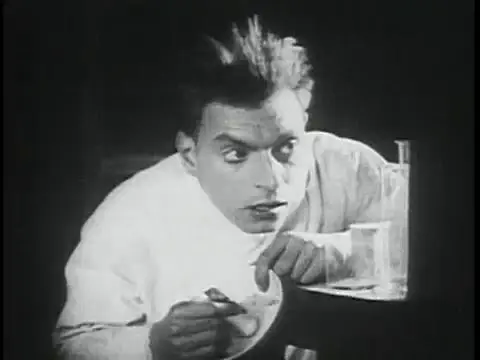
Technically, the film is a marvel of economy. Running at just under thirty minutes, it wastes not a single frame. The pacing is relentless, yet it finds time for quiet, observational humor—like the scene with the various cats or the protagonist’s numerous hidden chess sets. It shares a certain DNA with the frantic social comedies of the era, such as Real Adventure, but with a sharper, more intellectual edge. The way Pudovkin handles the 'poison' subplot, turning a potential suicide into a gag about a chess manual, is a testament to his confidence as a storyteller.
While often overshadowed by Pudovkin’s later, more 'serious' works like 'Mother' or 'The End of St. Petersburg,' Chess Fever remains a vital piece of cinema history. It proves that the sophisticated techniques of the Soviet avant-garde were not limited to political propaganda but could be applied with equal brilliance to the nuances of human behavior and the absurdities of daily life. It is a film that rewards multiple viewings, as the density of the visual jokes and the precision of the editing are easy to miss on a first pass through its whirlwind narrative.
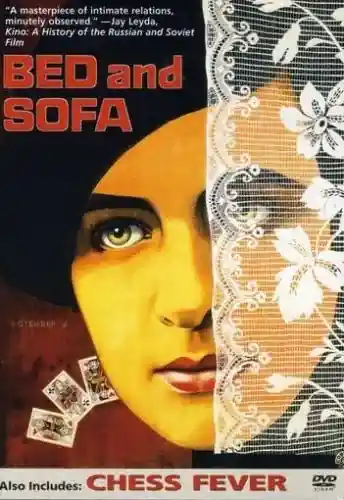
In comparison to other international works of the mid-20s, such as The Third Generation or the Hungarian A kuruzsló, Chess Fever feels remarkably unburdened by the melodramatic conventions of the past. It is a forward-looking film, one that understands the power of the image to convey complex mental states. Whether you are a devotee of the 'royal game' or simply a lover of cinematic craft, this short film offers a masterclass in how to capture the 'fever' of the mind. It is a droll, inventive, and ultimately triumphant celebration of the beautiful madness that occurs when logic and passion collide on a checkered field.
Ultimately, Pudovkin’s little comedy stands as a reminder that even in the most rigid of systems—be it the rules of chess or the dogmas of early Soviet society—there is always room for a bit of chaotic, human laughter. It’s a film that doesn't just depict a fever; it makes the audience catch it, too. From the opening shots of the tournament hall to the final, reconciled embrace of the chess-mad couple, the film is a joy. It avoids the pitfalls of the overly sentimental The Little Girl That He Forgot and the heavy-handedness of The Danger Line, opting instead for a sharp, satirical bite that remains fresh nearly a century later. It is, quite simply, a checkmate for the viewer.
IMDb 6.4
1931
Community
Log in to comment.