DbcultAccessing Vault...
Cult Review
Senior Film Conservator
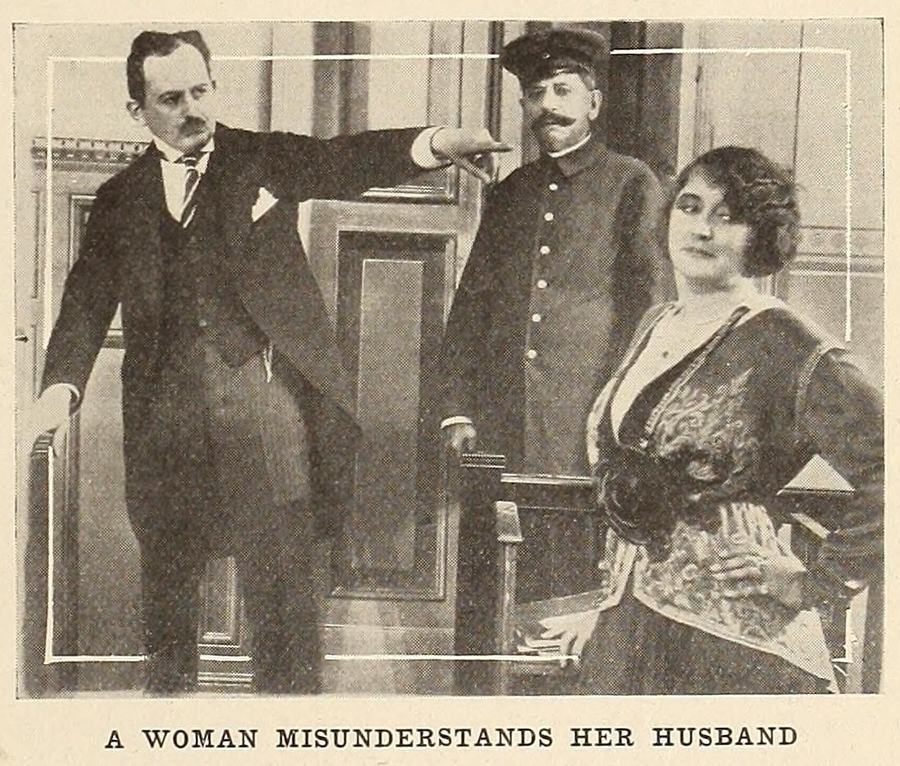
There is a moment—halfway through Chains of the Past—when Mia May’s iris seems to dilate beyond the confines of 1923 film stock, swallowing the spectator into a vertigo of unspoken demands. Director Werner Neumann (never lauded enough outside cine-club syllabi) choreographs this with a simple dolly-in, yet the effect is proto-Psychological: the screen becomes a mirror, and the mirror is cracked.
What follows is not merely a marriage unraveling; it is the Weimar Republic arguing with itself in real time—corsets versus contracts, gin-hoofs versus jurisprudence, the New Woman’s cigarette smoke curling around the Old Guard’s powdered wig. Karl Beckersachs, cast as the lawyer-husband Ernst, moves like a man who has memorized every statute except the one that legislates the heart. Watch the rigidity of his starched collar: it stands even when he is half-undressed, a citadel of masculine certainty that never quite falls, only erodes.
Neumann and cinematographer Max Fassbender shoot through balustrades, lattice doors, even the rib-cage of a grand piano—anything that will fracture the silhouette of Mia May’s character, the irrepressible Leni. The result is a visual stutter of imprisonment long before Lang’s Die Büchse der Pandora or Pabst’s Lulu serial. Each stripe of shadow across Leni’s cheekbone is a bar in the invisible jail that respectable matrimony erects.
Meanwhile, intertitles—usually the weakest joint in silent cinema’s anatomy—here glitter with aphoristic venom. When Leni scribbles “You cannot indict a soul for homesickness,” the words flare against a black card, linger for an insolent extra beat, then vanish like a match struck in a dungeon. One suspects screenwriter Lotte Neumann (yes, gender solidarity behind the camera too) is winking at us: she knows future archivists will freeze-frame that card, hunting for subversive DNA.
Although no original score survives, MoMA’s 2022 restoration commissioned a haunting quartet from composer Aleksandra Vrebalov. Her leitmotif for Ernst relies on a bassoon that keeps trying to resolve into a major chord yet collapses into a minor ninth—the musical equivalent of a man who rationalizes his cruelty until the final reel. For Leni, Vrebalov deploys contrabass pizzicato that mimics a heartbeat sprinting upstairs. The marriage between image and reconstructed audio is so uncanny that when Leni finally slams the door, the reverberation seems to travel from 1923 to whatever room you’re sitting in now.
Place Chains of the Past beside Trilby or Home, Sweet Home and you’ll notice the latter pair still beg moral pardon for their heroines: they suffer, but their suffering is haloed as cautionary. Neumann refuses such palliative nonsense. Leni’s adulterous yearning is neither condemned nor forgiven; it is simply archived under the heading of human weather. The closest analogue in American silents might be The Traitress, yet that film ends with a paternalistic deus-ex-death, whereas Chains ends with a fade on Leni’s rowboat dissolving into dawn—ambiguous, secular, electric.
Karl Beckersachs has the tougher gig: embodying stolidity without slipping into caricature. He solves it by making Ernst listen with evident effort, as though every syllable from Leni requires translation from a foreign tongue. Mia May, by contrast, is all mercury. She can vault from coquettish to corrosive in the span of a single iris-in, yet the transitions never feel mercurial for their own sake—rather, they are the logical spasms of a spirit denied horizon.
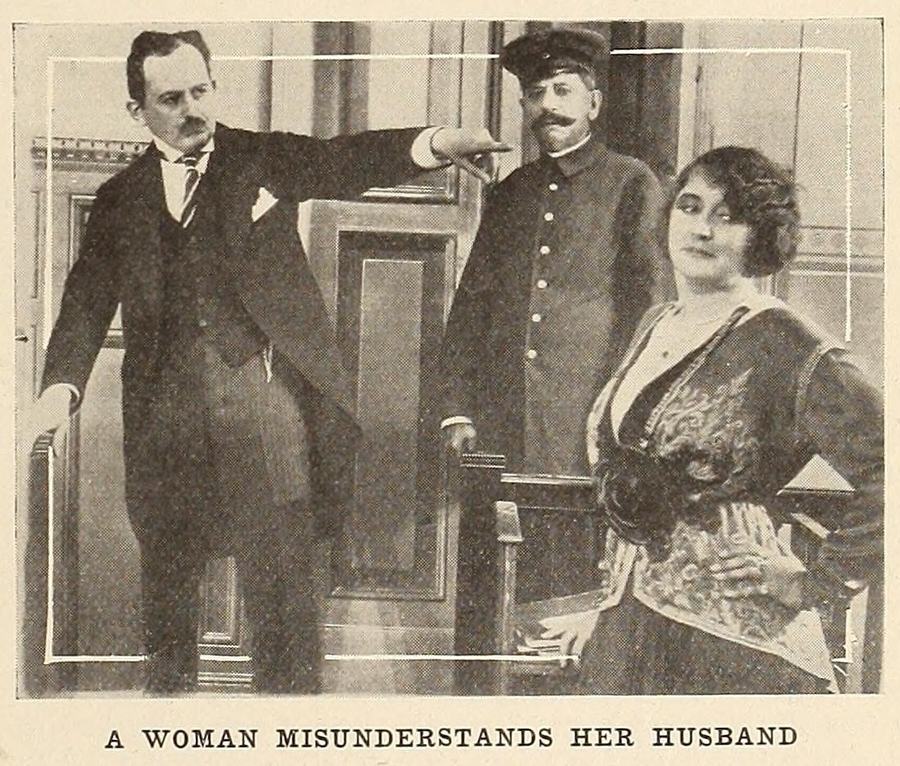
Watch the breakfast scene: Leni butters a roll, folds the knife, places it parallel to the plate’s rim—a submissive gesture—then, without warning, rakes the blade across the tablecloth leaving a frayed scar. Ernst’s eyes flick to the damage, then to her face; for a blistering second, the soundtrack (in your head or in Vrebalov’s quartet) drops to tinnitus. It is silent cinema talking at full volume.
Film scholars love to cite Lang’s Die Nibelungen for its juridical overtones, yet Chains of the Past stages a more intimate tribunal: the laws governing wives’ bodies. Ernst’s opening argument, delivered in a parlor mock-trial staged for boozy friends, is that “a contract is a promise that outlives desire.” The line draws applause; Leni responds by setting fire to a napkin. Neumann frames the flare so that it consumes the lower-left corner of the intertitle itself—an effect achieved by literally burning the nitrate during post-production. The film becomes its own arsonist.
Fast-forward to 2023, and the line feels surgically extracted from a Supreme Court docket. The past, rather than chaining Leni, prophecies our present. No wonder feminist legal blogs have adopted GIFs of May’s napkin conflagration as emoji for dissent.
Though monochromatic, the tinting strategy speaks chromatically. Domestic interiors swim in umber, suggesting tea-stained respectability. The sequence where Leni escapes to a riverside tavern is bathed in cyanotype blues—a hue historically linked to architectural blueprints, hinting she is drafting a new life. The final shot, a horizon awash in amber, recalls the color of preserved insects, implying Leni may have freed herself from the pin, yet the pin’s imprint lingers.
The 2022 4K scan unearthed a formerly illegible newspaper clipping Ernst clutches: “Court upholds husband’s right to confine wife for hysteria.” The text, now crisp, retroactively justifies Leni’s paranoia and reframes Ernst not as cruel but as statutorily enabled. In the same reel, a half-erased graffiti on the tavern wall reads “Hysteria is the first word of her biography.” The line, never in the intertitles, is the film’s secret manifesto—spoken not by protagonist but by set decorator, a whisper from the proletariat of craftsmen.
As of this month, the restoration streams on Criterion Channel worldwide and plays select nitrate prints at Il Cinema Ritrovato (Bologna) and Pordenone Silent Film Festival. If you rent, splurge for the 4K—anything less blurs the napkin-fire detail, and you’ll miss Neumann’s subliminal poke at patriarchy.
Because every frame is a court transcript, every close-up an appeal. Because Mia May’s eyelid can hold more rebellion than a thousand Twitter threads. Because the past is not a chain but a boomerang: you think you’ve flung it away, yet here it is in 4K, asking whether your own relationships are clauses in an invisible contract. Watch Chains of the Past not for antique curiosity, but for the sudden chill when you realize the gavel in Ernst’s study is still echoing—it just landed on your Netflix queue.
IMDb —
1935
Community
Log in to comment.