DbcultAccessing Vault...
Cult Review
Senior Film Conservator
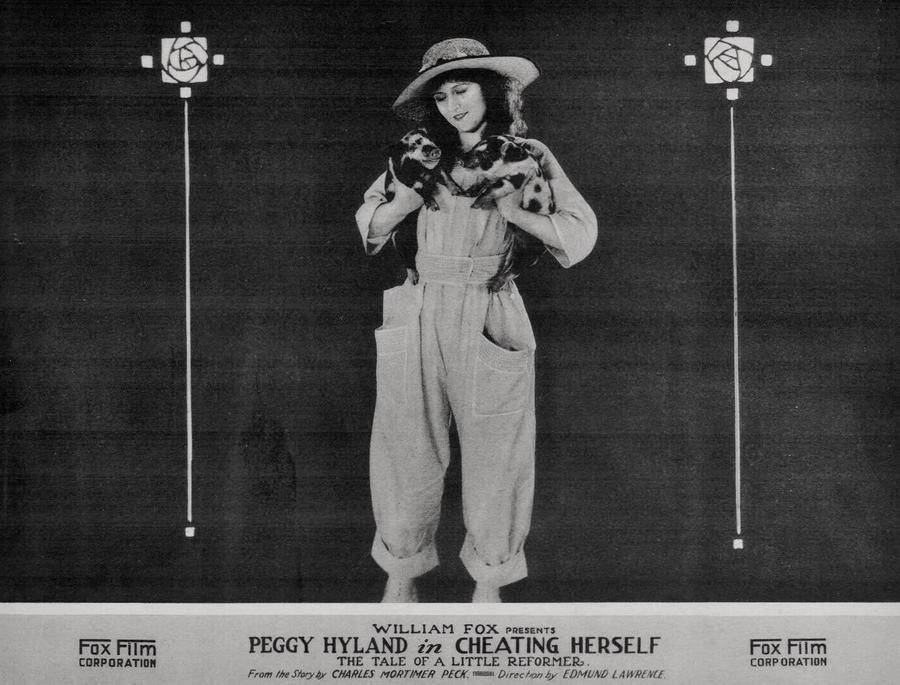
The year 1919 was a crucible for the American psyche, a period where the trauma of the Great War collided with an unprecedented industrial boom. Within this cultural friction, Fox Film Corporation released Cheating Herself, a film that, on its surface, appears to be a lighthearted social comedy but serves as a fascinating specimen of class-conscious storytelling. Directed by Sidney Franklin and written by the formidable Ruth Ann Baldwin, the film interrogates the burgeoning 'simple life' movement—a precursor to modern minimalism—with a cocktail of cynicism and slapstick. It is a work that captures the zeitgeist of a nation grappling with the weight of its own prosperity, questioning whether the 'gilded cage' of the upper class is a sanctuary or a prison.
At the heart of the narrative is Patience Hilton, portrayed with a spirited, if misguided, intensity by Peggy Hyland. Patience is a character defined by her susceptibility to external ideologies. In this instance, the catalyst for her transformation is Magnus 'Magpie' MacDonald, a bookkeeper who possesses the kind of folksy wisdom that often masks a deep-seated resentment of the administrative grind. Magpie’s philosophy—that true happiness resides in the absence of material burden—is a siren song for a young woman who has known nothing but the stifling comforts of a millionaire’s mansion. This thematic exploration of the 'back to nature' trope was common in the era, often seen in films like His Sweetheart, which also navigated the tensions between rural simplicity and urban sophistication.
However, Cheating Herself takes a darker, more subversive turn than its contemporaries. Patience does not merely wish to live simply; she wishes to force simplicity upon her family. Her parents and her lover, Hale Thompson, are depicted as the quintessential bourgeois resistors—comfortably ensconced in their luxury and utterly dismissive of the spiritual 'toil' Patience advocates. This conflict sets the stage for a heist that is as much about psychological liberation as it is about financial theft. The inclusion of Dugan, the ex-burglar butler, adds a layer of genre-bending intrigue. Unlike the moral gravity found in Conscience, where the weight of one's actions is the primary focus, here the crime is framed as a therapeutic intervention.
The film’s middle act shifts from social satire to a tense crime thriller. The robbery of the Hilton safe is executed with a level of amateurish enthusiasm that highlights Patience’s naivety. The intervention of the 'fake' policemen—actual criminals who use the cover of authority to facilitate their own greed—is a masterful narrative stroke. It strips Patience of her agency and her romanticized notion of 'struggle.' When she and Magpie are chloroformed, the film literally and figuratively knocks them out of their dream state. They wake up not in a pastoral paradise, but in a reality where poverty is not a choice, but a sentence.
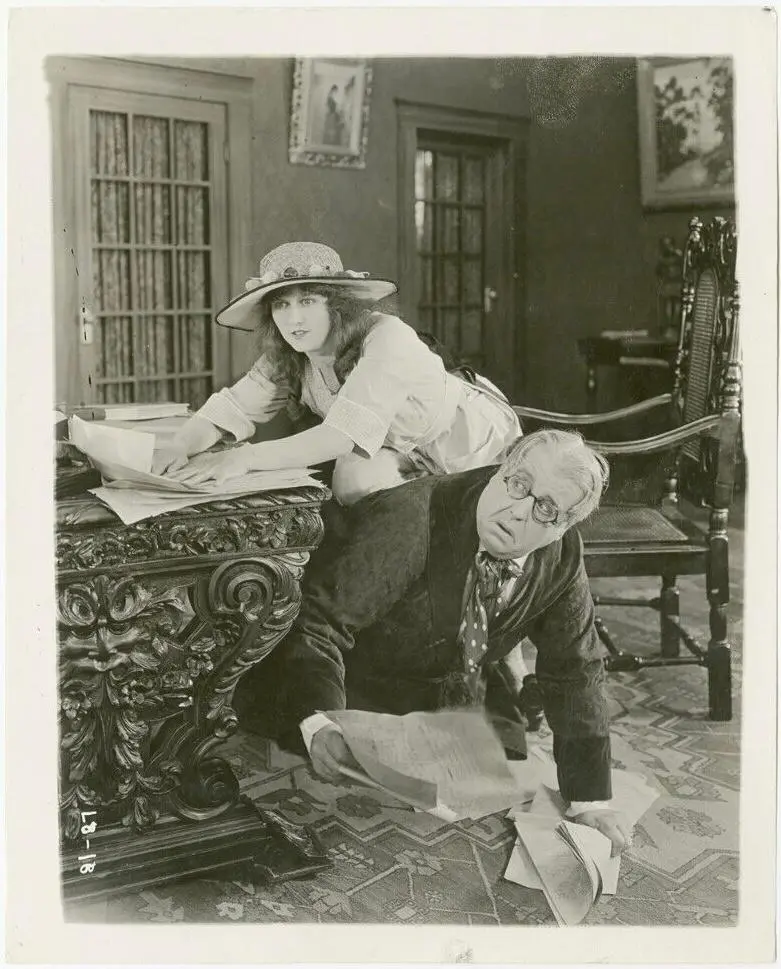
The subsequent sequence of the Hiltons living a life of 'toil and drudgery' is perhaps the film's most potent commentary. It mirrors the thematic despair found in The Edge of the Abyss, though it maintains a more comedic veneer. The sight of a millionaire father and a debutante daughter grappling with the mundane horrors of manual labor is played for laughs, yet it carries a sharp edge. It suggests that the 'simple life' is only attractive when one has the safety net of a bank account to fall back on. Once the securities are gone, the romance of the soil evaporates, replaced by the crushing exhaustion of the working class.
Peggy Hyland was a star of significant magnitude in the late 1910s, and her performance here is a testament to her range. She manages to make Patience Hilton sympathetic despite the character’s inherent arrogance. Hyland’s expressive face conveys the transition from wide-eyed idealism to the hollow-eyed fatigue of poverty with remarkable clarity. In comparison to other Fox stars of the period, such as those in La reina joven or En la sombra, Hyland possesses a groundedness that makes the farcical elements of the plot feel anchored in a recognizable human experience.
The resolution of Cheating Herself is undeniably a product of its time. Hale Thompson, the jilted but loyal boyfriend, serves as the traditional hero who tracks down the crooks and recovers the stolen wealth. His discovery that Dugan was the mastermind—or at least a willing participant in the betrayal—serves as a warning against the inherent 'dishonesty' of the lower classes, a trope that was unfortunately common in silent cinema. This restoration of order is not just financial; it is moral and patriarchal. Patience is 'cured' of her beliefs, returning to the fold of the elite with a newfound appreciation for her privilege. This ending echoes the thematic conclusions of The Social Buccaneer, where the redistribution of wealth is ultimately deemed a chaotic endeavor that requires a firm, traditional hand to correct.
The film’s cynicism regarding the 'simple life' is almost total. It posits that the Hilton family's temporary descent into poverty was a necessary 'medicine' to purge them of their radical impulses. While this might rankle modern viewers who value social mobility and the critique of wealth, within the context of 1919, it was a comforting reaffirmation of the American Dream. The dream was not to be poor and happy, but to be rich and wise enough to enjoy it. The film shares this DNA with other morality plays of the era, such as God's Half Acre and Soldiers of Chance, which also explored the intersection of luck, labor, and social standing.
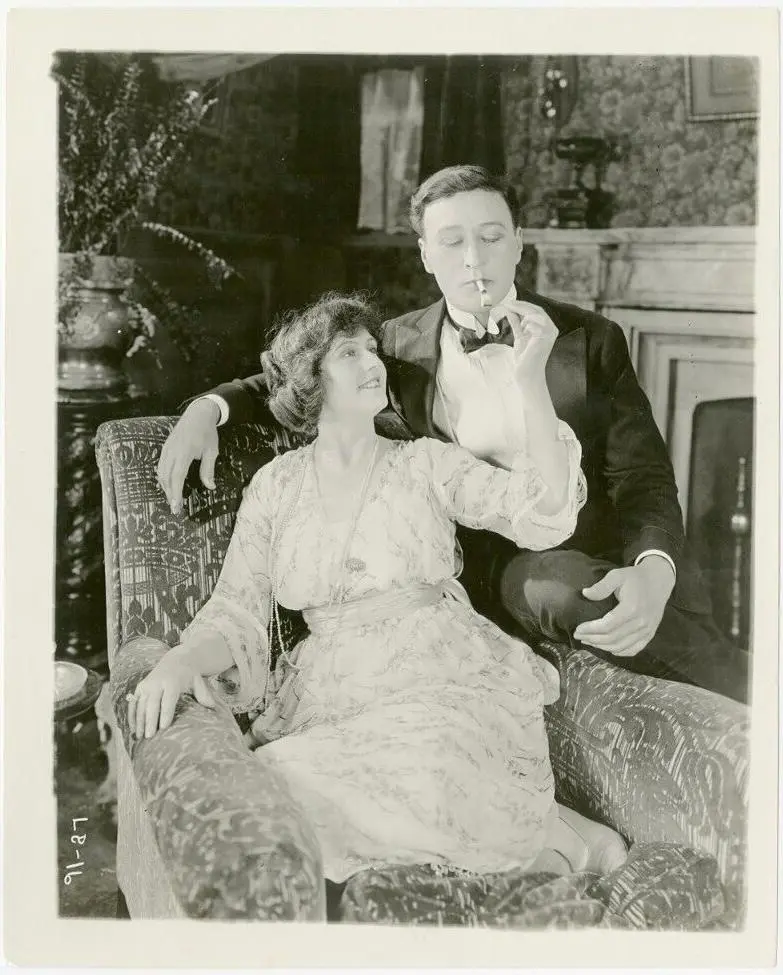
Sidney Franklin’s direction is crisp, utilizing the Fox studio’s high production values to create a stark contrast between the Hilton mansion and the 'toil' locations. The lighting, particularly in the heist sequence, uses shadow to create a sense of genuine peril that briefly elevates the film from comedy to noir-lite. The screenplay by Ruth Ann Baldwin is equally noteworthy. Baldwin, one of the few women in a position of creative power at the time, imbues Patience with a level of agency that, while ultimately retracted by the ending, allows her to be the primary mover of the plot. Unlike the more passive heroines in Lest We Forget or The Bridge of Sighs, Patience Hilton is the architect of her own downfall—and her own redemption.
The film also benefits from a robust supporting cast. William Elmer as Dugan provides a nuanced performance as a man caught between his criminal past and his domestic present. His betrayal of the Hiltons is not portrayed as sheer villainy, but as a pragmatic response to the opportunity Patience herself created. This ambiguity is a hallmark of Baldwin’s writing, which often explored the gray areas of human motivation, much like the narratives found in Greater Than Love and Vengeance.
In the final analysis, Cheating Herself is a fascinating artifact of early 20th-century social anxiety. It uses the framework of a heist comedy to explore profound questions about class, identity, and the romanticization of the 'other.' While its conclusion may seem conservative, the journey it takes the viewer on is filled with sharp observations and genuine wit. It stands alongside films like Common Property and The Marble Heart as a work that attempts to reconcile the human heart with the demands of a capitalist society.
For those interested in the evolution of the 'cured of idealism' trope, this film is essential viewing. It predates the screwball comedies of the 1930s but contains the seeds of their social subversion. It is a film that asks us to look closely at what we value and why we value it, even if the answer it provides is as old as the hills: that there is no place like home, especially when that home is a mansion. As we look back at Find the Woman and other contemporary works, Cheating Herself remains a unique, albeit cynical, gem in the Fox silent library.
"A quixotic descent into the realities of labor, Cheating Herself is a sharp reminder that the grass is only greener on the other side if you can afford the gardener." — The Silent Critic

IMDb 6.1
1929
Community
Log in to comment.