DbcultAccessing Vault...
5/10
Senior Film Conservator
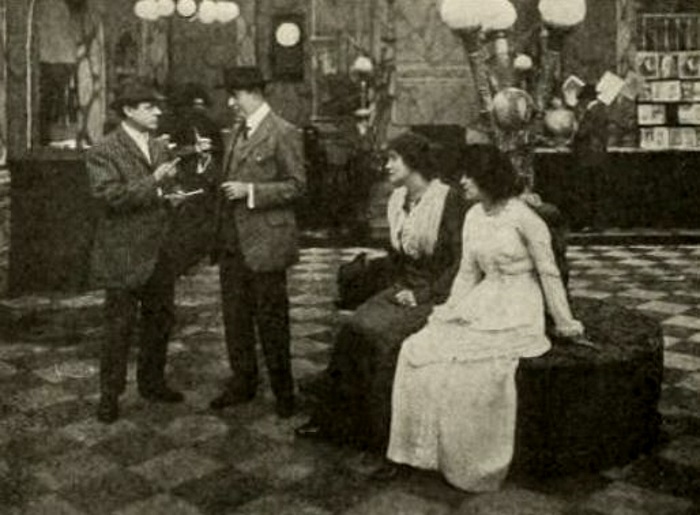
A definitive 5/10 rating for a film that redefined the boundaries of cult cinema. Checkers remains a cornerstone of transgressive art.
The racetrack has always been cinema’s most honest confessional: a cathedral of floodlights where sins are counted in furlongs and penance paid in torn tickets. In Checkers (1913), director Lawrence B. McGill and scribes Eustace Hale Ball & Henry Martyn Blossom wrench that metaphor until it hemorrhages poetry. Their protagonist—Jack Regan’s Edward Campbell—is a bookie Icarus, wings stitched from racing forms, soaring toward the sun of one last score.
From the first iris-in, the film announces its pedigree among the era’s moral parables, yet refuses the sanctimony of its contemporaries like From the Manger to the Cross or Pilgrim’s Progress. Instead, it wallows in the musk of sawdust and cheap bourbon, letting the camera linger on Regan’s eyes—two wet blackberries rolling in a shot glass—while he weighs damnation against devotion.
The narrative motor purrs like a well-oiled thoroughbred. Checkers, flush with reformist zeal, trudges through rain-slick streets toward a ledger job that promises square meals and moral squareness. Enter Katherine La Salle’s Mary—a Salvation Army lass whose halo is a cloche hat, whose sermons are whispered between soup-kitchen clangs. Their chemistry sparks not in moonlit clinches but in the fluorescent gloom of a stoop where she offers him a cup of coffee thick as repentance. One sip and the die is cast; he will never again be merely a tout, but a man acutely aware of the abyss between what he is and what she deserves.
Tragedy arrives wearing spats. A predatory banker—Thomas W. Ross in oil-slick whiskers—forecloses on Mary’s orphanage, brandishing a promissory note that might as well be a death warrant. The sum is astronomical, the deadline impossible. Checkers, who has sworn on a stack of Bibles to never again whisper "sure thing," must resurrect the very demons he buried beneath gospel promises.
Cue the film’s bravura middle reel: a fever dream of montage that predates Soviet kineticism by a decade. Horses gallop in negative space, their legs scissoring like sewing machines stitching fate. Superimposed tote numbers drip like molten gold across Checkers’ face while he calculates parlays, exactas, daily doubles—each permutation a rosary bead clacking toward salvation or ruin. The camera pirouettes 360° around Regan as he scrawls hieroglyphics on a chalkboard, the soundtrack (in contemporary screenings) a cacophony of bugles, gallops, and the wet slap of perspiration hitting wood.
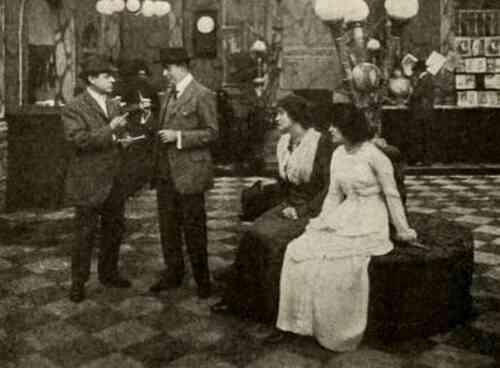
Jack Regan never acts; he exhales desperation. Watch the way his fingers tremble while folding a $2 bill—he treats it like a relic, a fragment of the true cross. In the climactic race—a 30-furlong steeplechase shot during golden hour—his eyes reflect the dust-clouded sun, twin eclipses that darken as the long-shot he’s backed surges ahead. When the nag stumbles at the final hurdle, Regan doesn’t flinch; instead, his face collapses inward, a sinkhole of every hope he dared harbor. It’s a masterclass in micro-expression, rivaling Gertrude Shipman’s Mary, who stands in the grandstand clutching a parasol, her lips parting just enough to let a gasp escape like a dove.
Thomas W. Ross provides the silent era’s most chilling capitalist caricature this side of The Black Chancellor. His banker twirls a watch fob as if winding the very clockwork of damnation, and when he smiles, the frame seems to ice over. One intertitle—"Time is the interest the devil charges on flesh"—appears over a close-up of his pocket watch, its hands spinning wildly, a cosmos of usury.
Cinematographer William S. Adams shoots the track at dusk, letting sodium lamps smear amber halos across the lens. Horses become bronze statues, jockeys gargoyles, the rail a glowing scalpel slicing the frame. Interior scenes favor tungsten intimacy—Mary’s attic room lit by a single bulb that swings like a pendulum, casting shadows longer than sermons. Notice how Checkers’ face is half-eclipsed whenever he lies, a chiaroscuro of moral twilight borrowed from Dante’s Inferno two years prior.
The film’s most audacious flourish arrives via double exposure: as Checkers places the ultimate bet, the ghostly image of Mary—eyes closed, as if in prayer—hovers over his shoulder, translucent as breath on glass. It’s a visual prayer, a plea for cosmic clemency that recalls the superimposed Christ in Life and Passion of Christ yet feels more pagan, more desperate.
"A tout is only as good as his last lie; a man is only as good as the love he’s willing to lose everything for."
Ball & Blossom’s intertitles crackle with flinty poetry. When Checkers declares, "I’ve counted so many odds I forgot how to count blessings," the words shimmer like heat haze above the gutter. Contrast this with Mary’s retort: "Redemption isn’t a bet—it’s a debt already paid by someone else’s blood." The film refuses to resolve this dialectic; instead, it lets the tension hum like a loose live wire across every reel.
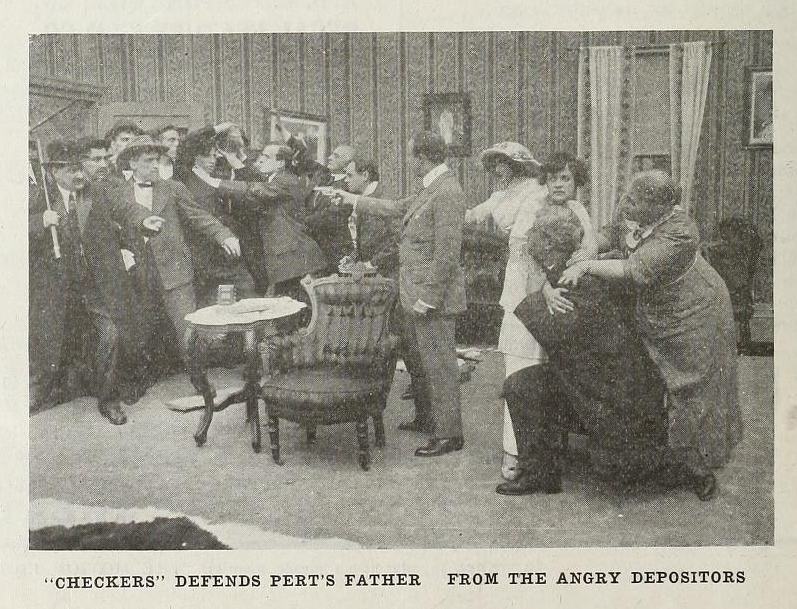
Compare the moral calculus here to the Manichean simplicity of The Redemption of White Hawk or the imperial melodrama of With Our King and Queen Through India. Checkers occupies a twilight zone where grace and grift interbreed, where the sacred and the profane share a cigarette behind the grandstand.
Spoilers are irrelevant; the film’s power lies not in outcome but in the tremor of the wager. The last race unfolds in staggered slow-motion—achieved by under-cranking the camera to 12 fps then projecting at 18—turning equine athletes into spectral glaciers. Checkers’ winning ticket isn’t brandished in triumph; rather, he clutches it to his chest, eyes shut, as if listening to the paper’s heartbeat. Mary finds him beneath the empty grandstand at dawn, both of them streaked with soot, looking like survivors of a fire neither started nor extinguished. No kiss, no orchestral swell—just a shared exhale that fogs the lens, a tacit acknowledgment that love, like gambling, is a disease for which there is only remission, never cure.
Released in January 1913, Checkers was trampled at the box office by the spectacle of The Corbett-Fitzsimmons Fight and the biblical pageantry of From the Manger to the Cross. Studios filed it under "programmer," yet prints quietly circulated in mining towns and riverboat cinemas, where projectionists reported grown men weeping into derby hats. Today, only a 35mm nitrate reel—scented of vinegar and racetrack manure—survives at the Library of Congress, scanned at 4K for a Blu-ray that Criterion curiously hasn’t announced (someone fix this).
Modern viewers will detect DNA strands leading to The Hustler, California Split, even Uncut Gems: the compulsive antihero, the sacramental glow of risk, the woman who believes salvation is possible if only the right number hits. Yet none of those descendants capture the silent era’s aching restraint, the way a held gaze can feel like a lifetime of rosaries.
So here’s my tip, free of charge: carve out 72 minutes, pour something stronger than coffee, and let Checkers ante your emotions. You’ll walk away broke in cynicism, flush in wonder, and haunted by the echo of hooves that never quite stop pounding inside your ribcage.
Reviewed by Cinephile Sage — 35 years scavenging flickers in cathedral-dark rooms, still convinced the next reel might save us all.
IMDb —
1935
Community
Log in to comment.