DbcultAccessing Vault...
6.9/10
Senior Film Conservator
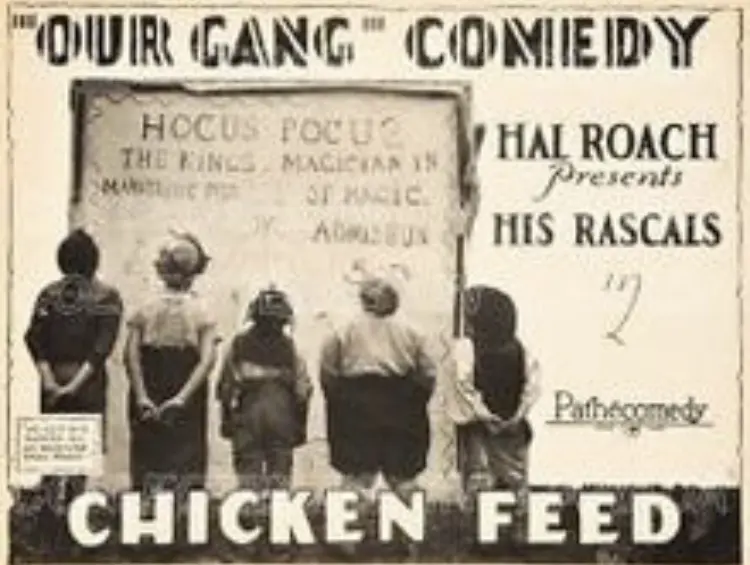
A definitive 6.9/10 rating for a film that redefined the boundaries of cult cinema. Chicken Feed remains a cornerstone of transgressive art.
Is 'Chicken Feed' a silent film worth your time in the modern era? Short answer: yes, but with significant caveats. This early Our Gang short offers a fascinating, if sometimes bewildering, glimpse into the nascent stages of comedic filmmaking and the raw, unpolished charm of child performers.
It’s a peculiar artifact that will undoubtedly resonate with enthusiasts of silent cinema, film historians, and fans of the 'Our Gang' series eager to witness its formative years. However, those accustomed to contemporary comedic pacing, sophisticated narratives, or even the more refined slapstick of later eras, might find its disjointed structure and dated gags a challenge. This film is for the patient, the curious, and those who appreciate historical context over immediate gratification; it is decidedly NOT for viewers seeking a modern, polished laugh.
'Chicken Feed' is less a narrative triumph and more a vibrant, spontaneous explosion of early 20th-century childhood mischief, filtered through the lens of Hal Roach's burgeoning comedic genius. The plot, if one can call it that, is a pretext for a series of escalating gags. We are introduced to the familiar antics of the 'Our Gang' kids, here attempting a backyard magic show that, inevitably, goes spectacularly wrong. The central conceit—Mango’s transformation from boy to monkey to chicken—is a marvel of early special effects (or rather, the clever use of stand-ins and quick cuts) and a testament to the era’s willingness to embrace absurdity.
What strikes you immediately is the sheer commitment of the children to the bit. They don’t just react; they embody the escalating panic and confusion. When Mango, as a chicken, is seemingly gobbled up by a passing hobo, the children’s horrified expressions and frantic attempts to retrieve him are priceless. It’s a dark gag, even for its time, but one delivered with such earnestness by the young performers that it transcends mere shock to become genuinely comedic. This moment, in particular, highlights the film’s tonal tightrope walk between innocent fun and surprisingly morbid humor.
The film’s climax, with Mango appearing as a sheet-clad ghost, chasing his terrified friends down the railroad tracks, feels like a sudden, almost surreal shift. It’s a pure, unadulterated chase sequence, a staple of silent comedy, but here infused with a childlike terror that feels both genuine and manufactured for laughs. The setting—dusty tracks, open fields—adds to the sense of a world where anything could happen, a world untamed by adult supervision or logical explanation. It's a relic. A fascinating, flawed relic.
The true heart of 'Chicken Feed,' and indeed of the entire 'Our Gang' series, lies in its cast of child actors. Joe Cobb, with his perpetually worried brow and round face, anchors much of the comedic reaction. His expressions of bewilderment and fear are remarkably consistent and effective, providing a relatable emotional core amidst the chaos. Jackie Condon, as another one of the gang, contributes to the general pandemonium with his wide-eyed reactions and frantic energy.
But it’s Allen 'Farina' Hoskins who often steals the show, even in these early appearances. His natural, unforced presence, a blend of wide-eyed innocence and mischievous curiosity, is a joy to behold. Farina doesn't just act; he exists within the scene, reacting with a spontaneity that few adult actors could replicate. His nuanced expressions, often a mix of fear and an underlying curiosity, are the film's most reliable source of genuine humor. You see him process the absurdity, and it’s infectious.
Jean Darling, though perhaps less central in this particular short, contributes to the ensemble's dynamic. The chemistry among these children is palpable, a testament to Roach's genius for casting and his willingness to let them simply *be* children on screen. Unlike more contrived performances in other silent films like 'Fig Leaves', where comedic timing is meticulously choreographed, the humor here often feels like it's bubbling up organically from the children's interactions. This improvisational feel is both the film's greatest strength and, at times, its biggest structural weakness.
The adults in the film are largely foils or background elements, serving only to further the children's misadventures. The hobo, for instance, is a caricature, a plot device more than a character, but his bewildered reaction to the children's accusations is a brief, effective comedic beat. The performances aren't polished in the theatrical sense, but they possess an authenticity that still resonates, proving that raw talent can often trump formal training, especially in comedy.
Hal Roach’s direction in 'Chicken Feed' is a masterclass in simplicity and efficiency, perfectly suited for the rapid-fire gags of silent comedy. The cinematography, while basic by today’s standards, serves its purpose effectively. The camera is largely static, observing the unfolding chaos from a medium distance, allowing the physical comedy and the children’s expressions to take center stage. There are no elaborate tracking shots or complex compositions; instead, the focus is on clear sightlines and capturing the entirety of the action.
One could argue this simplicity is a limitation, but for a film of this nature, it's an asset. It allows the audience to feel like an unobserved bystander, peeking into a spontaneous backyard drama. The use of close-ups is sparse but effective, often reserved for moments of heightened emotion or comedic reaction, such as Joe Cobb's wide-eyed terror or Farina's perplexed frown. These moments punctuate the broader physical comedy, ensuring that the emotional beats land, however briefly.
The editing is brisk, cutting between setups and payoffs with a speed that maintains the film's frenetic energy. The transformations of Mango, from boy to monkey to chicken, are handled with a deceptive ease, relying on quick cuts and the audience's willingness to suspend disbelief. While not as technically ambitious as films like 'The Nut' from the same period, 'Chicken Feed' demonstrates a clear understanding of how to maximize comedic impact with minimal cinematic fuss. It’s a functional approach, prioritizing laughs over lavish visual spectacle, and in that regard, it succeeds.
'Chicken Feed' is a short, sharp burst of energy, characterized by a relentless, almost breathless pacing. The film wastes little time on exposition, throwing the audience directly into the children's ill-fated magic show. This rapid-fire approach ensures that there's rarely a dull moment, as one gag quickly gives way to the next, with little pause for reflection or narrative development. The film’s brevity (it runs just over ten minutes) is a blessing, as the constant escalation of absurdity might become exhausting in a longer format.
The tone is undeniably comedic, but it veers wildly between lighthearted mischief, genuine panic, and surprisingly dark humor. The sequence involving the hobo and the supposed consumption of Mango-as-chicken is particularly jarring, showcasing a brand of humor that might not sit well with modern sensibilities. It’s a testament to the era’s different comedic boundaries, where almost anything could be played for a laugh, even implied cannibalism.
This tonal inconsistency is, to me, one of the film’s most interesting and challenging aspects. It doesn't commit to one emotional register, preferring to bounce between them, much like the children themselves. This makes 'Chicken Feed' feel somewhat disjointed, less a coherent story and more a collection of comedic vignettes loosely tied together by the magic show premise. However, for those who appreciate the raw, experimental nature of early silent shorts, this very disjointedness can be part of its charm. It works. But it’s flawed.
'Chicken Feed' is more than just a comedy short; it's a fascinating historical document. It offers a candid look at childhood in the early 20th century, albeit a highly stylized and comedic one. The children's independence, their resourcefulness in creating their own entertainment, and the dusty, somewhat ramshackle setting all speak to a bygone era. It's a world where children roamed free, their imaginative play often leading to unexpected, and here, magical, consequences.
One surprising observation is how the film, despite its age, still manages to tap into universal childhood anxieties and fantasies. The fear of something going wrong during a performance, the misunderstanding with adults, and the thrill of a good chase are all timeless elements. Yet, the specific cultural context—the casual presence of a hobo, the depiction of child-on-child pranks—places it firmly in its time. It’s a snapshot of a different social landscape, where humor could be found in scenarios that today might be considered problematic.
The film's enduring appeal, for me, lies not in its sophisticated humor, which it largely lacks, but in its raw, unfiltered energy. It’s a film that doesn't try to be anything more than what it is: a simple, silly vehicle for child actors to be children, with all the accompanying chaos and charm. While it doesn't possess the thematic depth of a drama like 'Revelation' or the intricate plotting of later comedies, its unpretentious nature is its strength. It reminds us that sometimes, the simplest gags, delivered by the right performers, are all that's needed to entertain.
Chicken Feed is a curious, chaotic relic of silent comedy. It’s not a film that will redefine your understanding of cinema or leave you pondering deep philosophical questions. Instead, it’s a delightful, if sometimes baffling, ten-minute escapade into the world of early 'Our Gang' antics. While its narrative is as thin as the white sheet Mango eventually wears, its strength lies in the irresistible energy of its young cast and the unpretentious joy of pure, unadulterated slapstick. It’s a film you watch not for its cinematic brilliance, but for its historical charm and the occasional, unexpected burst of laughter. For those willing to embrace its eccentricities and appreciate it as a product of its time, 'Chicken Feed' offers a unique, if not entirely polished, comedic experience. It’s a testament to the timeless appeal of children simply being children, even when a magic trick goes horribly, hilariously wrong.

IMDb 6.1
1930
Community
Log in to comment.