DbcultAccessing Vault...
Cult Review
Senior Film Conservator

Step into the silent, yet profoundly resonant, world of Children of the Feud, a cinematic journey that plunges deep into the heart of early 20th-century Americana, specifically the rugged, unforgiving mountain territories where family names carried the weight of destiny and retribution. This film, a stark portrayal of generational conflict and burgeoning romance, stands as a testament to the dramatic prowess of the silent era, offering audiences a potent brew of loyalty, betrayal, and the enduring human struggle for peace amidst chaos. Released during a period when cinema was rapidly evolving, it captures a raw, untamed spirit, reflecting societal anxieties and moral dilemmas that, surprisingly, still echo today. It’s a narrative that dares to challenge the very foundations of inherited animosity, proposing that love and reason can, perhaps, triumph over the most deeply entrenched cycles of violence.
At its core, Children of the Feud is a narrative meticulously woven with the threads of ancient grievance and forbidden affection. We are introduced to Pap Clayton, a patriarch whose word is law within his clan, and whose traditionalist grip dictates the fate of his spirited daughter, Sairy Ann. Pap, adhering to an archaic promise, has betrothed Sairy Ann to his cousin, Jed Martin, a figure whose simmering jealousy and possessive nature are palpable from his initial appearance. Jed embodies the very essence of the entrenched feuding mentality – his actions driven by a volatile mix of entitlement and a deeply ingrained sense of honor, however twisted. His character is a stark reminder of how personal desires can become dangerously entangled with communal codes of conduct.
However, Sairy Ann's heart, a vibrant contrast to the stark landscape and starker traditions, has already been claimed by Dr. Richard Cavanagh. Richard is not merely a love interest; he represents a nascent modernism, an educated perspective that champions law and reason over the savage dictates of bloodlust. He is the son of Judge Lee Cavanagh, a man who strives to uphold the very legal framework that the mountain clans frequently defy. This romantic entanglement immediately establishes a profound conflict, setting the stage for a clash between personal desire and inherited duty, between individual enlightenment and communal dogma. It’s a classic Romeo and Juliet setup, but with a distinctly American, frontier flavor, where the stakes are not merely familial pride but the very fabric of justice itself.
The narrative gains its violent momentum amidst the ongoing, brutal feud between the Claytons and the Jacksons. This backdrop is not merely scenery; it's a living, breathing entity that shapes every character's decision and fuels every confrontation, illustrating how easily individual lives are consumed by collective hatreds. Jed, consumed by his unrequited love for Sairy Ann and his hatred for Richard, sees an opportunity to eliminate his rival. His attempt to assassinate Richard is thwarted, but in his desperate rage, he tragically shoots a deputy, an act that forces the hand of the very legal system Richard embodies. This single act of violence escalates the personal vendetta into a full-blown crisis, drawing the rigid lines between the mountain people and the law into sharp, tragic relief.
The subsequent trial of Jed before Judge Cavanagh becomes the dramatic pivot point of the film. Here, the raw power of the feud confronts the formalized process of justice. The Claytons, loyal to their own, issue a chilling ultimatum: convict Jed, and the Judge will pay with his life. This threat underscores the profound chasm between mountain law and state law, a tension explored in similar narratives like Jess of the Mountain Country or Meg o' the Mountains, though Children of the Feud pushes this confrontation to its most tragic extreme. When Judge Cavanagh, a man of unwavering principle, delivers a guilty verdict, the Claytons make good on their dreadful promise, plunging Richard into a maelstrom of grief and a burning desire for personal revenge. This moment is a stark, brutal depiction of how deeply ingrained the cycle of violence truly is, and how easily it can claim even those who stand for a better way.
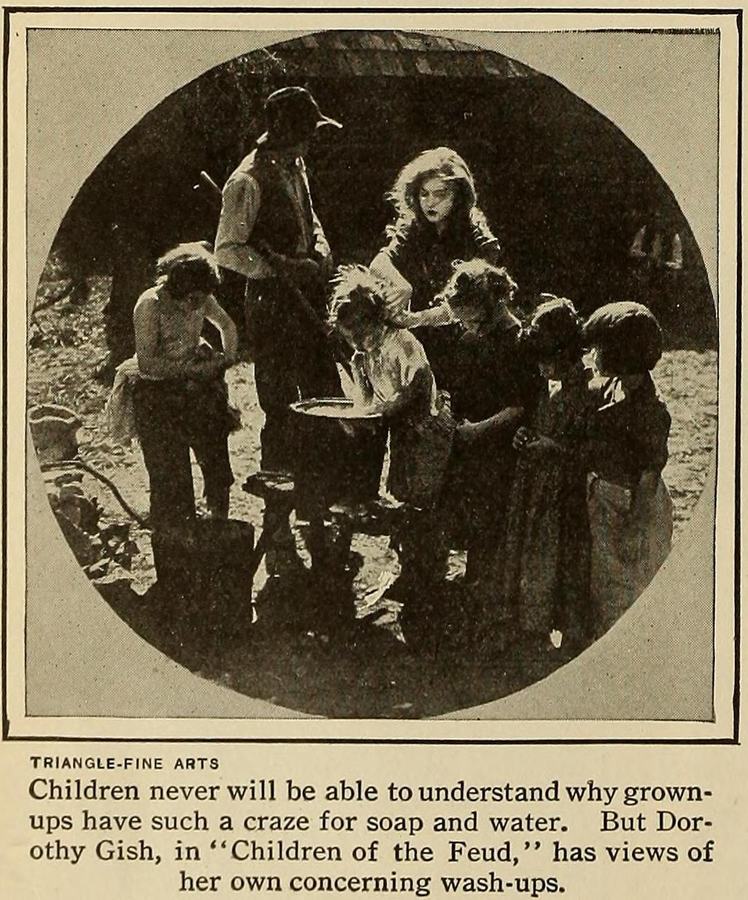
Richard's immediate vow to kill the escaped Jed is a powerful moment, revealing the fragility of his enlightened ideals when confronted with personal loss. It is here that Dorothy Gish, as Sairy Ann, delivers a performance of quiet strength and profound moral clarity. Her intervention is not one of mere pleading, but a powerful reminder to Richard of his own espoused principles – his consistent railing against the futility of feuding, his belief that only the law possesses the right to take a life. This scene is the emotional anchor of the film, highlighting the transformative power of love and moral conviction over the primal urge for vengeance. Sairy Ann's voice, though silent, resonates with the weight of generations of suffering, pleading for a different, more just future.
Dorothy Gish, in the role of Sairy Ann, is nothing short of captivating. Her portrayal transcends the typical damsel-in-distress trope, infusing Sairy Ann with a resilience and moral compass that truly drives the narrative. Gish, known for her nuanced expressions and ability to convey deep emotion without uttering a single word, brings a palpable authenticity to the mountain girl caught between familial obligation and personal truth. Her eyes, often wide with a mix of despair and unwavering resolve, communicate volumes, making her plea to Richard not just a pivotal plot point but a deeply moving emotional crescendo. She is the embodiment of hope, the character who dares to imagine a future beyond the cycle of violence. Her performance makes Sairy Ann a character who is not simply acted upon, but one who acts, decisively shaping the destiny of those around her. It’s a masterclass in silent screen acting, where every gesture, every tilt of the head, every flicker of emotion across her face tells a story far richer than any intertitle could convey.
Sam DeGrasse, as Dr. Richard Cavanagh, complements Gish's performance with a portrayal of intelligent idealism tempered by human fallibility. His initial commitment to justice and reason makes his momentary lapse into vengeful fury all the more impactful, underscoring the powerful grip of the feud. DeGrasse effectively conveys the internal struggle of a man torn between his intellectual convictions and the raw, emotional pull of personal loss. It’s a portrayal that humanizes the seemingly unshakeable idealist, reminding us that even the most principled among us can be swayed by grief. The other cast members, including Elmo Lincoln and F.A. Turner, contribute to the film's gritty realism, their rugged countenances and physical performances painting a vivid picture of the harsh mountain existence. While perhaps not as overtly dramatic as some contemporary productions like The Raven or even the fantastical Fantomas: The Mysterious Finger Print, the strength of Children of the Feud lies in its grounded, human-centric drama, where the internal battles are as compelling as the external ones.
The film is a profound meditation on the nature of justice. It starkly contrasts the primitive, retaliatory justice of the feud with the nascent, institutionalized justice represented by Judge Cavanagh and championed by Richard. The tragic death of the judge serves as a brutal indictment of unchecked tribalism, demonstrating how entrenched hatred can systematically dismantle any attempt at civil order. This theme resonates deeply, inviting viewers to ponder the fragile balance between personal retribution and societal law, a dichotomy that has fascinated storytellers for centuries, from ancient Greek tragedies to modern legal dramas. The film doesn't shy away from showing the devastating consequences when this balance is tipped, forcing its characters, and by extension, its audience, to confront uncomfortable truths about human nature and the societal structures we build to contain it.
Vengeance, a primal human instinct, is meticulously explored through Richard's journey. His initial, righteous indignation at the murder of his father quickly morphs into a dangerous desire for blood. It is Sairy Ann’s wisdom, born not from books but from a deeper understanding of human suffering and the futility of endless cycles of violence, that pulls him back from the brink. This pivotal moment underscores the film's message: true strength lies not in perpetuating violence, but in breaking its chain. The narrative arc of Richard, from a champion of law to a would-be avenger and then back to a proponent of measured justice, is one of the film's most compelling elements. It's a journey from instinct to enlightenment, a testament to the power of a single individual to choose a better path, even when grief threatens to overwhelm all reason. This personal transformation is what elevates the film beyond a simple action drama into a poignant moral tale.
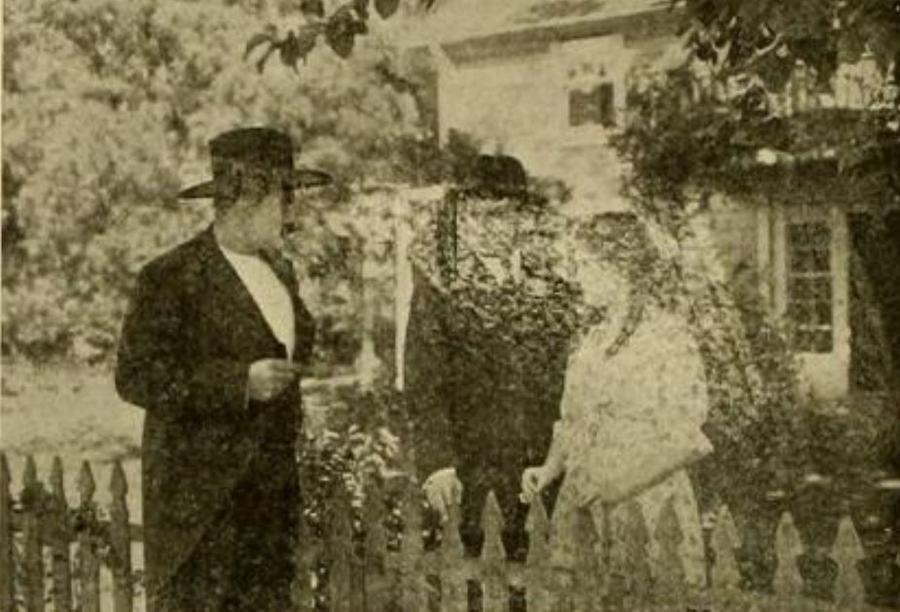
Redemption, both personal and communal, forms the powerful resolution. Richard's decision to capture Jed and hand him over to authorities, rather than exacting personal revenge, is an act of profound moral courage. It signifies his acceptance of the higher ideal he once preached, demonstrating that principle can indeed overcome passion. Furthermore, the subsequent forgiveness extended to the Claytons, despite their role in his father's death, represents a monumental step towards healing. This act of grace, facilitating the engagement of Richard and Sairy Ann, suggests that love and empathy can, indeed, transcend the bitter legacy of generations of animosity. It’s a hopeful, if hard-won, conclusion, suggesting that even the most entrenched conflicts can yield to understanding and reconciliation. The film posits that true peace isn't found in victory over an enemy, but in the courage to extend an olive branch, to forgive, and to build anew.
While specific directorial flourishes are sometimes lost to the mists of time for films of this vintage, Children of the Feud undoubtedly benefited from the burgeoning cinematic language of its era. The use of intertitles, crucial for conveying dialogue and internal monologues, would have been skillfully employed to guide the audience through the complex emotional landscape, providing insights into character motivations and plot developments that would otherwise be difficult to express silently. The cinematography, likely focusing on the stark beauty of the mountain setting, would have amplified the sense of isolation and the unforgiving nature of the environment, making the landscape itself a character in the drama. Imagine sweeping shots of craggy peaks and deep valleys, emphasizing the insularity and rugged independence of the mountain communities.
Close-ups on Gish's expressive face, a technique perfected by D.W. Griffith and his contemporaries, would have been vital in conveying the depth of Sairy Ann's inner turmoil and conviction. These intimate shots would have allowed the audience to connect directly with her emotional journey, making her silent pleas and resolute decisions all the more powerful. The film’s pacing, characteristic of early narrative cinema, would have built tension through carefully constructed sequences, culminating in the dramatic courtroom scene and Richard's subsequent pursuit. The action sequences, particularly Jed's escape and Richard's eventual capture of him, would have been staged with an emphasis on clarity and dramatic impact, essential for a silent audience to follow without dialogue. The narrative structure, though perhaps appearing straightforward by today's standards, was sophisticated for its time, weaving together multiple character arcs and thematic threads into a cohesive whole, demonstrating a growing mastery of storytelling through the visual medium.
Children of the Feud, while perhaps not as widely known as some of Dorothy Gish's collaborations with her sister Lillian or with Griffith, remains an important artifact. It showcases Gish's remarkable talent in a challenging, morally complex role, proving her capabilities beyond light comedies or purely tragic heroines. Its exploration of themes like the rule of law versus personal vengeance, the power of forgiveness, and the struggle to break free from inherited hatreds ensures its continued relevance. For cinephiles and historians, it offers a window into the narrative concerns and dramatic sensibilities of early American cinema, standing as a compelling example of how silent films tackled weighty social issues with both grace and grit. It reminds us that the fundamental human dilemmas of love, loyalty, and justice are timeless, and that the power of cinema, even in its nascent form, was profound enough to explore them with compelling emotional depth, laying groundwork for countless dramas that followed.
Ultimately, Children of the Feud is more than just a historical curiosity; it is a powerful drama that speaks to the enduring human capacity for both destruction and redemption. It champions the individual who chooses principle over passion, and the love that can heal the deepest wounds. The film’s resolution, where Richard and Sairy Ann find their future together after navigating such immense turmoil, is not merely a happy ending but a hard-earned peace, a testament to their moral fortitude. It’s a narrative that, in its silent eloquence, continues to resonate, reminding us of the timeless struggle against the forces that divide us and the profound impact of choosing a path of understanding and justice. In an era often characterized by sensationalism, this film chose to delve into the nuanced complexities of human morality, offering a message of hope that transcends its historical context and speaks to the heart of what it means to be human in the face of ancient conflicts. It is a quiet triumph, a cinematic whisper that carries immense weight, proving that even without spoken words, a powerful story can echo through generations.
IMDb —
1924
Community
Log in to comment.