DbcultAccessing Vault...
Cult Review
Senior Film Conservator
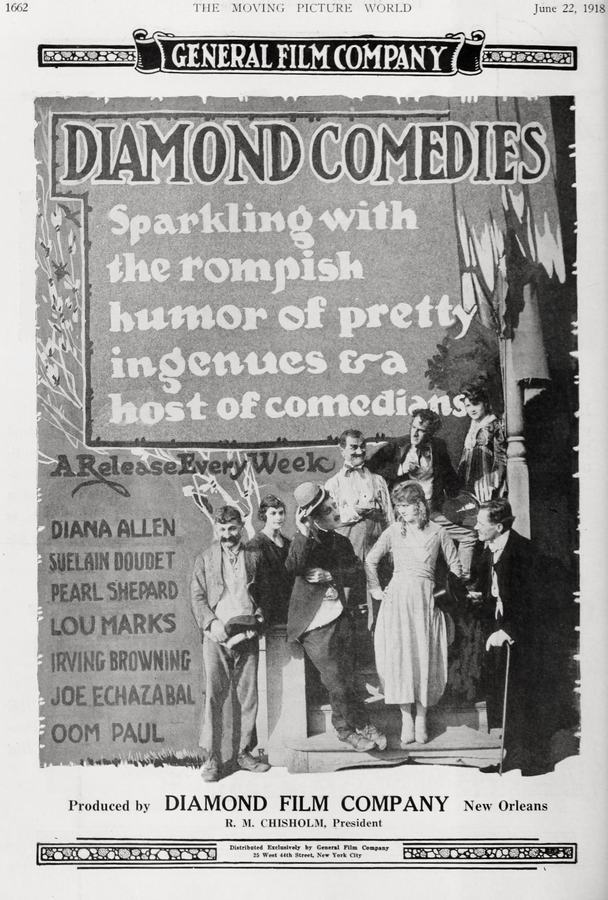
To witness His Blooming Bloomers in the modern age is to step into a time capsule of pure, unadulterated physical poetry. Released in 1919, a year that saw the world reeling from the aftermath of the Great War and the dawn of a new, more cynical decade, this short film stands as a testament to the enduring power of the gag. Unlike the heavy moralizing found in contemporary dramas like The Final Judgment, this film eschews the weight of the world for the lightness of the laundry line.
The performance of Oom Paul is a masterclass in the vestigial remains of Vaudeville stagecraft. Every gesture is magnified, every double-take is a calculated explosion of facial muscles. In an era before the nuance of the close-up was fully weaponized, actors had to rely on the geometry of their entire bodies to convey narrative intent. Paul, alongside Irving Browning and Lou Marks, creates a trio of comedic friction that rivals the better-known troupes of the time. While films like The Little Liar focused on the delicate nuances of character deception, His Blooming Bloomers revels in the honesty of the physical blunder.
One cannot discuss this film without addressing the central motif: the bloomers themselves. In 1919, the bloomer was more than just an undergarment; it was a symbol of the shifting status of women and the loosening of social mores. By making these garments the focal point of a masculine struggle, the film reflects a subconscious anxiety regarding the 'New Woman'—a theme explored with far more gravity in Mothers of Men. Here, however, the anxiety is sublimated into laughter. Diana Allen and Pearl Shepard provide the necessary foil to the male protagonists, acting with a sharpness that suggests they are the only ones in on the joke.
The cinematography, though primitive by today's standards, exhibits a surprising level of intentionality. The use of deep space in the domestic interiors allows for multiple planes of action, a technique that would later be perfected in the feature-length comedies of the 1920s. When compared to the more static staging of The Chimes, this film feels remarkably modern in its pacing. There is a relentless forward momentum, a refusal to let the audience breathe, which mirrors the frantic energy of the burgeoning metropolis.
The cast is a fascinating cross-section of early 20th-century talent. Joe Echazabal and Suelain Doudet contribute to the ensemble with a precision that hints at countless hours on the stage circuits. This was a time when the boundary between the proscenium arch and the silver screen was porous. The actors brought with them a set of skills—timing, pratfalls, and pantomime—that were perfectly suited for the silent medium. This transition is evident when contrasting the film with the more theatrical A Gentleman's Agreement, where the dialogue-heavy source material often felt cramped by the silence.
In the chaotic choreography of a man pursued by his own wardrobe, we find the DNA of all modern comedy. It is the struggle of the individual against the inanimate object, a battle that is eternally relatable.
It is enlightening to place His Blooming Bloomers alongside its contemporaries to understand its unique flavor. While A Daughter of the West sought to capture the rugged expansionism of the frontier, and The Market of Vain Desire dealt with the high-society rot of the Gilded Age, our subject film remains stubbornly grounded in the ridiculous. It shares a certain athletic vigor with A Pigskin Hero, yet it trades the gridiron for the bedroom and the garden, proving that the stakes of farce can be just as high as those of sport.
The film also avoids the melodramatic pitfalls of works like Indiscretion or Whoso Findeth a Wife. Those films sought to moralize the domestic sphere, often punishing their characters for minor transgressions. In contrast, His Blooming Bloomers celebrates the transgression. The chaos is the point. The ultimate resolution is not a moral lesson, but a return to a fragile status quo that we know will be shattered again by the next comedic misunderstanding.
The lighting in the film, often overlooked in reviews of this period, serves a vital function. By utilizing high-contrast setups, the director ensures that the physical comedy remains legible even in the grainy prints that have survived a century. This clarity of action is something that even high-budget serials like The New Exploits of Elaine sometimes struggled with, as they prioritized atmosphere over athletic legibility. In His Blooming Bloomers, every kick, fall, and slide is rendered with sharp precision.
The editing rhythm is equally noteworthy. There is a proto-Soviet montage quality to the way the shots of the bloomers are intercut with the reactions of the cast. It creates a rhythmic pulse that dictates the viewer's emotional response. This is far more sophisticated than the linear storytelling found in The Conflict or the whimsical but often disjointed Molly Go Get 'Em. The film understands that comedy is a matter of seconds, not minutes.
Looking back from the vantage point of the 21st century, the film offers a fascinating glimpse into the 'low culture' of 1919. While the intelligentsia were reading T.S. Eliot, the masses were flocking to see Oom Paul lose his dignity to a piece of silk. This divide is essential to understanding the history of cinema. Films like Hit-the-Trail Holliday tried to bridge the gap with celebrity appeal, but His Blooming Bloomers remains a pure expression of the populist spirit. It is unpretentious, loud (even in its silence), and fiercely dedicated to the singular goal of amusement.
In the grand tapestry of film history, this short might seem like a minor thread. However, when we examine the works that followed, we see its influence everywhere. The DNA of this slapstick can be found in the early works of Keaton and Lloyd, and even in the surrealist humor of the later avant-garde. It shares a certain raw vulnerability with A Naked Soul, stripped of its dramatic pretension and replaced with the vulnerability of the clown.
Ultimately, His Blooming Bloomers is a triumph of the ephemeral. It does not ask for your reverence; it asks for your laughter. It is a reminder that even as the world changes, the fundamental absurdity of the human condition—and our clothes—remains a constant. To watch it today is to acknowledge that we are not so different from the audiences of 1919. We are all just one misplaced garment away from a total collapse of social order, and there is something profoundly comforting in that realization.
Final Verdict: A vibrant, essential artifact of silent comedy that proves the shortest distance between two points is a well-timed pratfall.
IMDb 6.7
1937
Community
Log in to comment.