DbcultAccessing Vault...
Cult Review
Senior Film Conservator
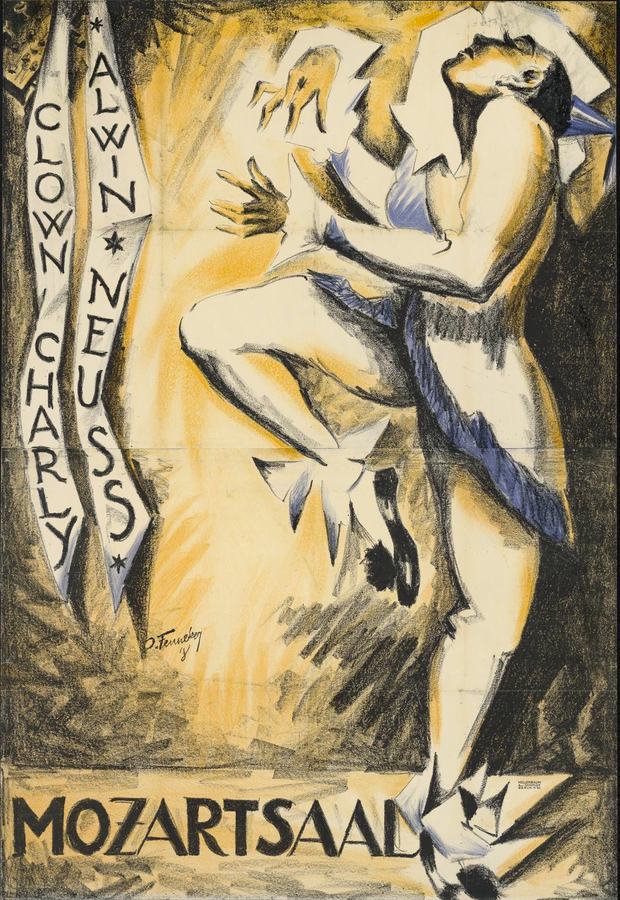
The cinematic landscape of the early 20th century, often dismissed by casual observers as merely primitive or quaint, frequently birthed works of profound emotional resonance and startling artistic ambition. Among these, Karl Schneider’s “Clown Charly” stands as a towering, if tragically under-celebrated, achievement. This silent melodrama, a visceral exploration of the human condition, delves into the devastating chasm between outward appearance and internal torment, presenting a protagonist whose very existence is a performance, both on and off the stage. From its opening frames, the film immerses us in the dazzling, yet inherently melancholy, world of the circus, a vibrant tapestry of ephemeral joy woven with threads of quiet desperation.
Our titular Charly, portrayed with an astonishing blend of physical agility and heart-rending vulnerability, is not merely a clown; he is an archetype, a symbol of the individual crushed beneath the weight of societal expectation and personal tragedy. His painted smile, a grotesque rictus of forced gaiety, becomes a mask not just for his audience, but for himself, a shield against the relentless onslaught of his own sorrow. The narrative, penned with a keen understanding of psychological depth by Karl Schneider, eschews simplistic villainy for a more nuanced portrayal of circumstance and systemic heartbreak. Schneider crafts a world where true happiness feels perpetually out of reach, a fleeting illusion always just beyond Charly's grasp, much like the ephemeral nature of the circus itself.
The film’s visual language is nothing short of breathtaking. The use of chiaroscuro lighting, a hallmark of the era, is employed here with masterful precision, casting long, dramatic shadows that mirror the darkness encroaching upon Charly's soul. The vibrant, almost garish, colors of the circus costumes and sets are juxtaposed against the stark, often monochrome, reality of Charly’s private moments, creating a visual metaphor for his internal struggle. When Charly is on stage, bathed in the artificial glow of the spotlights, his movements are broad, his expressions exaggerated; yet, in the quiet solitude of his dressing room, the camera lingers on the subtle tremors of his hands, the profound sadness in his unpainted eyes, revealing the true man beneath the greasepaint. This stark contrast is a powerful cinematic device, drawing the audience into the protagonist's fractured psyche with remarkable efficacy.
Lil Dagover, a luminary of the German silent screen, delivers a performance of exquisite sensitivity as Elara, the object of Charly’s unspoken affection. Her presence imbues the film with a fragile beauty, a counterpoint to the raw, often brutal, emotional landscape surrounding Charly. Dagover's ability to convey a spectrum of complex emotions through subtle gestures and eloquent glances is truly remarkable. Her character, a fellow performer, understands the inherent loneliness of their transient life, and a silent, profound connection blossoms between her and Charly, a bond forged in shared experience and mutual, though often unacknowledged, pain. This relationship, however, is not destined for simple happiness; it is another thread in the intricate web of Charly's suffering, a fleeting glimpse of paradise threatened by the harsh realities of their existence and the machinations of others.
Karl Falkenberg, in a role that could easily have devolved into caricature, portrays the formidable ringmaster with a nuanced blend of authority and thinly veiled menace. He is not merely an antagonist but a force of nature, a representation of the relentless, unforgiving demands of the circus world. His interactions with Charly are charged with a palpable tension, a constant reminder of the precariousness of Charly’s position and the ever-present threat to his fragile peace. Falkenberg’s imposing physical presence and piercing gaze command the screen, making his every appearance a moment of heightened drama. Similarly, Alwin Neuß, as a rival performer or perhaps a suitor for Elara's affections, adds another layer of complexity to the narrative, fueling the emotional conflict and exacerbating Charly's internal turmoil. Neuß's character embodies a more conventional masculinity, a stark contrast to Charly's melancholic artistry, further highlighting the protagonist's unique, often isolated, path.
The tragic arc of Charly’s story resonates deeply with the themes explored in other seminal works of the era. One cannot help but draw parallels to Asta Nielsen’s iconic portrayal in Hamlet (1917), where the weight of destiny and the burden of a public persona similarly crush the individual spirit. Both films masterfully depict protagonists trapped by circumstances, forced to don masks—literal or metaphorical—while their inner worlds crumble. The heightened melodrama and exploration of profound suffering in “Clown Charly” also find echoes in films like Satan's Rhapsody, where characters are often victims of cruel fate or their own tragic flaws, propelled towards inevitable heartbreak with a grand, operatic flair. Schneider’s screenplay, while rooted in the specifics of Charly’s circus life, taps into universal anxieties about identity, sacrifice, and the enduring human capacity for resilience in the face of overwhelming despair.
Beyond the individual performances, the film’s pacing is a testament to the sophistication of silent cinema storytelling. It allows moments of quiet contemplation to breathe, building emotional tension through extended close-ups and deliberate camera movements rather than relying on rapid-fire editing. This measured approach ensures that every gesture, every flicker of an eye, carries immense weight. The director (whose identity, sadly, is often overshadowed by the star power and writer, though their contribution is undeniable) demonstrates an acute understanding of visual storytelling, using the frame itself as a canvas for emotion. The composition of each shot is meticulously crafted, often placing Charly in isolation within vast, cavernous spaces, emphasizing his profound loneliness even amidst the bustling energy of the circus. The meticulous set design and art direction further enhance this sense of an enclosed, self-contained world, both dazzling and suffocating.
The central conflict in “Clown Charly” is not merely external; it is a battle waged within the very soul of its protagonist. His struggle to reconcile his public duty with his private anguish forms the beating heart of the narrative. This internal wrestling matches the intensity seen in films like The Honor System, which similarly grappled with moral quandaries and the heavy price of upholding a personal code against overwhelming odds. Charly’s silent suffering is a masterclass in non-verbal communication, a testament to the power of the moving image to convey profound emotional depth without recourse to dialogue. The film's use of intertitles, while sparse, is impactful, providing poignant insights into Charly's thoughts or driving the narrative forward with stark, declarative statements. They act as a Greek chorus, commenting on the unfolding tragedy without diluting its visual power.
The tragic culmination of Charly’s journey is not a sudden, explosive catharsis, but rather a slow, agonizing descent into an inescapable fate. It’s a powerful statement on the relentless nature of sorrow, a theme that reverberates through other character-driven dramas like The Little Gray Lady, where quiet endurance ultimately defines the protagonist's existence. The film challenges its audience to look beyond the superficial glitter of performance and confront the often-painful realities hidden beneath. It forces a contemplation of the masks we all wear, however unconsciously, to navigate the complexities of life. The final moments of “Clown Charly” are imbued with a haunting beauty, a quiet despair that lingers long after the credits roll, a testament to the film's enduring power and its masterful execution. The image of Charly, still smiling through tears, is seared into the viewer's memory, a profound symbol of the ultimate sacrifice of self for the sake of an audience, for the sake of survival.
Indeed, the enduring appeal of “Clown Charly” lies in its universal themes. While set in a specific era and milieu, its exploration of identity, illusion, and the search for genuine connection remains profoundly relevant. Karl Schneider’s script, brought to life by a stellar cast, transcends its time, offering a timeless meditation on the human spirit’s capacity for both immense joy and profound suffering. The film's legacy is not just in its technical brilliance or its compelling performances, but in its ability to evoke deep empathy for a character who, despite his painted face and boisterous antics, represents the silent battles fought by countless individuals behind their own carefully constructed facades. It’s a cinematic elegy, a poetic lament for the dreams deferred and the hearts broken in the relentless pursuit of a smile, however artificial. The film demands a re-evaluation, a rediscovery of its profound artistic merit, and a recognition of its place as a pivotal work in the canon of silent era cinema. It reminds us that sometimes, the greatest tragedies are performed under the brightest lights, and the most poignant tears are shed by those who bring us the most laughter.
The meticulous attention to detail in the film extends to its broader social commentary. The circus itself, a microcosm of society, becomes a stage for class distinctions and power dynamics. The performers, often exploited and underpaid, represent the working class, their livelihood dependent on the whims of the audience and the iron fist of the management. This subtext adds another layer of depth to Charly’s plight, making his personal tragedy emblematic of a wider struggle. His attempts to carve out a semblance of dignity and love in such an unforgiving environment resonate with the struggles depicted in other social dramas of the time, even those not directly about the performing arts. The film’s final, lingering shot, shrouded in a pervasive sense of melancholy, ensures that the audience departs not with easy answers, but with a profound sense of introspection, pondering the true cost of happiness and the enduring power of the human spirit to endure, even when utterly broken. It is a masterpiece, deserving of far greater recognition, a testament to the profound artistry of its creators and the timeless emotional power of its narrative.
IMDb 6
1931
Community
Log in to comment.