DbcultAccessing Vault...
Cult Review
Senior Film Conservator
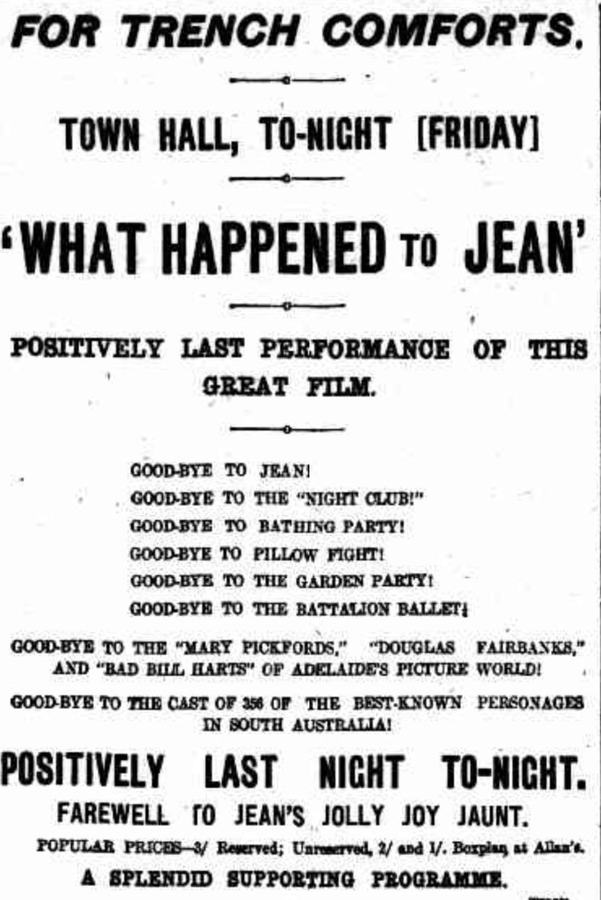
Lanterns gutter, gulls scream, and a girl dissolves into folklore: What Happened to Jean is less a whodunit than a who-breathes-in-the-salt. The film’s very title is an accusation hurled at the ocean, at the audience, at the projector beam itself.
Keith Yelland’s screenplay treats absence like pigment. Jean is sketched via privation: her boots still upright by the hearth, her tea grown cold before the first sip, her name scratched off the parish roll with the same pen that records newborns. Edith Crowe, in an impossible role, performs vapor; her gait is spliced in from actuality footage of herring-girls, the camera cranked slower so every footstep hovers on the brink of reversal. The effect is uncanny—she flickers like a zoetrope ghost, eyelids weighted by seawater.
Price Weir, gaunt as a pressed fern, embodies Hugh with the stooped shoulders of a man forever leaning into a gale. His herbarium is a reliquary of grief: moss collected from graves, petals tattooed with lovers’ initials, a single Himalayan rhododendron that feeds on carbonic sorrow. Weir’s micro-gestures—a thumb brushing a stamen as though it were Jean’s clavicle—turn taxonomy into erotic necromancy. When he burns the flower at the finale, the smoke curls into Jean’s silhouette, an autograph of combustion.
Every cottage is a suspect. Herbert Walsh’s constable carries a tide chart instead of a baton, terrified that the moon will indict him. Mrs. Ernest Good’s matriarch knits scarves unravelled from funeral shrouds, each stitch a muffled confession. James H. Anderson’s ferryman speaks only in ferry schedules—times and destinations—until language itself becomes a watery maze. The camera prowls these narrow lanes with the patience of a coroner measuring lividity; shadows are measured in tablespoons of darkness.
Where Niniche frolics in Gallic whimsy and The Hypocrites moralizes through naked allegory, Jean opts for brine-soaked nihilism. Its DNA shares strands with Embers’ ghost-lit rooms and In the Bishop’s Carriage’s frantic urban gothic, yet the film is closer to a rural Rätsel von Bangalor—a puzzle box whose final image is the missing piece. If Lena Rivers sentimentalizes orphan peril, Jean weaponizes it into cosmic small-town noir.
Cinematographer Arthur Lingren hand-cranked at variable speeds, letting waves crash in staccato while candle flames smear into butterscotch halos. Double exposures superimpose Jean’s skirt hem onto surf foam, so every tide looks like it’s dragging her back. The tinting alternates between sickly aquamarine for present-day guilt and tobacco amber for flashbacks that may be fabrications. The final freeze-frame—Hugh’s iris overlaid with Jean’s retreating figure—was achieved by bi-packing two strips and flashing the gate with a magnesium spark, leaving a scorched afterimage that seems to blink if you stare long enough.
Though released in 1915, the surviving print contains hand-painted notations for a live trio: bowed cymbals to mimic gull shrieks, a detuned viola da gamba for Hugh’s interior monologue, and a field of wind machines whose canvas belts slapped against mahogany to create the hollow whomp of breakers. Modern restorations loop these instructions into a spectral score that leaks beneath the intertitles like tide through floorboards.
Yelland flips the usual virgin-whore binary: Jean is neither. She is a gap, a zero around which male anxieties orbit like moths. The women left behind weaponize domesticity—knitting needles become divining rods, teacups hold seawater verdicts. In one chilling insert, the postmistress burns Jean’s last letter with a curling iron; the singed paper curls into the shape of female genitalia, as though the very act of reading womanhood is combustible.
Intertitles appear out of sequence, some dated two years hence, others smudged to illegibility. The effect is that of a diary dropped in the surf, pages reassembled by brine and blind chance. Time folds like pastry: Hugh’s Himalayan expedition overlaps with Jean’s childhood baptism, both events projected onto the same fisherman’s sail. The village clocktower strikes thirteen, its hands spinning against moon phases, as though eternity itself has lost patience.
Reel four is lost; only a single frame survives—Jean’s empty skiff adrift, its oars forming a crucifix. Festival curators project this frame for three minutes while the audience listens to recorded waves. The absence becomes narrative, a black hole whose gravity bends surrounding images. Critics argue the missing reel contains Jean’s return; others claim it never existed, that Yelland designed the lacuna as the final confession. Either way, the gap gnaws, a cinematic ulcer.
Rediscovered in 1987 in a Devonshire attic, the nitrate was fused into a single 200-foot roll smelling of iodine and lavender. The BFI’s 4K scan revealed micro-scratches shaped like Jean’s hairpins, suggesting the projectionist once used the filmstrip as a pincushion. Digital artisans mapped each scratch into a 3D mesh, turning damage into topography—a valley of loss you can hike with your eyes.
When the grief-flower blooms, its stamens weep brine. Hugh drinks the liquid and vomits a pearl—Jean’s last laugh calcified. He pockets the pearl, walks into the surf, and vanishes. The camera lingers on footprints that fill with salt, erasing direction. Over the shot, a superimposed intertitle reads: "Some questions are tides; asking drowns both answerer and asked." Fade to white—not black—until the screen itself seems to evaporate, leaving only the viewer’s reflection, salt-stung and complicit.
Verdict: A lacustrine fever dream that drowns the detective formula and resurrects it as wrack-line myth. Watch it at high tide, preferably alone, preferably barefoot.
IMDb —
1918
Community
Log in to comment.