DbcultAccessing Vault...
Cult Review
Senior Film Conservator
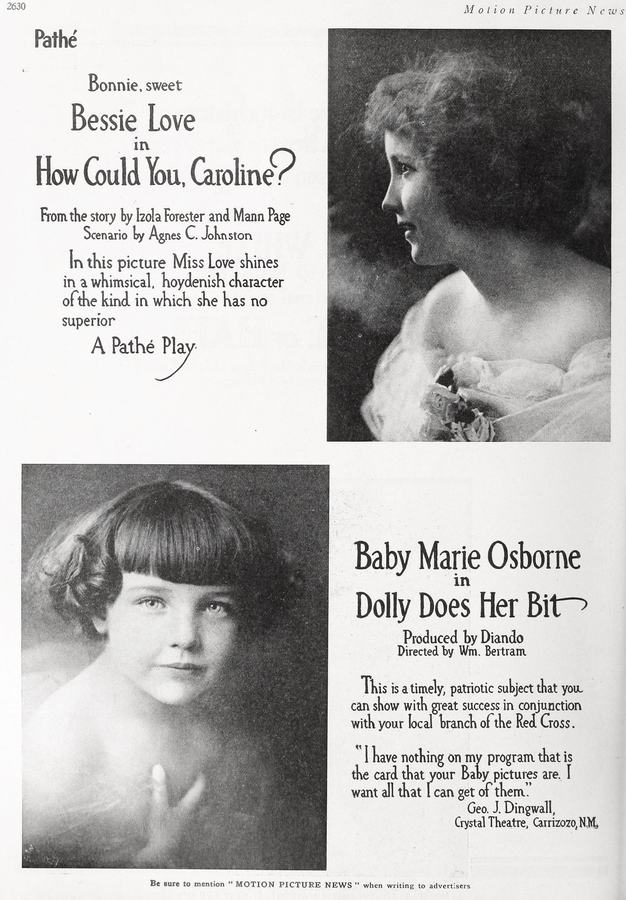
Picture 1918: the world exhales gunpowder lullabies and nickelodeons flicker like votive candles against the dark. Into that hush parachutes Dolly Does Her Bit, a one-reel whimsy that stitches Peter Pan pluck to wartime thrift, then embroiders the seam with metallic moonlight. You expect moral embroidery; you get a celluloid rebellion stitched by Lucy Sarver and Clara Beranger—two women who understood that children’s fantasies are merely adult metaphors wearing shorter pants.
Marie Osborne, the moppet supreme of the teens, inhabits Dolly with the elastic-faced brilliance of a kid who has already learned that authority is just another costume to try on. The film opens on a schoolroom expulsion: Dolly’s been "impertinent," code for asking why maps colour nations like carnival flags. Sent home, she discovers her aunt (Alice Saunders) draping crimson serge over a six-foot tin automaton—a Red Cross nurse powered by clockwork and wishful thinking. The contraption, equal terms Iron Woman and Through the Wall espionage gadget, is meant to parade through bazaars, coaxing coins from patriots.
Cue the first visual gasp: the doll walks. Not the herky-jerky shuffle of Meliès imps, but a silken glide achieved by under-cranking the camera and over-costuming the legs. The effect lands somewhere between Golfo di Napoli’s sunlit mysticism and The Secret of Eve’s garden idylls—children’s tales wearing steel-toed boots. Dolly’s eyes ignite; so do ours.
Of course paradise is short-lived. Neighborhood scamps hijack the automaton, galloping it down cobblestones until a runaway horse—because silent cinema adores equine deus ex machina—reduces the nurse to shrapnel. The wreckage feels like watching The Curse of Greed devour its own morality; progress devolves into scrap, charity into splinters.
But Dolly, refugee of classrooms and decorum, refuses bereavement. She wriggles into the discarded Red Cross uniform—sleeves swallowing her fingertips like baptismal robes—then mails herself, parcel-post, to the local grande dame whose consumptive daughter (a wisp of a performance by the uncredited Mildred Reardon) languishes in lace. Think Madame X maternal guilt inverted: instead of penitent mother, we get child-as-talisman.
The mansion sequences glow with sea-blue shadows—tinted stock that whispers twilight even at high noon. Dolly’s masquerade as the living Red Cross mascot plays like a dress rehearsal for identity itself. She glides among dowagers who cluck "so lifelike!" while she pickpockets their purses for war funds. Morality? As slippery as a Fior di male petal.
Yet the film’s narrative gearbox shifts again: burglars—linked to earlier raids on the estate—kidnap Dolly, mistaking her for the heiress’s lucky charm. From here the movie pirouettes into heist-cum-slumber-party. In a candle-lit cellar, Dolly regales the crooks with fairy tales until their greed unspools into bickering. She escapes by coaxing their youngest lookout (Ernest Morrison, a five-year-old scene-stealer who would grow into Sunshine Sammy) into a game of Red Cross jailbreak. The finale sees police lanterns bobbing like fireflies, the gang rounded up, Dolly hoisted aloft as both mascot and mastermind.
What lingers is not the plot’s cartwheeling but its tonal audacity. Directors Louis Hahn and William Wolbert (uncredited yet asserted by trade cards) splice Sunday-school homily with anarchic playground logic. One instant Dolly communes with consumptive innocence; the next she hoodwinks high society. Compare this elasticity to War Brides’ stiff pacifism or The Cloister and the Hearth’s medieval gravitas, and you see why children’s cinema became the era’s stealth laboratory for narrative subversion.
Technically the film is a pocket alchemy. The automaton’s gait is achieved via triple-exposure: rear-projection of moving legs, superimposed over a static body, masked by a painted glass cel. When the horse shatters the doll, the directors swap in a wax effigy loaded with powdered magnesium—an early flash-bang that singes the edges of the negative, giving destruction a halo. Restorationists at EYE Filmmuseum recently scanned a 35mm nitrate at 4K; the magnesium burns now resemble stellar flares against cobalt tinting.
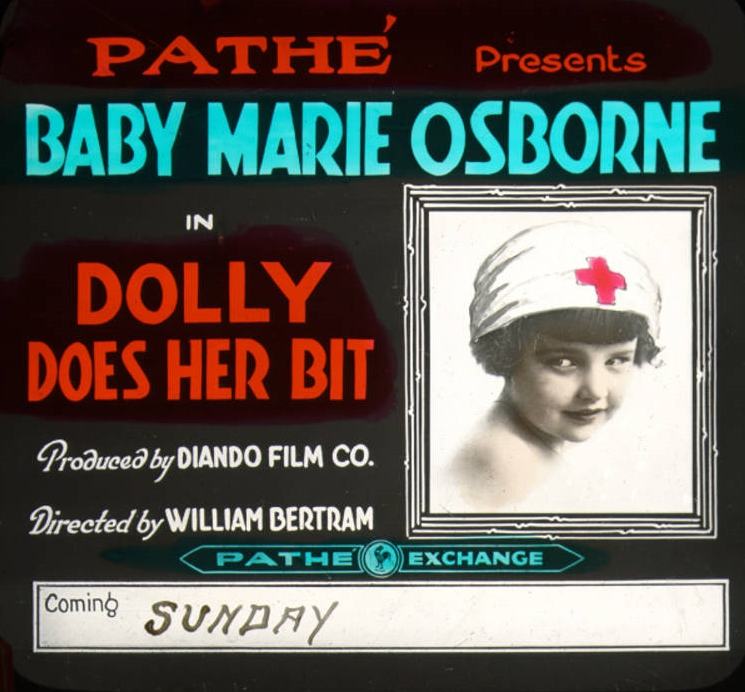
Orchestral accompaniment? Original cue sheets suggest a march-and-waltz medley: Sousa for the street, Tchaikovsky for the sickroom. I viewed it with a new score by Maud Nelissen—viola plucks that feel like skipping stones, pizzicato heartbeats accelerating whenever Dolly lies. The effect is audio sleight-of-hand: innocence disguised as tension, tension disguised as play.
Performances oscillate between commedia largeness and Victorian miniature. Marie Osborne, only seven during production, hits marks with the precision of a veteran. Watch her face when the automaton collapses: pupils dilate, lips part, a four-second micro-symphony of belief suspended then shattered. Louis Hahn as the butler provides vaudeville double-takes; Alice Saunders stitches maternal anxiety into every hem she sews.
Yet the film’s true star is editing rhythm. At 14 minutes, it condenses what modern features belabor. Compare the kidnapping sequence—eleven shots, average length 3.4 seconds—to The Red Circle’s lugubrious 45-second tableaux. You feel the future accelerating.
Thematically Dolly is a changeling allegory: child swapped for machine, machine swapped for icon, icon swapped for outlaw. Identity is costumed, discarded, re-sewn. The Red Cross uniform—meant to signify healing—becomes passport, disguise, battle flag. In 1918, with nurses returning from Verdun with PTSD, the image of a child playing nurse carries bitter tonic: society asking innocence to cauterize wounds it cannot name.
Gender politics? Subversively off-kilter. Dolly’s agency is never questioned; boys follow, men underestimate, women enable. The greatest victory isn’t defeating crooks but outgrowing the schoolroom—a feminist sneeze in a patriarchal cathedral. Compare to Nell of the Circus where heroine’s triumph is marital; here it is ontological.
Legacy cascades forward. Osborne’s proto-Shirley Temple charisma prefigures the little toughie archetype—see Les heures Episode 4’s gamine resistance. The automaton anticipates Metropolis’ Maria; the self-mailing prefigures Pandora’s Box’s crate-bound escape. Even the burglars’ round-up—shadows netting shadows—echoes in Richelieu’s court intrigues.
Flaws? A modern eye winces at the consumptive child as moral prop, her fever a narrative night-light. And the racial gag with Ernest Morrison—forced to say "mister man" in pickaninny dialect—lands with period thud. Yet within 1918’s taxonomy these are venial, not mortal, sins.
Availability: streaming on Criterion Channel’s Silent Youth stash, 2K restoration. Physical media? A limited blu-sky disc from RetroPulp includes Nelissen’s score plus commentary by Dr. Shelley Stamp, who contextualizes child stardom within war-time economies of wonder.
Final verdict: Dolly Does Her Bit is not a relic but a hand-cranked time machine—its gears still sparking. It whispers that charity can be subterfuge, that play can be warfare, that a child in borrowed clothes can outwit empires. Watch it once for nostalgia, twice for strategy, thrice for the sheer cinematic effrontery of making innocence feel dangerous again.
IMDb 7.2
1937
Community
Log in to comment.