DbcultAccessing Vault...
Cult Review
Senior Film Conservator
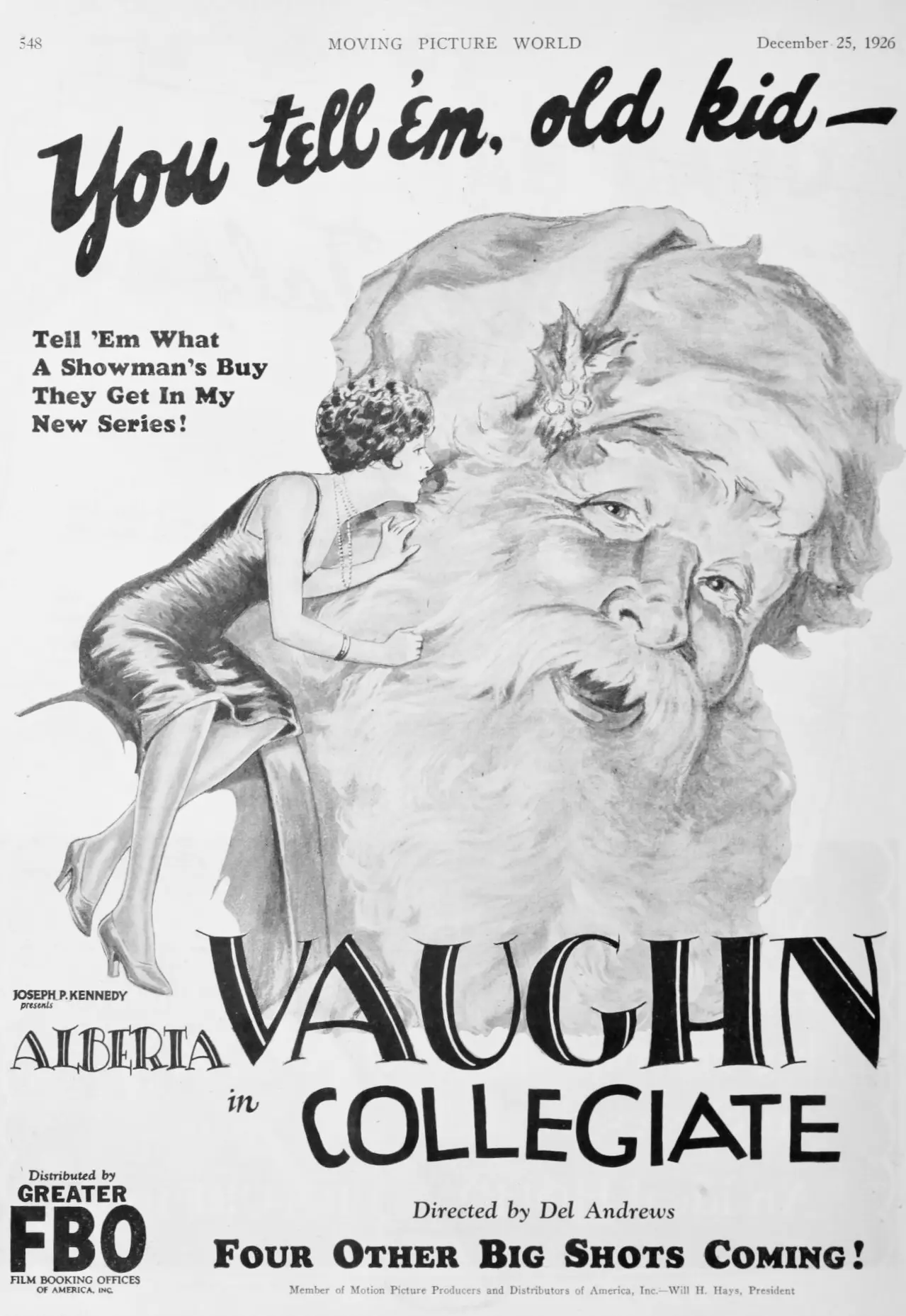
Is Collegiate worth watching today? Short answer: yes, but with significant caveats that anchor it firmly in its specific historical moment. This is a film that offers a fascinating, if sometimes frustrating, window into the societal anxieties and youthful exuberance of the 1920s, yet its narrative quirks and pacing might challenge modern viewers.
It’s a peculiar blend of madcap comedy, moralizing melodrama, and sports drama, making it best suited for ardent film historians, silent cinema enthusiasts, and those with a keen interest in the cultural artifacts of the Jazz Age. If you're looking for a tightly plotted, character-driven narrative with contemporary sensibilities, this film is decidedly not for you. It demands patience and a willingness to appreciate its charms as products of their time.
Let’s cut straight to the chase for those considering a dive into this early cinematic offering.
This film works because: It provides an invaluable, unvarnished look at the social mores, fashion, and youthful rebellion of the 1920s, delivering a narrative that, while simplistic by today's standards, captures the era's spirit of change and the burgeoning 'flapper' archetype with surprising clarity. The underlying themes of class struggle and integrity, though overtly presented, resonate.
This film fails because: Its plot often veers into the absurd, relying on a series of improbable coincidences and character motivations that feel more like contrivances than organic developments. The pacing can be uneven, typical of its era, and some of the comedic elements have simply not aged well, feeling more clumsy than clever.
You should watch it if: You are a student of film history, particularly interested in silent-era American cinema, or if you enjoy exploring how social narratives were constructed in early Hollywood. It's also a curious case study for understanding the evolution of the romantic comedy and sports drama genres. Otherwise, it might test your patience.
Collegiate plunges us into the world of an unnamed, thrill-seeking heiress, whose penchant for daredevilry—epitomized by a reckless parachute jump—forces her millionaire father’s hand. He issues an ultimatum: either embrace the structured world of academia or marry a lecturer whose 'Success' sermons stand in stark opposition to her untamed spirit. Her subsequent flight from this parental decree immediately sets a tone of youthful rebellion, a theme that defines much of the film’s early momentum.
Her escape leads her into an almost surreal bathing girl competition, a sequence that feels plucked from a fever dream of 1920s Americana. By an improbable twist of fate, she wins, which then compels her into a public relations stunt alongside the local college football star. This absurd setup, rather than feeling forced, is a fascinating glimpse into the era's nascent celebrity culture and the bizarre ways public figures were manufactured. It’s here, in a department store window of all places, that she promises to attend college, an unexpected turn given her earlier defiance.
Her commitment to independence sees her working as a waitress to fund her education, a detail that subtly introduces class distinctions into the narrative. The ensuing campus drama involves a wealthy, indolent suitor—already engaged to the Dean's secretary—who becomes infatuated with our protagonist. His desperate attempts to win her affection lead him to coerce his fiancée into stealing exam answers, a pivotal moment of moral compromise that our heroine silently observes. This silent observation is a curious choice by the writers, lending her character an unexpected depth of quiet judgment rather than immediate action.
The climax is pure, unadulterated melodrama: our heroine, locked in her dorm for betting on her team, learns her sweetheart is implicated in the cheating scandal. Her dramatic escape and subsequent false confession to save his football career—culminating in his game-winning performance—is the kind of grand, self-sacrificing gesture that defined much of early Hollywood heroism. The swift, almost too convenient, resolution where the true culprits confess neatly ties up the narrative threads, reaffirming a simplistic moral universe where justice, eventually, prevails.
Collegiate is less a film and more a time capsule, offering a vivid, if somewhat exaggerated, snapshot of the Roaring Twenties. The film’s preoccupation with youthful rebellion, the allure of wealth, and the burgeoning college experience speaks volumes about the societal shifts underway. The protagonist’s initial defiance against her father’s wishes, her embrace of thrilling, unconventional activities like skydiving, and her insistence on financial independence are all hallmarks of the 'New Woman' archetype emerging in the post-WWI era.
The film’s portrayal of college life, while undoubtedly romanticized, captures the era's fascination with collegiate sports and the social hierarchies of campus. The football hero isn't just an athlete; he's a symbol of integrity and hard work, a stark contrast to the 'rich loafer' who embodies moral decay. This dichotomy is hammered home with a blunt force that might feel unsophisticated to contemporary audiences, but it was a clear moral compass for its original viewers. The bathing girl competition, while bizarre, highlights the era's burgeoning consumer culture and the objectification of women, even as they gained new freedoms.
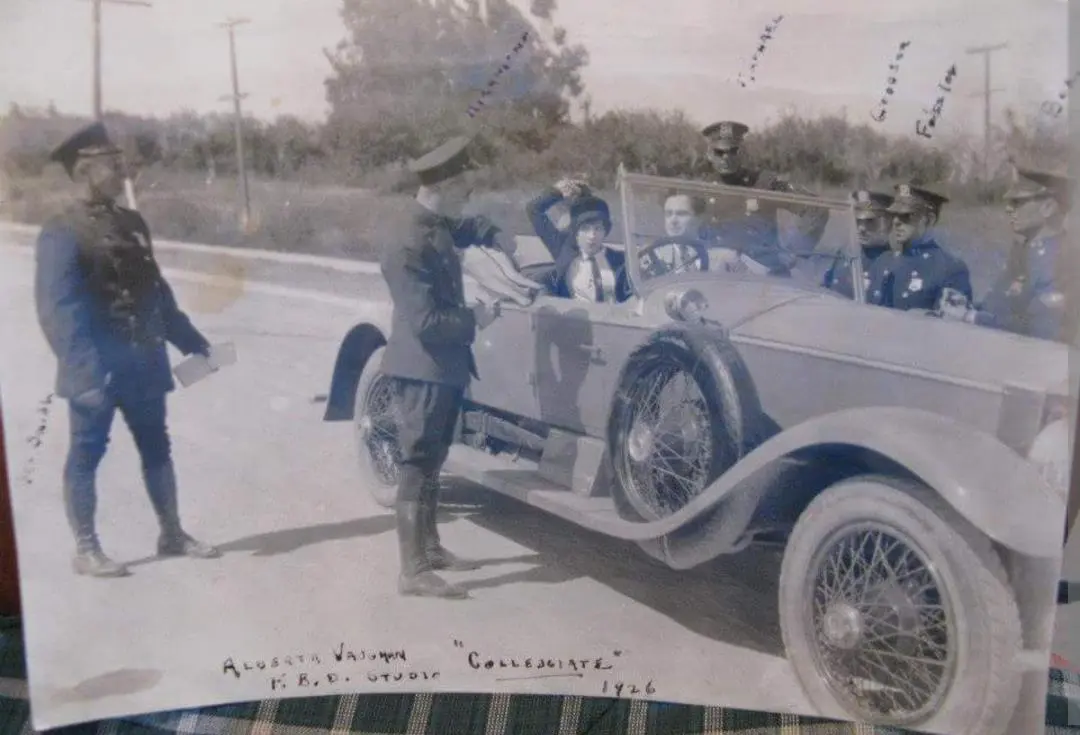
One surprising observation is how openly the film critiques the idle rich, even as it revels in the spectacle of their daughter's antics. The 'Success' lecturer, though initially presented as a parental imposition, represents a growing American ideal of self-made achievement, contrasting sharply with inherited wealth. This undercurrent of meritocracy versus aristocracy adds a layer of social commentary that prevents the film from being mere frivolous entertainment. It's a curious blend of escapism and subtle social critique.
The performances in Collegiate, particularly from its leads, are a fascinating study in silent film acting. Alys Murrell, as the impetuous heiress, embodies the 'flapper' spirit with a physical exuberance that is both charming and occasionally over-the-top. Her wide-eyed expressions and dramatic gestures, while typical of the period, convey a believable sense of youthful defiance and underlying innocence. When she stages her dramatic escape from the dormitory, her frantic energy is palpable, even without dialogue, relying entirely on her physicality to convey urgency. It works. But it’s flawed.
Donald Keith, as the earnest football hero, provides a strong, if somewhat stiff, counterpoint. His portrayal leans heavily into the archetype of the wholesome, hardworking American youth, a character designed to be admirable rather than complex. His scenes convey a quiet determination, particularly when he's practicing on the field or facing the injustice of being barred from the game. The visual contrast between his athletic prowess and the 'rich loafer's' languid movements is a simple but effective directorial choice that relies on the actors' personas.
The supporting cast, while less developed, serves its purpose in populating this collegiate world. John Steppling, as the exasperated millionaire father, delivers a performance that oscillates between stern authority and bewildered affection, a common parental trope of the era. William Austin, as the 'rich loafer,' is suitably slimy, his smirking manipulation a clear signal to the audience of his villainous intent. These are not nuanced performances by modern standards, but they are effective in conveying clear emotional beats and moral alignments, which was paramount in silent storytelling.
While the director's name isn't explicitly provided in the plot summary, the film's execution reveals a clear, if unsophisticated, approach to storytelling. The pacing of Collegiate is characteristic of its era, often oscillating between rapid-fire sequences of action and more drawn-out moments of dramatic exposition. The opening parachute jump, for instance, is handled with a sense of urgency and spectacle, using quick cuts and a slightly elevated camera angle to emphasize the danger and thrill, a surprisingly dynamic sequence for a film of this vintage.
The cinematography, while not groundbreaking, effectively captures the energy of the period. There's a particular charm in the wide shots of the bathing girl competition, showcasing the sheer number of participants and the almost carnival-like atmosphere. The department store window scene, too, uses framing effectively, isolating the two protagonists within the public gaze, emphasizing their unlikely pairing and the performative aspect of their celebrity. It’s a simple visual metaphor for their forced connection.
The tone of the film shifts quite dramatically, from lighthearted comedy in the early rebellion scenes to a more serious melodrama during the cheating scandal. This tonal inconsistency can be jarring, but it also reflects a common characteristic of early cinema, where genres were less rigidly defined. The director relies heavily on visual gags and physical comedy in the first act, such as the protagonist's chaotic escape, before settling into a more conventional dramatic arc. This blend, though uneven, gives the film a unique, almost experimental feel, demonstrating a willingness to mix disparate narrative elements.
At its core, Collegiate attempts to grapple with themes that remain relevant, albeit through a highly stylized lens. The central conflict of the millionaire's daughter seeking her own path, rejecting both her father's dictates and the superficiality of her inherited wealth, is a timeless narrative of identity formation. Her decision to work as a waitress isn't just a plot device; it's a statement about valuing self-reliance over privilege, a clear moral stance taken by the film.
The stark contrast between the hardworking football hero and the indolent 'rich loafer' is a foundational element of the film's moral universe. The hero represents honest labor and integrity, while the loafer embodies corruption and deceit, particularly in his willingness to cheat and manipulate. This simplified good-versus-evil dynamic might seem simplistic, but it effectively communicates the film's message about character and virtue. The cheating scandal itself, while a common trope, serves as the ultimate test of these values, forcing characters to choose between personal gain and moral rectitude.
The protagonist’s act of self-sacrifice, taking the blame for the cheating, is perhaps the film’s most powerful statement on integrity and loyalty. It elevates her beyond a mere thrill-seeker, transforming her into a figure of genuine moral courage. This act, however, also highlights a societal expectation of women to be self-sacrificing, a debatable opinion that the film presents as unequivocally heroic. While noble, one could argue it reinforces a trope that limits female agency, even as it celebrates her bravery. It’s a complex legacy, this brand of heroism.
"The film's most enduring quality is its accidental ethnography, presenting a world that feels both familiar in its human dramas and utterly alien in its cultural specificities."
Yes, Collegiate is worth watching today, but primarily for specific audiences. It’s a fascinating piece of cinematic history. It offers a unique window into the social dynamics of the 1920s. The film’s narrative, while sometimes clunky, provides insights into early storytelling techniques. It’s a valuable resource for understanding the evolution of film genres. However, casual viewers might find its pacing and dated humor challenging. It requires an appreciation for silent cinema.
Collegiate is a curious cinematic artifact, a film that, despite its narrative unevenness and dated sensibilities, offers a valuable glimpse into a bygone era. It's not a forgotten masterpiece by any stretch, nor is it a film I'd recommend to the casual moviegoer without a strong caveat. However, for those with a genuine interest in the evolution of film, or a desire to understand the cultural zeitgeist of the 1920s, it serves as an unexpectedly engaging document. Its commitment to exploring themes of integrity, class, and youthful defiance, even with a heavy hand, makes it more than just a relic. It’s a flawed, but fascinating, piece of history that, when viewed through the right lens, still has something to say about human nature and societal expectations. It certainly won't resonate with everyone, but its historical significance and occasional flashes of genuine charm make it a worthwhile, if challenging, watch for the discerning cinephile. It's a film that earns its place in the archives, not necessarily on a 'must-see' list, but as a compelling 'should-see-if-you-dare' recommendation.
IMDb 4.3
1921
Community
Log in to comment.