DbcultAccessing Vault...
Cult Review
Senior Film Conservator
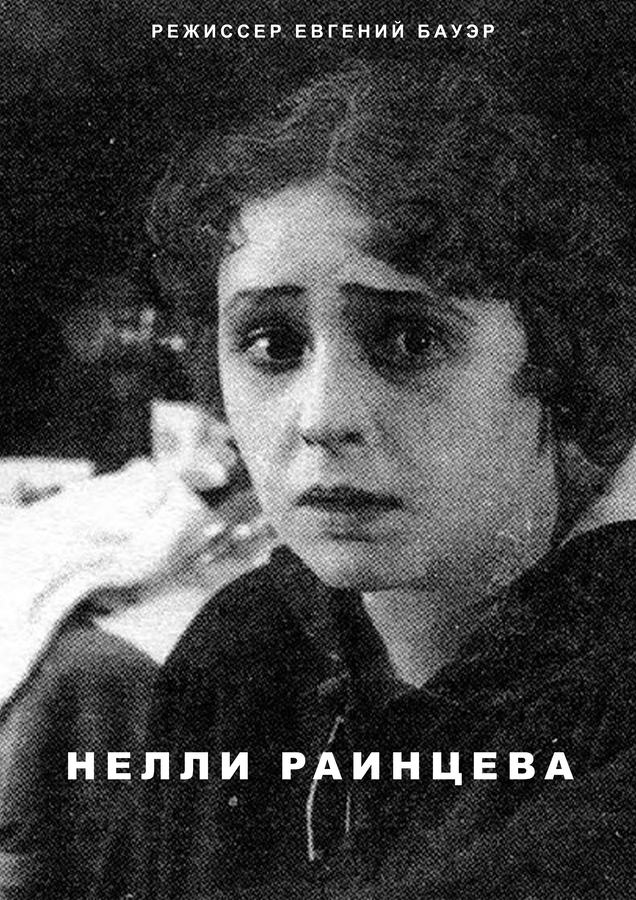
In the annals of cinematic history, certain narratives possess an uncanny ability to burrow deep into the collective consciousness, not through bombastic spectacle, but through the quiet, searing intensity of human experience. Such is the case with Nelly Raintseva, a film that, despite its seemingly understated premise, unravels a devastating psychological tapestry woven from threads of neglect, affluence, and profound solitude. It’s a work that eschews easy answers, instead opting for a nuanced, often discomfiting, examination of a soul adrift in a sea of material comfort but emotional destitution.
From the very outset, Aleksandr Amfiteatrov's screenplay, a masterclass in character-driven drama, establishes the 'unfavorable conditions' that forge Nelly's nascent identity. The film doesn't merely state these conditions; it immerses the viewer in their suffocating reality. We witness, through a series of evocative vignettes, the stark contrast between the opulent trappings of her childhood and the chilling emotional void that permeates every corner of her existence. Her father, portrayed with a chilling detachment by Konstantin Zubov, is less a paternal figure and more an abstract representation of capitalistic ambition. His world revolves around ledgers and market fluctuations, his interactions with Nelly reduced to fleeting, transactional gestures, if they occur at all. This portrayal, devoid of overt malice yet dripping with indifference, highlights a particular brand of patriarchal neglect – one born not of cruelty, but of absolute preoccupation.
Equally compelling, and perhaps even more tragic in its implications, is the depiction of Nelly's mother. Olga Rakhmanova delivers a performance of exquisite fragility, embodying a woman consumed by the ephemeral demands of 'social flirtation.' Her days are a carefully choreographed ballet of appearances, her affections distributed amongst a coterie of admirers, leaving no genuine emotional reserves for her own child. The film cleverly positions this as not merely a character flaw, but a symptom of a broader societal malaise, where superficiality trumps genuine connection, and outward presentation is prized above inner substance. Nelly thus becomes a ghost in her own home, an inconvenient truth in a meticulously curated facade.
The genius of Nelly Raintseva lies in its unflinching gaze at the long-term ramifications of such an upbringing. We are not merely shown a neglected child; we are invited to observe the slow, agonizing calcification of a spirit. Nelly, brought to life with heartbreaking nuance by Yanina Mirato, becomes a repository of unspoken desires and unfulfilled longing. Her interactions with the world are tentative, marked by a palpable sense of apprehension and an almost desperate yearning for validation that she never received in her formative years. The film's pacing, deliberate and often melancholic, mirrors Nelly's internal state, allowing the viewer to fully absorb the weight of her isolation.
One cannot discuss the film without acknowledging the profound contributions of the supporting cast. Aleksandr Kheruvimov, in a role that could have easily been one-dimensional, brings a surprising depth to a character who perhaps offers Nelly a fleeting glimpse of genuine human connection, only to have it snatched away by the inexorable forces of her circumstances. Similarly, Mikhail Stalski and Vera Pawlowa, though in more ancillary roles, contribute to the rich tapestry of a society that inadvertently perpetuates Nelly's isolation. Even the brief appearances of Zoya Barantsevich add layers to the societal backdrop, showcasing the pervasive nature of indifference that Nelly encounters.
The thematic resonance of Nelly Raintseva extends far beyond the confines of its narrative. It serves as a potent critique of a society that often prioritizes material success and superficial engagement over the fundamental human need for emotional sustenance. In this regard, it shares a spiritual kinship with films like La luz, tríptico de la vida moderna, which similarly dissects the alienating effects of modern life, albeit through a different lens. Both films suggest that beneath the veneer of progress and prosperity, a profound sense of human disconnect can fester, leaving individuals emotionally marooned.
The visual language of the film is equally compelling. The director employs a stark, almost austere aesthetic, utilizing muted color palettes and deliberate camera movements to emphasize Nelly's internal world. Long, lingering shots of opulent, yet empty, rooms speak volumes about the hollowness of her existence. The cinematography often frames Nelly as small and isolated within grand spaces, underscoring her insignificance in the eyes of her parents and the larger world. This visual metaphor is particularly effective in conveying the weight of her psychological burden without resorting to overt exposition. The use of light and shadow is masterfully executed, often casting Nelly in literal and metaphorical dimness, contrasting sharply with the dazzling, yet ultimately cold, brilliance of her parents' social spheres.
Amfiteatrov's screenplay, while focused on Nelly, subtly broadens its scope to comment on the societal structures that allow such neglect to flourish. The film suggests that the parents' behavior is not merely individual failing, but a product of an environment that rewards relentless ambition and superficial charm, often at the expense of genuine human connection. This mirrors the societal commentary found in films like The Lure, which often explores how individuals become entrapped by external forces and societal expectations, sometimes leading to their moral or emotional decay. Here, Nelly is not entrapped by a physical lure, but by the invisible bonds of emotional deprivation.
The film's exploration of Nelly's inner turmoil also brings to mind the psychological depth found in The Unknown, another work that delves into the hidden struggles and complex identities of its protagonists. While The Unknown might deal with more overt secrets, Nelly Raintseva explores the more insidious 'unknowns' of a neglected psyche, the unformed thoughts and emotions that fester beneath a placid exterior. The film asks us to consider what happens to a soul denied the basic nutrients of love and attention, and the answers it provides are profoundly unsettling.
The narrative arc, while seemingly simple, is punctuated by moments of quiet desperation and fleeting hope. Nelly's attempts to forge connections, her tentative steps towards self-discovery, are consistently met with either indifference or misunderstanding. These moments are rendered with such poignant realism that they evoke a deep empathy from the viewer. There’s a particular scene, masterfully directed, where Nelly tries to share a small personal triumph with her mother, only to be met with a distracted nod and an immediate pivot to a social engagement. This small interaction, seemingly innocuous, speaks volumes about the emotional chasm separating mother and daughter. It's a testament to the film's power that such subtle moments carry immense emotional weight.
Comparisons can also be drawn to An Amateur Orphan, not in terms of literal orphanhood, but in the profound sense of abandonment that defines Nelly's experience. She is, in essence, an emotional orphan, adrift in a world where her biological parents are present but utterly absent in any meaningful sense. This thematic parallel underscores the universality of the film's message about the critical importance of parental engagement and emotional support during childhood. The film argues, with quiet conviction, that material wealth can never compensate for the profound poverty of spirit inflicted by neglect.
Furthermore, the film's portrayal of societal expectations and the pressure to maintain appearances resonates with the themes explored in The Upstart, albeit from a different perspective. While The Upstart might focus on ambition and social climbing, Nelly Raintseva shows the devastating cost of maintaining a certain social standing, where emotional authenticity is sacrificed at the altar of reputation. Nelly’s parents are trapped by their own perceived social obligations, unable or unwilling to break free from the superficiality that defines their lives, and in doing so, they trap their daughter within its confines.
The profound sadness that permeates Nelly Raintseva is not one of melodrama, but of quiet, almost unbearable despair. It’s the sadness of what could have been, of a potential unfulfilled, a spirit crushed before it ever truly had a chance to blossom. The film doesn't offer easy resolutions or neat conclusions; instead, it leaves the viewer with a lingering sense of unease and a profound reflection on the subtle cruelties that can exist even within the most privileged environments. It’s a powerful, thought-provoking piece that compels us to look beyond the surface and consider the intricate, often painful, inner lives of those around us.
In conclusion, Nelly Raintseva stands as a testament to the enduring power of character-driven cinema. It is a film that demands patience and introspection, rewarding the attentive viewer with a deeply moving and intellectually stimulating experience. Amfiteatrov's masterful writing, coupled with the compelling performances of the entire cast, particularly Yanina Mirato, creates a narrative that is both specific in its portrayal of one young woman’s plight and universal in its exploration of human connection, neglect, and the search for meaning. It’s a film that stays with you long after the credits roll, prompting a re-evaluation of societal values and the often-unseen emotional landscapes that define our lives. A truly essential watch for anyone interested in the profound psychological dramas that cinema can offer, and a stark reminder of the often-invisible scars etched by indifference.

IMDb —
1917
Community
Log in to comment.