DbcultAccessing Vault...
Cult Review
Senior Film Conservator
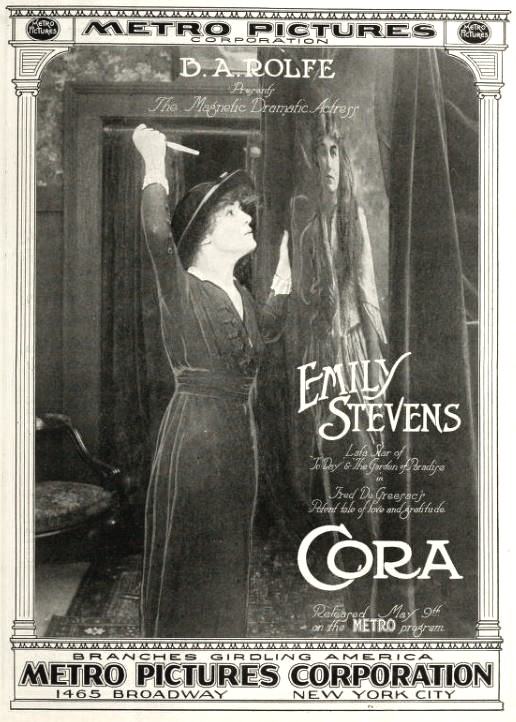
In the burgeoning landscape of early American cinema, where narratives often soared to operatic heights even without spoken word, 1915's Cora emerges as a compelling exemplar of the silent melodrama. This cinematic gem, featuring the luminous Emily Stevens in the titular role, plunges its audience into a world of profound emotional upheaval, societal constraints, and the relentless pursuit of artistic and personal fulfillment. It is a film that, despite its century-old vintage, retains a potent capacity to enthrall, dissecting the intricate dance between love, ambition, and the capricious hand of fate with remarkable dexterity. The visual storytelling, characteristic of the era, is a testament to the power of gesture, expression, and meticulously crafted intertitles to convey a sprawling saga of human drama.
The story of Cora begins with a stark, almost brutal, twist of destiny. Our protagonist, a young woman whose life is inextricably linked to the grand stages of Parisian opera through her mother, finds her world irrevocably altered upon their transatlantic journey to America. The sudden demise of her mother, a celebrated diva, leaves Cora adrift, an orphan in a foreign land. This initial tragedy sets the tone for a narrative steeped in pathos, yet also brimming with the potential for resilience. Her subsequent placement with Marie, an artist's model, introduces Cora to a bohemian milieu, a stark contrast to the structured world of the opera house. It is here, amidst the creative chaos, that she encounters George Garnier, an artist whose gaze, one can imagine, captures not just her likeness but the nascent spirit within her.
The casting of Emily Stevens as Cora was a stroke of genius. Stevens, known for her intense performances and striking screen presence, imbues Cora with a vulnerability that quickly hardens into steely determination. Her portrayal of a young woman grappling with loss, navigating new social landscapes, and discovering the intoxicating pull of first love is nothing short of captivating. One can observe the subtle shifts in her posture, the nuanced expressions of her eyes, conveying volumes of unspoken emotion – a hallmark of truly great silent film acting. This early segment of the film, establishing Cora's foundational struggles, resonates with the thematic undercurrents often explored in other period dramas focusing on female resilience, perhaps finding a spiritual kinship with narratives like Children of Eve, which likewise delved into the trials faced by women in challenging circumstances.
The narrative quickly thickens with the introduction of George's pre-existing entanglement: an engagement to the wealthy Helen Van Brooks. This is not a simple love triangle but rather a complex geometric pattern of affections, as Helen herself harbors a secret passion for the club-man Carl Wilson. Such intricate romantic entanglements were a staple of early cinema, designed to maximize dramatic tension and explore the societal pressures surrounding marriage and social standing. The film masterfully builds the inevitable romantic crescendo between George and Cora, making their burgeoning love feel both fated and forbidden. Their stolen glances, hesitant touches, and the palpable chemistry between Emily Stevens and Frank Elliott (as George) are rendered with a delicate touch, allowing the audience to invest deeply in their connection.
The revelation of George's engagement to Cora is, predictably, a devastating blow. It shatters her nascent happiness and propels her into a dramatic act of self-preservation: she leaves, not to wallow in despair, but to forge her own destiny. This pivotal moment marks Cora's transformation from a dependent orphan to an autonomous force. Her decision to embrace her operatic heritage and become a star echoes the grand, often tragic, romantic gestures found in films such as The Pride of Jennico, where characters often make monumental sacrifices for love or honor. Cora's journey to operatic stardom is not merely a plot device; it symbolizes her finding her own voice, literally and figuratively, in a world that had initially silenced her.
Years pass, and Cora achieves international renown as an opera star, a testament to her talent and perseverance. George, having finally broken his ill-fated engagement, returns to her orbit, rekindling the embers of their past affection. However, their path to happiness remains fraught with obstacles. The formidable Mrs. Van Brooks, Helen's mother, emerges as a formidable antagonist, her aristocratic sensibilities outraged by the prospect of George abandoning her daughter for a, comparatively, 'new money' opera singer. Her entreaties to Cora to give up George are delivered with a chilling blend of social superiority and emotional manipulation, highlighting the rigid class structures that often dictated romantic choices in that era. The tension here is a palpable force, reminiscent of the societal pressures and grand familial dramas that underpinned much of the cinematic output of the period, including works like A Little Brother of the Rich, which similarly explored the chasm between different social strata.
The dramatic crescendo of the film arrives at a wild party, a scene pulsating with a dangerous mix of revelry and emotional desperation. Here, Cora, in a moment of profound emotional turmoil and perhaps a calculated act of self-sabotage or desperate testing of George's devotion, allows her long-time admirer, Jose, to advance his affections. This provocative act is a masterclass in silent film acting for Emily Stevens, conveying Cora's inner conflict and desperate longing without a single spoken word. George's immediate disgust is understandable, yet it is Marie, the ever-loyal and perceptive friend, who intervenes, offering a crucial explanation of Cora's behavior. Marie's role throughout the film is that of a grounding force, a voice of reason and empathy, providing vital exposition and emotional context for the audience. Her presence is a consistent anchor in Cora's turbulent journey, a loyal confidante whose understanding often bridges gaps in communication and perception.
The party sequence spirals into a terrifying climax. Jose, alone with Cora, reveals his true, predatory nature, attacking her. This sudden shift from romantic admirer to aggressor is a stark reminder of the dangers lurking beneath polite society's surface, a theme that, while perhaps less explicit, can be seen in the underlying tensions of dramas like Called Back, where emotional stakes often escalate into life-or-death situations. Just as Cora's life hangs in the balance, George and Marie burst in, a deus ex machina moment perfectly timed to heighten the suspense. In a desperate act of self-defense, Cora hurls a wine cooler, striking Jose with fatal force, sending him crashing through a window to his death on the street below. This sudden, violent resolution to the Jose subplot is shocking, yet it underscores the extreme pressures and life-threatening situations that silent film heroines often faced, forcing them into acts of extreme courage.
The film then swiftly moves towards its ultimate resolution. The news of Helen Van Brooks and Carl Wilson's elopement effectively dissolves the last remaining impediment to Cora and George's union. This convenient, almost tidy, wrap-up of the secondary romance allows the primary lovers to finally find their peace. While some might view this as an overly simplistic resolution, it was a common narrative device in melodramas of the era, designed to provide catharsis and a satisfying conclusion for audiences who had invested deeply in the protagonists' struggles. The marriage of Cora and George, therefore, is not just a happy ending; it is a hard-won victory, a testament to their enduring love and resilience against a cascade of societal expectations, personal tragedies, and violent confrontations. It speaks to a profound belief in the triumph of true affection over all adversity, a timeless message that resonated deeply with audiences then and continues to hold a certain charm today. The journey of Cora, from orphaned vulnerability to operatic triumph and finally to marital bliss, is a compelling arc that solidifies the film's place as a potent example of early cinematic storytelling.
While specific directorial credits for many early films, including Cora, often remain somewhat obscured by the collaborative nature of the nascent industry, the film's overall construction speaks volumes about the burgeoning artistry of cinematic narrative. The pacing, the use of close-ups to emphasize emotional states, and the dynamic staging of dramatic confrontations all contribute to a compelling viewing experience. The film's ability to maintain a high level of emotional intensity throughout its various twists and turns is a testament to the effective visual language employed. The dramatic tension, particularly in scenes like the wild party and the subsequent attack, is masterfully orchestrated, drawing the audience into Cora's predicament with visceral impact. This kind of sustained emotional engagement, relying purely on visual cues and the actors' expressions, showcases the unique power of silent film as a storytelling medium.
Cora, in its essence, is a grand romantic tragedy turned triumph, a narrative blueprint that would influence countless films for decades to come. Its exploration of themes such as the societal pressures on women, the pursuit of artistic dreams, and the enduring power of love against all odds, imbues it with a timeless quality. The film also provides a fascinating glimpse into the social mores and expectations of the early 20th century, particularly regarding class distinctions and the roles of women. Emily Stevens' performance alone makes Cora a valuable artifact of silent cinema, showcasing an actress at the height of her powers, capable of conveying profound emotional depth without a single spoken word. For enthusiasts of early film, and indeed for anyone interested in the evolution of cinematic storytelling, Cora offers a rich tapestry of human emotion, dramatic spectacle, and the captivating allure of a bygone era. It stands as a testament to the foundational strength of melodrama as a narrative form, executed with a flair that keeps its silent voice resonating through the years.
IMDb —
1924
Community
Log in to comment.