DbcultAccessing Vault...
Cult Review
Senior Film Conservator
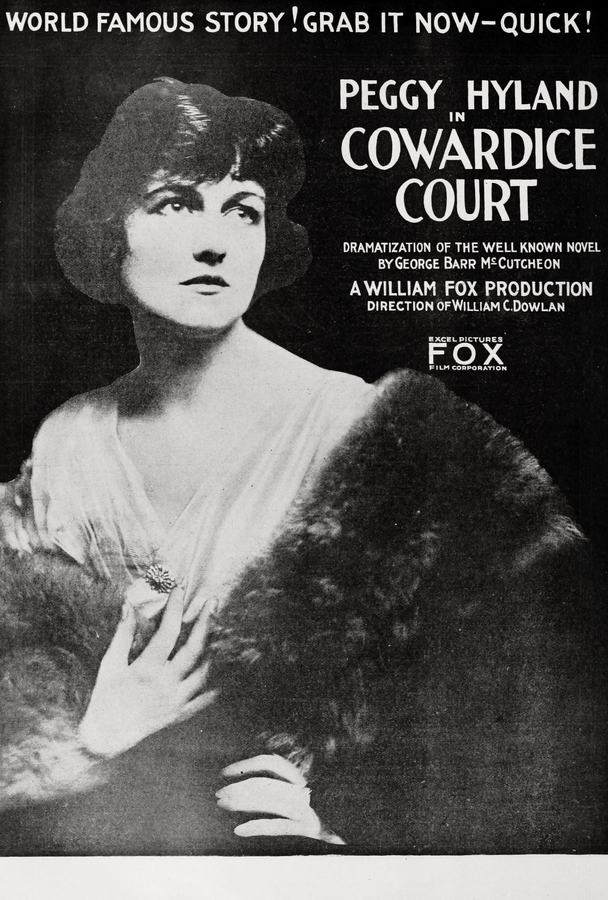
There's a peculiar magic to silent cinema, a language of gesture and expression that transcends the spoken word, inviting audiences to fill in the auditory blanks with their own imaginations. Among the vast archives of this bygone era, certain films, though perhaps not household names, possess a compelling narrative and a charming spirit that warrant rediscovery. Joseph Anthony Roach and George Barr McCutcheon's Cowardice Court, a 1923 production, is precisely one such gem. It's a delightful concoction of class conflict, romantic whimsy, and a good old-fashioned property dispute, all set against the majestic backdrop of the Adirondack Mountains. Far from a mere historical curiosity, this film offers a fascinating glimpse into the social dynamics and storytelling conventions of its time, delivered with a wit and charm that still resonate today.
At the heart of Cowardice Court lies a seemingly trivial, yet deeply symbolic, feud. Randolph Shaw, portrayed with a sturdy, unyielding demeanor by Al McKinnon, is the archetypal American frontiersman – self-sufficient, rooted in his land, and fiercely independent. His humble shack, a testament to rustic living, sits adjacent to the sprawling, opulent estate of Lord Cecil Bazelhurst, a character brought to life by Bertram Grassby with just the right touch of aristocratic pomposity. The conflict isn't merely about land; it's a microcosm of larger societal tensions. Shaw represents the rugged individualism and burgeoning American identity, a spirit that chafed against the lingering echoes of European aristocracy. Lord Cecil, on the other hand, embodies a fading grandeur, a man whose inherited title grants him social standing but perhaps little practical acumen.
The catalyst for escalating this simmering tension is Lady Evelyn Bazelhurst, formerly Evelyn Banks of Jersey City, played by Evelyn Mulhall. Her character is a brilliant study in social ambition. Having married Lord Cecil for his title, Evelyn is determined to solidify her new aristocratic standing. Randolph's unsightly shack, a constant reminder of a less refined existence, becomes an intolerable blemish on her carefully curated image of gentility. Her relentless desire to remove it is not just about aesthetics; it's about erasing any trace of the 'common' from her elevated reality, a fascinating commentary on the aspirations and anxieties of the newly monied in an era obsessed with social climbing. One might draw a thematic parallel to the social maneuvering seen in films like Anna Karenina, though in a vastly different, more lighthearted context. While Tolstoy's masterpiece delves into the tragic consequences of societal constraints, Cowardice Court offers a more comedic, yet equally insightful, look at the absurdities of social aspiration.
The narrative, however, takes an unexpected turn with the introduction of Penelope Bazelhurst, Lord Cecil's sister, portrayed by Kathryn Adams with an endearing blend of curiosity and youthful spirit. Initially, Penelope views the feud with a detached amusement, a trivial squabble among men. Her world, presumably one of refined leisure, has shielded her from such earthy concerns. Yet, her encounters with Randolph Shaw begin to chip away at her aristocratic complacency. The film masterfully builds this burgeoning romance, not through grand declarations, but through subtle interactions that highlight their contrasting worlds and mutual intrigue. It’s a classic trope of the 'unlikely couple,' yet executed with a freshness that keeps the audience invested.
The true turning point arrives dramatically. When one of the Bazelhurst servants, in an act of misguided loyalty or sheer clumsiness, shoots Randolph in the arm for trespassing, Penelope's perspective undergoes a profound transformation. The abstract 'joke' of the feud suddenly becomes a tangible, painful reality. This incident serves as a powerful catalyst, propelling her from passive observer to active participant. Disillusioned by the pettiness and violence inherent in her family's aristocratic entitlement, she makes a decisive break. Her flight to Randolph's shack isn't just an act of defiance; it's a symbolic rejection of her inherited world and an embrace of authentic connection. The acceptance of his engagement proposal, under these dramatic circumstances, solidifies their bond, suggesting that true love can indeed flourish across seemingly insurmountable social divides. This theme of love triumphing over external pressures and societal expectations is a timeless one, explored in many films, including perhaps Love's Conquest, where personal desires often clash with established norms.
The ensuing pursuit by Lord Cecil and his retinue provides some of the film's most comically poignant moments. Driven by a sense of outraged honor and perhaps a touch of possessiveness over his sister, Cecil marshals his men to retrieve Penelope. However, their aristocratic sensibilities are ill-equipped for the rugged wilderness that Randolph and his men navigate with ease. The tables are turned as Randolph's loyal, presumably equally rustic, men frighten away Cecil's ill-prepared party. The spectacle of Lord Cecil and his gentlemen, accustomed to comfort and luxury, being forced to spend a miserable, stormy night in the unforgiving woods is a masterclass in comedic comeuppance. Their discomfort, vividly conveyed through silent film's exaggerated expressions and physical comedy, serves as a powerful visual metaphor for the fragility of their social standing when stripped of their artificial trappings.
This sequence, in particular, highlights the film's subtle critique of class distinctions. The supposed 'cowardice' is not found in Randolph's defiance, but in the inability of the privileged to cope when removed from their manufactured environments. It draws a clear line between inherent resilience and acquired fragility. The storm itself acts as a great equalizer, reducing lords and servants alike to shivering, bedraggled figures, utterly dependent on the mercy of nature – a realm where Randolph Shaw is king.
The resolution of the conflict is as satisfying as it is pragmatic. With the dawn, and the cessation of the storm, everyone becomes reconciled. The key to this truce lies not in a sudden change of heart from Lord Cecil, but in the shrewd calculation of Lady Evelyn. Realizing that with Penelope's marriage to Randolph, the coveted property will, in essence, now be 'in the family,' her primary objection dissolves. This moment is a brilliant stroke of characterization by writers Joseph Anthony Roach and George Barr McCutcheon, underscoring Evelyn's consistent pragmatism and ambition. Her initial desire to remove the shack was driven by social aspiration; now, that same aspiration can be satisfied by incorporating the land, and Randolph, into the extended family fold. It's a resolution born not of sentimentality, but of astute self-interest, beautifully illustrating the transactional nature of certain social relationships.
Randolph, ever the magnanimous victor, seals the reconciliation with a gesture of simple humanity: he offers Cecil and his shivering men dry, if ill-fitting, garments. This act of hospitality, devoid of condescension, effectively disarms any lingering animosity. It's a powerful visual contrast to the previous night's indignity, highlighting Randolph's inherent decency and the ultimately superficial nature of the aristocratic pride that fueled the feud. The film concludes with a sense of harmonious, if somewhat unconventional, integration. The shack remains, but its presence is no longer a symbol of discord, but rather a testament to an unexpected union.
The success of Cowardice Court hinges significantly on its cast, who, like all silent film actors, relied on exaggerated facial expressions, gestures, and body language to convey emotion and narrative. Al McKinnon, as Randolph Shaw, embodies the stoic, resilient American frontiersman with conviction. His performance is understated yet powerful, conveying a deep sense of connection to his land and a quiet strength that stands in stark contrast to the bluster of his aristocratic adversaries. Kathryn Adams, as Penelope, delivers a nuanced performance, transitioning convincingly from a sheltered, amused observer to a defiant, lovestruck woman. Her transformation is central to the film's emotional arc, and Adams executes it with grace and believability.
Evelyn Mulhall's portrayal of Lady Evelyn is particularly noteworthy. She imbues the character with a calculating intelligence and a subtle ambition that makes her a compelling, if not always sympathetic, figure. Her shift from antagonist to pragmatic peacemaker feels organic to the character's core motivations. Bertram Grassby, as Lord Cecil, provides the perfect foil. His aristocratic airs and eventual humiliation are played for comedic effect, but with enough underlying dignity to prevent him from becoming a caricature. The ensemble, including supporting players like Harry Lonsdale, Gung Wong, Larry Steers, and the imposing Bull Montana, all contribute to the film's vibrant tapestry.
While specific directorial credits for Joseph Anthony Roach and George Barr McCutcheon are noted for writing, the overall direction of the film effectively utilizes the visual storytelling inherent to silent cinema. The cinematography captures the beauty of the Adirondack setting, contrasting the wild, untamed nature with the manicured lawns of the Bazelhurst estate. The pacing is brisk, maintaining audience engagement without sacrificing character development. The film’s ability to convey complex emotions and social commentary without dialogue is a testament to the skill of its creators and the power of the medium itself. It’s a testament to the era's ability to tell a compelling story, much like the serialized narratives of films such as Who Pays? or the dramatic tension of The Strangler's Cord, albeit with a lighter, romantic touch.
Cowardice Court is more than just a quaint silent film; it's a charming exploration of enduring themes. The clash between old-world aristocracy and new-world independence, the disruptive power of love, and the ultimate triumph of pragmatism over petty grievances are all woven into its narrative fabric. It subtly critiques the superficiality of social status while celebrating genuine connection and resilience. The film’s resolution, driven by Evelyn's practical realization rather than a sudden shift in moral rectitude, is particularly insightful, offering a realistic, rather than idealistic, portrayal of human nature. It suggests that sometimes, common ground is found not through grand epiphanies, but through convenient alignments of self-interest.
In an era when films like Mr. Opp might explore small-town ambition or One More American depicted immigrant struggles, Cowardice Court offers a distinct flavor of American social comedy. It's a reminder that even nearly a century ago, filmmakers were adept at crafting narratives that entertained while subtly reflecting on societal values. For silent film enthusiasts and casual viewers alike, rediscovering Cowardice Court is a rewarding experience. It’s a testament to the timeless appeal of a well-told story, brought to life by expressive performances and a keen understanding of human folly and affection. This film, though perhaps overshadowed by more celebrated works, deserves its place as a delightful and insightful piece of early 20th-century American cinema.
IMDb —
1920
Community
Log in to comment.