DbcultAccessing Vault...
Cult Review
Senior Film Conservator
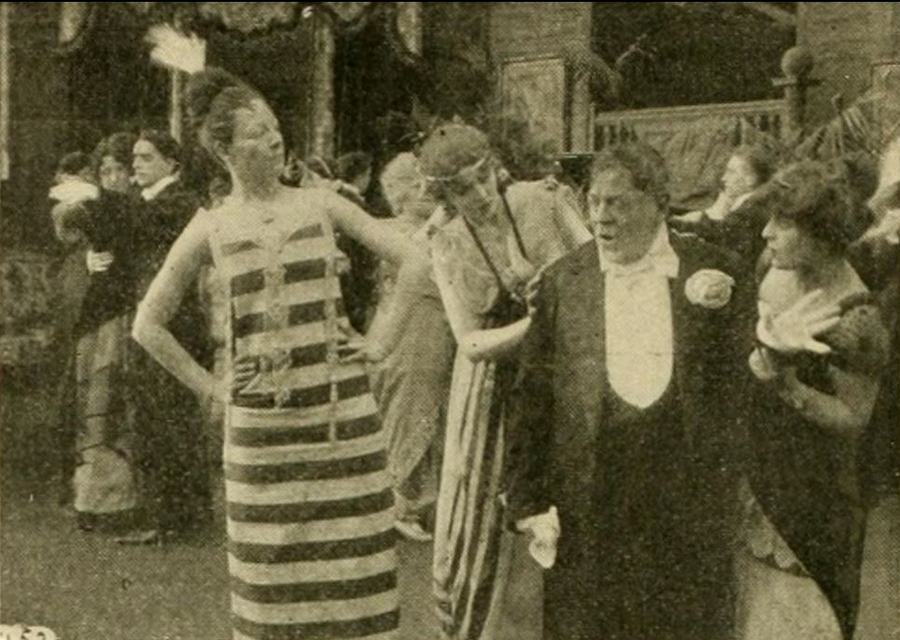
Frank Daniels’s face—rubbery, elastic, capable of folding into a Mephistophelian grin or elongating into a Keaton-esqe mask of panic—was the single greatest special effect Crooky ever needed. Released in March 1915 by the Vim Comics Company, this one-reel cyclone distills every urban anxiety of the Gilded Age: tycoons gambling on railroad futures, penitentiaries bulging with disposable bodies, women past thirty treated like stale bonds. The plot pirouettes from Sing Sing to Wall Street to Fifth-Atonement ballrooms, yet never exceeds a brisk twelve minutes, proving that narrative velocity can feel downright libertine when editors splice chase, theft, and courtship into the same breathless montage.
The barrel gag—our protagonist rolling downhill inside a stave cocoon—was already slapstick scripture by 1915, yet directors Edwin Middleton and Paul West pervert the cliché: the cask does not simply spit its prankster onto a mud-puddle; it vomits him into the arterial pulse of capital. Note the cut-on-action as Crooky’s timber sphere slams against a curb: splice, match-action, and suddenly he’s strolling Broadway decked in a checked suit whose lapels swallow his prison stripes whole. The edit is so seamless it feels like larceny at twenty-four frames per second.
Meanwhile Bob Roberts—played by the granite-jawed Harry T. Morey—arrives clutching a letter of introduction meant for magnate John W. Dough (Charles Eldridge, channeling every monocled plutocrat ever caricatured in Puck). The letter becomes a baton: forgotten in a clerk’s pocket, it shuttles from hand to hand until it lands—like a fuse—on the very convict who can counterfeit handwriting. The MacGuffin here is not the cash but the signature, that flamboyant swirl of ink that transubstantiates paper into power. In an age when J.P. Morgan’s autograph could levitate markets, Crooky dares to mock the sacrament itself.
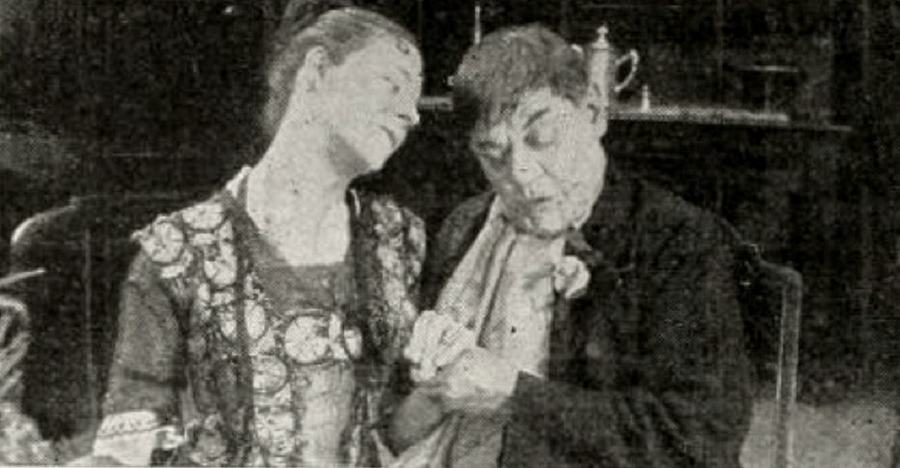
Wall Street may hoard the camera’s establishing shots, but the emotional centrifuge is female desperation. Susan Dough (Ethel Lee), “old maid” at thirty-five, spies Crooky filching her niece’s engagement ring and instead of shrieking for constabulary, calculates matrimonial odds. Her bargain—silence in exchange for wedlock—reads like a suffragette’s poison-pen letter to patriarchy: if society refuses her agency, she’ll weaponize complicity. Anna Laughlin’s younger Dora, by contrast, embodies the flapper-to-be, eyes sparkling at the convict’s irreverence the way later generations would swoon over Valentino.
Observe the blocking during the ballroom sequence: women orbit Crooky like moons around a rakish planet, yet the camera lingers on Susan’s clenched fan, a semaphore of repressed desire. When she finally corners him beneath gas-jet chandeliers, the depth of field keeps both faces sharp—her tear-bright eyes, his calculating pupils—creating a diptych of mutual predation. Few silents dared frame female appetite so candidly without moral retribution.
Cinema historians often locate the genesis of the “criminal-as-protagonist” in Sternberg’s Underworld (1927) or perhaps The Genet’s poetic felons, yet Crooky anticipates them by a dozen years. The film’s most subversive stroke arrives when the antihero teaches Roberts to “practice” signatures, an ostensibly innocuous scene that teaches audiences how to forge. Censors in Ohio demanded this snippet excised; Chicago exhibitors merely dimmed the explanatory intertitle. Thus the movie screen became both crime manual and confessional, a paradox that Prohibition-era censors would spend fortunes trying to resolve.
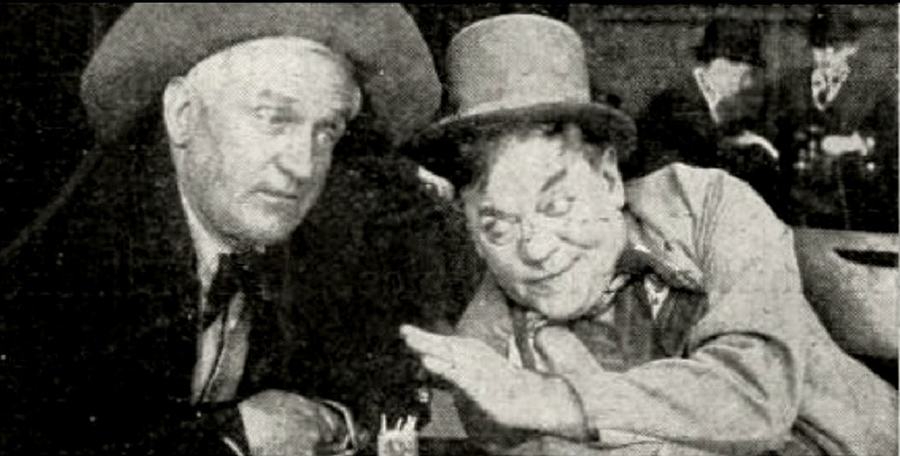
Set Crooky beside The Magic Note and you notice both trade in mistaken identities, yet where Note leans on pastoral innocence, Crooky luxuriates in metropolitan rot. Contrast it with Beatrice Cenci and the tonal schism yawns: Italianate tragedy versus American sarcasm. Only Der Lumpenbaron shares its carnivalesque velocity, though Vienna’s coffee-house nihilism feels genteel compared to this Manhattan rat-a-tat.
Surviving 35 mm prints (thanks to EYE Filmmuseum’s 2018 photochemical rescue) reveal cinematographer William Black’s chiaroscuro experiments: faces half-swallowed by murk while white ties shimmer like exposed bone. The prison interior—shot on a Fort Lee soundstage—exploits painted asphaltum backdrops whose vertical stripes echo the convict uniform, a visual rhyme that foreshadows Crooky’s final resignation to incarceration. Note how the yellow tint of the ballroom sequence (#EAB308 in modern grading parlour) saturates the gowns until even the celluloid seems drunk on champagne.
Forgotten today, Daniels was once hailed as “the human question mark” for the way his eyebrows arched in disbelief at his own mischief. Watch the micro-gesture when he pockets Roberts’s wad: fingertips brush the fabric twice—first to test thickness, second to bless the loot with silent absolution. The dual stroke lasts maybe eight frames, yet it encapsulates every pickpocket’s credo: touch, hesitate, convert sin into choreography.
Original exhibitors were encouraged to accompany the reel with Zeno Mauzotti’s “Capriccio di burla,” but surviving cue sheets reveal anarchic departures: house organists segued from ragtime to Anacreon overtures, mirroring the film’s tonal whiplash. Contemporary restorations favour a klezmer-jazz hybrid, its clarinet trills underlining the Lower-East-Side subtext of every grift.
Released two months after The Birth of a Nation and mere weeks before Lusitania’s sinking, Crooky channels a nation drunk on modernity yet fearing its shadow. The railroad speculation subplot references the Real Estate Trust Company collapse of 1914; Susan’s marital panic nods to the surplus of single women post-1890s immigration waves. Even the barrel—cheap pine, bound by iron hoops—evokes the war-bound materiel already steaming toward European trenches. Thus a twelve-minute farce becomes a jittery time-capsule.
You can trace Crooky’s DNA through Lubitsch’s Trouble in Paradise (1932), where larcenous love triangles likewise expose high-society rot, and in Preston Sturges’s Christmas in July (1940) with its forged-check shenanigans. Even Some Like It Hot owes a sly debt: men swapping identities to outrun doom, only to discover the costume more constricting than the crime.
Because in an era when antiheroes franchise into multiverses, there is tonic purity in watching a grinning felon weaponize nothing but charm and a fountain pen. Because the film’s brevity is a dare: can you binge three times before popcorn cools? Because its socio-economic bite—Wall Street panics, gendered desperation—feels ripped from this morning’s headlines. And because Frank Daniels, in the twilight of silent slapstick, proved that the most seductive special effect remains a mischievous twinkle under flickering nitrate.
Seek out the 4K restoration on archival platforms; pair with Nedra for a double bill of forgotten faces, or program beside Prestuplenie i nakazanie if you crave penitential counterpoint. However you watch, surrender to its velocity, and remember: sometimes the greatest freedom is laughing through the bars you chose.
IMDb 5.1
1917
Community
Log in to comment.