DbcultAccessing Vault...
Cult Review
Senior Film Conservator
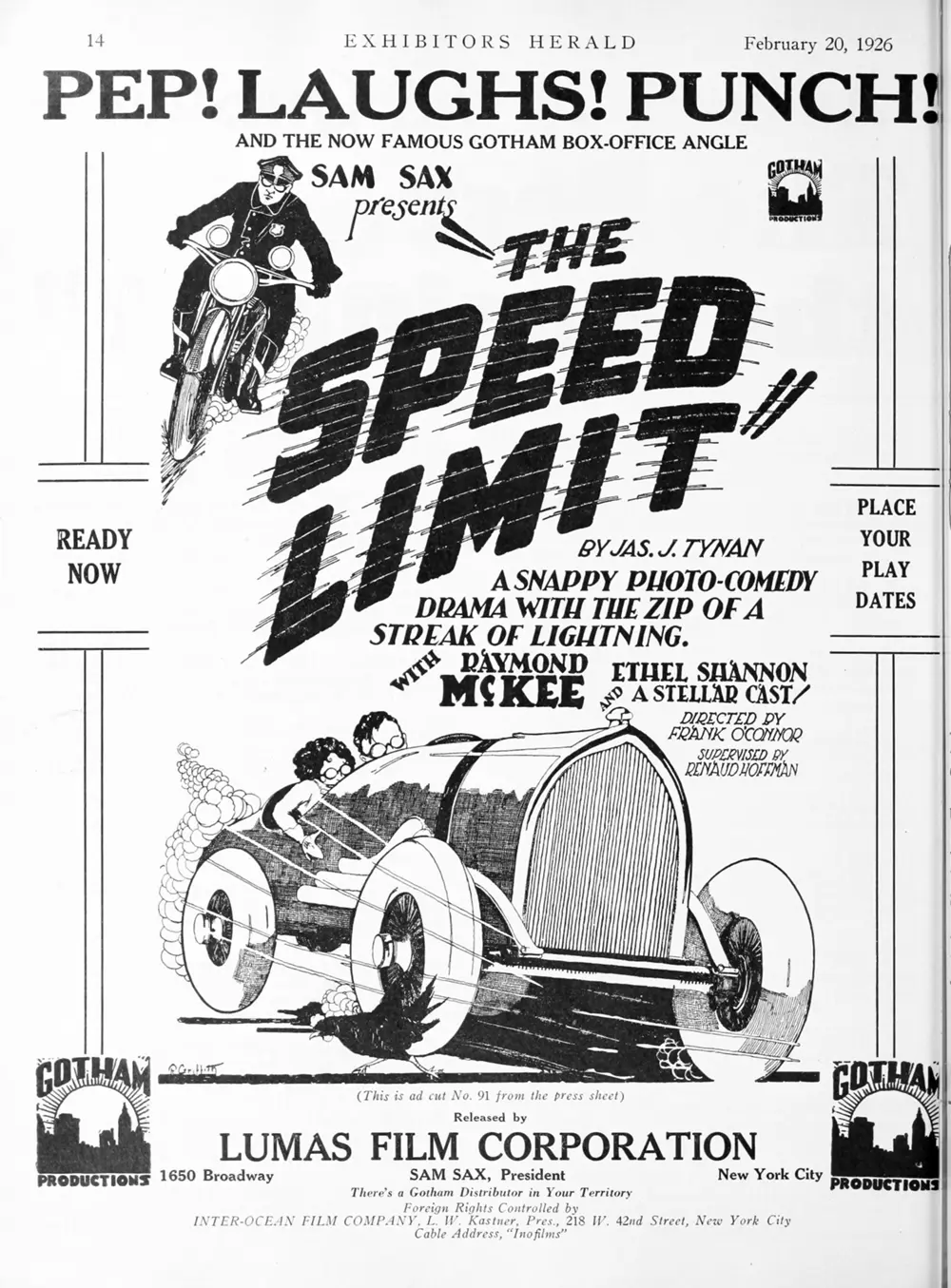
Is The Speed Limit worth your time in the modern age? Short answer: yes, but only if you appreciate the clatter of a vintage engine over the polish of a modern script. This is a film that belongs to a very specific pocket of 1920s cinema where the machine was the star, and the actors were merely there to crank the handle. It is for the silent film completionist and the automotive historian; it is certainly not for someone looking for the psychological depth of a modern sports drama.
While many films of this era, such as The Third Degree, focused on the shadows of the human soul, The Speed Limit is obsessed with the light reflecting off a radiator cap. It is a film about the friction between rubber and road, and between the working class and the idle rich. It works. But it’s flawed.
1) This film works because it treats the mechanical invention of a tire as a high-stakes thriller element, turning chemistry into drama.
2) This film fails because the romantic subplot feels like an obligatory checklist rather than a beating heart.
3) You should watch it if you are fascinated by the 1920s transition from horse-power to horsepower and the social hierarchy of the automobile.
At its core, The Speed Limit is a film about the American Dream as viewed through a grease-stained lens. Tom Milburn, played with a frantic energy by Raymond McKee, is not your typical silent film hero. He isn't a swashbuckler or a tragic lover; he is a tinkerer. In an era where films like Blue Jeans explored the industrial grit of the country, this film focuses on the specific niche of racing technology.
The plot centers on Milburn's experimental tire process. It sounds dry on paper, but director James J. Tynan manages to make the 'vulcanization' of rubber feel as vital as a sword fight. When Milburn is in his workshop, the cinematography shifts to tight, intimate shots of tools and textures. You can almost smell the sulfur and burnt oil. This specificity is what saves the film from being a generic melodrama.
The conflict arises when Claude Roswell (Bruce Gordon) arrives in his Rolls-Royce. The car isn't just a vehicle; it's a character. It represents the effortless, polished wealth that Milburn can't touch. The pranks between the two men—specifically the scene where they sabotage each other's engines—provide a slapstick relief that feels grounded in the mechanical reality of the 1920s. It’s not just 'funny'—it’s a battle of technical wits.
The rivalry between Milburn and Roswell is the engine that drives the second act. Roswell’s decision to frame Milburn for car theft is a classic trope, but it’s executed with a surprising amount of venom. In many ways, the film mirrors the social tensions found in Slaves of Pride, where wealth is used as a weapon to stifle the upward mobility of the talented poor.
The frame-up scene is particularly telling. Milburn is caught in a web of circumstantial evidence that relies on the assumption that a 'grease monkey' would naturally want to steal a luxury vehicle. The legal system in the film is portrayed as a tool for the elite, a theme that resonates even today. However, the resolution of this legal drama is where the film stumbles. It’s too quick, too tidy, and lacks the punch of a film like The Snarl.
Bruce Gordon plays Roswell with a sneer that borders on the cartoonish, but it works within the binary morality of the time. He is the perfect foil to McKee’s earnest, slightly desperate Milburn. The two represent the two faces of the 1920s: the man who makes things and the man who buys them.
Technically, The Speed Limit is a marvel of B-movie efficiency. The racing sequences are the clear standout. Unlike the staged, static shots of earlier films, Tynan uses mounting cameras and low-angle shots to capture the sensation of velocity. You see the dust kicking up; you see the vibration of the chassis. It feels dangerous because, in 1926, it was.
The pacing of the film is generally brisk, though it suffers from a sagging middle section where the romance between Milburn and Bess (Ethel Shannon) takes center stage. Shannon does the best she can with a role that is essentially a trophy for the winner of the race, but her character lacks the agency seen in contemporary films like Plain Jane. She is a prize to be won, which is a disappointing, if expected, element of the era's storytelling.
The 'experimental tires' themselves are treated with a reverence usually reserved for religious relics. During the final race, the camera lingers on the tires as they round corners, emphasizing their durability. It is a brilliant piece of early product-placement-style storytelling, even if the product is fictional. It turns the technical into the emotional.
The Speed Limit is a foundational text for racing fans. It captures the raw, dangerous energy of early 20th-century motorsports. The film focuses on technical innovation rather than just speed, making it a precursor to modern 'engineering' dramas. It is a must-watch for anyone interested in the history of the car on film.
However, if you are looking for the narrative complexity of something like Mad Love, you will be disappointed. This is a linear, predictable story that relies on its climax to do the heavy lifting. The 'prank' war in the first half feels like it belongs in a different, lighter film, perhaps something like Mr. Billings Spends His Dime. The tonal shift from comedy to 'theft and framing' is jarring.
If you are a student of cinema history, yes. The film provides a fascinating look at the 1926 perspective on technology and class. It isn't as poetic as The Song of the Soul or as socially biting as The Woman God Sent, but it has a rugged charm that is hard to ignore. It is a film that smells of gasoline and ambition.
For the casual viewer, it might feel like a relic. The pacing is uneven, and the secondary characters, played by actors like Paul Weigel and Lucille Thorndyke, are given very little to do. But for those who can look past the age, there is a genuine thrill in seeing Milburn push his experimental car to the limit. It is a pure expression of the 'faster, better, stronger' ethos of the early 20th century.
Pros:
- Excellent use of location shooting for the racing scenes.
- Raymond McKee provides a relatable, energetic lead performance.
- A unique focus on the 'science' of racing rather than just the spectacle.
- Short runtime ensures it never truly overstays its welcome.
Cons:
- The villain's motivations and actions are paper-thin.
- The romantic subplot is entirely predictable and lacks chemistry.
- Some of the 'pranks' feel repetitive and slow down the first act.
- The resolution of the theft charge is far too convenient.
The Speed Limit is a fascinating, if somewhat clunky, artifact of 1920s cinema. It captures the zeitgeist of an era obsessed with progress and the democratization of speed. While it lacks the emotional weight of Castles for Two or the comedic brilliance of Never Say Die, it stands on its own as a solid piece of genre entertainment. It isn't a masterpiece of storytelling, but it is a masterclass in how to film a car race with limited technology. It works. But it’s flawed. If you can appreciate the mechanical beauty of a vintage racer, you’ll find plenty to love here. Just don’t expect the tires to be the only thing that’s a bit over-inflated.
IMDb 7.6
1937
Community
Log in to comment.