DbcultAccessing Vault...
4.6/10
Senior Film Conservator
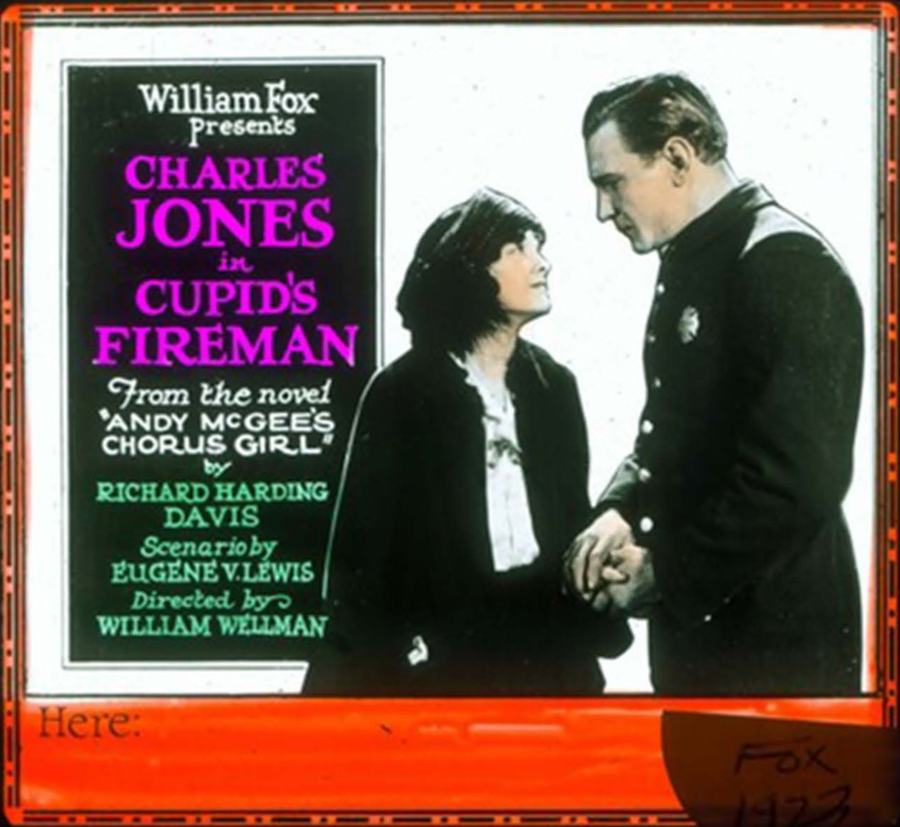
A definitive 4.6/10 rating for a film that redefined the boundaries of cult cinema. Cupid's Fireman remains a cornerstone of transgressive art.
In the pantheon of early 20th-century cinema, few figures cast a shadow as ruggedly persistent as Buck Jones. While contemporary audiences might reflexively associate his name with the dusty trails of the Western genre, Cupid's Fireman (1923) serves as a startling reminder of his versatility within the urban melodrama. This Fox Film Corporation production, directed with a keen eye for atmospheric tension by William Wellman (though often attributed to the broader studio machinery of the era), transcends the simplistic tropes of the 'rescue' film to explore the murky intersection of personal desire and professional stoicism.
The film opens with a sequence that establishes the crushing weight of legacy. Andy McGee, portrayed by Jones with a restraint that borders on the ascetic, is not merely joining the fire department; he is attempting to resurrect the ghost of his father. This thematic obsession with paternal shadows is a recurring motif in silent cinema, often seen in works like The Law's Outlaw, where the protagonist's identity is inextricably linked to the moral standing of his forebears. Jones discards the flamboyant bravado of the cowboy for a utilitarian grit, his movements measured and heavy with the responsibility of the brass helmet.
The cinematography during the training sequences utilizes the high-contrast lighting typical of the early 1920s, casting the firehouse as a cathedral of industry. Here, the clanging bells and the frantic harnessing of horses create a sensory tapestry that, even without sound, feels deafening. It is within this world of iron and ash that Andy seeks his purpose, oblivious to the fact that his greatest challenge will not be a collapsing roof, but the fragile heart of a dancer.
The narrative shift from the fire station to the theater district introduces a jarring but effective juxtaposition. Agnes Evans, played with a haunting vulnerability by Eileen O'Malley, represents the ephemeral beauty of the stage—a stark contrast to the visceral reality of Andy’s world. Her 'specialty dancer' role is more than a plot device; it serves as a metaphor for the masks we wear. In the glow of the footlights, she is an ethereal vision; in the harsh light of the morning, she is a woman trapped in the gravitational pull of a failing marriage. This duality of existence is a common thread in the era's romantic dramas, echoing the sentimental depth found in The Miracle of Love.
The romance between Andy and Agnes is not the whirlwind courtship of a typical rom-com. It is a slow-burning realization of shared loneliness. When Cupid 'shoots his arrow,' it doesn't land in a field of flowers, but in the soot-stained reality of a man who realizes that the woman he loves belongs to another.
Al Fremont’s portrayal of Bill Evans is a masterclass in the 'unredeemable' archetype. In the 1920s, the 'drunkard' was not merely a character flaw but a moral catastrophe. Evans is depicted as a parasite, consuming the vitality of Agnes to fuel his own addiction. This dynamic creates a palpable sense of dread that permeates the second act. The domestic sphere, which should be a sanctuary, becomes a site of psychological warfare. Unlike the rugged antagonists in Untamed, Evans is a threat born of weakness rather than strength, making him all the more dangerous because his actions are unpredictable and fueled by desperation.
The screenplay by Eugene B. Lewis and Richard Harding Davis meticulously builds the pressure. We see Andy’s internal conflict manifest in his physical performance—the way he grips the steering wheel of the fire truck, the way he gazes at the theater posters. He is a man of action forced into a state of agonizing passivity, waiting for a catastrophe that he knows is inevitable.
The climax of Cupid's Fireman is a triumph of practical effects and editing. When the fire finally breaks out at the Evans residence, it is not just a spectacle; it is a manifestation of Bill’s internal chaos. The use of real fire on set—a common and perilous practice of the time—lends an authenticity that CGI could never replicate. The smoke is thick, the heat seemingly radiating through the celluloid.
Andy’s rescue of Agnes is swift and heroic, but it is the subsequent moment of hesitation that defines the film. Standing at the threshold of the burning building, knowing Bill is trapped inside, Andy faces an ontological crisis. To save Bill is to preserve the very obstacle to his own happiness. To let him perish is to fail the legacy of his father and the oath of his office. This sequence is edited with a frantic, rhythmic pulse, cutting between the roaring flames and Jones’s sweat-streaked face. It mirrors the high-stakes moral dilemmas found in Facing Death on the Blumlisalp, where the environment itself acts as a judge of character.
Visually, the film benefits from the sophisticated tinting processes available to Fox at the time. Amber hues dominate the fire sequences, while cool blues define the lonely nights Andy spends on watch. The directorial choice to focus on close-ups during the emotional beats allows the cast to communicate volumes through micro-expressions. Mary Warren and Marian Nixon provide excellent supporting turns, adding layers to the social fabric of the story, though the narrative remains firmly anchored by the central trio.
Compared to other contemporary works like Home-Keeping Hearts, which deals with domesticity in a more pastoral sense, Cupid's Fireman embraces the grime and grit of the city. It acknowledges that heroism is often a messy, thankless endeavor. The resolution avoids the saccharine endings common in lesser melodramas, opting instead for a sense of weary relief. The fire has purged the past, but the scars—both physical and emotional—remain.
Why does Cupid's Fireman deserve a place in the modern critical conversation? Primarily because it showcases a pivotal moment in Buck Jones' career where he successfully pivoted from action star to dramatic lead. Furthermore, it serves as a fascinating cultural artifact of the 1920s' fascination with the 'urban hero.' In an era before the superhero, the fireman was the ultimate symbol of selfless bravery, and this film interrogates that symbol with surprising depth.
The writing, particularly the contributions of Richard Harding Davis, injects a sense of journalistic realism into the melodrama. Davis, known for his war correspondence, understood the mechanics of courage under fire, and that expertise translates into the logistical accuracy of the firefighting scenes. While the plot may lean into the tropes of the era, the execution is elevated by a genuine respect for the subject matter.
Ultimately, the film is a testament to the power of silent storytelling. Without a single word of spoken dialogue, we understand the agony of Andy's choice and the release found in the ashes of the Evans home. It is a burning reminder that while fire can destroy, it can also clear the ground for something new to grow. If you find yourself captivated by the moral complexities of The Quality of Faith or the rhythmic tension of The Policeman and the Baby, then this 1923 gem is an essential addition to your cinematic lexicon.
IMDb —
1934
Community
Log in to comment.